Identifying patterns Addition & Subtraction Worksheets for 7-Year-Olds
3 filtered results
-
From - To
Unlock your child's mathematical potential with our Identifying Patterns Addition & Subtraction Worksheets designed specifically for 7-year-olds. These engaging worksheets help young learners discover and understand numerical patterns while mastering essential addition and subtraction skills. By identifying patterns, children enhance their problem-solving abilities and develop a strong foundation in math. Our user-friendly format encourages independent learning and makes practicing math fun! Perfect for home or classroom use, these worksheets cater to diverse learning styles and promote critical thinking. Start paving the way for your child's success in mathematics today with our expertly crafted resources! Explore our variety of worksheets now!
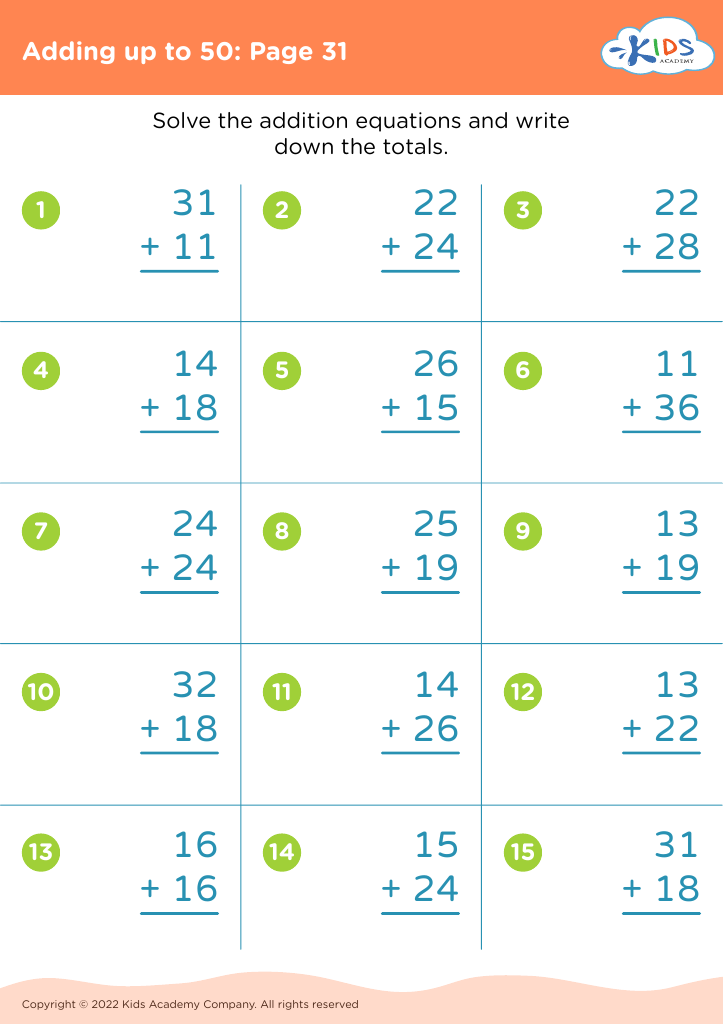
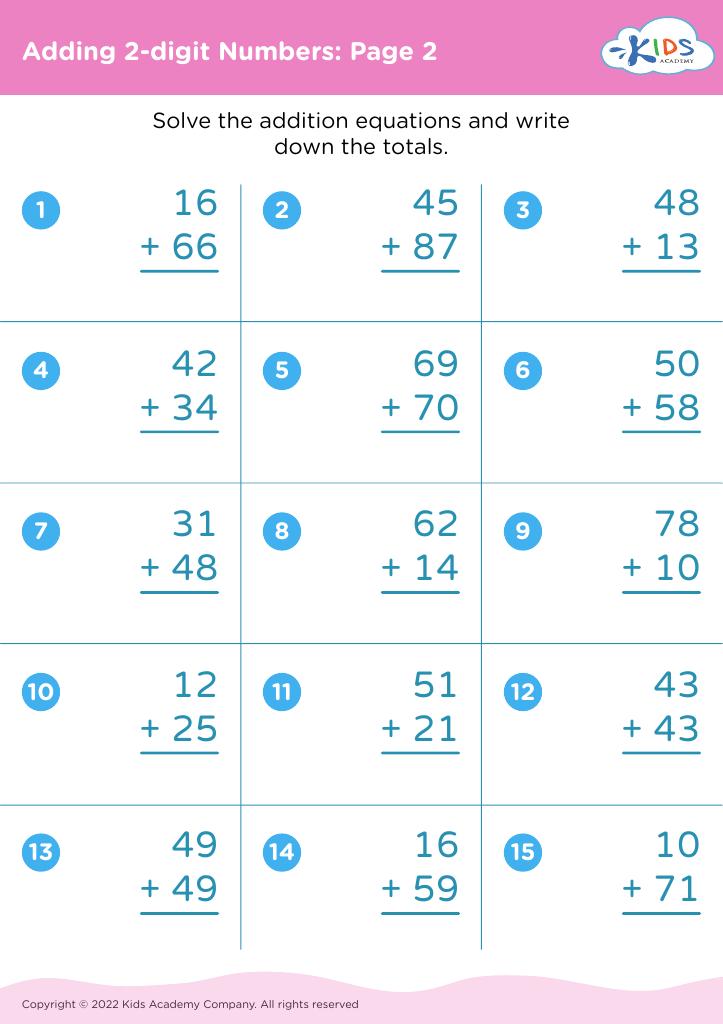
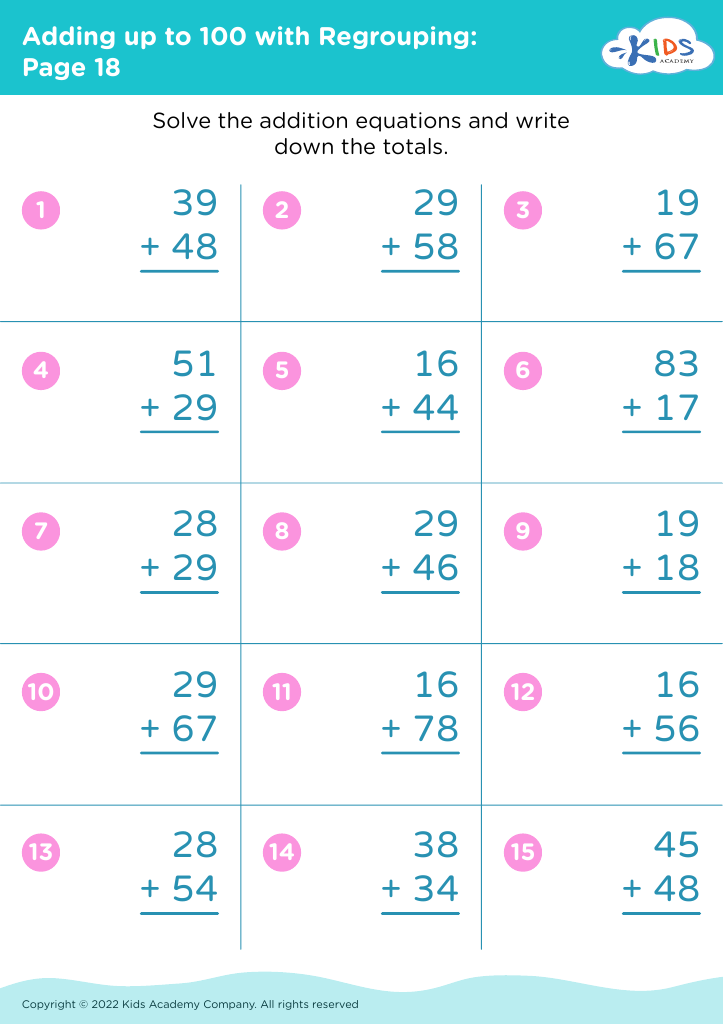








Identifying patterns in addition and subtraction is crucial for the mathematical development of 7-year-olds. At this age, children are building foundational skills that will support their future learning in more complex math concepts. Recognizing patterns helps children understand the relationships between numbers and how they operate together, fostering a deeper comprehension of arithmetic rather than mere memorization.
When children learn to identify patterns, they can more easily grasp concepts such as the commutative property of addition (e.g., 3 + 5 = 8 and 5 + 3 = 8) and recognize sequences in subtraction. This understanding aids them in problem-solving and enables them to tackle math problems with confidence. Moreover, pattern recognition enhances critical thinking, as children begin to predict outcomes and make connections between mathematical concepts.
Parents and teachers play a vital role in this process. By integrating engaging activities like games, puzzles, and real-life examples that highlight patterns, they can stimulate children’s interest in math. Encouraging participation fosters a positive attitude toward learning, laying the groundwork for future success in mathematics and beyond. Ultimately, caring about this foundational skill equips young learners with the tools necessary for academic achievement and lifelong numerical literacy.








