Learn subtraction Addition & Subtraction Worksheets for 7-Year-Olds
4 filtered results
-
From - To
Explore our engaging Addition & Subtraction Worksheets for 7-year-olds! Designed meticulously, these printable activities help young learners master fundamental math skills, including basic subtraction and addition. Each worksheet fosters critical thinking, problem-solving, and numerical fluency, ensuring that kids build a strong arithmetic foundation. Fun, interactive exercises keep children motivated and eager to learn, making math both easy and enjoyable. Our resources are perfect for home learning or classroom use. Equip your child with essential mathematical skills today—download our math worksheets and see them excel! Visit us to turn learning math into an adventure.
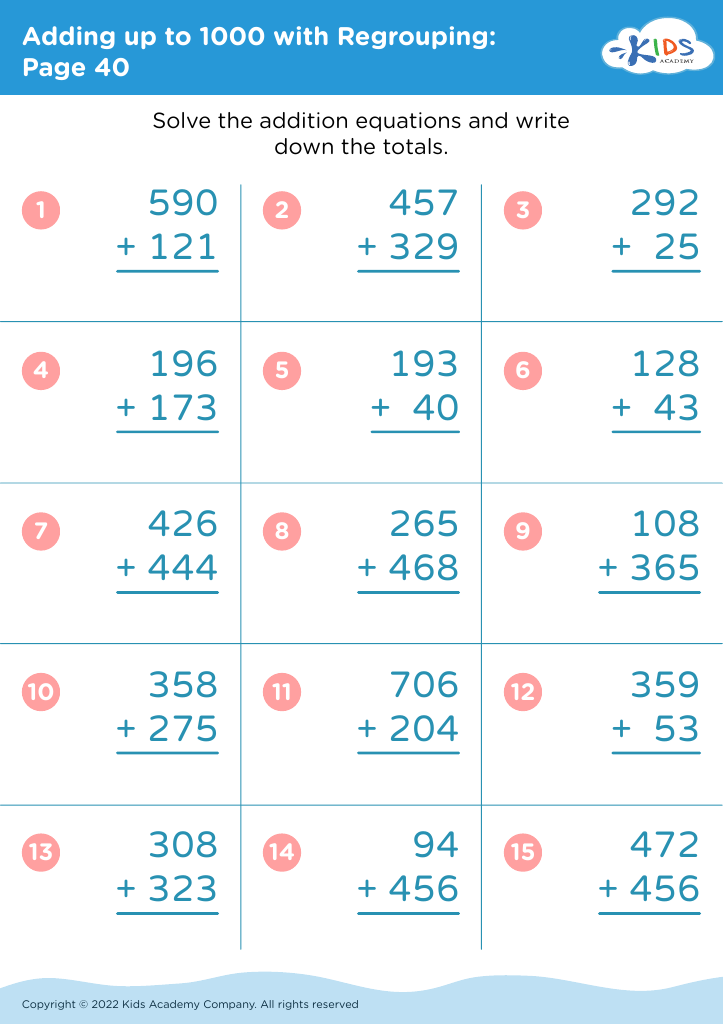
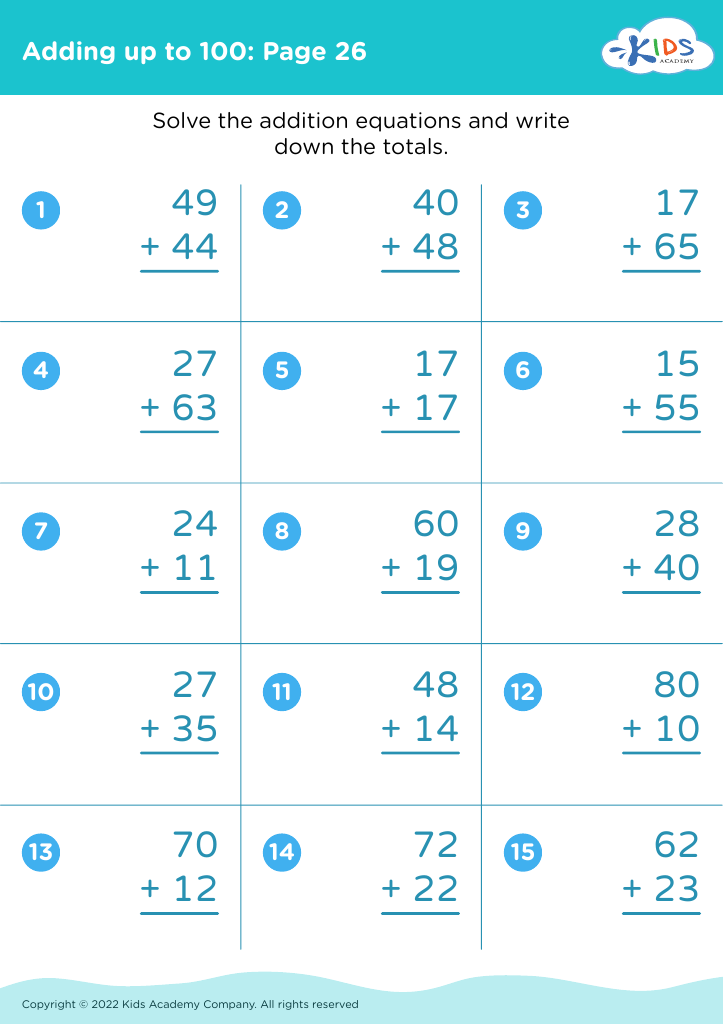
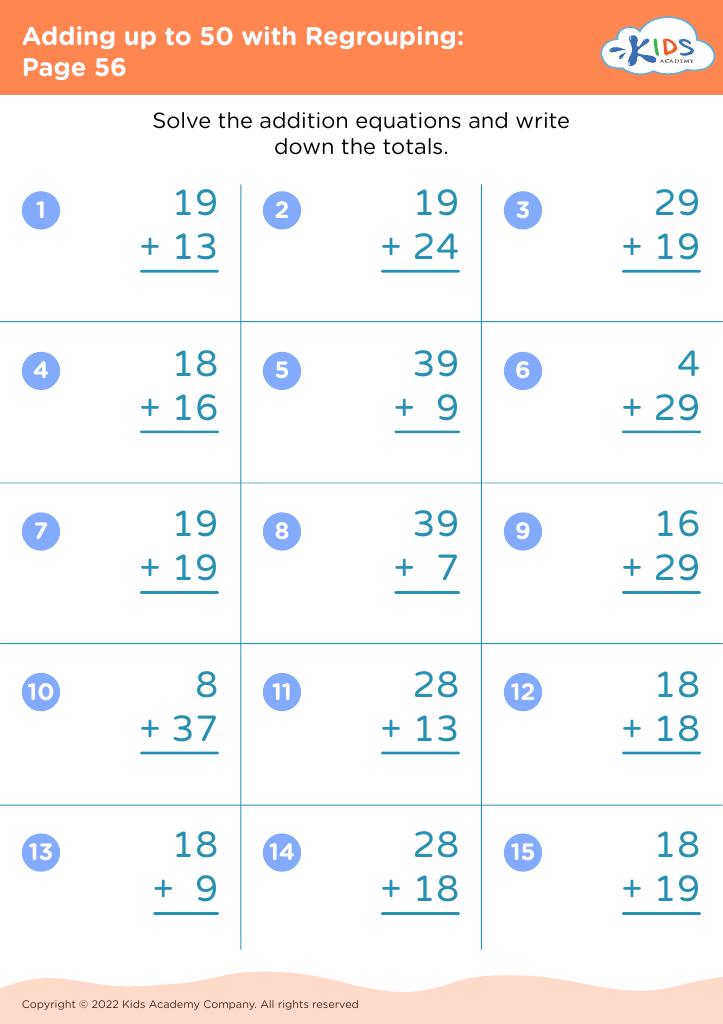
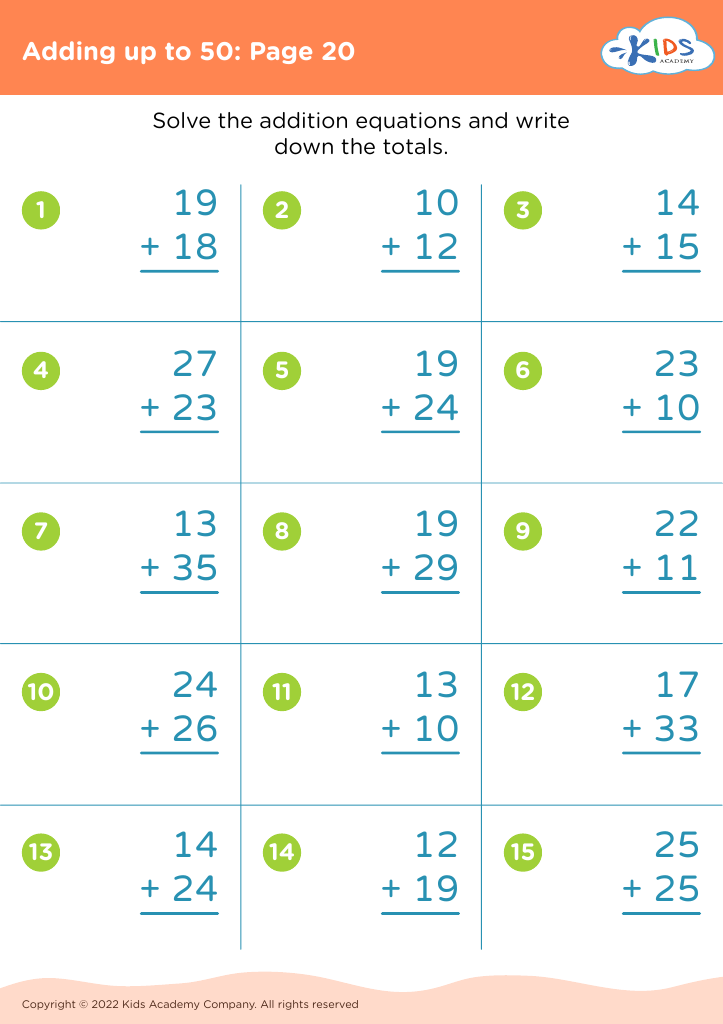








Parents and teachers should prioritize teaching addition and subtraction to 7-year-olds because these foundational skills are crucial for their mathematical development and overall cognitive growth. At this age, children are building the basic numeracy skills upon which more complex mathematical concepts will be constructed.
Mastering addition and subtraction not only boosts a child's confidence in their math abilities but also enhances their problem-solving and logical reasoning skills. These operations are essential for everyday activities such as counting money, telling time, and even following recipes, thereby reinforcing their practical life skills. Additionally, proficiency in addition and subtraction lays the groundwork for understanding multiplication, division, fractions, and more advanced mathematics in later grades.
Introducing these concepts through engaging and interactive methods fosters a positive attitude towards math. Games, stories, and hands-on activities can make learning fun and memorable, promoting a lifelong interest in the subject. Attention to these skills also supports the development of persistence and concentration, key attributes for academic success.
Ultimately, a strong grasp of addition and subtraction enables children to navigate both schoolwork and real-world tasks with greater ease and confidence, illustrating why these early lessons are of paramount importance in educational settings.








