
Mathematical skills Addition & Subtraction Worksheets for 7-Year-Olds
3 filtered results
Difficulty Level
Grade
Age
-
From - To
Subject
Activity
Standards
Discover engaging Addition and Subtraction worksheets designed specifically for 7-year-olds to bolster their mathematical skills! Our collection offers a variety of fun, interactive exercises that encourage young learners to practice foundational math concepts. Each worksheet is tailored to support children in mastering addition and subtraction through colorful visuals and relatable scenarios. Perfect for both classroom and home use, these worksheets help to improve problem-solving abilities and numerical fluency. Take the stress out of learning math and watch your child's confidence soar as they tackle a range of challenges. Explore our resources and help your child excel in their mathematical journey today!
Favorites
With answer key
Interactive
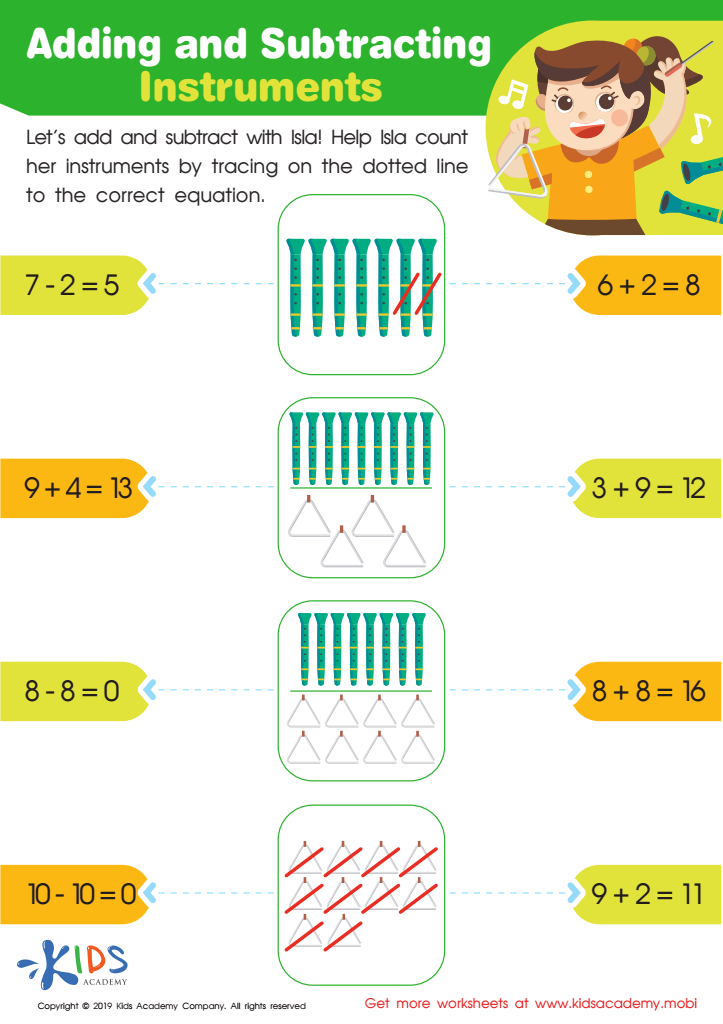
Adding and Subtracting: Instruments Worksheet
Children can help Isla count her musical instruments with this fun worksheet. The downloadable PDF gives them a chance to practice addition and subtraction by connecting pictures to equations. It's also a great way to learn the order of operations.
 Assign to My Students
Adding and Subtracting: Instruments Worksheet
Worksheet
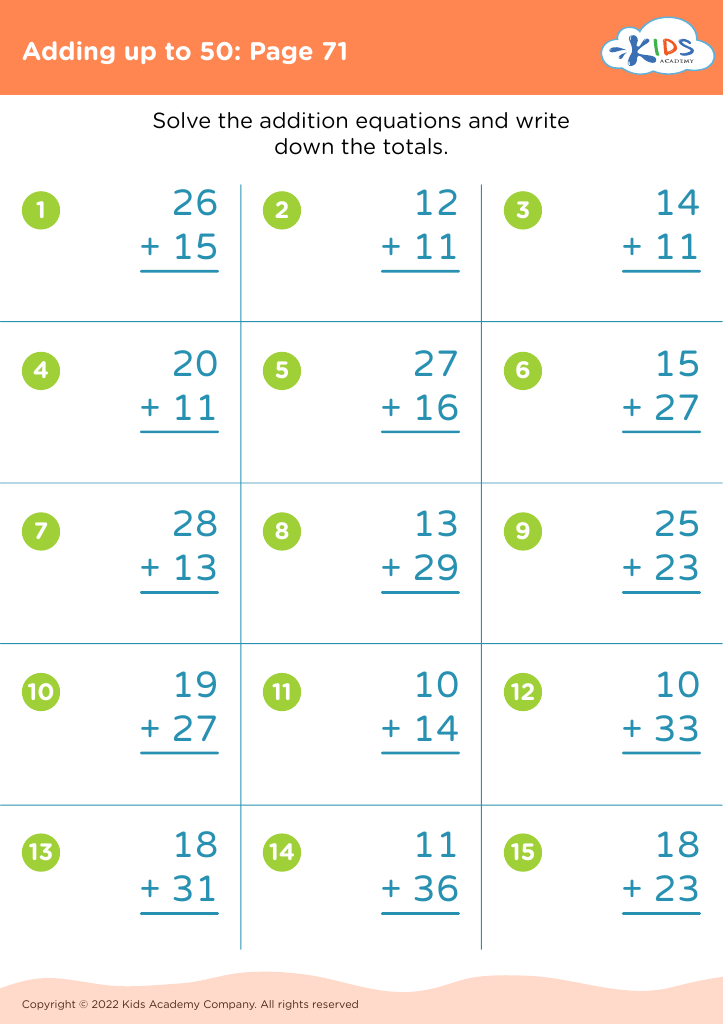
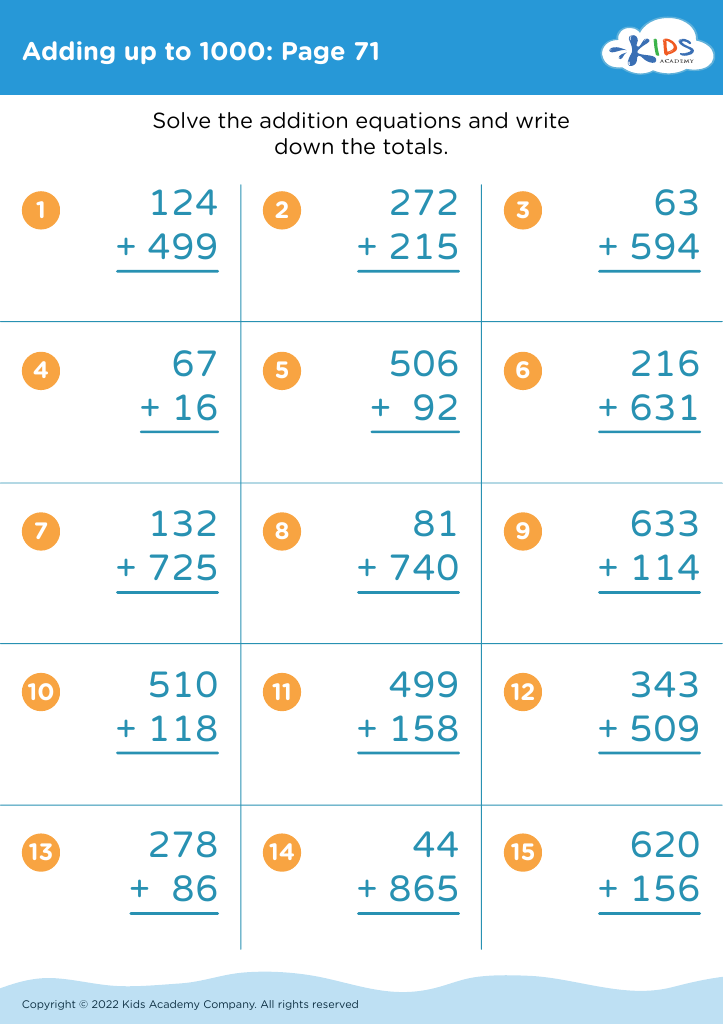
Join Kids Academy for Free
Who is primarily going to use this learning content?








Mathematical skills such as addition and subtraction are foundational for a 7-year-old's cognitive development and academic success. At this age, children are transitioning from basic number recognition to performing calculations, which sets the stage for more complex mathematical concepts they will encounter later. Mastering these skills not only enhances their ability to handle everyday tasks, such as budgeting their allowance or measuring ingredients for cooking, but also fosters critical thinking and problem-solving abilities.
Moreover, a strong grasp of addition and subtraction aids in confidence building. When children succeed in math, they cultivate a positive self-image and a love for learning. This confidence spills over into other subjects, fostering a well-rounded educational experience.
Teachers and parents play a crucial role in nurturing these skills, and their involvement creates a supportive learning environment. By engaging in math-related conversations and activities, they can make math enjoyable and relatable, which helps children see its relevance in daily life. Additionally, teaching through games and real-life scenarios can alleviate math anxiety and promote a lasting interest in the subject. Overall, focusing on these essential mathematical skills not only enhances computation abilities but also prepares children for future academic challenges.








