Practice inference skills Addition & Subtraction Worksheets for 7-Year-Olds
3 filtered results
-
From - To
Enhance your child's problem-solving abilities with our "Practice Inference Skills Addition & Subtraction Worksheets" designed specifically for 7-year-olds. These engaging worksheets from Kids Academy offer a fun and effective way to improve mathematical operations and develop critical thinking skills. By applying inference techniques, children gain proficiency in recognizing patterns, making educated guesses, and solving complex math problems. Ideal for both classroom and home use, each worksheet comes with colorful illustrations and age-appropriate challenges that keep young learners motivated and excited about math. Foster a love for learning and help your child excel with these expertly crafted resources.
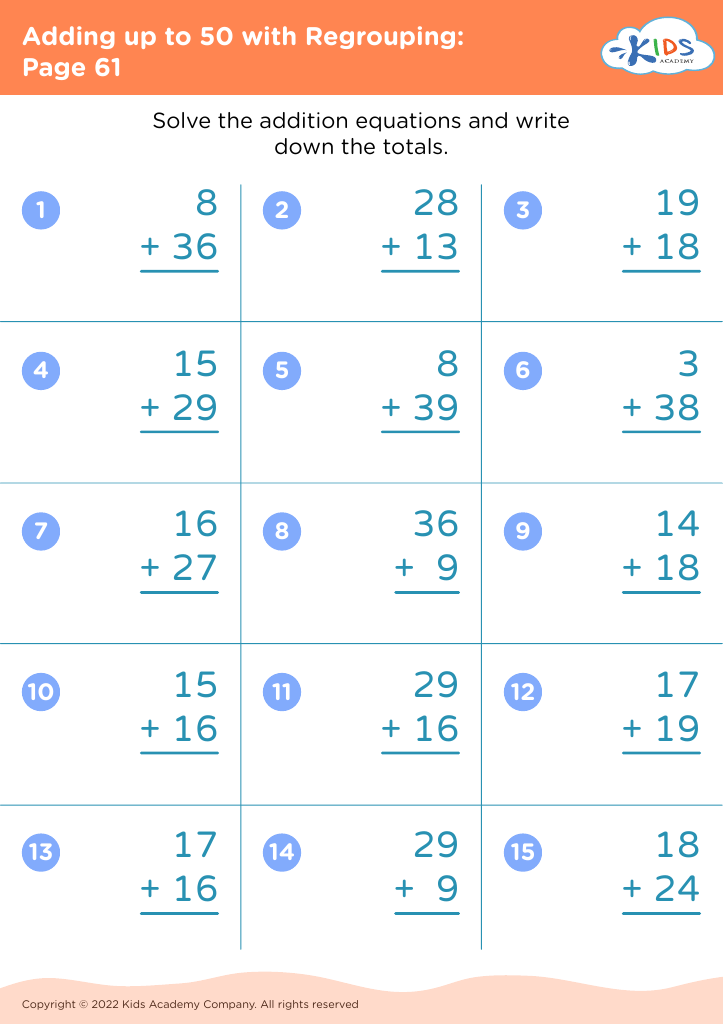
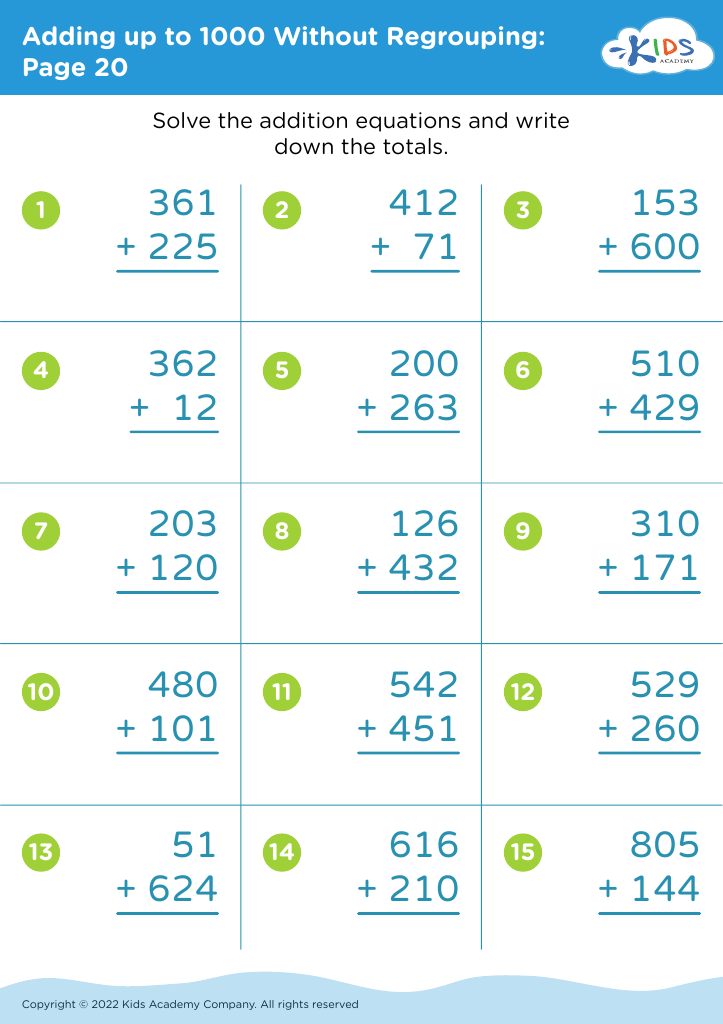
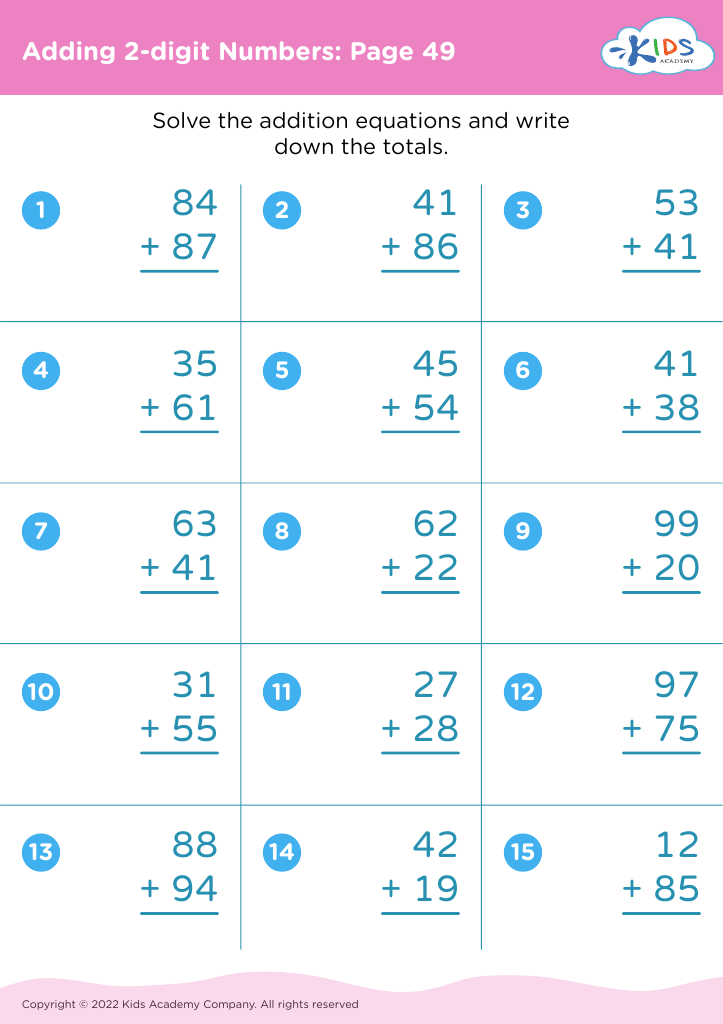








Parents and teachers should prioritize practicing inference skills alongside addition and subtraction for 7-year-olds because these foundational arithmetic abilities and cognitive skills are crucial for their academic and developmental progress.
Addition and subtraction are core components of early math education. Mastery of these operations is necessary for understanding more complex mathematical concepts in later grades. Practicing these skills helps young children develop numerical literacy, problem-solving abilities, and logical thinking. Frequent practice aids in reinforcing memory and boosts confidence, which is essential for a positive learning experience.
Inference skills, on the other hand, enable children to make logical connections and predict outcomes based on given information. By focusing attention on contextual clues and developing analytical thinking, children learn to draw conclusions and deepen their comprehension skills across different subjects.
Combining these practices cultivates a more holistic approach to learning, where children not only perform arithmetic operations but also understand when and why to apply these skills. This dual focus promotes critical thinking, enhances reading comprehension by helping to grasp mathematical word problems, and supports overall cognitive development.
Investing time and effort in nurturing both areas sets children on a path toward academic success, equipping them with necessary tools to navigate complex problems and fostering lifelong learning habits.








