Recognizing numbers Addition & Subtraction Worksheets for 7-Year-Olds
4 filtered results
-
From - To
Our "Recognizing Numbers: Addition & Subtraction Worksheets for 7-Year-Olds" are expertly designed to help young learners master basic math skills. These engaging worksheets provide a variety of exercises aimed at enhancing addition and subtraction abilities while reinforcing number recognition. Each worksheet adopts a playful approach to learning, ensuring children stay motivated and interested. Perfect for classroom use or extra practice at home, these printables allow kids to build a solid foundation in math through fun and interactive practice. Help your 7-year-old sharpen their numerical skills with these practical and entertaining activities!
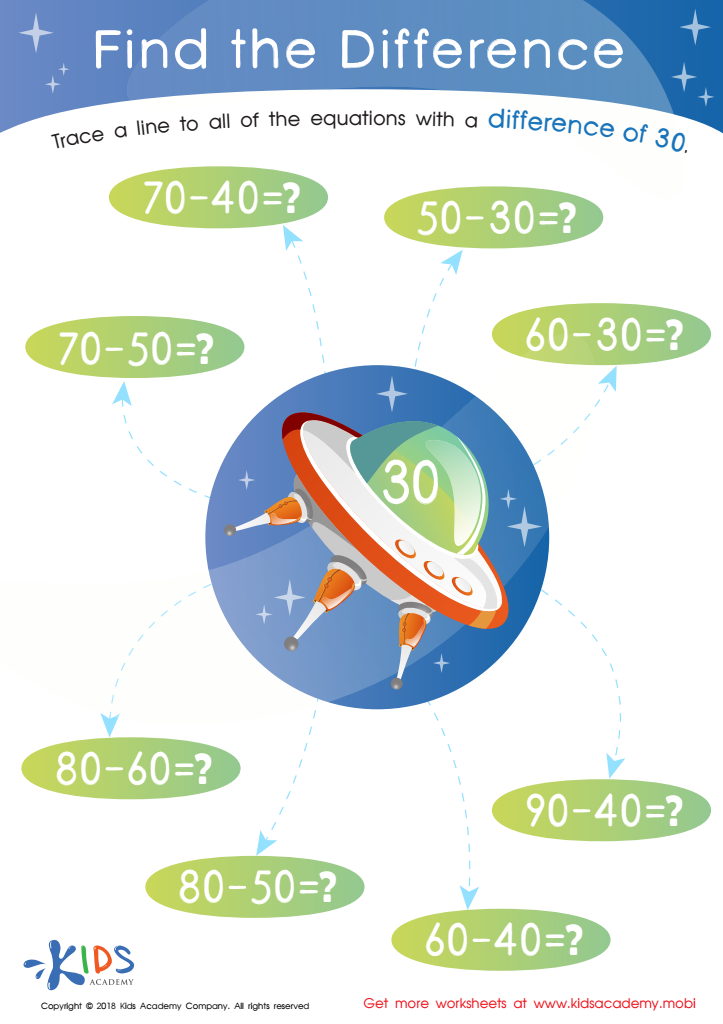
Find The Difference Worksheet
 Assign to My Students
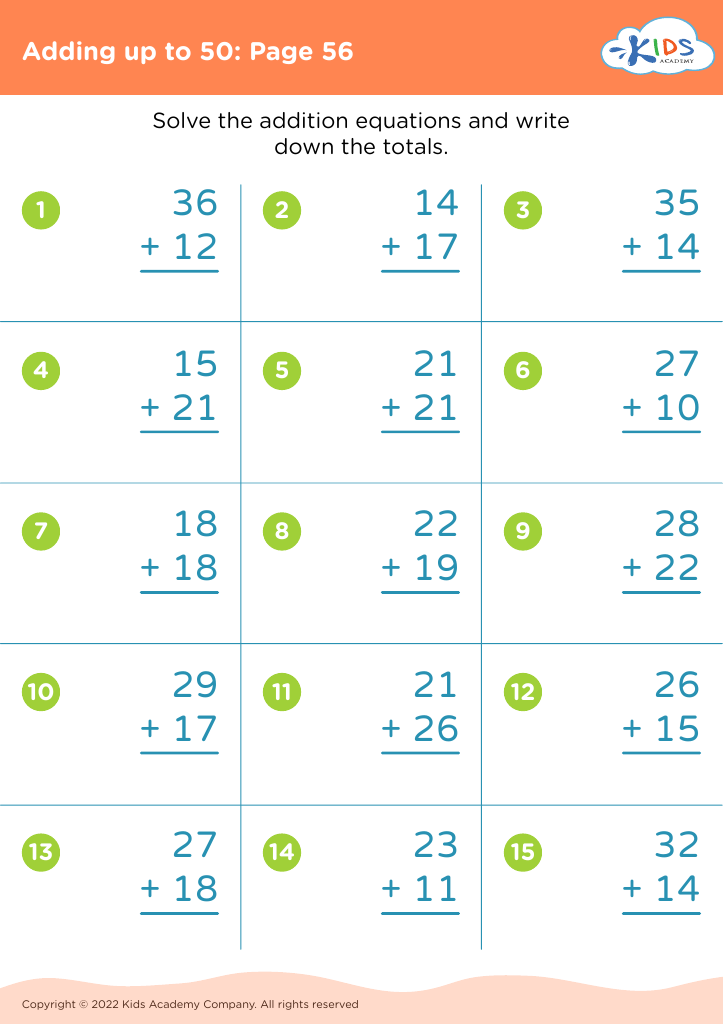
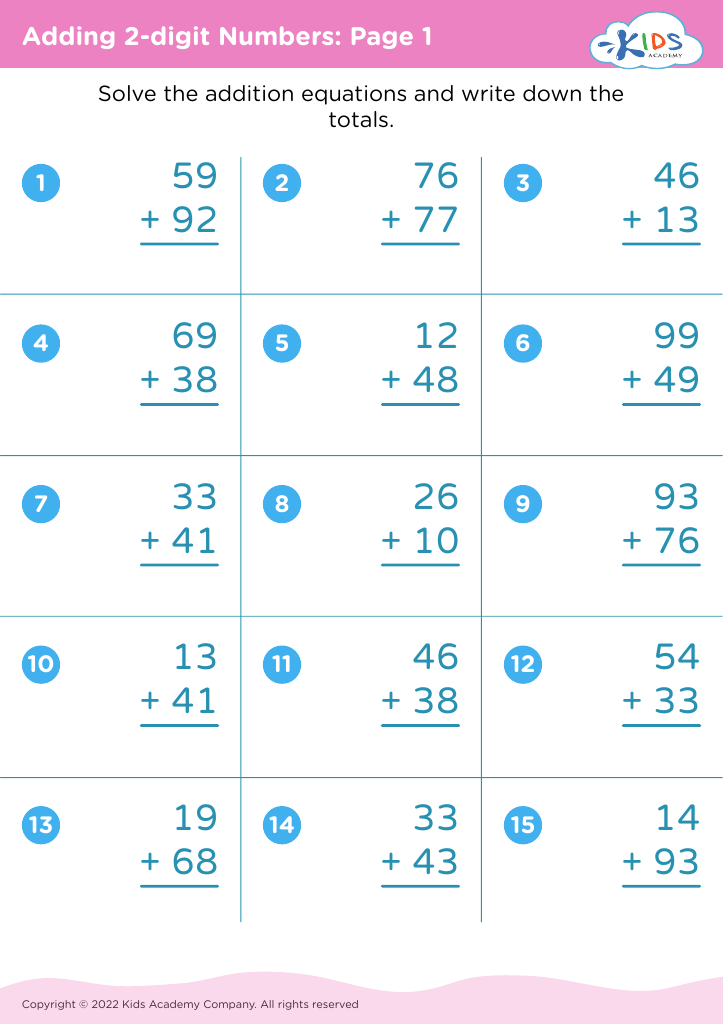
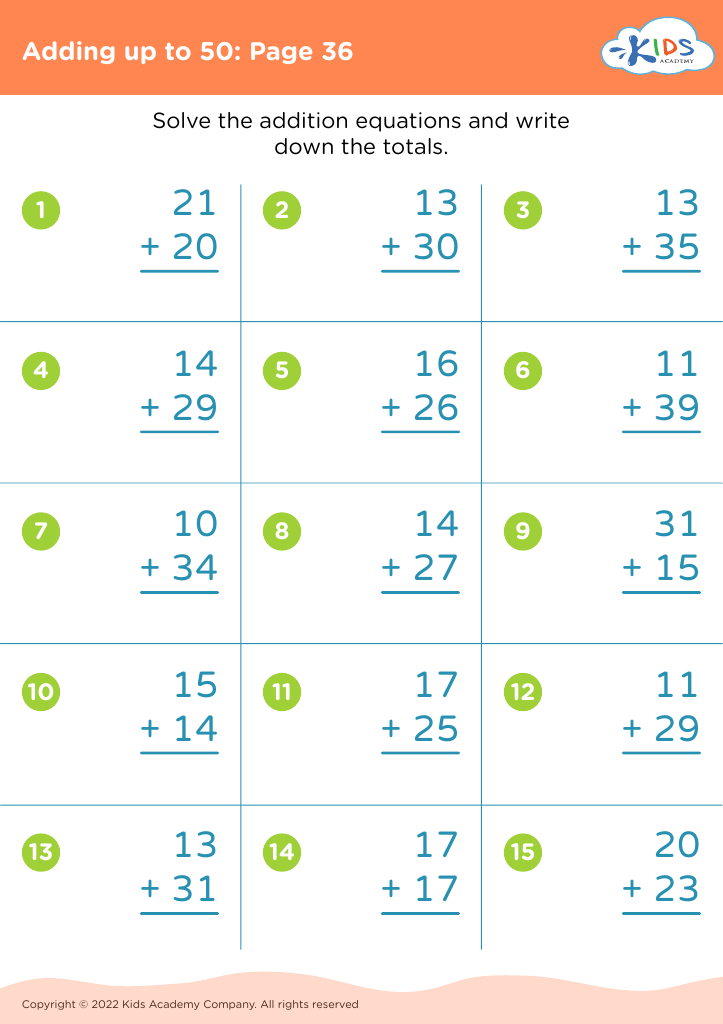








Recognizing numbers, addition, and subtraction for 7-year-olds is fundamental for several reasons. At this age, children are in a critical period of cognitive development, and mastering basic arithmetic skills can significantly impact their academic success and confidence in later years.
First, number recognition is a foundational skill in mathematics, enabling children to understand and work with more complex concepts. By recognizing numbers fluently, children can more easily grasp addition and subtraction, which are the building blocks for future math learning.
Second, proficiency in addition and subtraction is essential for developing problem-solving and logical thinking skills. These operations teach children how to manipulate numbers, recognize patterns, and make decisions based on quantitative data. This cognitive flexibility is not only vital in math but also in everyday life skills such as handling money, measuring ingredients in a recipe, or managing time effectively.
Third, confidence in these basic math skills fosters a positive attitude towards learning. When children see their competence in math, it can reduce anxiety and build a growth mindset, encouraging them to tackle more challenging subjects with curiosity and persistence.
Therefore, investing time and resources into helping 7-year-olds master numbers, addition, and subtraction is crucial for their educational development and overall self-confidence.








