Understand number relationships Addition & Subtraction Worksheets for 7-Year-Olds
3 filtered results
-
From - To
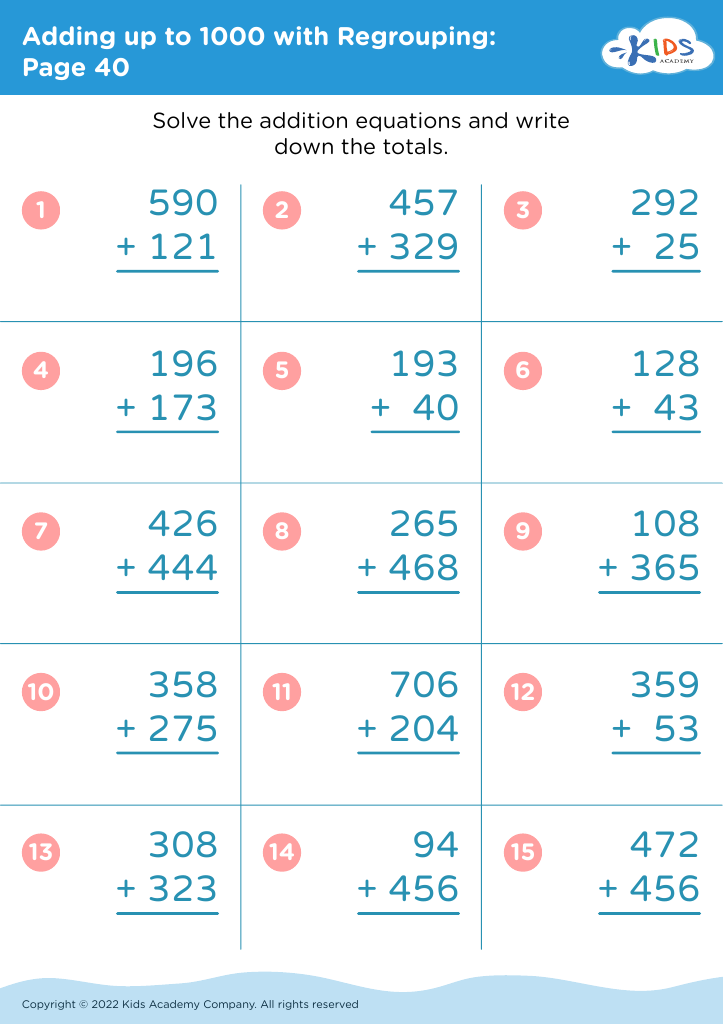
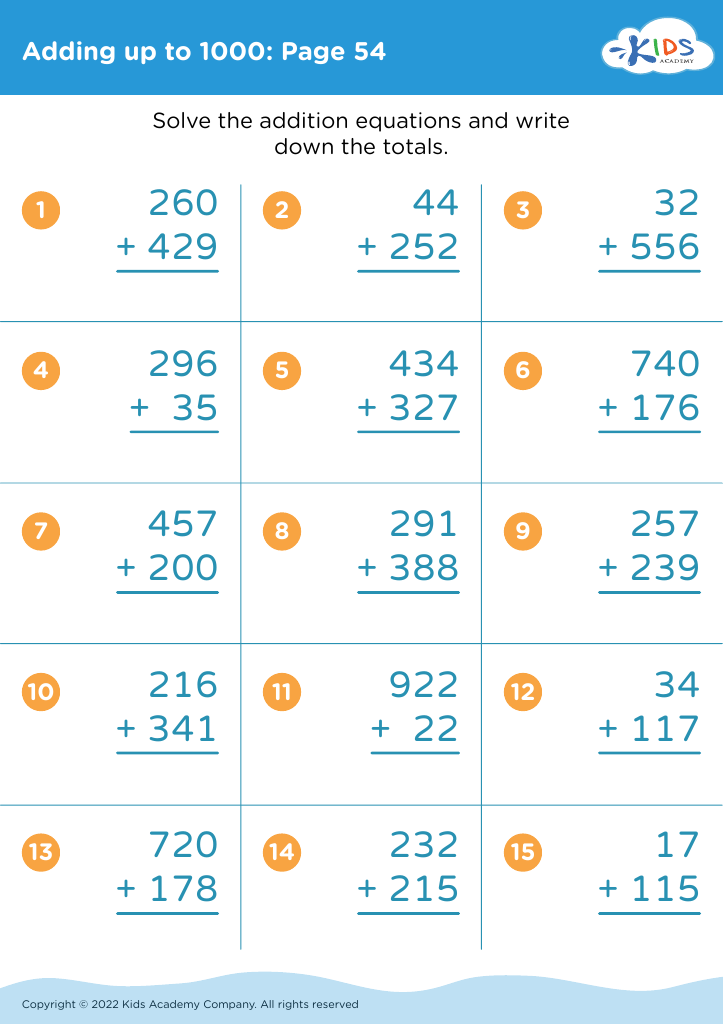
Enhance your 7-year-old's math skills with our "Understand Number Relationships Addition & Subtraction Worksheets." Designed specifically for young learners, these engaging worksheets help kids grasp the foundational concepts of addition and subtraction while exploring the relationships between numbers. Through a variety of interactive activities, your child will develop critical thinking and problem-solving skills as they master essential math strategies. These printable resources foster confidence and independence in learning, making math fun and accessible. Perfect for classroom use or at-home practice, our worksheets provide clear explanations and visually appealing designs that capture your child's interest and strengthen their number sense. Start learning today!
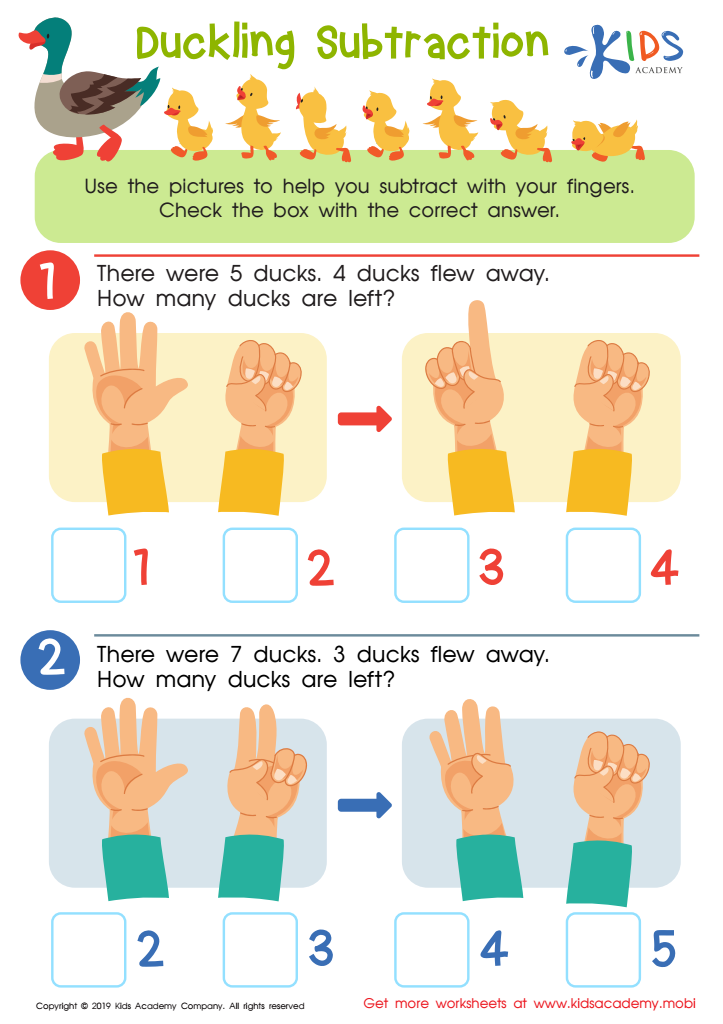
Duckling Subtraction Worksheet
 Assign to My Students








Understanding number relationships in addition and subtraction is crucial for seven-year-olds as it forms the foundation for their future mathematical skills. At this age, children are transitioning from basic counting to understanding how numbers interact, which enhances their ability to solve problems and think critically.
Parents and teachers should care about this because grasping number relationships helps students develop numerical fluency, enabling them to perform calculations efficiently and with confidence. When children visualize and comprehend how numbers relate—such as recognizing that adding or subtracting a certain number affects the total—they become more intuitive problem solvers.
Moreover, solid foundational skills in addition and subtraction support future learning concepts such as multiplication, division, and even fractions. A child who understands these relationships is better equipped to tackle more complex math problems in later grades.
Additionally, nurturing a positive attitude towards math during these formative years fosters lifelong learning. Engaging children in activities that emphasize number relationships makes math enjoyable and relatable. Parents and teachers play a pivotal role in this journey, encouraging exploration, questioning, and the application of math in daily life, thus cultivating both competence and confidence in young learners.








