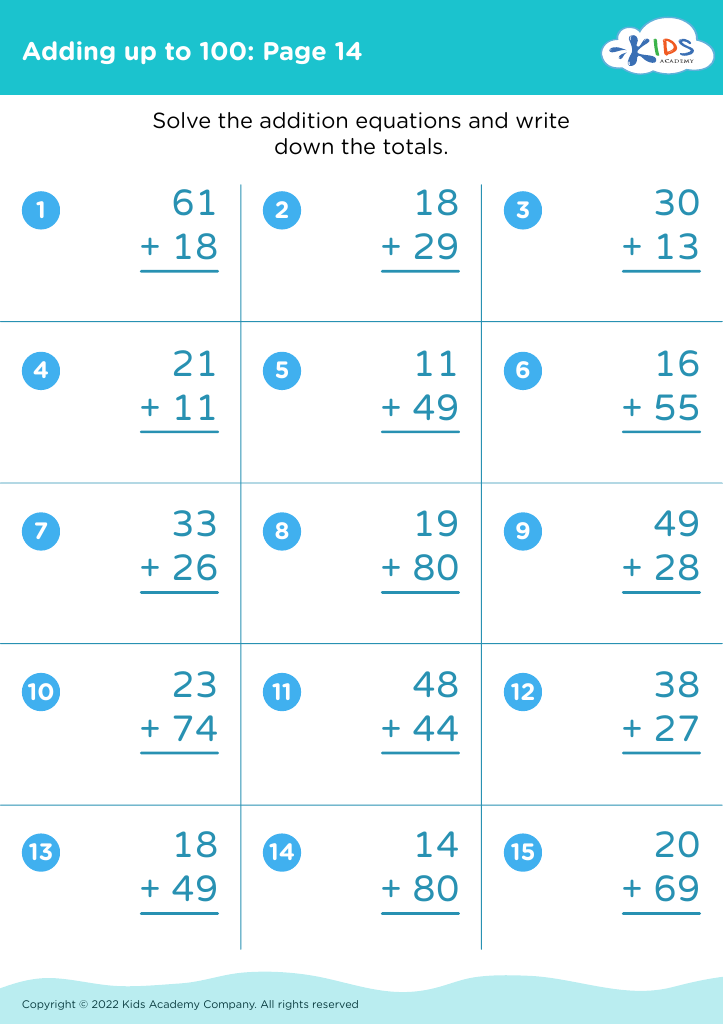
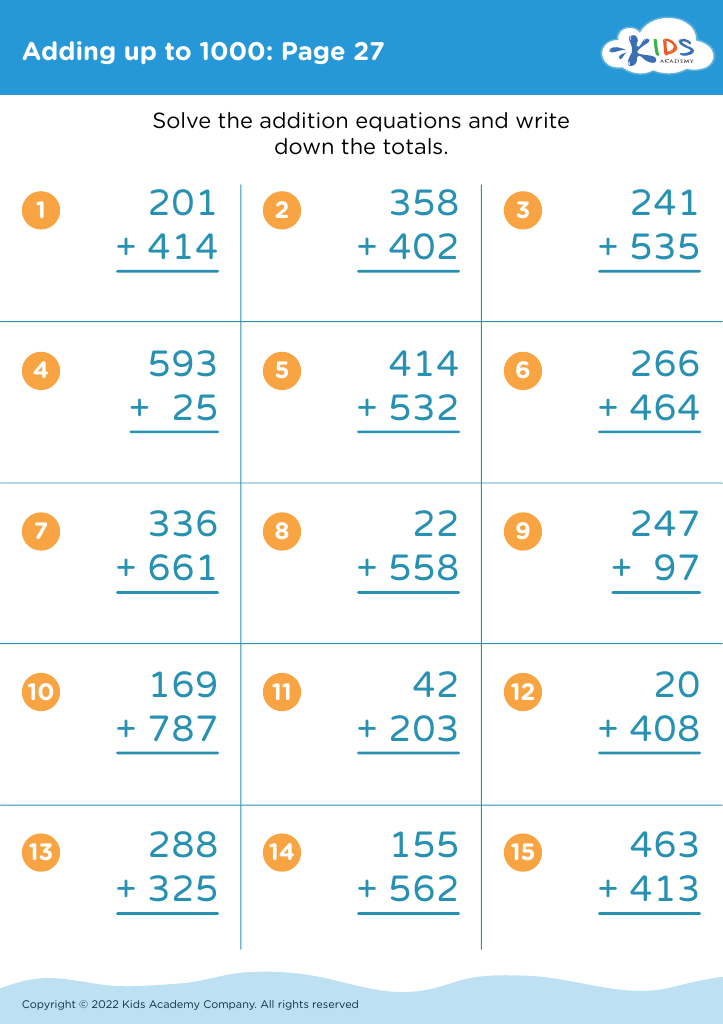
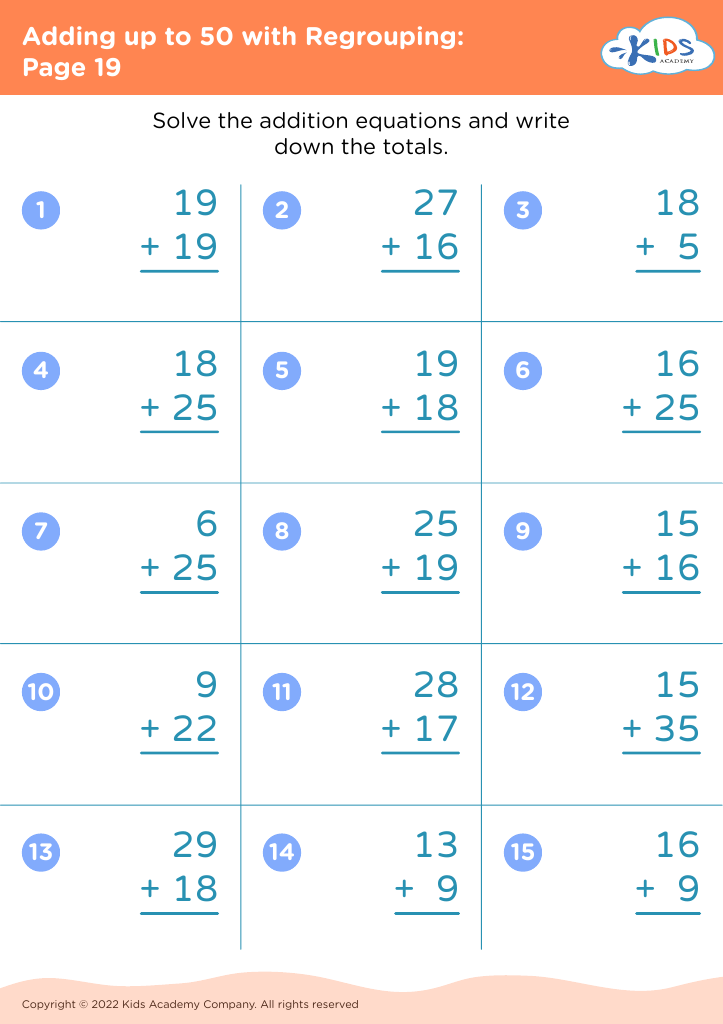
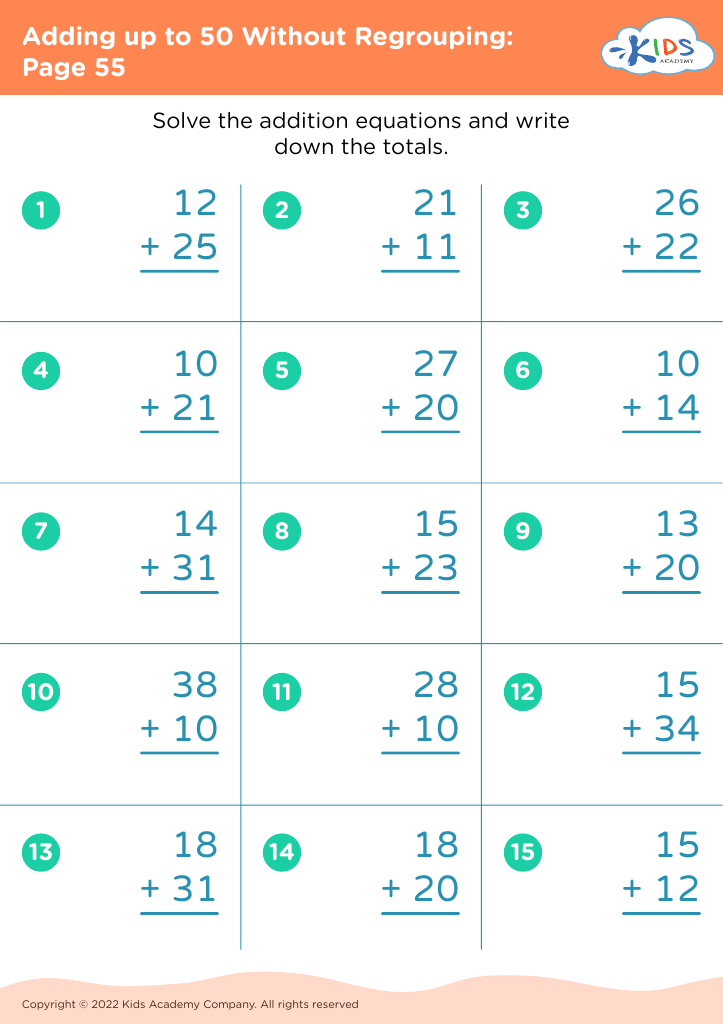
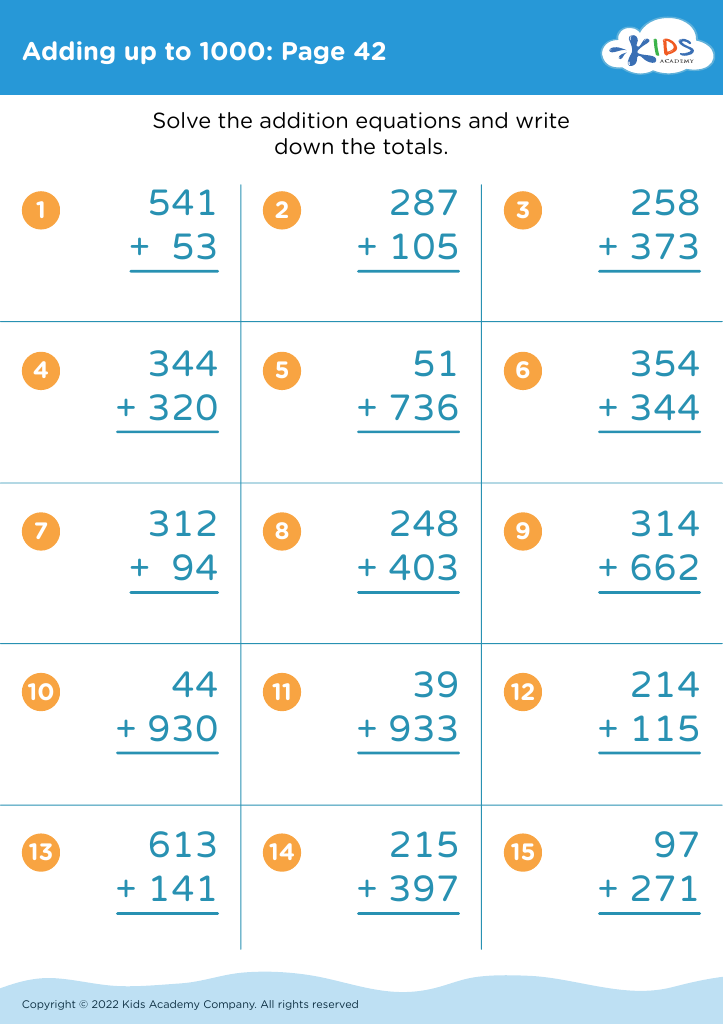
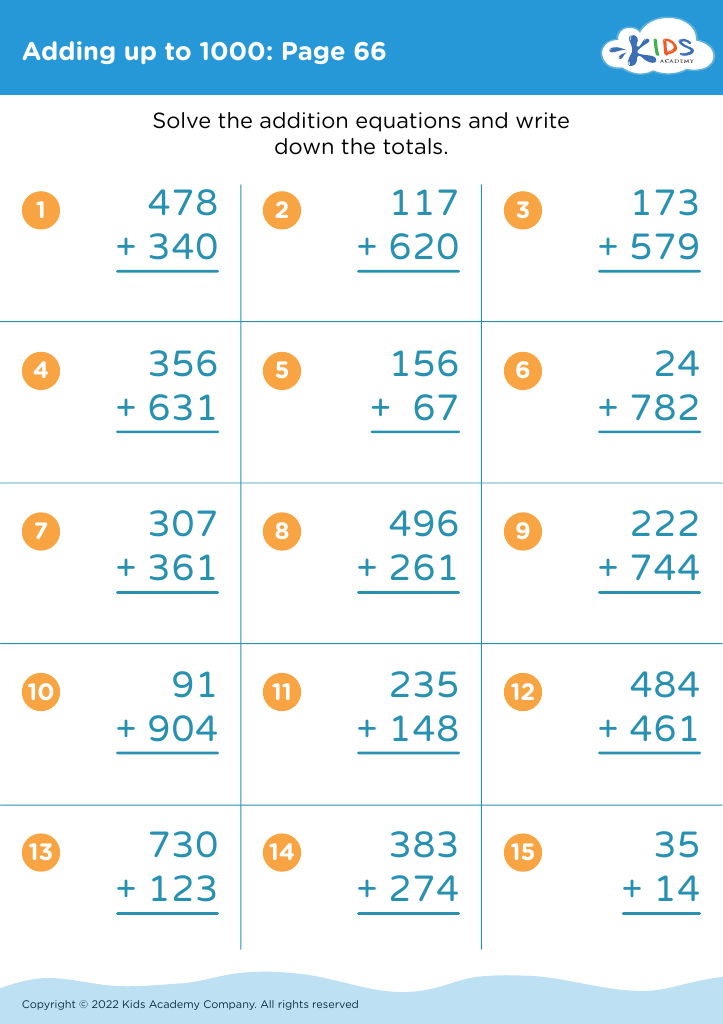
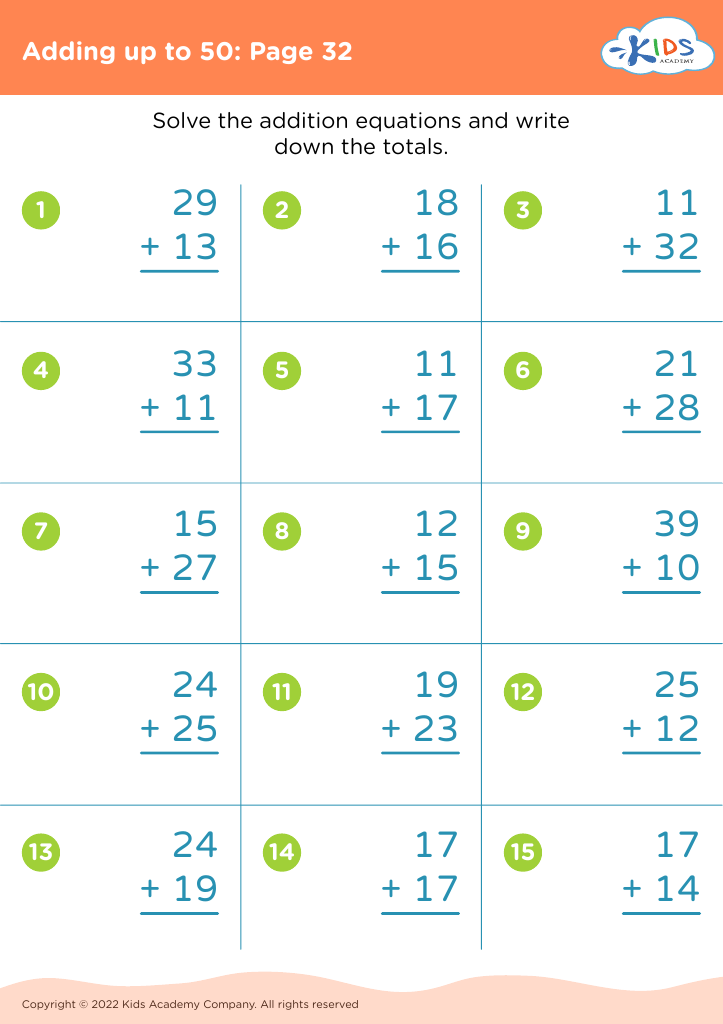








Addition practice for 7-year-olds is crucial for several reasons, making it essential for parents and teachers to prioritize. At this age, children are forming foundational math skills that significantly influence their future academic success. Mastering addition not only enhances their arithmetic abilities but also fosters critical thinking and problem-solving skills.
First, a strong grasp of addition helps build confidence in math, encouraging children to engage in more advanced concepts such as subtraction, multiplication, and division later on. This ensures a smooth transition into higher-level mathematics in later grades. Moreover, mathematics is a cumulative subject; without a solid understanding of addition, students may struggle with more complex operations.
Additionally, engaging in addition practice promotes cognitive development. It strengthens neurological pathways, enhancing memory and concentration. When children regularly practice addition, they become faster and more accurate in their calculations, which is vital for everyday tasks like telling time, budgeting, or measuring.
Moreover, practicing addition can be a fun activity that parents and teachers can do together. Incorporating games and interactive challenges can make math enjoyable, turning learning into a collaborative and motivating experience. By emphasizing addition practice, adults set the stage for lifelong learning and positive attitudes toward mathematics in children.








