Basic counting skills Addition Worksheets for 7-Year-Olds
3 filtered results
-
From - To
Boost your 7-year-old's math proficiency with our Basic Counting Skills Addition Worksheets! Designed to enhance foundational mathematical understanding, these engaging worksheets encourage young learners to practice addition through fun, interactive exercises. Ideal for at-home learning or classroom use, our resources help children develop essential counting skills, recognize numbers, and solve simple addition problems confidently. With colorful illustrations and varied formats, these worksheets not only capture your child's attention but also make learning exciting. Start your child's math journey today: explore our collection of worksheets focused on fostering essential counting and addition skills for young learners!
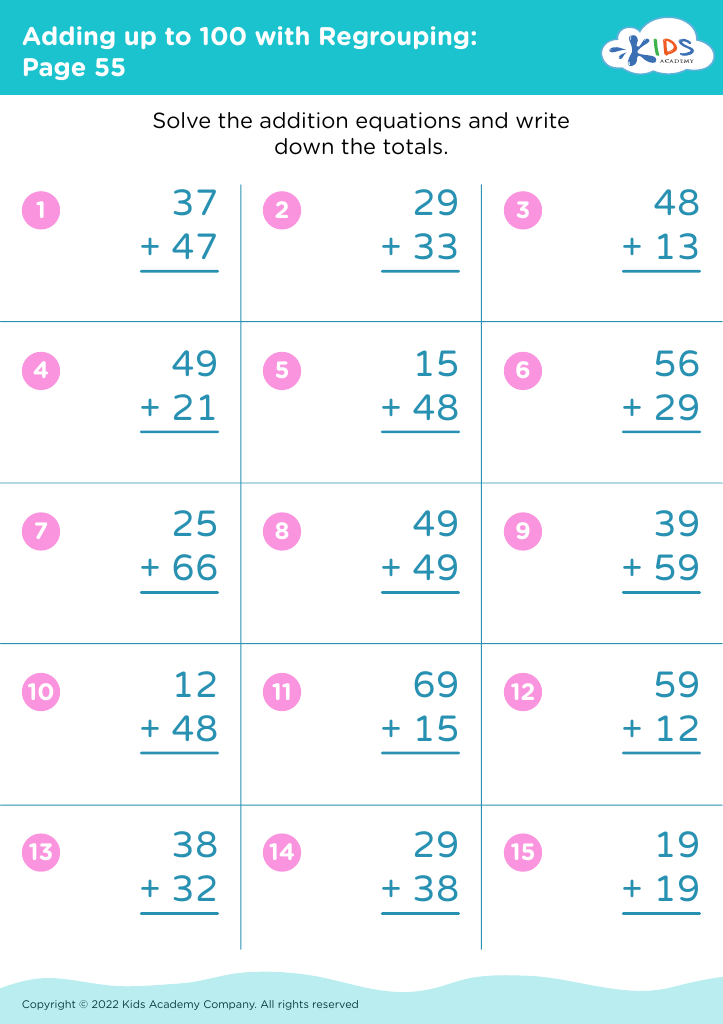
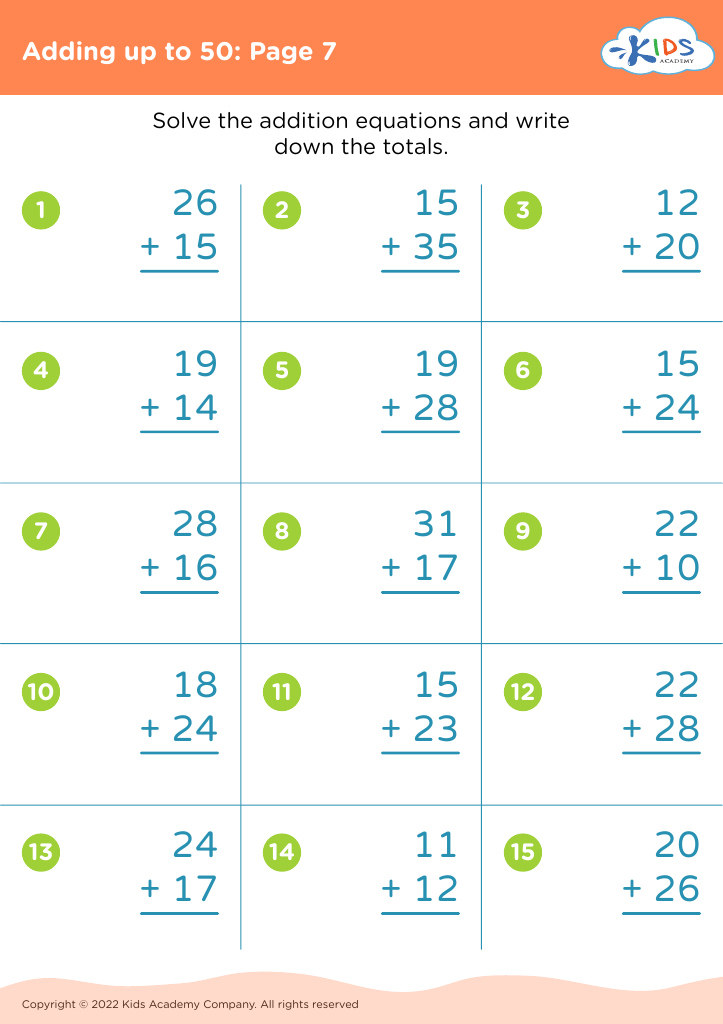
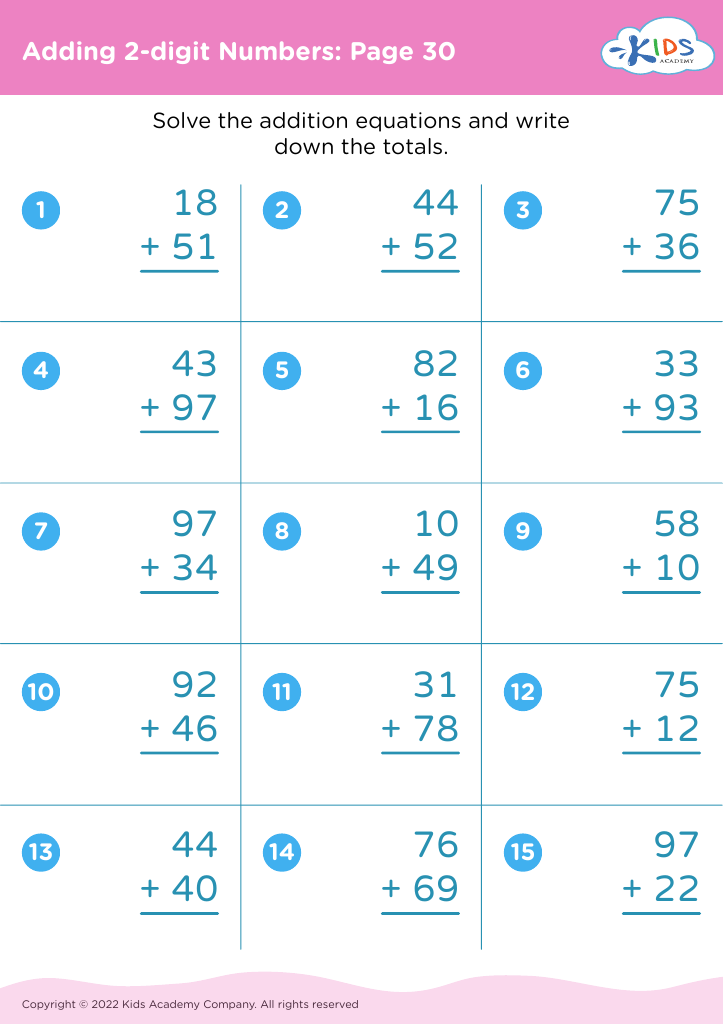





.jpg)


Basic counting skills and addition are foundational for children's overall mathematical understanding. For 7-year-olds, mastering these concepts not only supports their academic success—allowing them to tackle more complex math—but also fosters critical thinking and problem-solving skills. When children are proficient in counting and addition, they gain the ability to manipulate numbers, which is essential for more advanced operations like subtraction, multiplication, and division.
Additionally, counting and addition skills are crucial for everyday life applications. From managing money to measuring ingredients while cooking, these skills empower children to navigate the world around them confidently. Parents and teachers play a vital role in building these skills through engaging activities such as counting games and practical scenarios, which make learning enjoyable and relevant.
Moreover, early mastery enhances self-esteem and motivation in young learners. When children feel competent in these basic skills, they are more likely to develop a positive attitude toward math and learning in general. By prioritizing basic counting skills and addition, parents and teachers set the stage for a child’s academic journey, equipping them with essential tools for future learning and real-life situations. This attention to early education benefits both individuals and society, fostering well-rounded, numerically literate individuals.








