Counting objects Addition Worksheets for 7-Year-Olds
8 filtered results
-
From - To
Introduce your 7-year-old to the exciting world of addition with our Counting Objects Addition Worksheets! These engaging, printable worksheets help young learners develop essential math skills by counting and adding various objects. Each worksheet features vibrant illustrations and interactive exercises designed to captivate children's attention while reinforcing their understanding of addition concepts. These resources support early numeracy skills, making learning fun and enjoyable. Perfect for use at home or in the classroom, our worksheets cater to varied learning styles and ensure each child masters addition with confidence. Start exploring the joy of math through counting today!
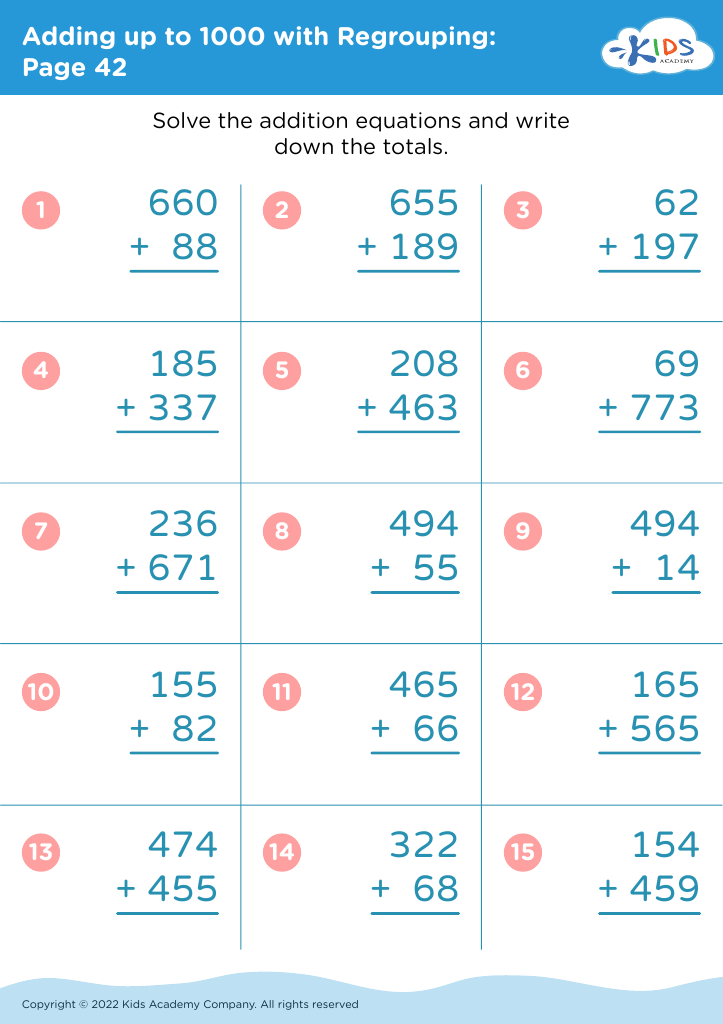
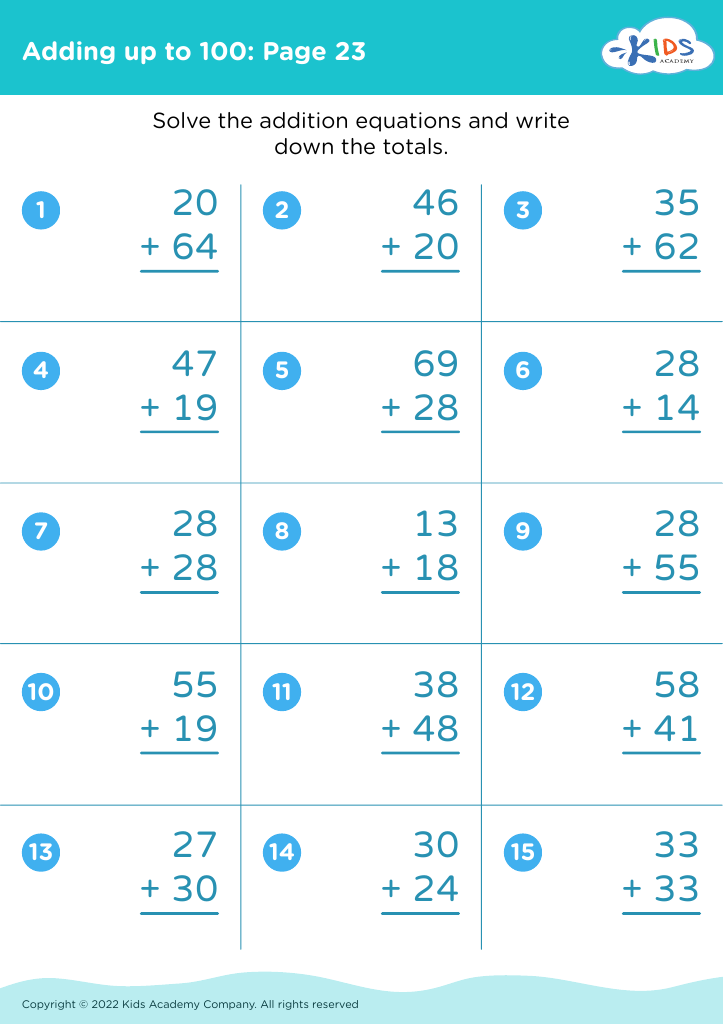
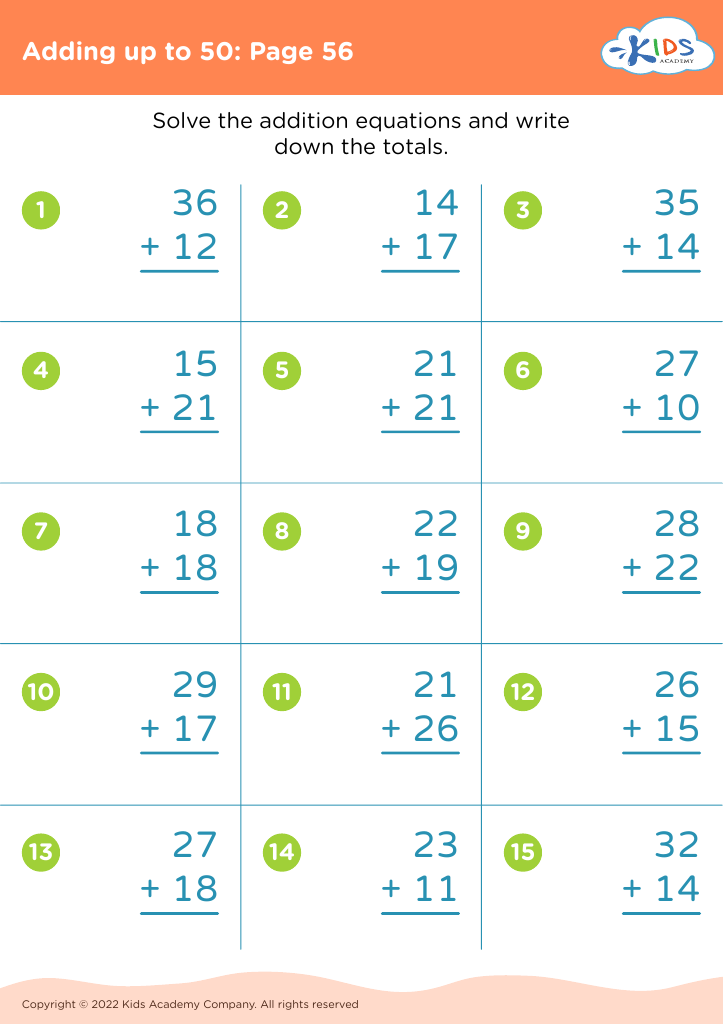
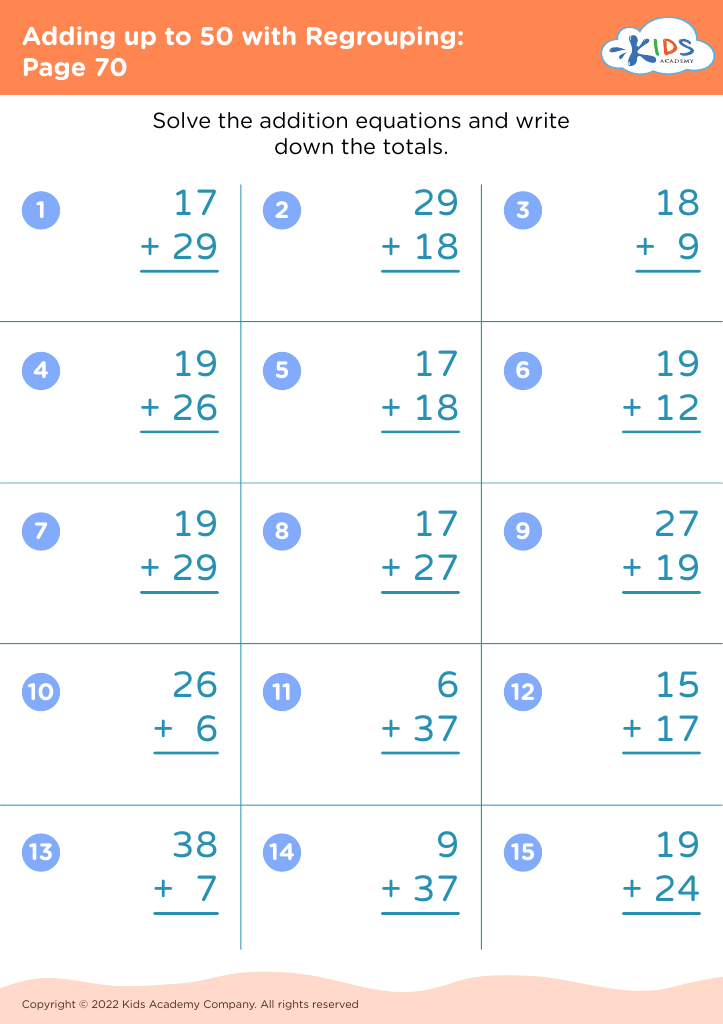
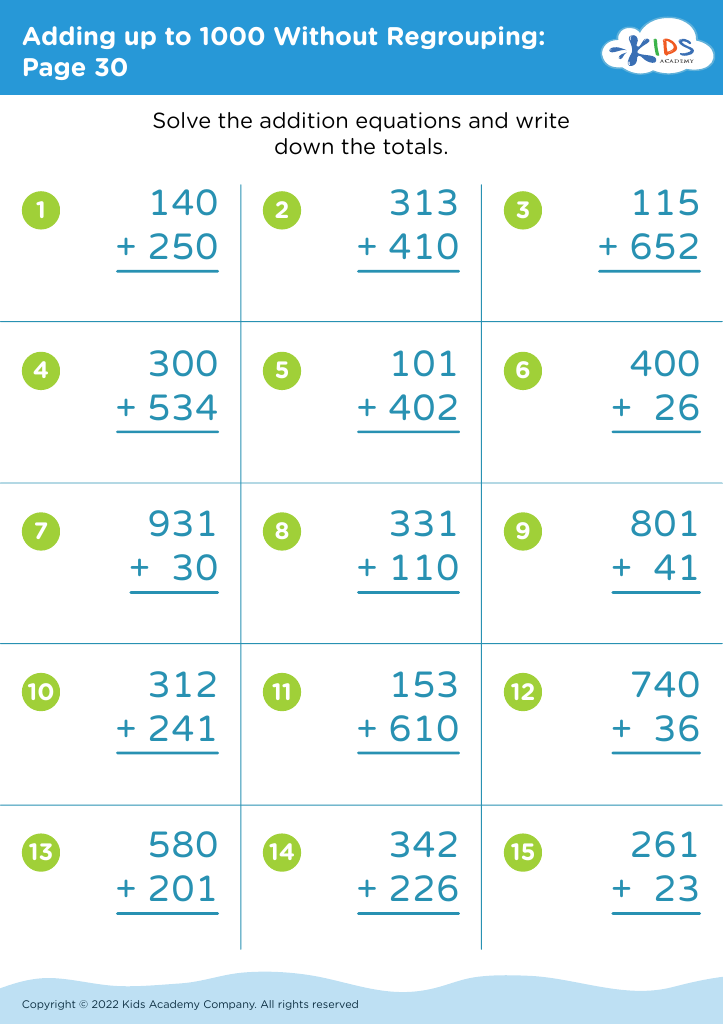
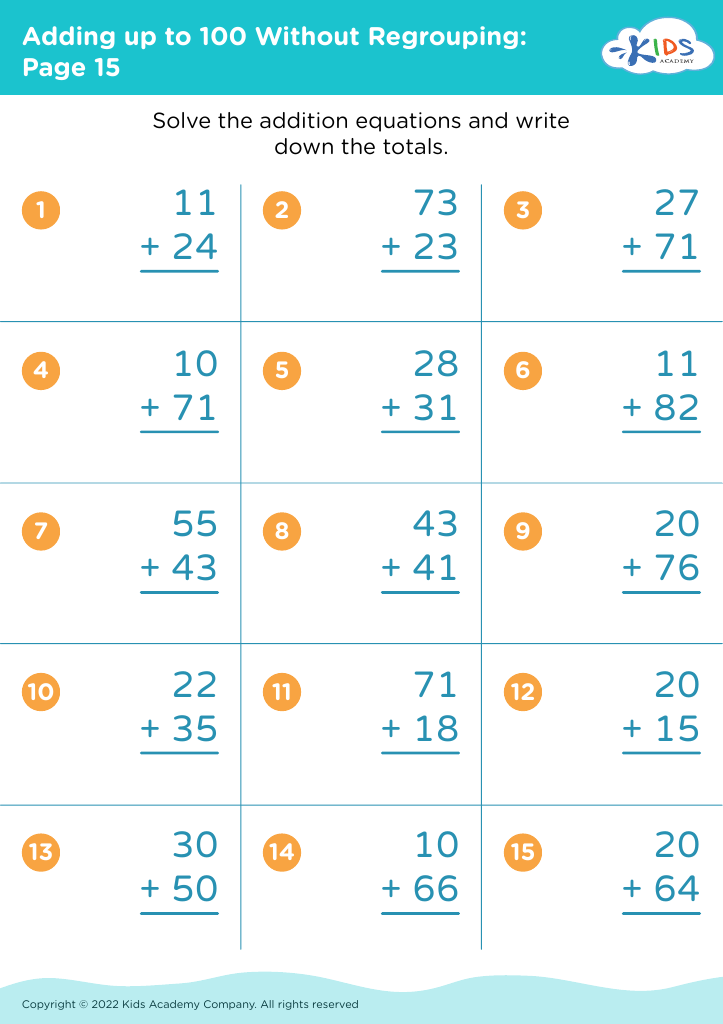
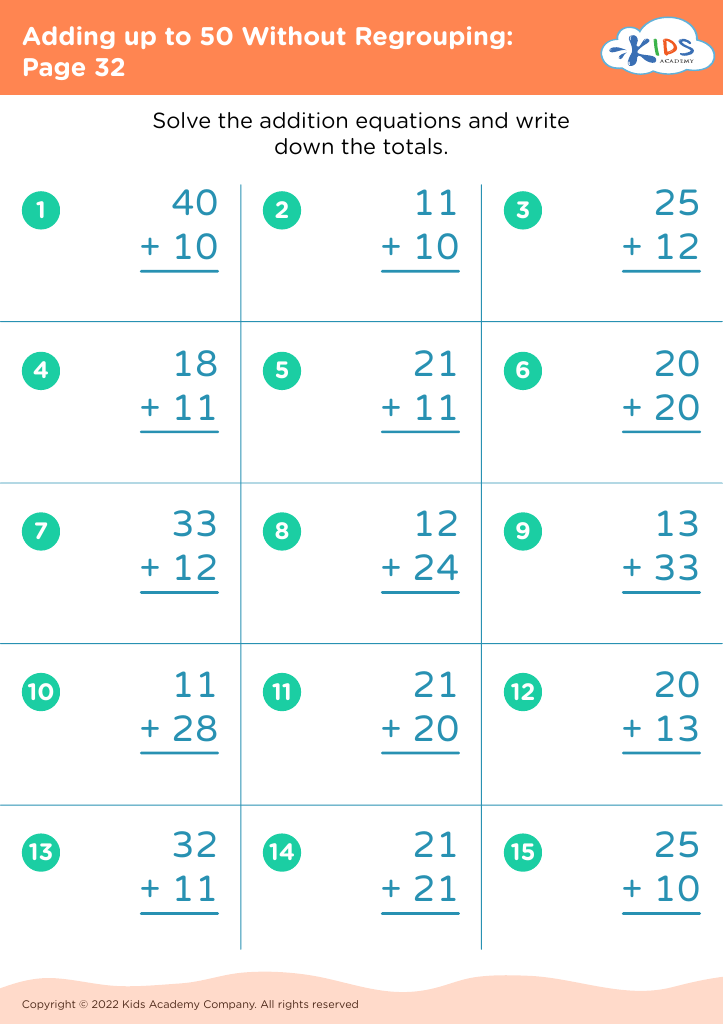
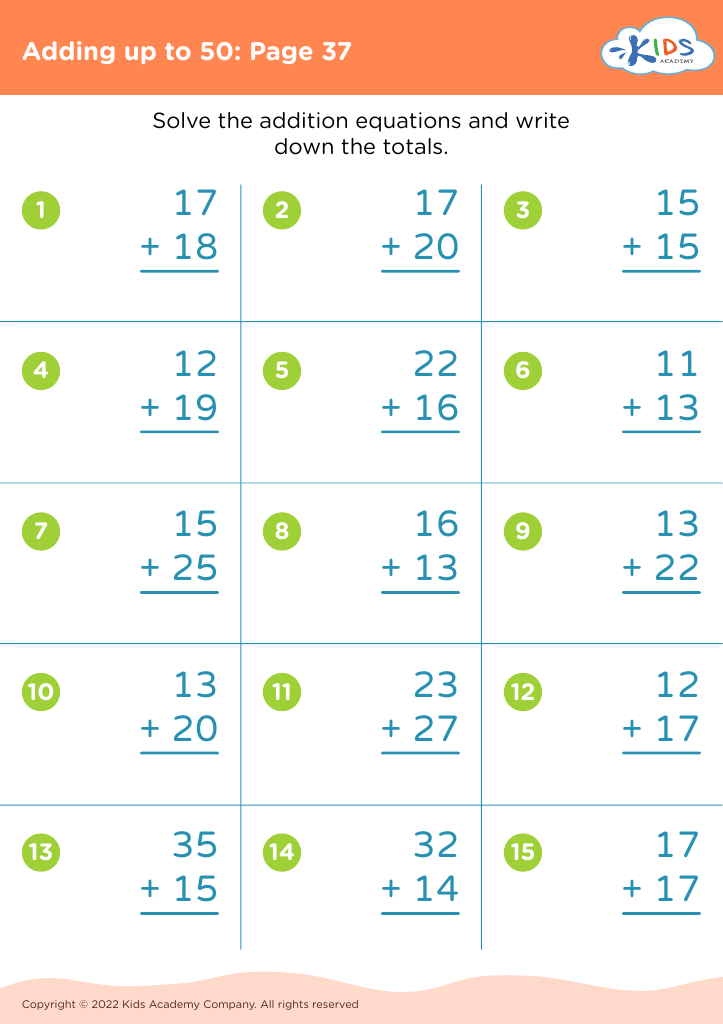








Counting objects and addition are fundamental skills that serve as the building blocks for mathematics. For seven-year-olds, mastering these concepts is crucial for several reasons. First, counting helps children develop their number sense, allowing them to understand quantities and improve their overall mathematical fluency. This skill is not only necessary for addition but also for more complex math operations in later grades.
Moreover, incorporating counting with tangible objects makes learning more engaging and relatable for young children. Hands-on activities involving counting items like toys, fruits, or blocks create opportunities for practical learning and reinforce mathematical concepts in a fun format. These experiences foster critical thinking and problem-solving skills.
Additionally, early proficiency in counting and addition boosts a child's confidence. Success in these foundational skills sets the tone for their future academic performance and instills a positive attitude towards math. When children feel confident in their abilities, they are more likely to tackle more complex topics with enthusiasm.
Lastly, parental and teacher involvement is essential in this learning process. Collaborative efforts support children’s understanding, making it a shared journey that can enhance family bonds and teacher-student relationships. Thus, the importance of counting objects and addition transcends mere arithmetic; it is integral to a child’s holistic development.








