Filters

52 filtered results

Clear all filters
Favorites
With answer key
Interactive

52 filtered results

Difficulty Level

Grade


Welcome to our Counting Practice Addition Worksheets for 7-Year-Olds! Designed to enhance early math skills, these worksheets provide engaging and interactive activities that make learning addition fun. Perfect for developing your child’s counting abilities, they cover a variety of topics, including basic addition, number recognition, and problem-solving strategies. Each worksheet is tailored to meet the learning needs of 7-year-olds, fostering confidence and proficiency in math. With vibrant illustrations and relatable themes, your child will enjoy practicing essential skills that lay the foundation for future math success. Download now and watch your little one thrive in their counting journey!
Check out this FREE Trial Lesson on Addition for age 7!

L

Favorites
With answer key
Interactive
  • 7
  • Counting practice
  • Addition
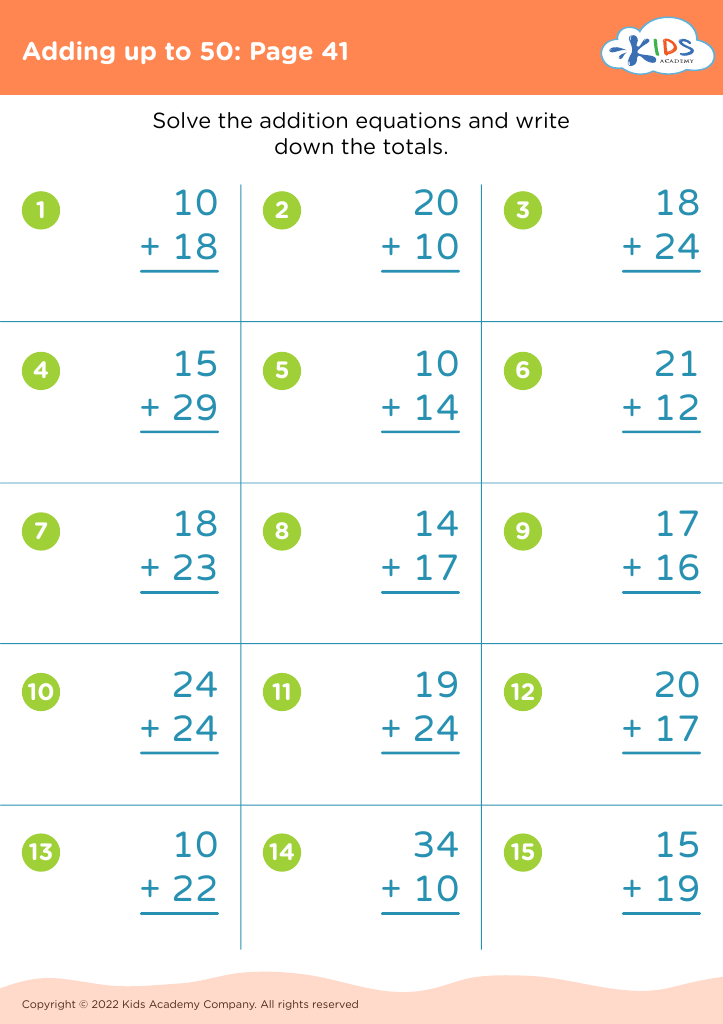
Adding up to 50: Page 41

Adding up to 50: Page 41

Adding up to 50: Page 41
Worksheet
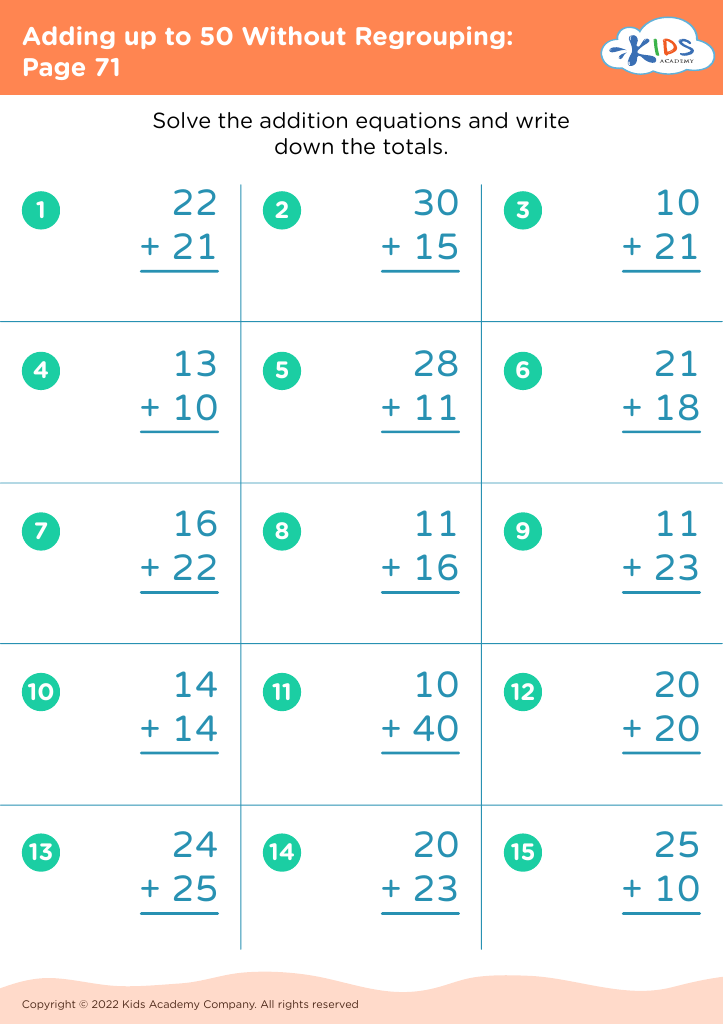
Adding up to 50 Without Regrouping: Page 71
Worksheet
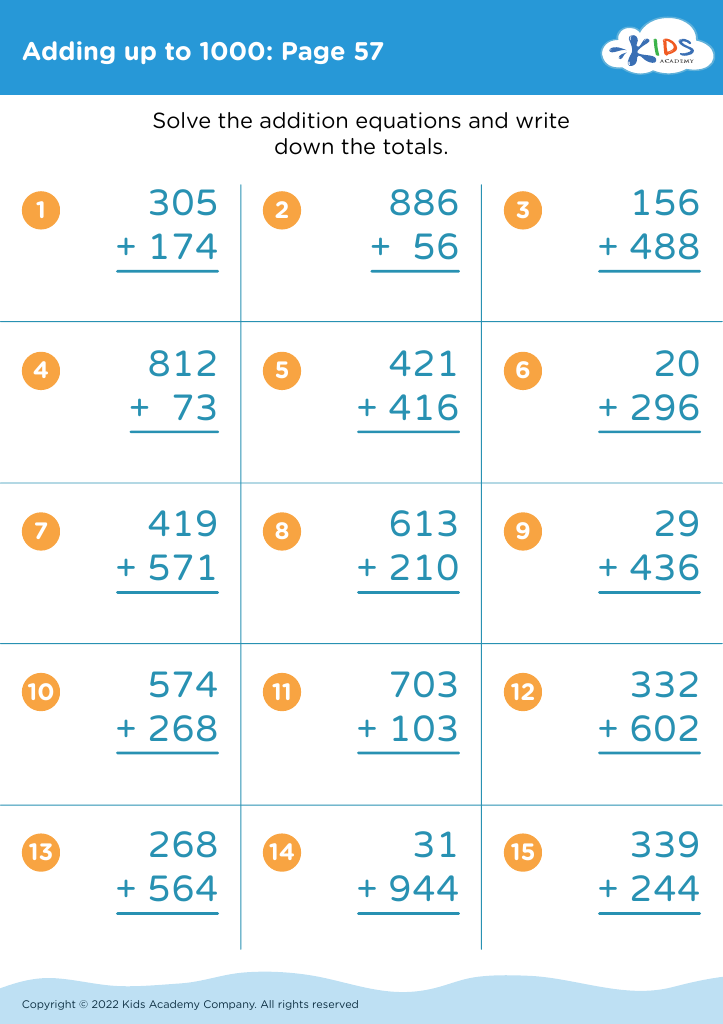
Adding up to 1000: Page 57

Adding up to 1000: Page 57

Adding up to 1000: Page 57
Worksheet
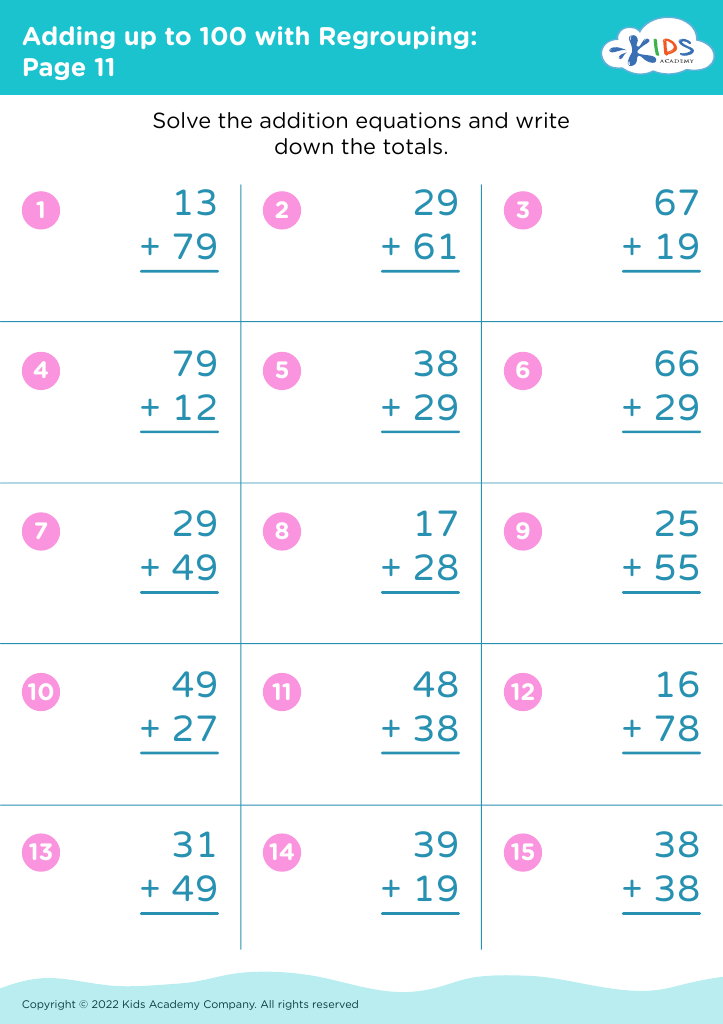
Adding up to 100 with Regrouping: Page 11
Worksheet
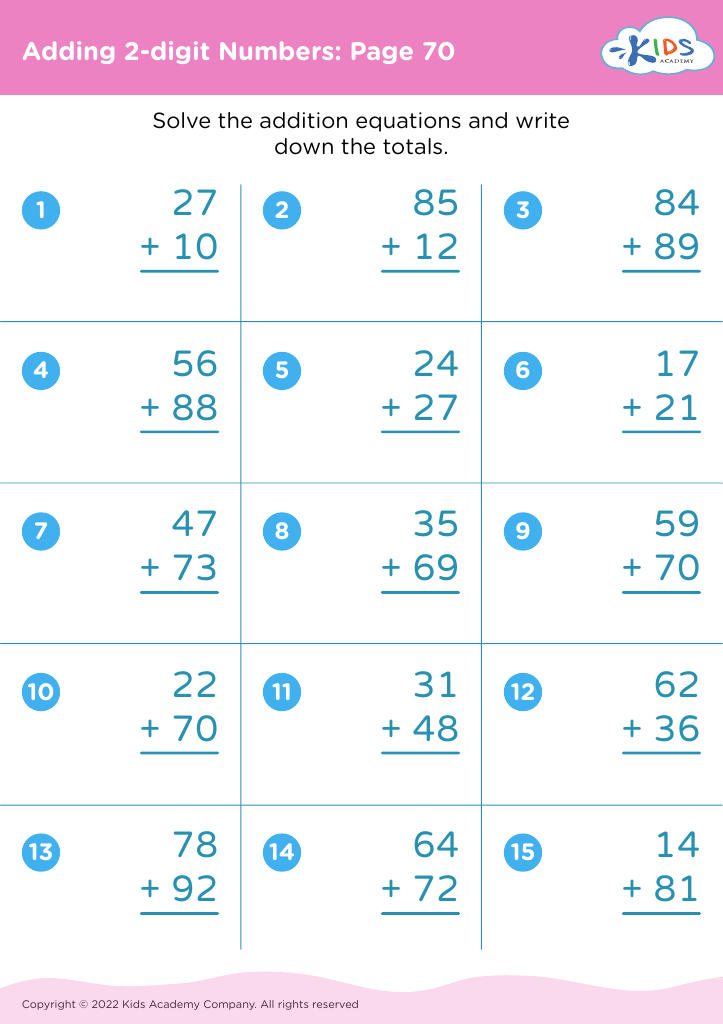
Adding 2-digit Numbers: Page 70

Adding 2-digit Numbers: Page 70

Adding 2-digit Numbers: Page 70
Worksheet
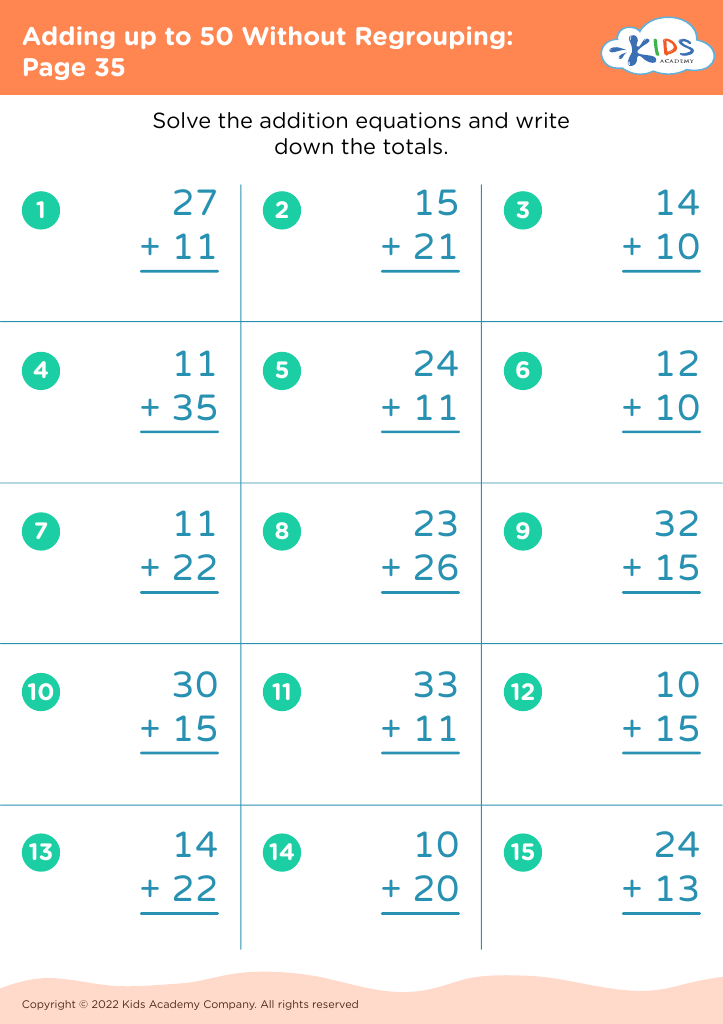
Adding up to 50 Without Regrouping: Page 35
Worksheet
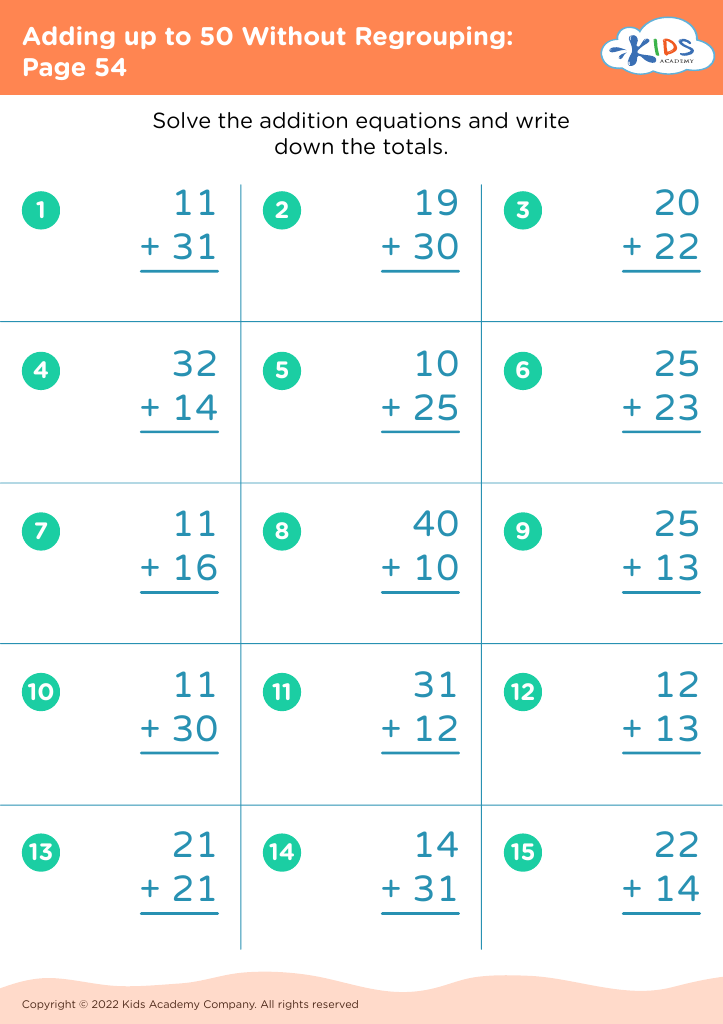
Adding up to 50 Without Regrouping: Page 54
Worksheet
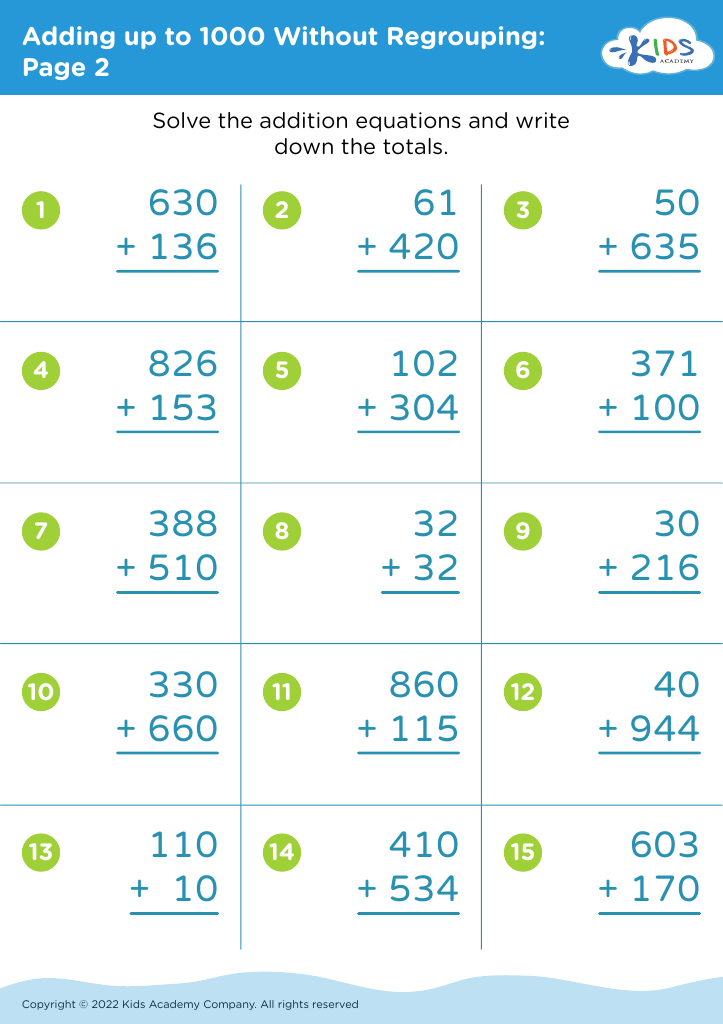
Adding up to 1000 Without Regrouping: Page 2
Worksheet
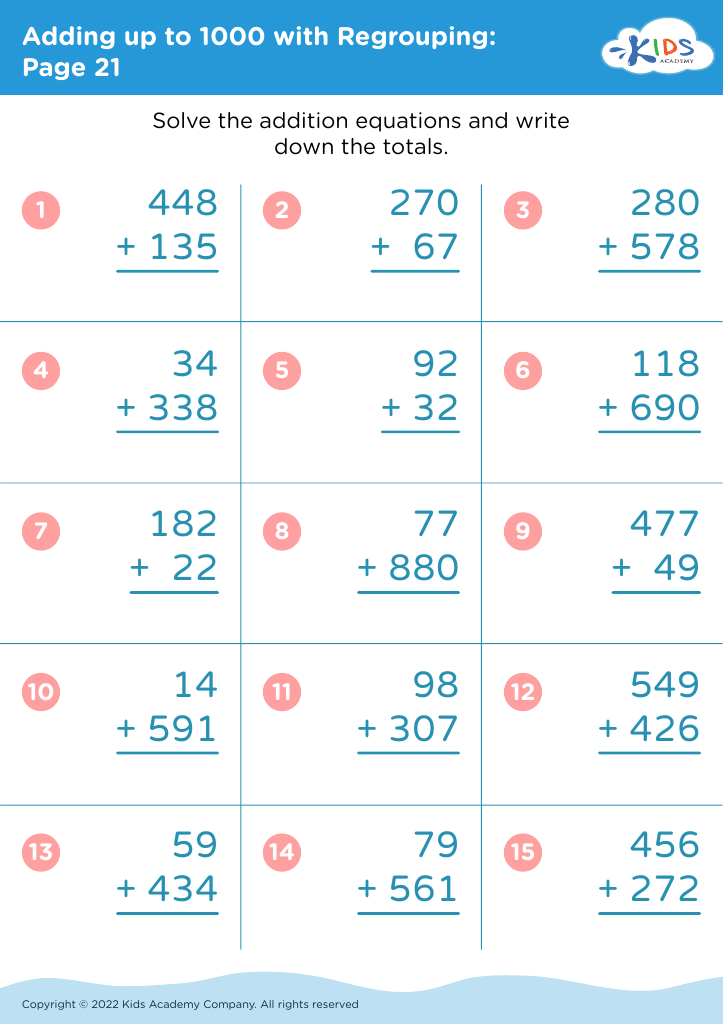
Adding up to 1000 with Regrouping: Page 21
Worksheet
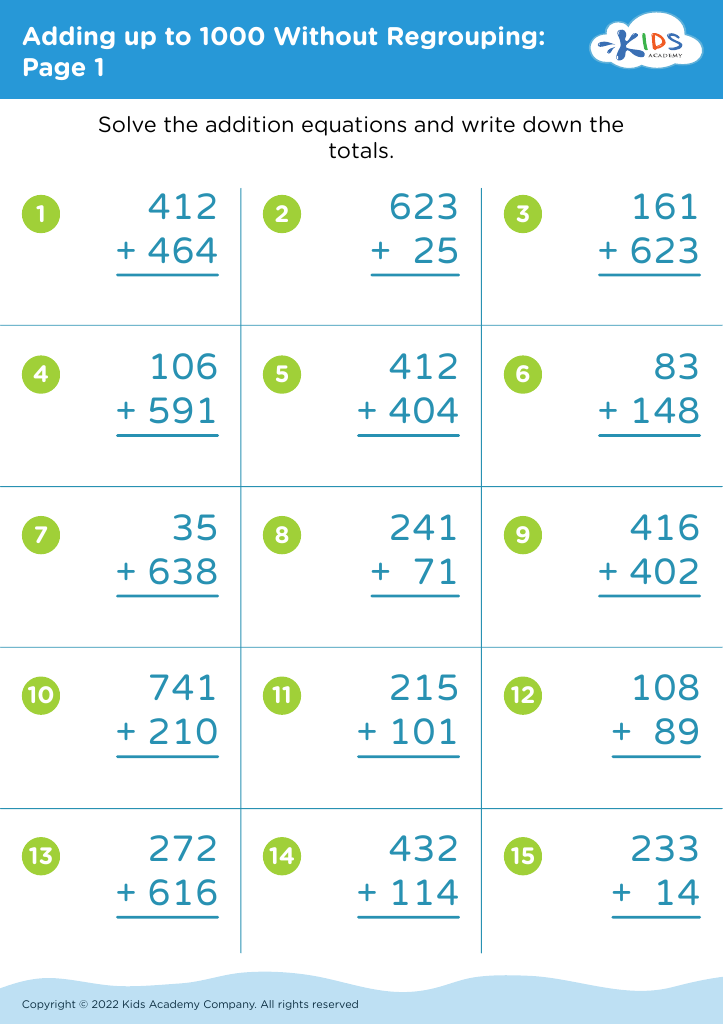
Adding up to 1000 Without Regrouping: Page 1
Worksheet
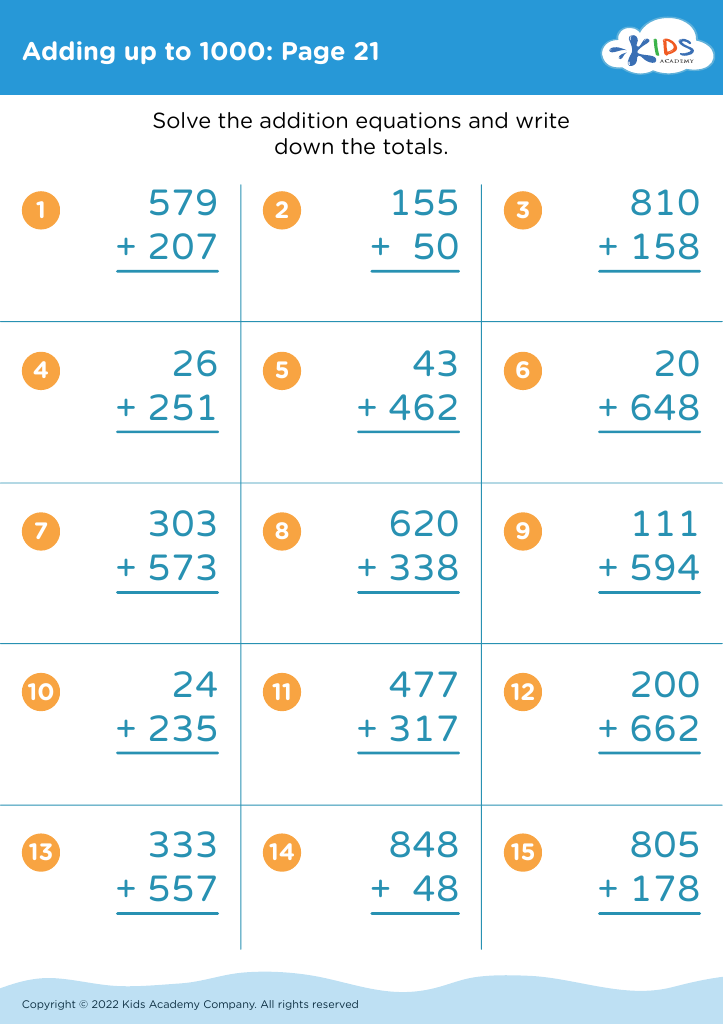
Adding up to 1000: Page 21

Adding up to 1000: Page 21

Adding up to 1000: Page 21
Worksheet
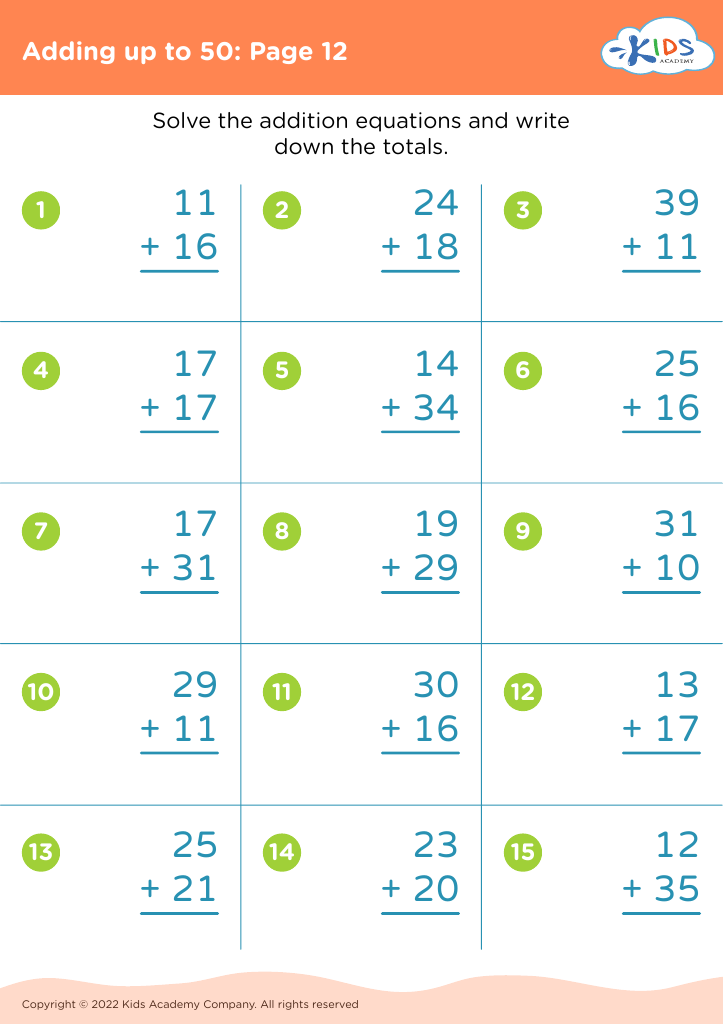
Adding up to 50: Page 12

Adding up to 50: Page 12

Adding up to 50: Page 12
Worksheet
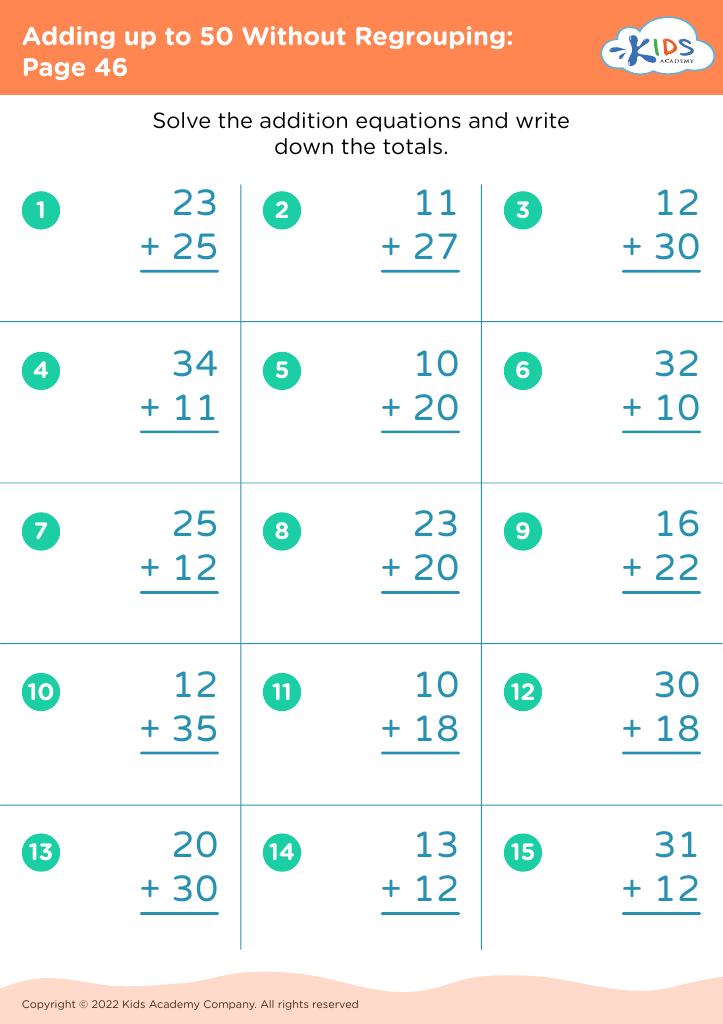
Adding up to 50 Without Regrouping: Page 46
Worksheet
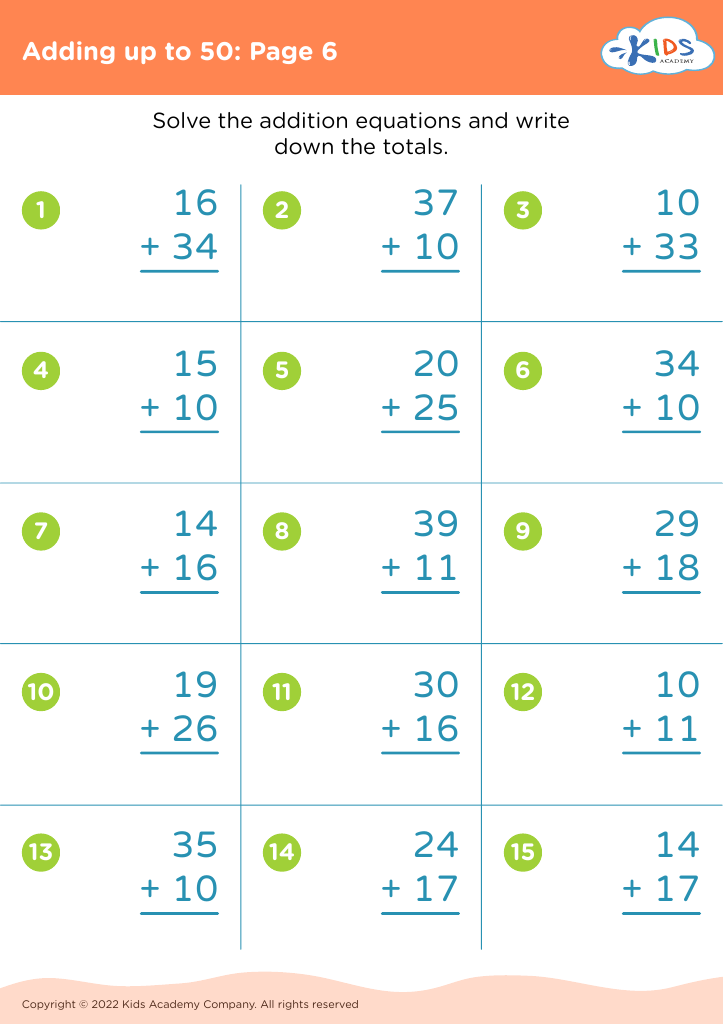
Adding up to 50: Page 6

Adding up to 50: Page 6

Adding up to 50: Page 6
Worksheet
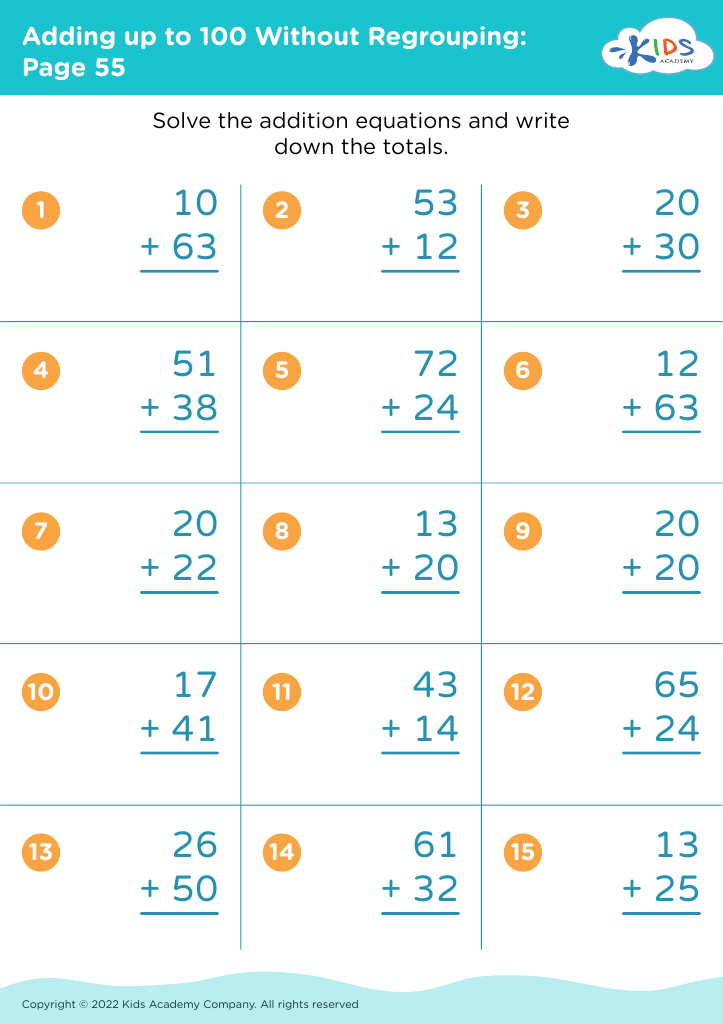
Adding up to 100 Without Regrouping: Page 55
Worksheet
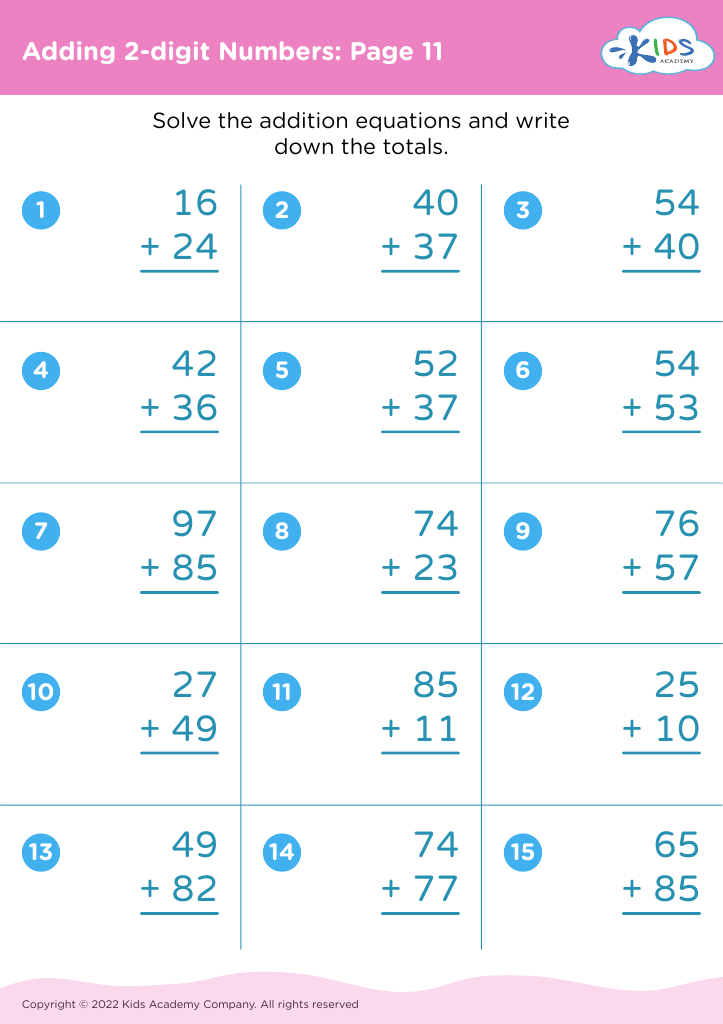
Adding 2-digit Numbers: Page 11

Adding 2-digit Numbers: Page 11

Adding 2-digit Numbers: Page 11
Worksheet
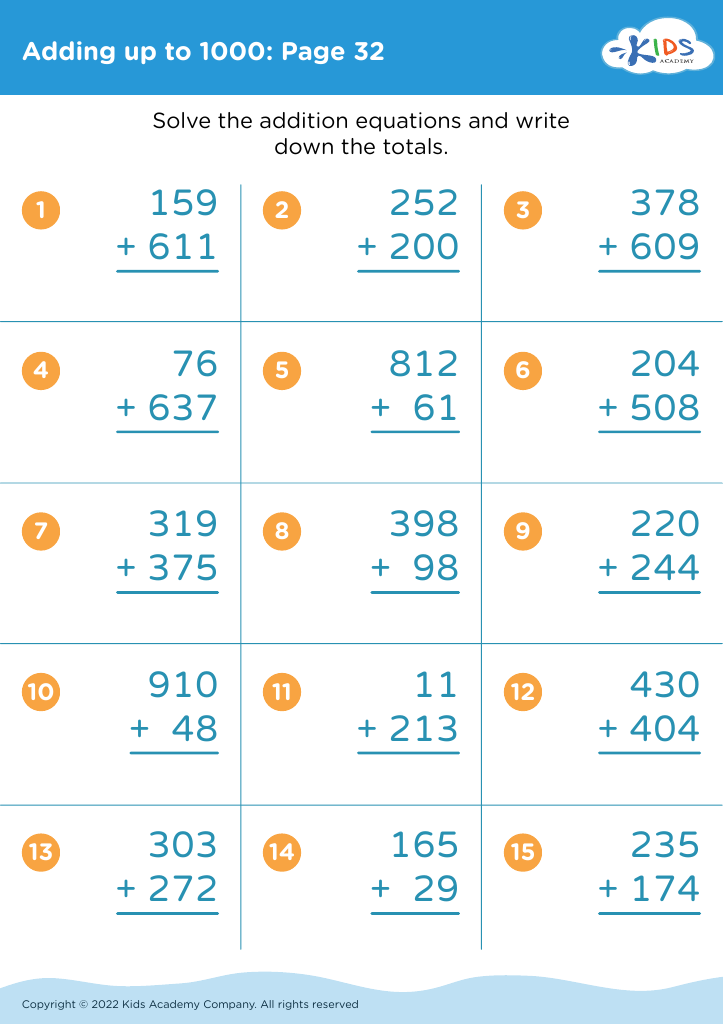
Adding up to 1000: Page 32

Adding up to 1000: Page 32

Adding up to 1000: Page 32
Worksheet
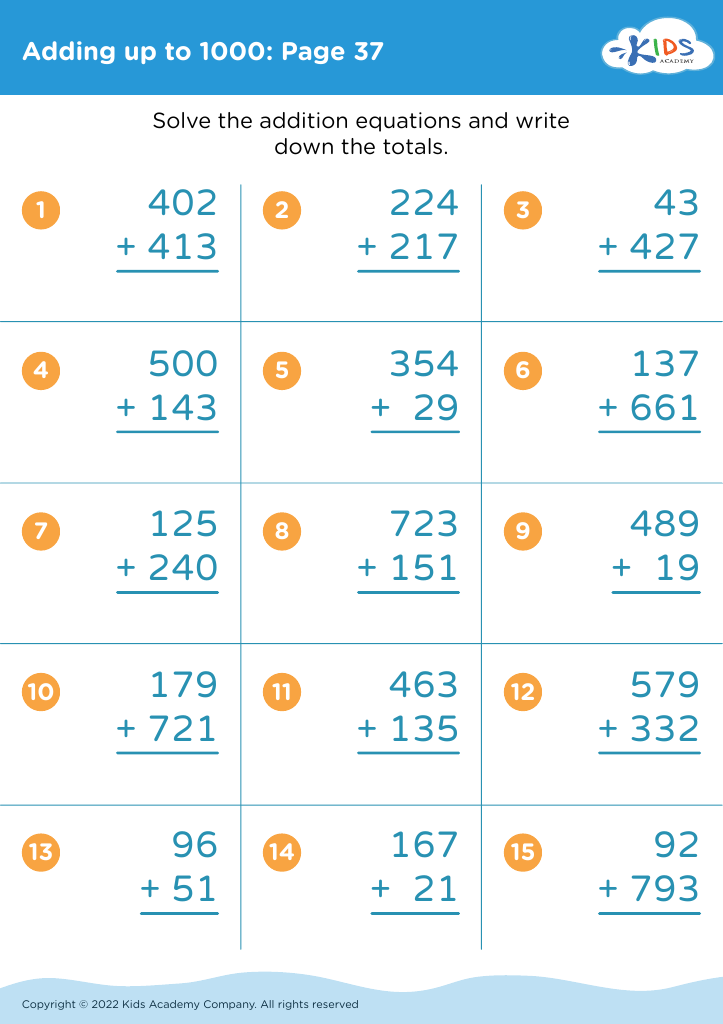
Adding up to 1000: Page 37

Adding up to 1000: Page 37

Adding up to 1000: Page 37
Worksheet
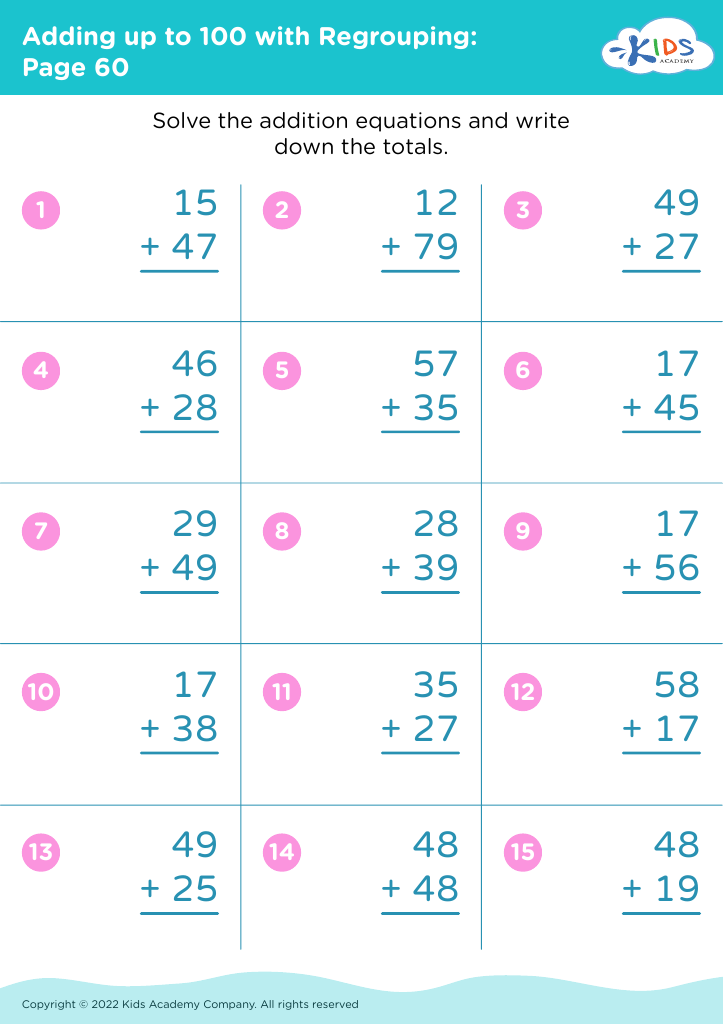
Adding up to 100 with Regrouping: Page 60
Worksheet
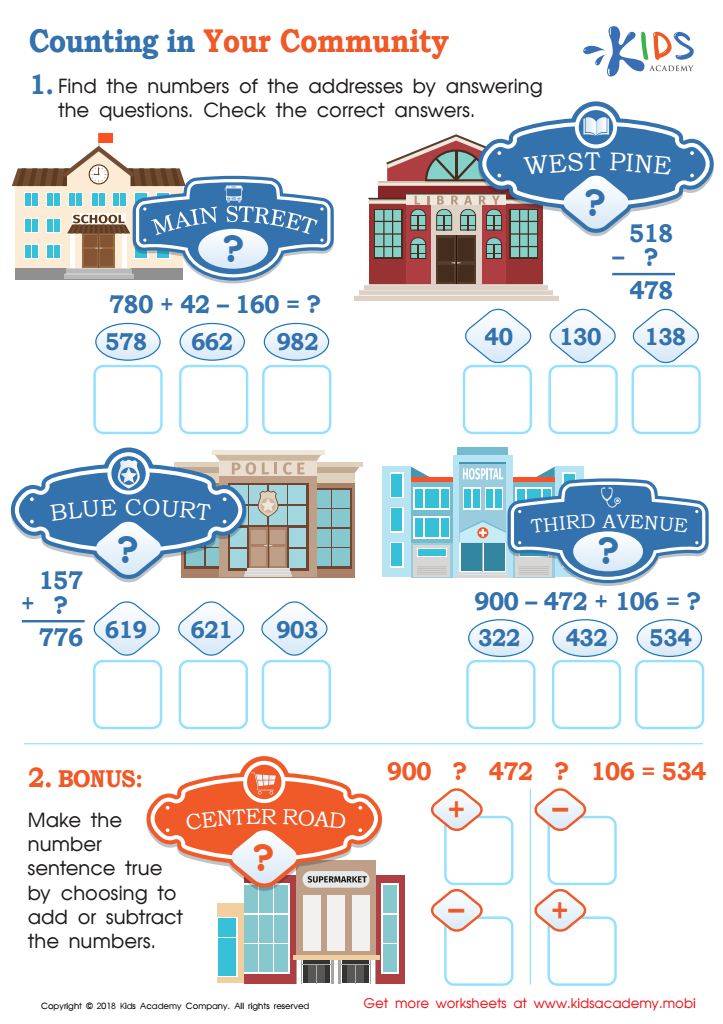
Counting in Your Community Worksheet

Counting in Your Community Worksheet

Introduce your kids to the idea of a community, where different people and buildings co-exist, each playing their part for the community's progress. Ask them to name the buildings they see in their community. Then work through this worksheet to find the numbers of the addresses by answering the questions. Check the answers once they've solved the equations.
Counting in Your Community Worksheet
Worksheet
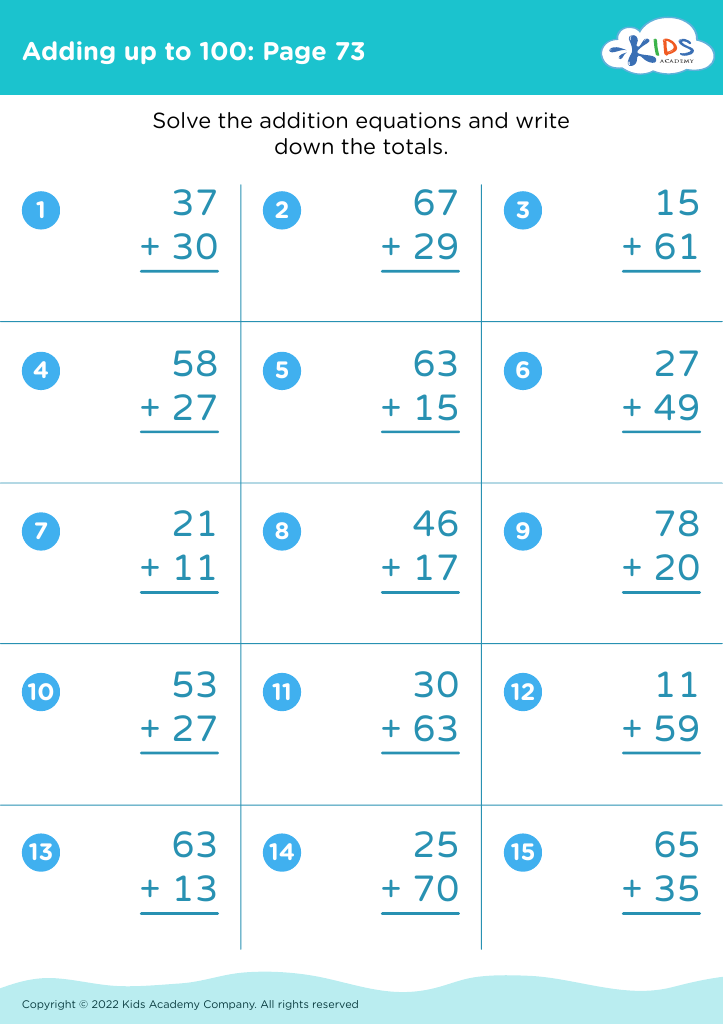
Adding up to 100: Page 73

Adding up to 100: Page 73

Adding up to 100: Page 73
Worksheet
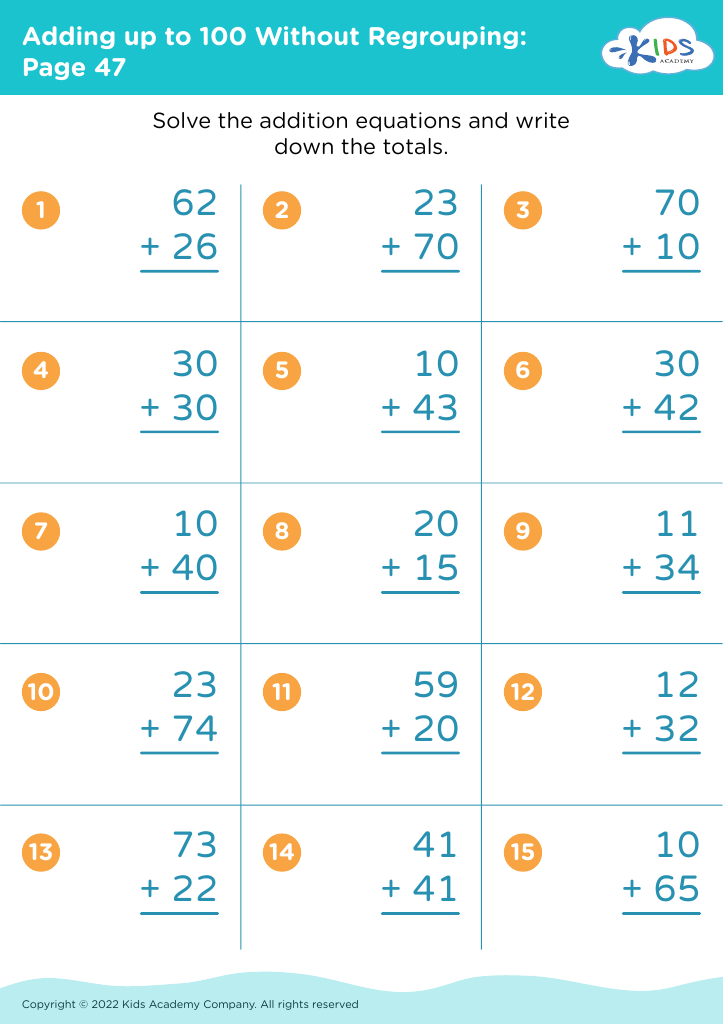
Adding up to 100 Without Regrouping: Page 47
Worksheet
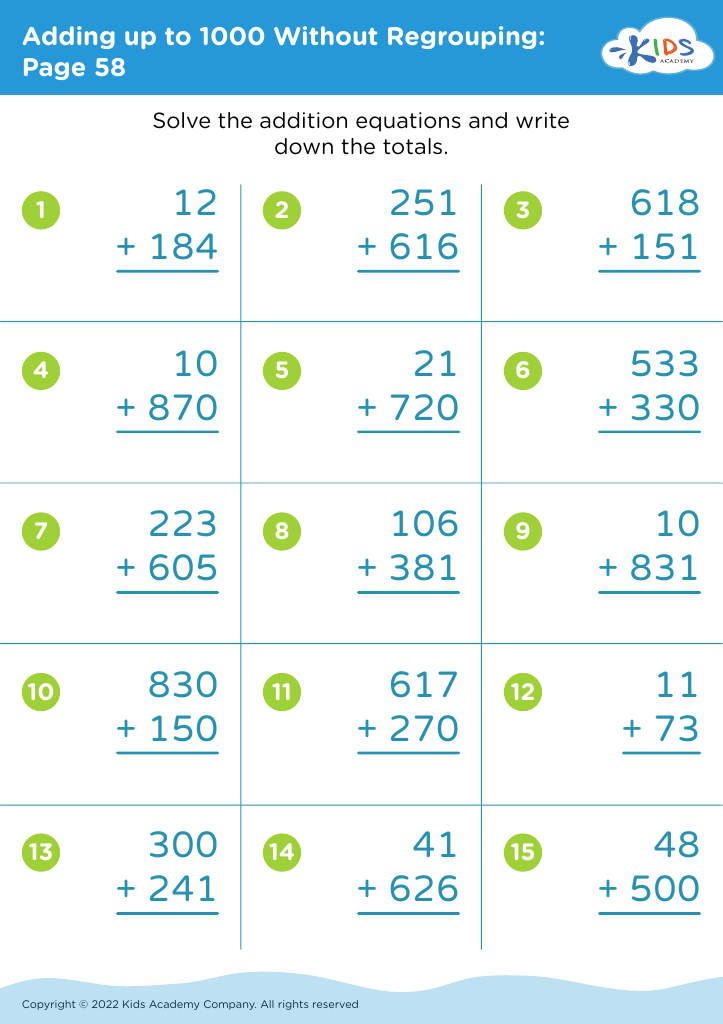
Adding up to 1000 Without Regrouping: Page 58
Worksheet
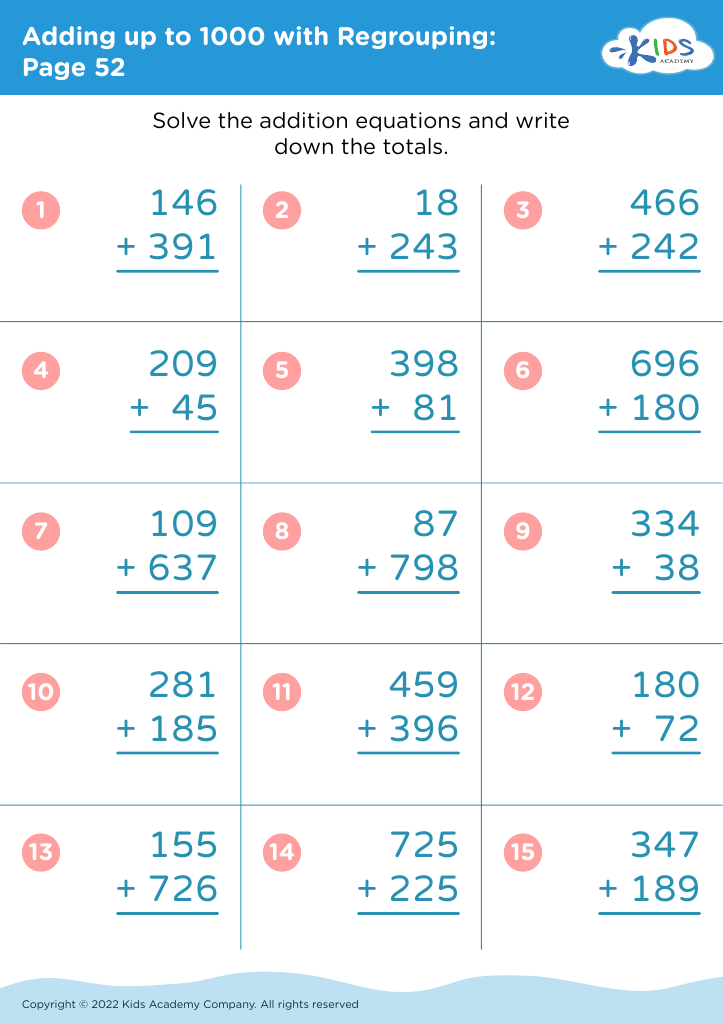
Adding up to 1000 with Regrouping: Page 52
Worksheet


Counting practice and addition skills are fundamental components of early mathematics education, particularly for 7-year-olds, who are typically in the second grade. At this age, children are developing critical thinking and problem-solving abilities, and mastering these foundational skills can significantly impact their overall academic performance.

Firstly, counting practice enhances children’s number sense, helping them to understand quantities, relationships between numbers, and the stability of numerical patterns. This understanding serves as the backbone for more advanced mathematical concepts that they will encounter in later grades, such as subtraction, multiplication, and division.

Moreover, strong addition skills can build a child's confidence. Success in counting and basic math can encourage children to approach more complex problems with a positive attitude, reducing math anxiety, which is prevalent in many learners.

Additionally, parents and teachers play a critical role in fostering a child's enthusiasm for mathematics through engaging activities, manipulatives, and games that emphasize counting and addition. Reinforcing these skills at home and in the classroom cultivates a supportive learning environment, promoting collaboration between educators and families. Ultimately, investing in counting practice and addition will cultivate a lasting love for mathematics and set children on a path to academic success.