Counting practice Addition Worksheets for 7-Year-Olds - Page 2
52 filtered results
-
From - To
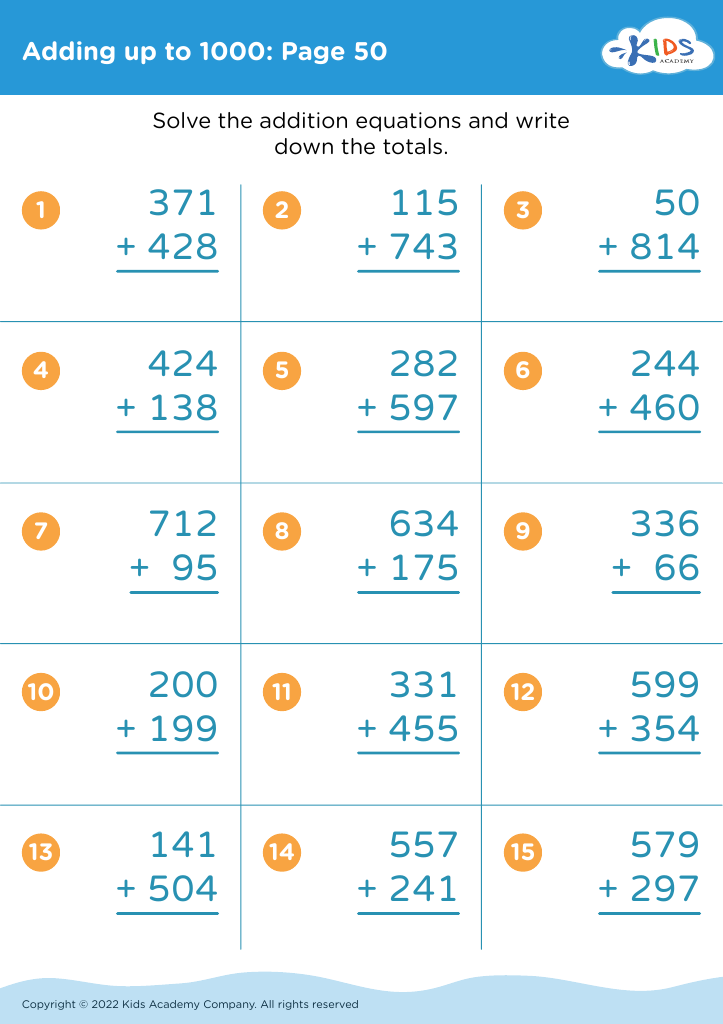
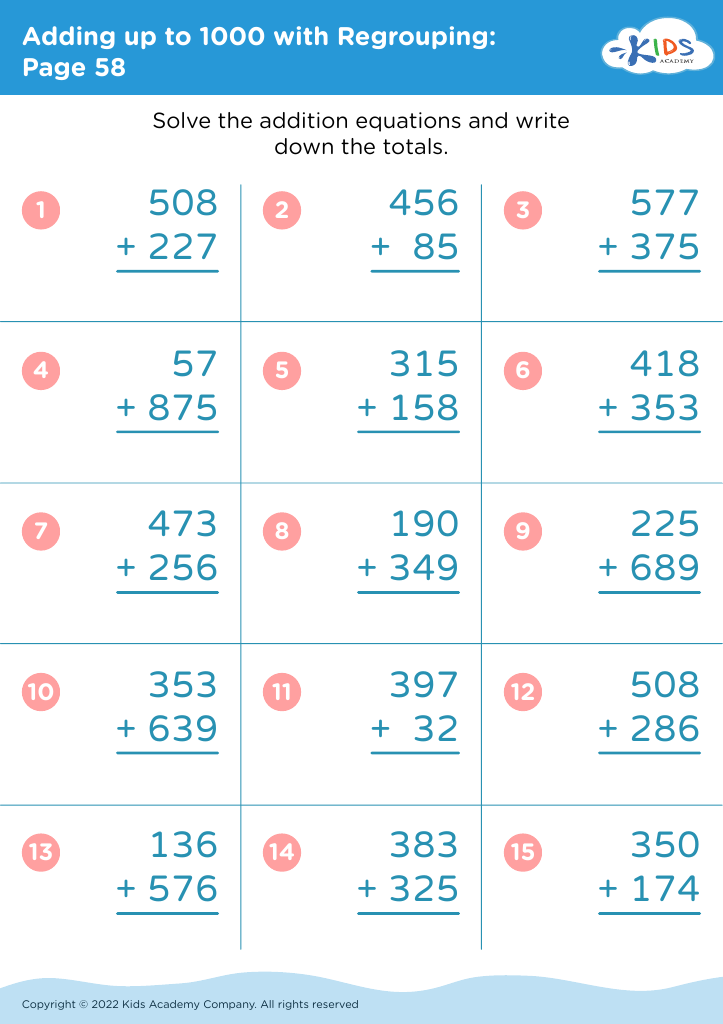
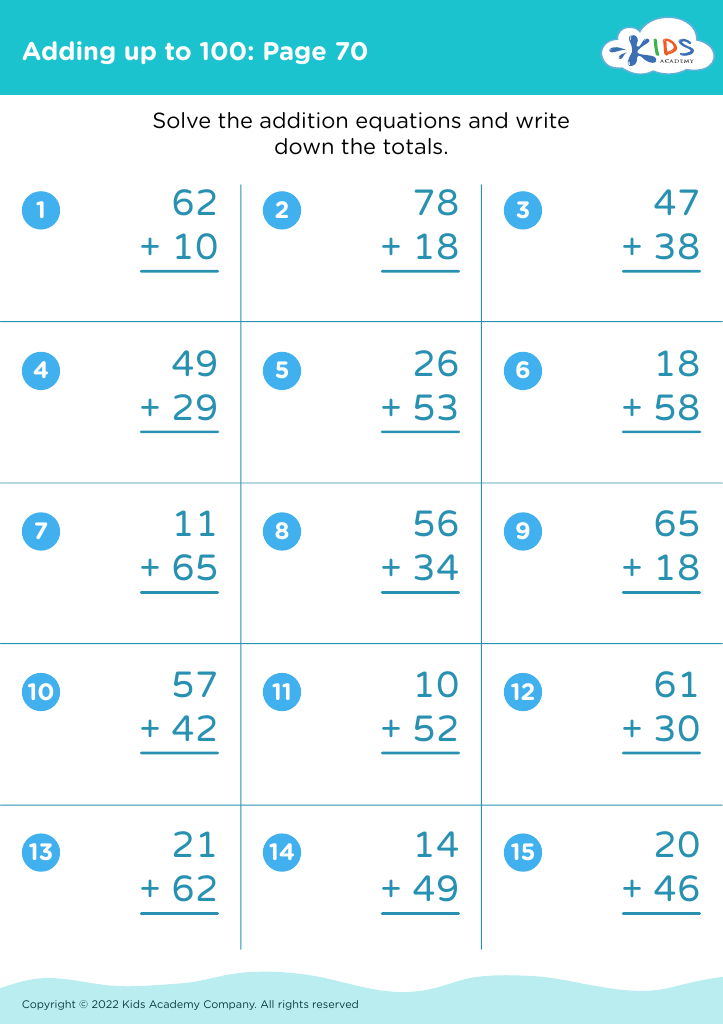
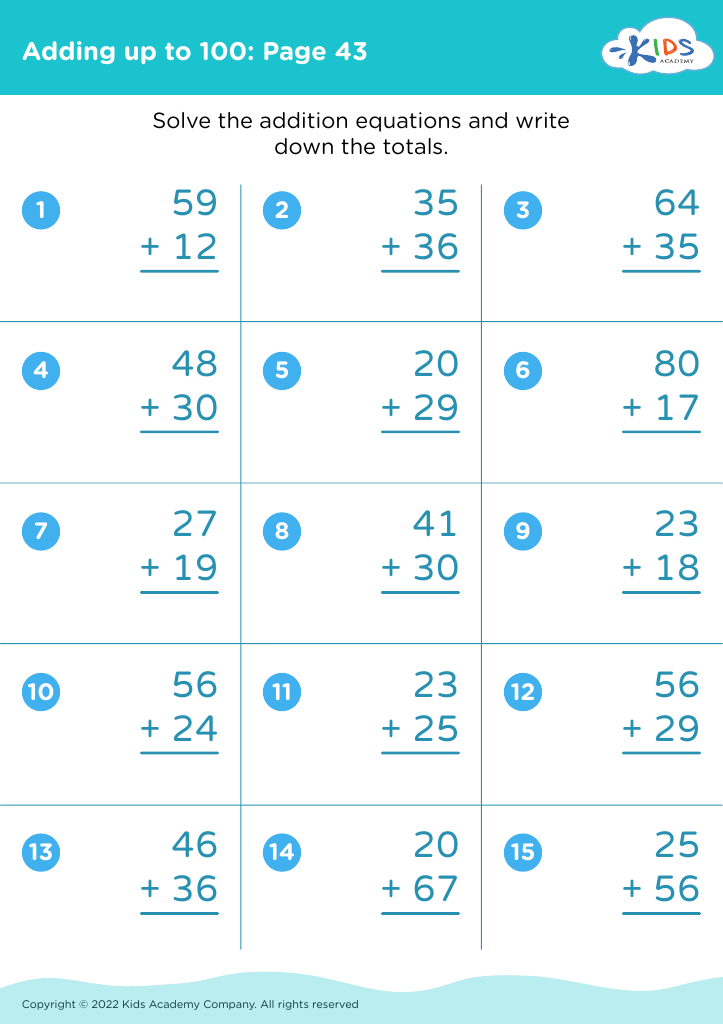
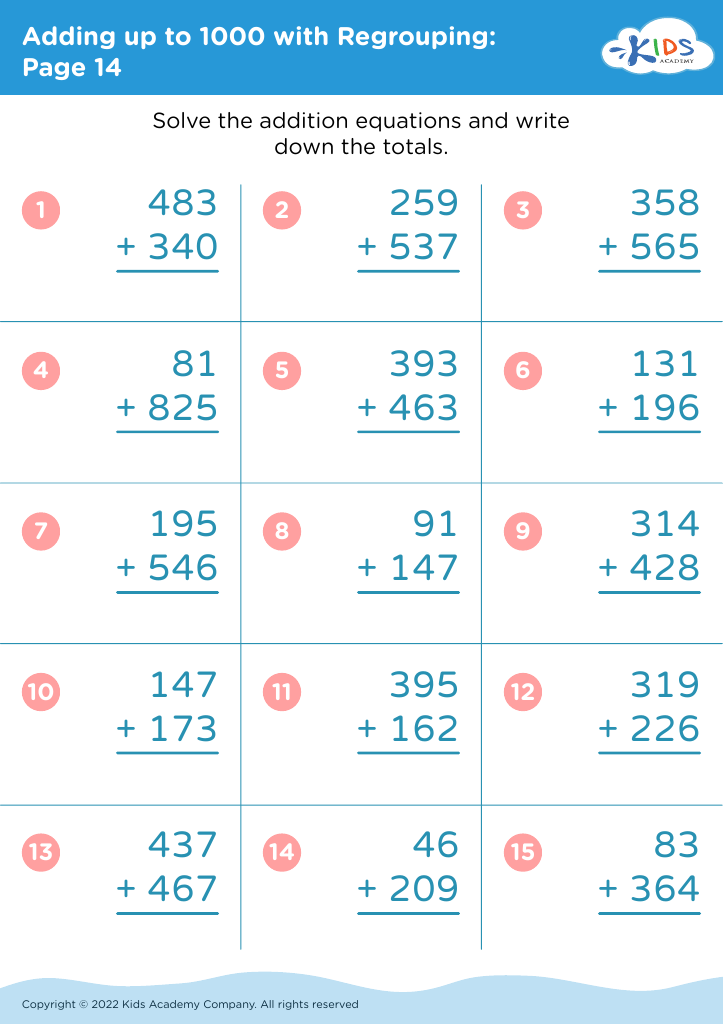
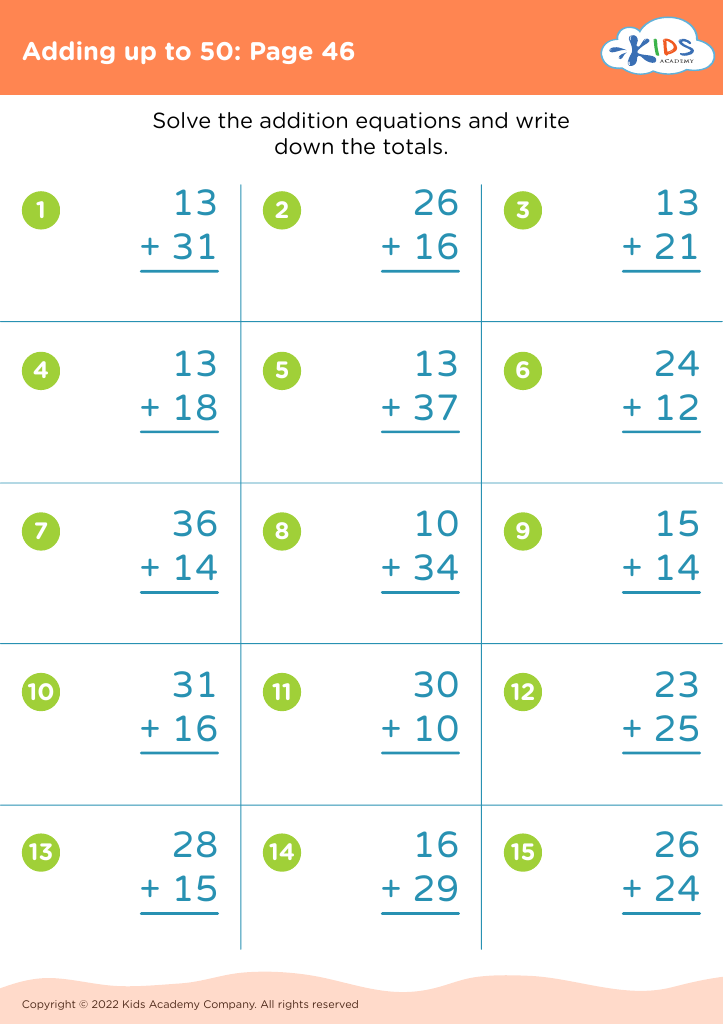
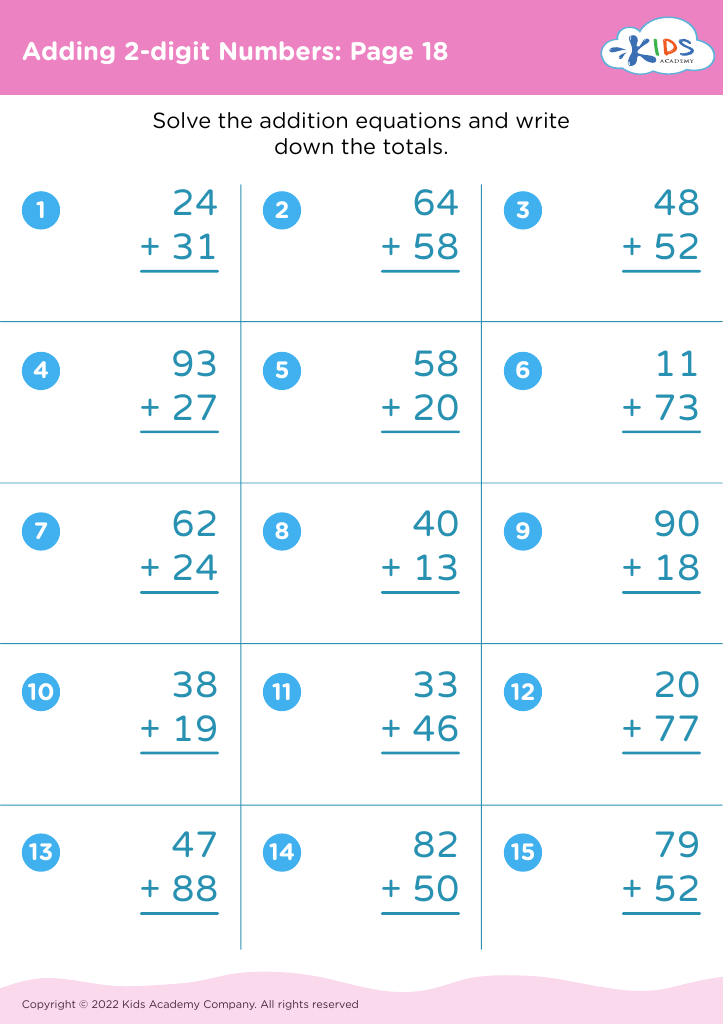
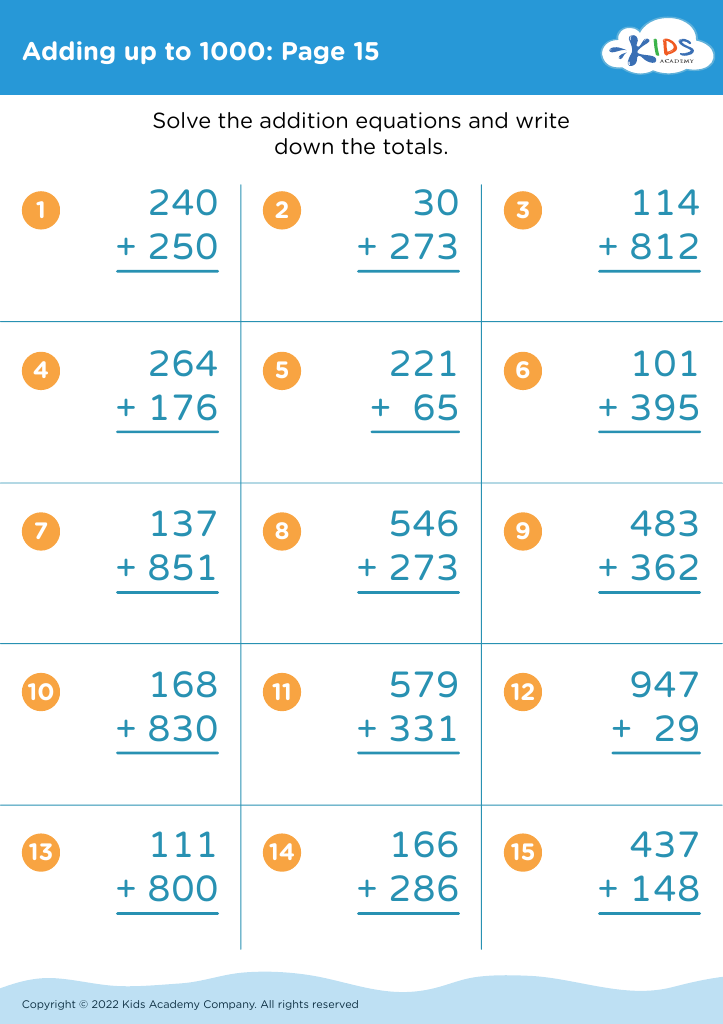
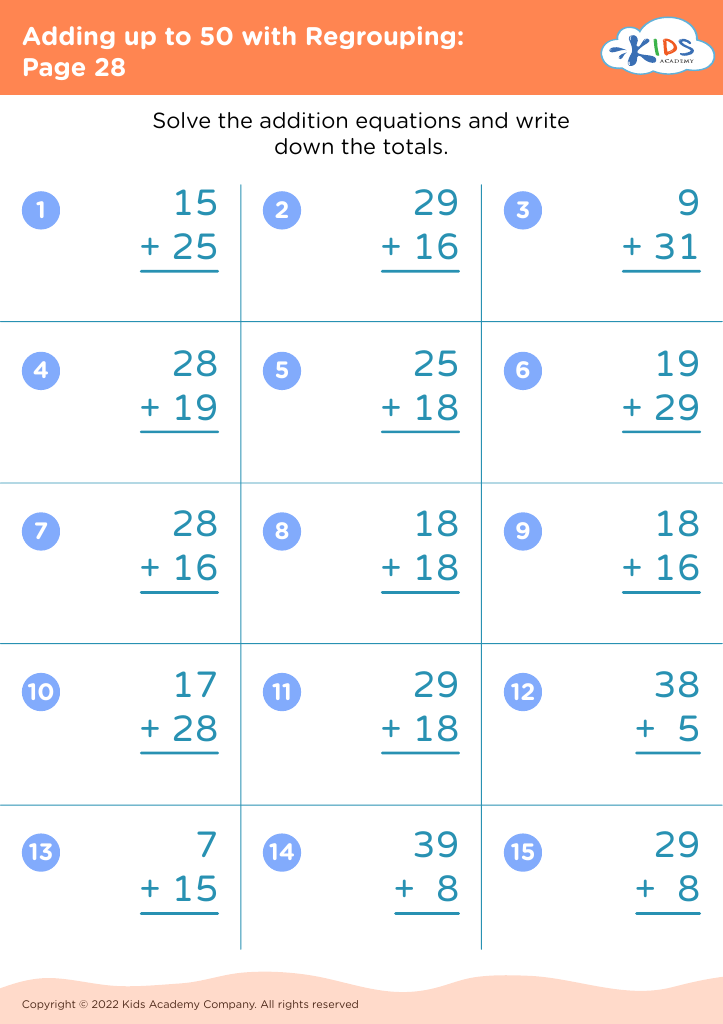
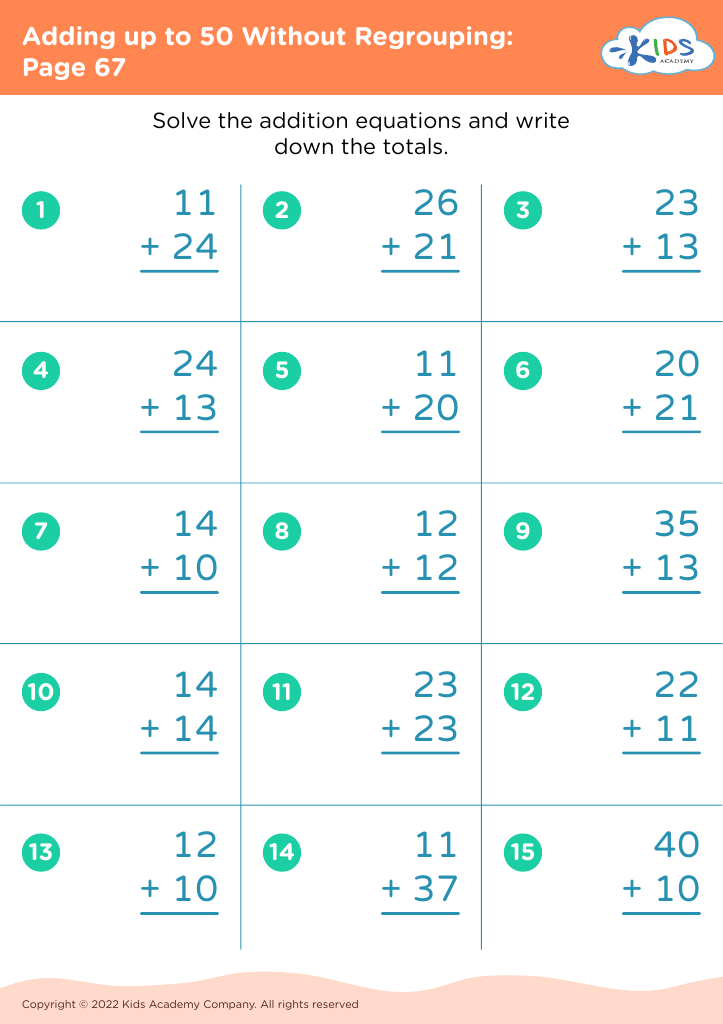
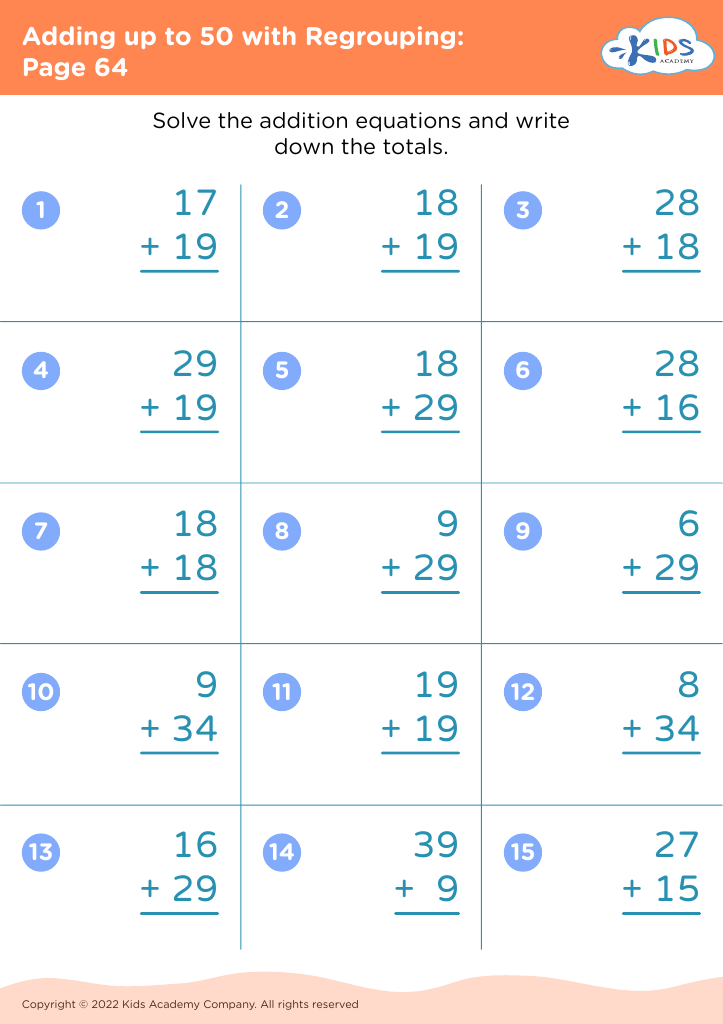
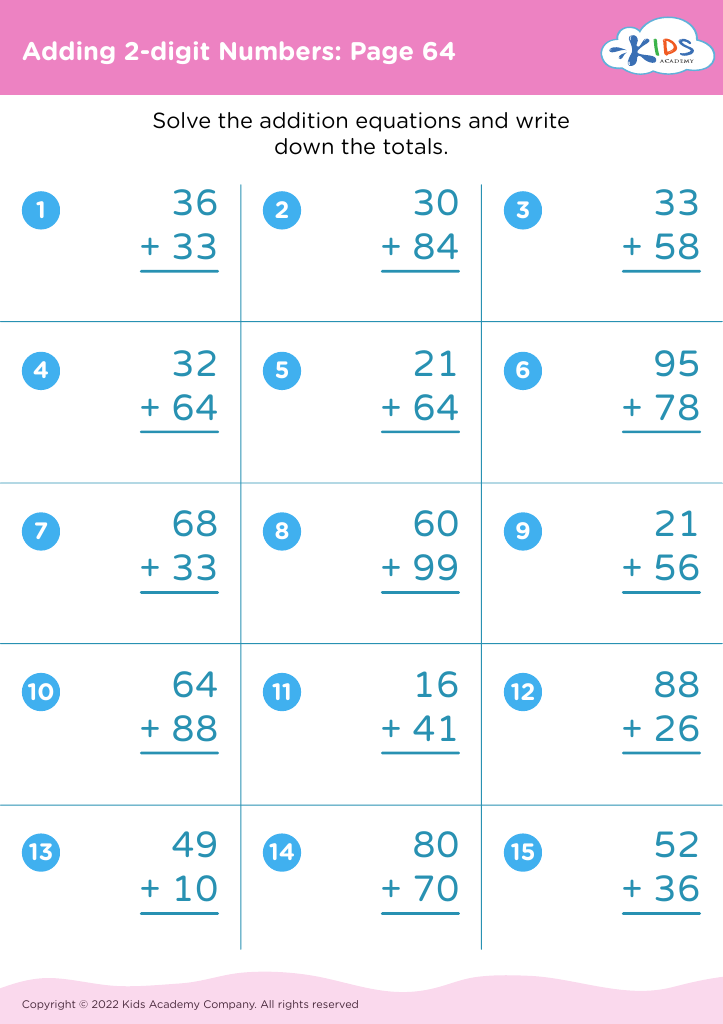
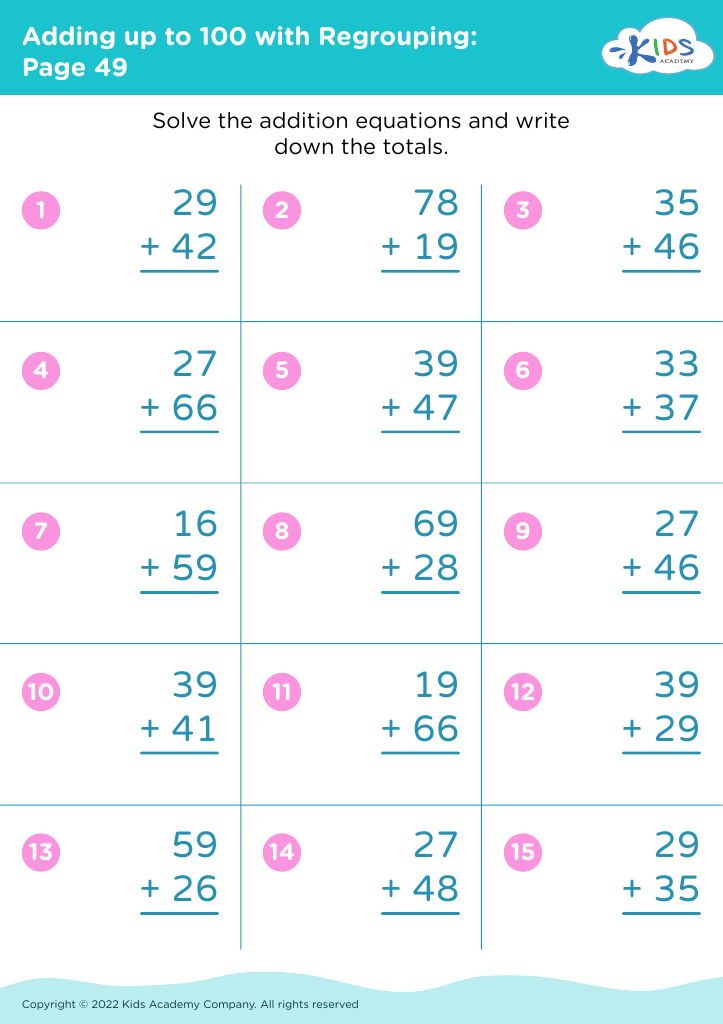
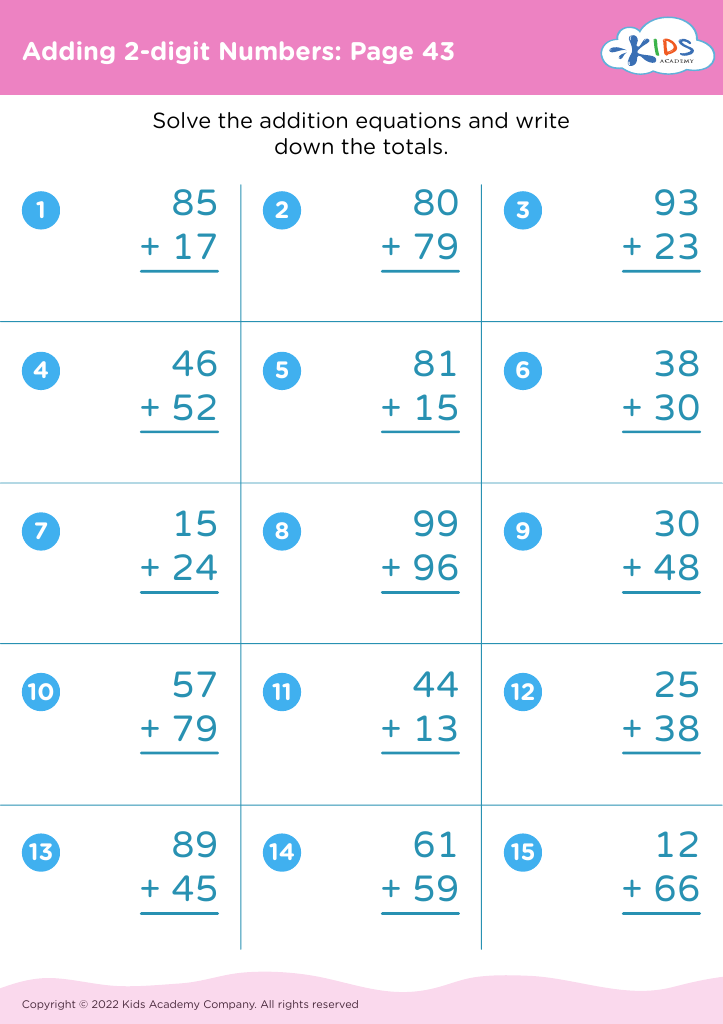
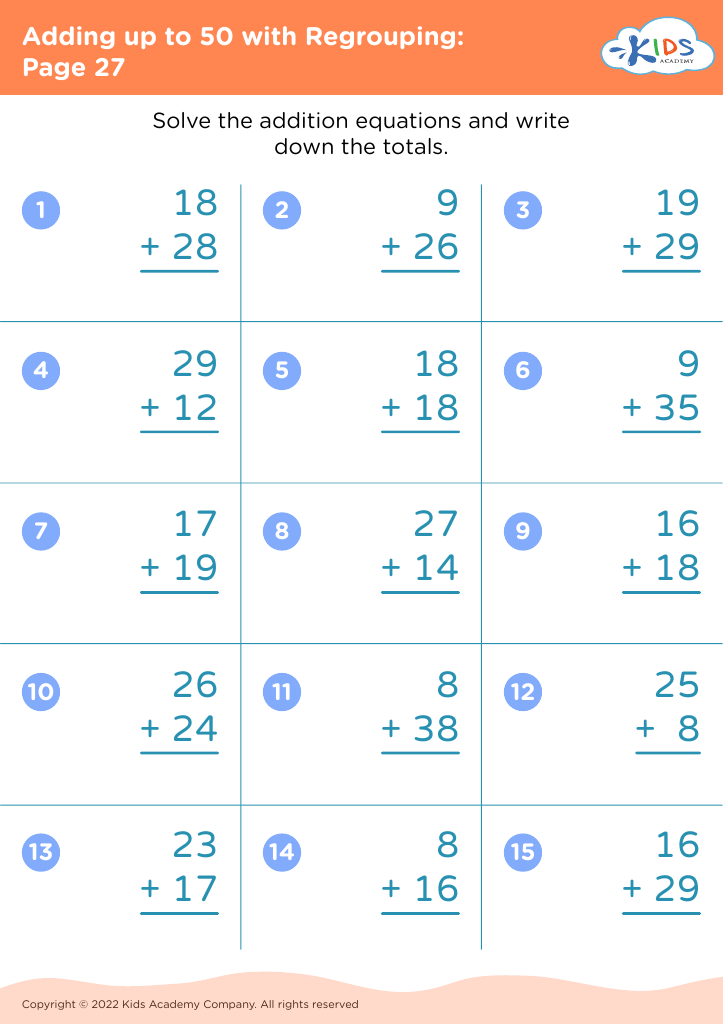
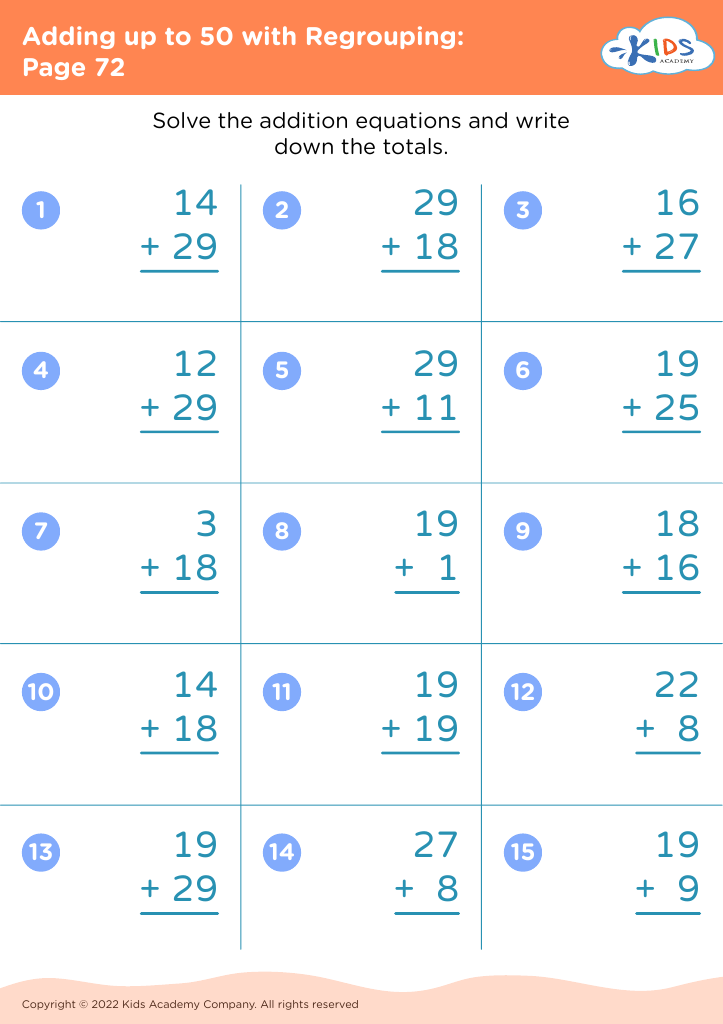
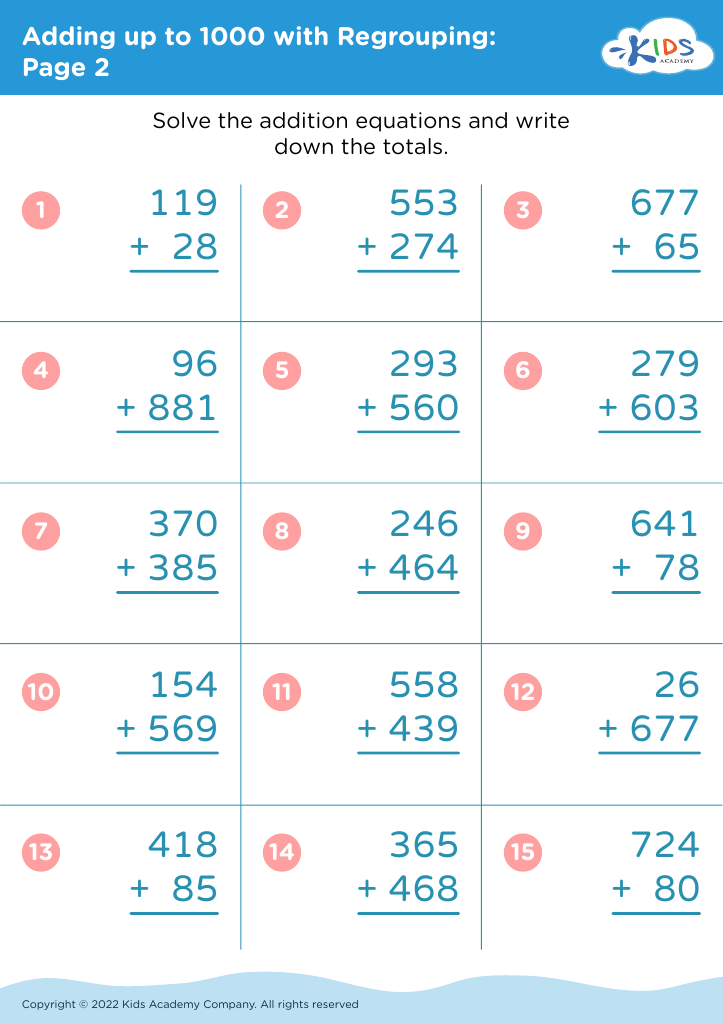
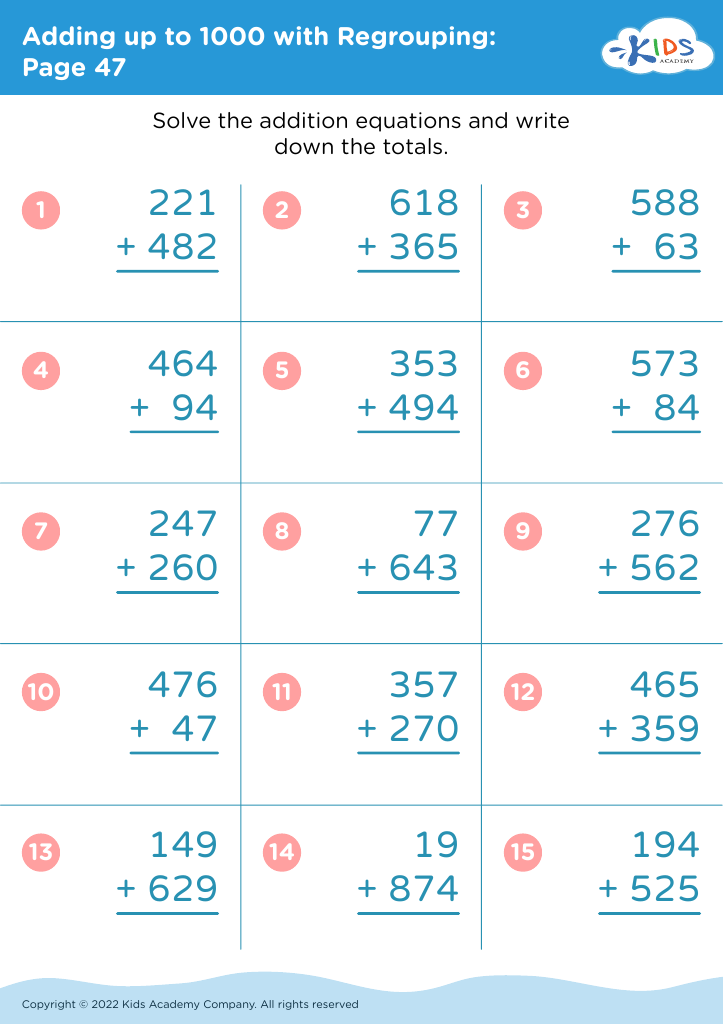
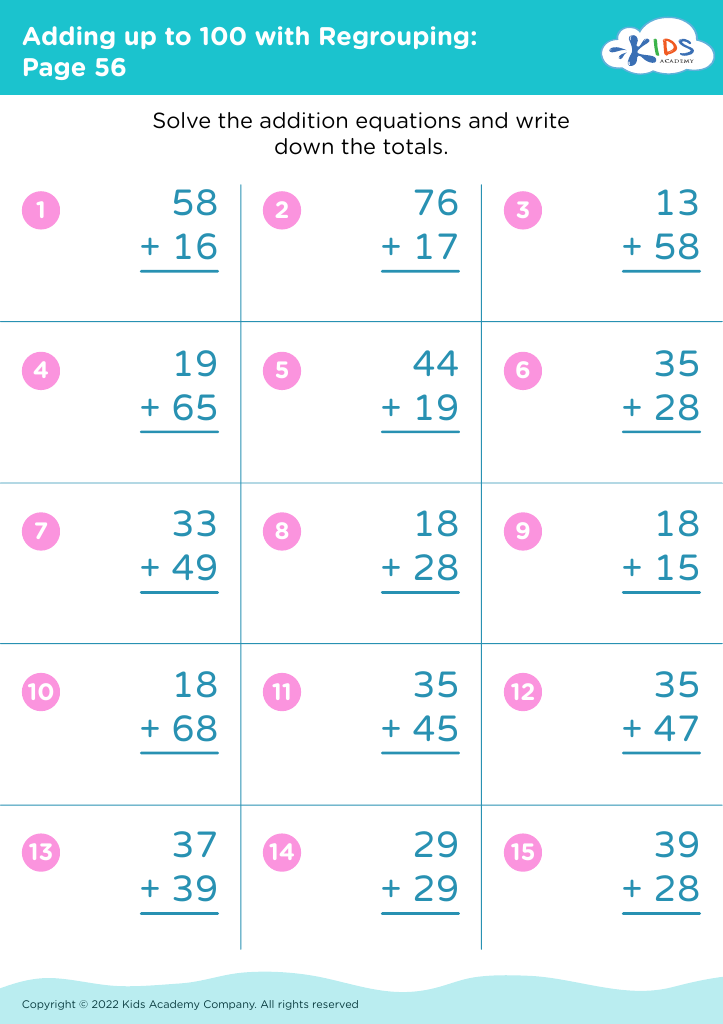
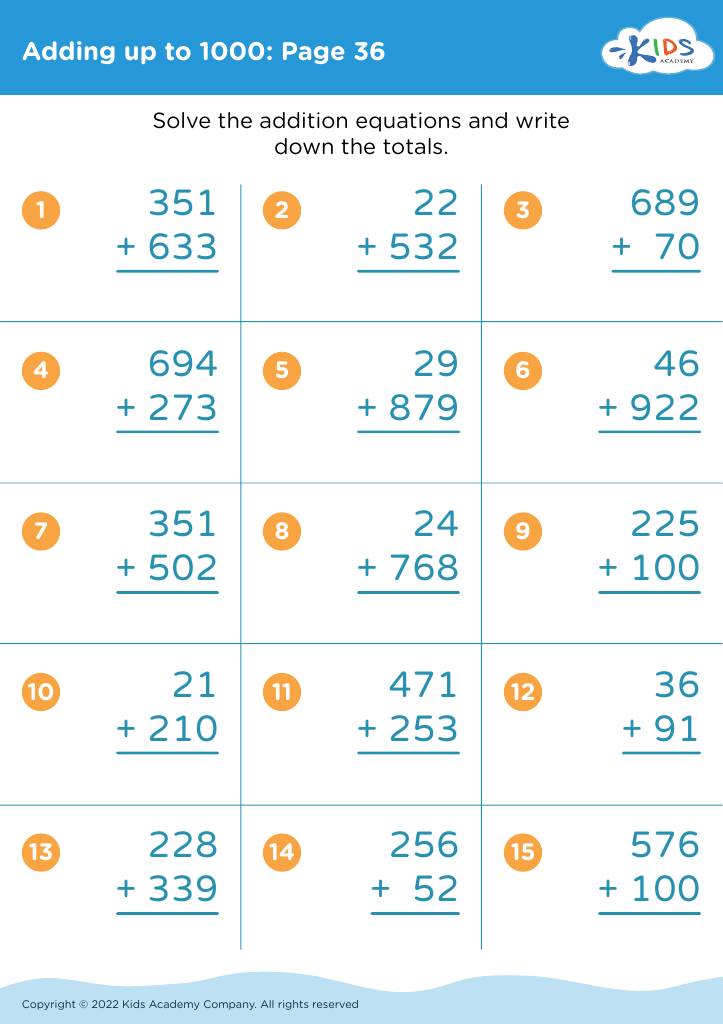







.jpg)
Counting practice and addition skills are fundamental components of early mathematics education, particularly for 7-year-olds, who are typically in the second grade. At this age, children are developing critical thinking and problem-solving abilities, and mastering these foundational skills can significantly impact their overall academic performance.
Firstly, counting practice enhances children’s number sense, helping them to understand quantities, relationships between numbers, and the stability of numerical patterns. This understanding serves as the backbone for more advanced mathematical concepts that they will encounter in later grades, such as subtraction, multiplication, and division.
Moreover, strong addition skills can build a child's confidence. Success in counting and basic math can encourage children to approach more complex problems with a positive attitude, reducing math anxiety, which is prevalent in many learners.
Additionally, parents and teachers play a critical role in fostering a child's enthusiasm for mathematics through engaging activities, manipulatives, and games that emphasize counting and addition. Reinforcing these skills at home and in the classroom cultivates a supportive learning environment, promoting collaboration between educators and families. Ultimately, investing in counting practice and addition will cultivate a lasting love for mathematics and set children on a path to academic success.








