Counting skills Addition Worksheets for 7-Year-Olds - Page 5
106 filtered results
-
From - To
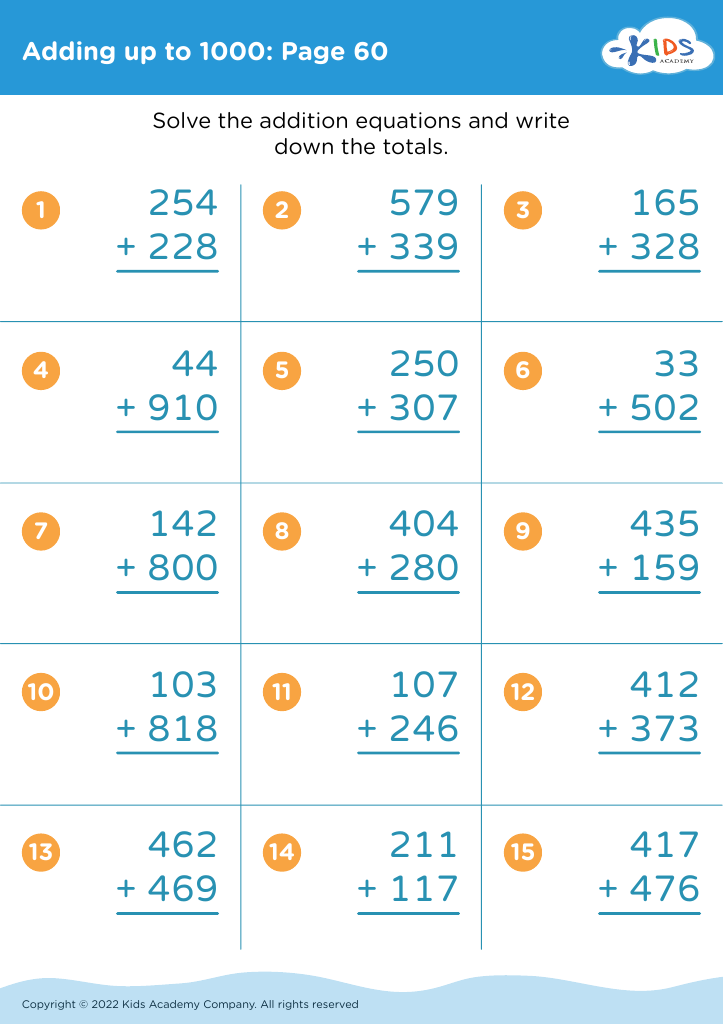
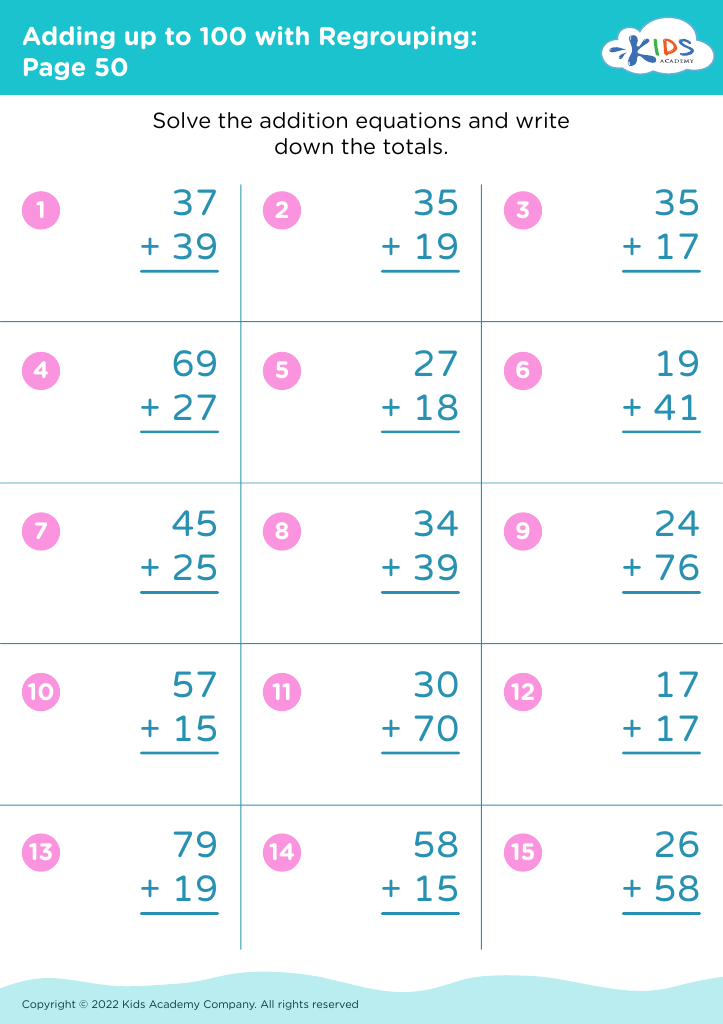
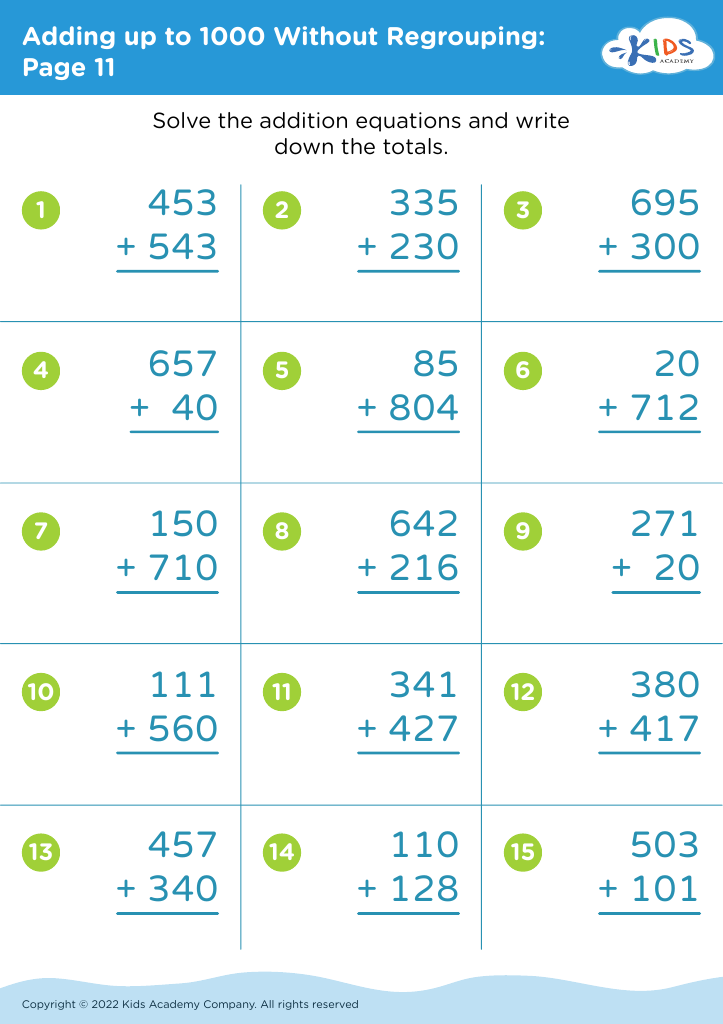
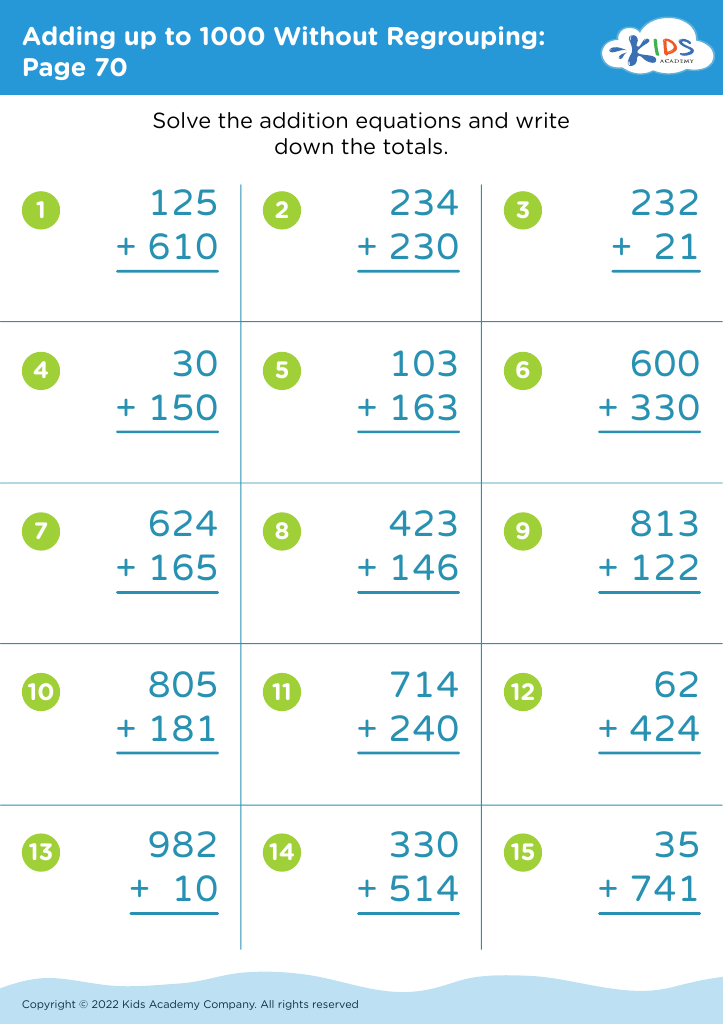
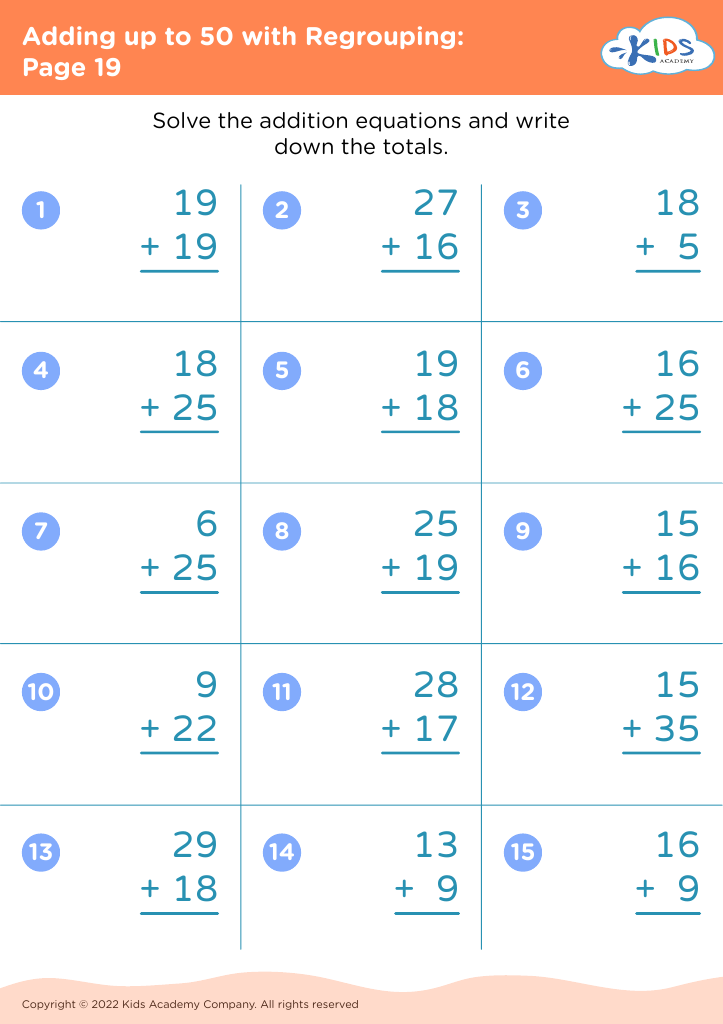
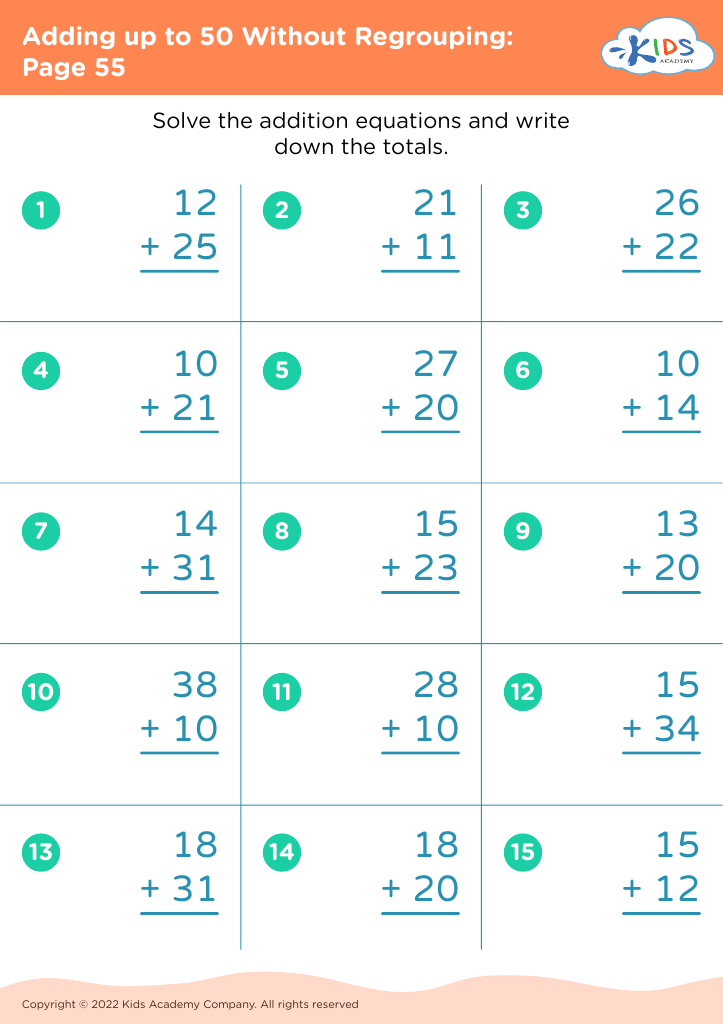
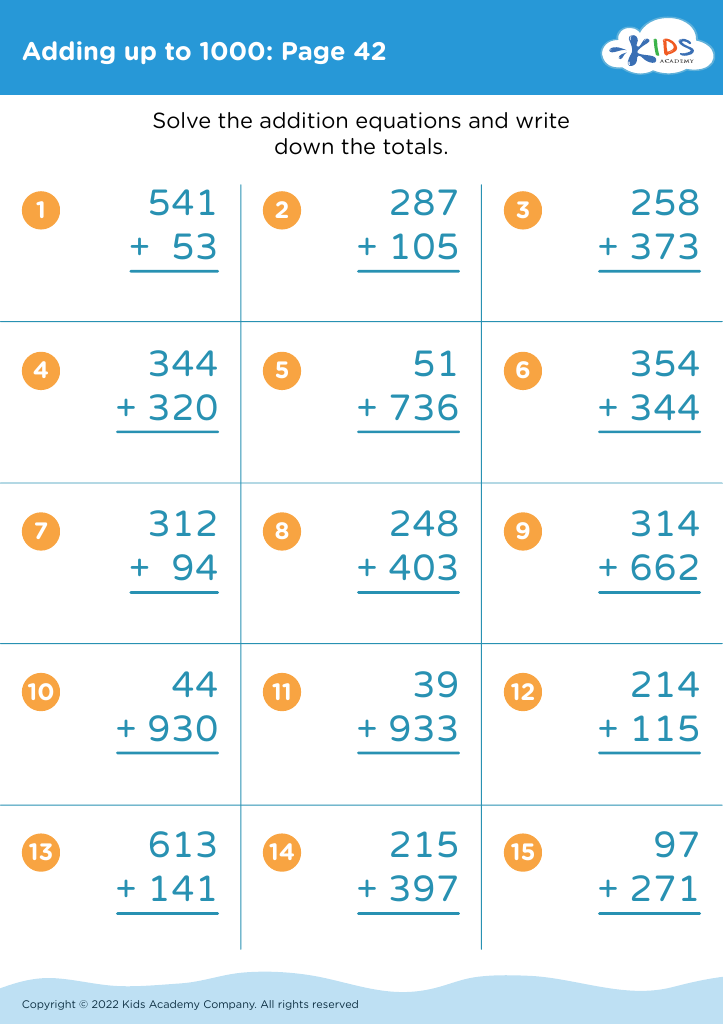
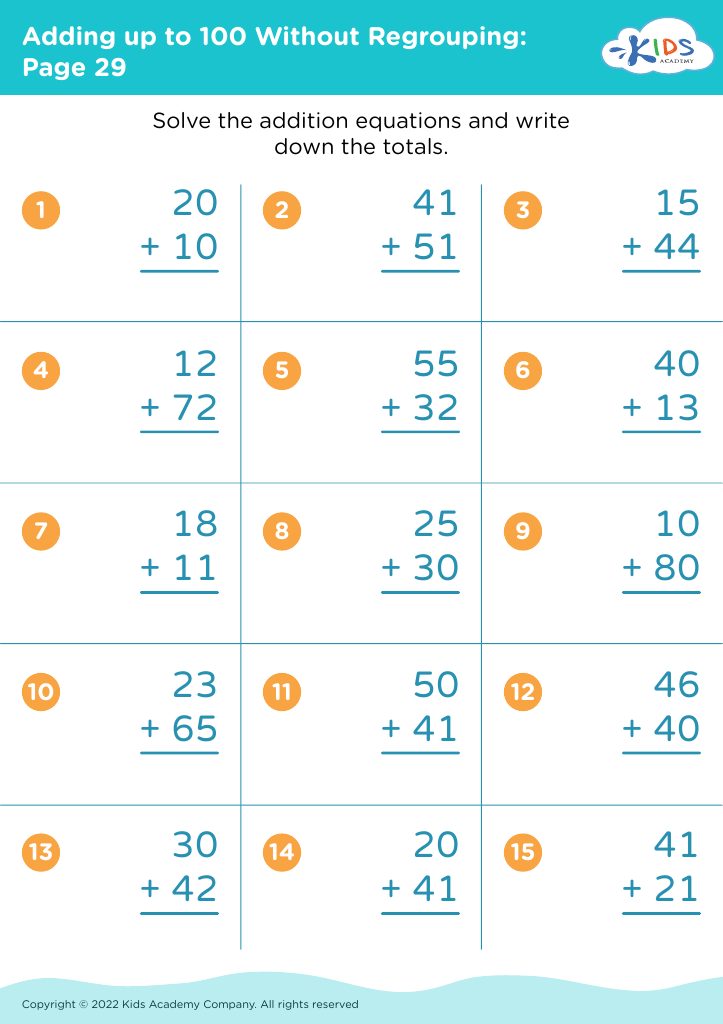
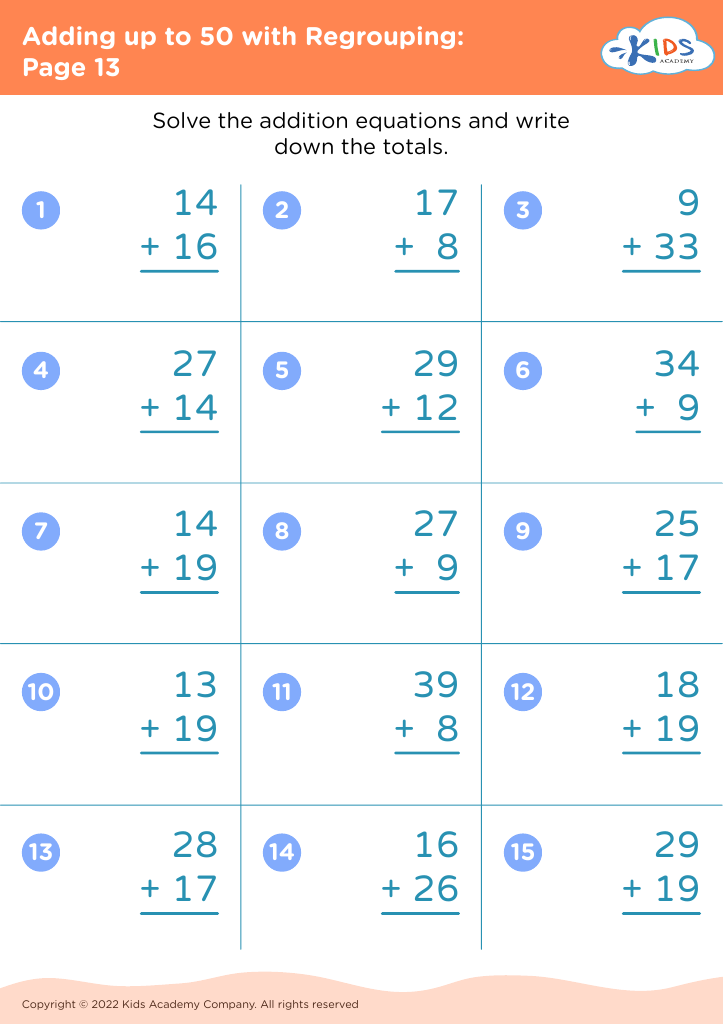
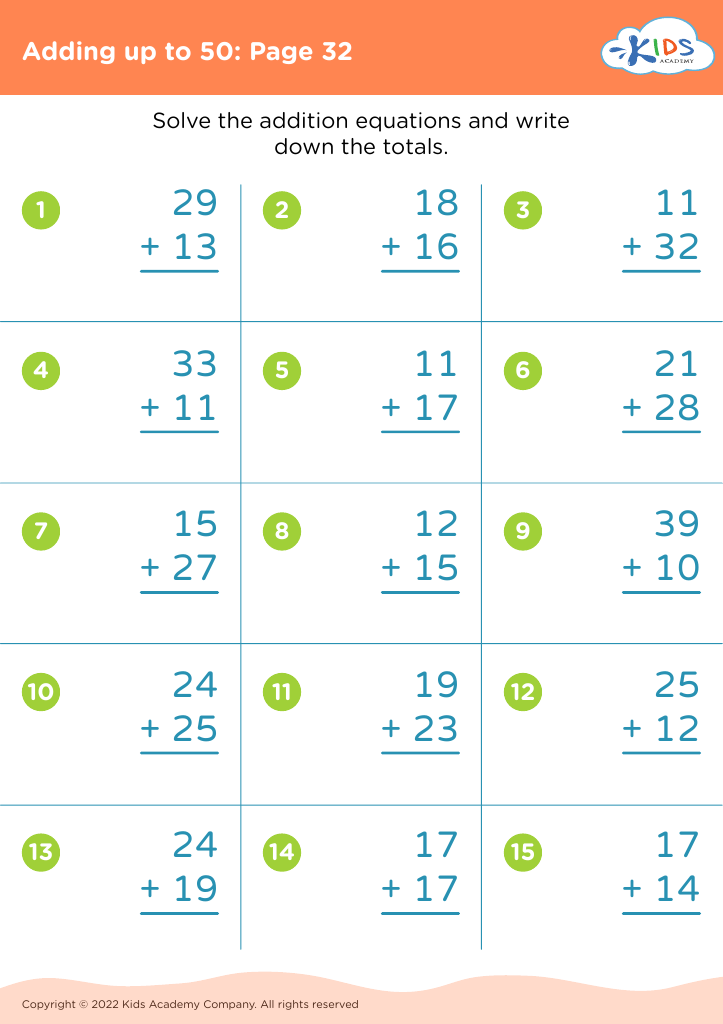





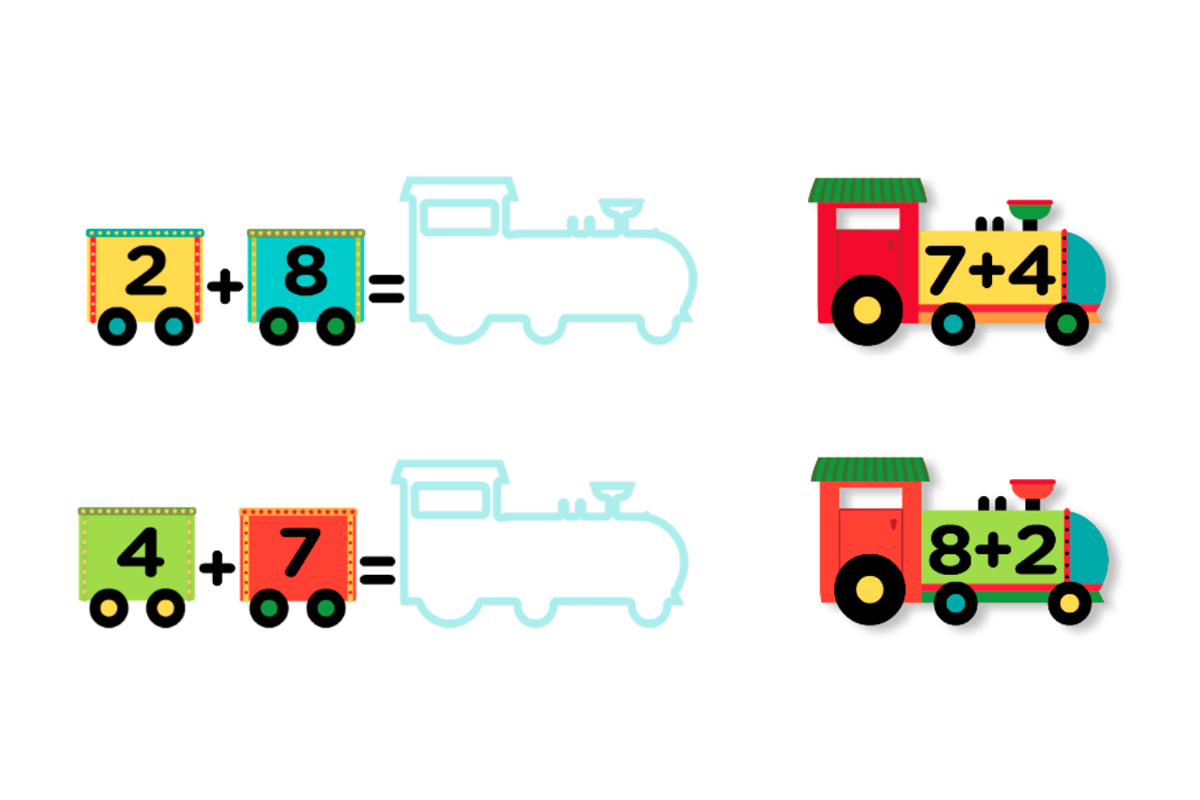


Counting skills and addition are foundational elements of a child's mathematical development, particularly for 7-year-olds. At this age, a strong grasp of these concepts shapes their ability to understand more complex mathematical concepts later on. For parents and teachers, nurturing these skills is crucial for several reasons.
Firstly, counting introduces children to the concept of numbers and their sequences, fostering a sense of numerical order and stability. It provides the critical skills of one-to-one correspondence and helps recognize that numbers represent quantities. Addition builds on this by introducing children to the idea of combining sets and understanding the relationships between numbers, which enhances their problem-solving capabilities.
Secondly, competence in early math skills, like counting and addition, directly correlates with future academic success. Research indicates that children who enter elementary school with a solid foundation in math are more likely to perform well not only in mathematics but also in other subjects. This early success often fosters positive attitudes toward learning in general, bolstering self-confidence.
Lastly, these skills are vital for everyday life. Basic arithmetic is used in daily tasks, from managing money to understanding time. By supporting the development of counting and addition skills, parents and teachers are not only preparing children for academic success but also equipping them with essential life skills.








