Critical thinking skills Addition Worksheets for 7-Year-Olds
5 filtered results
-
From - To
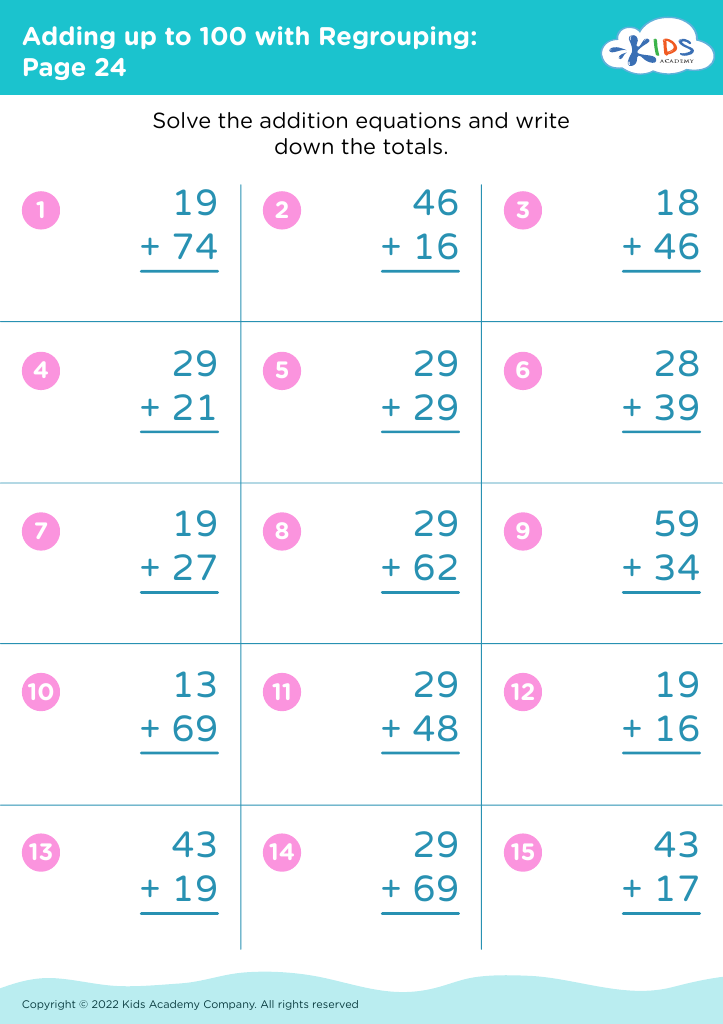
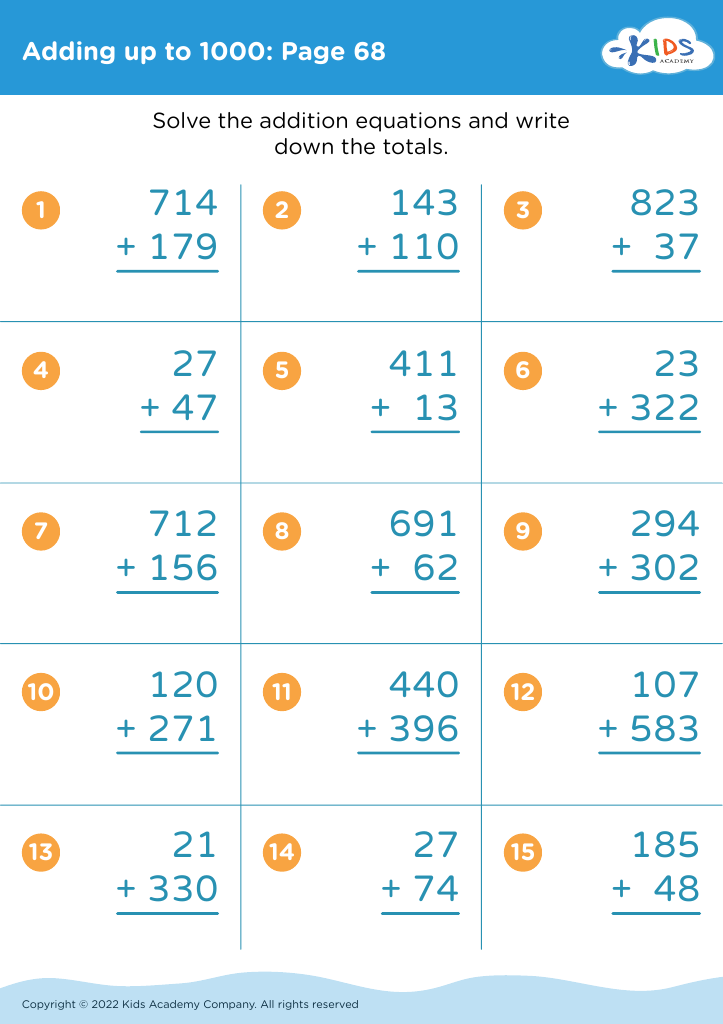
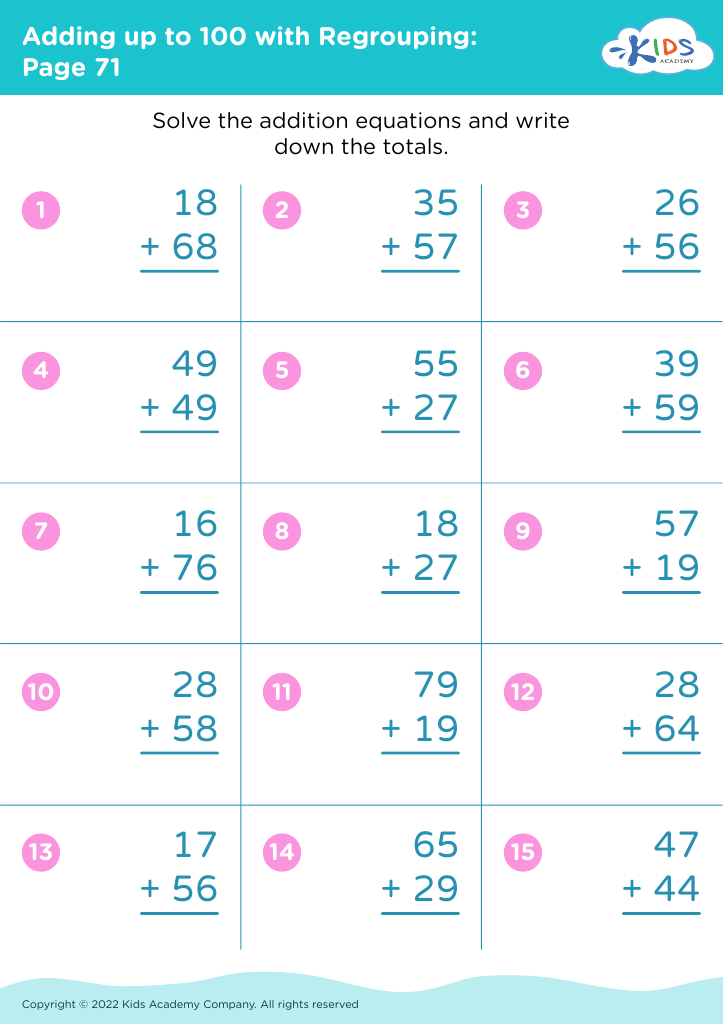
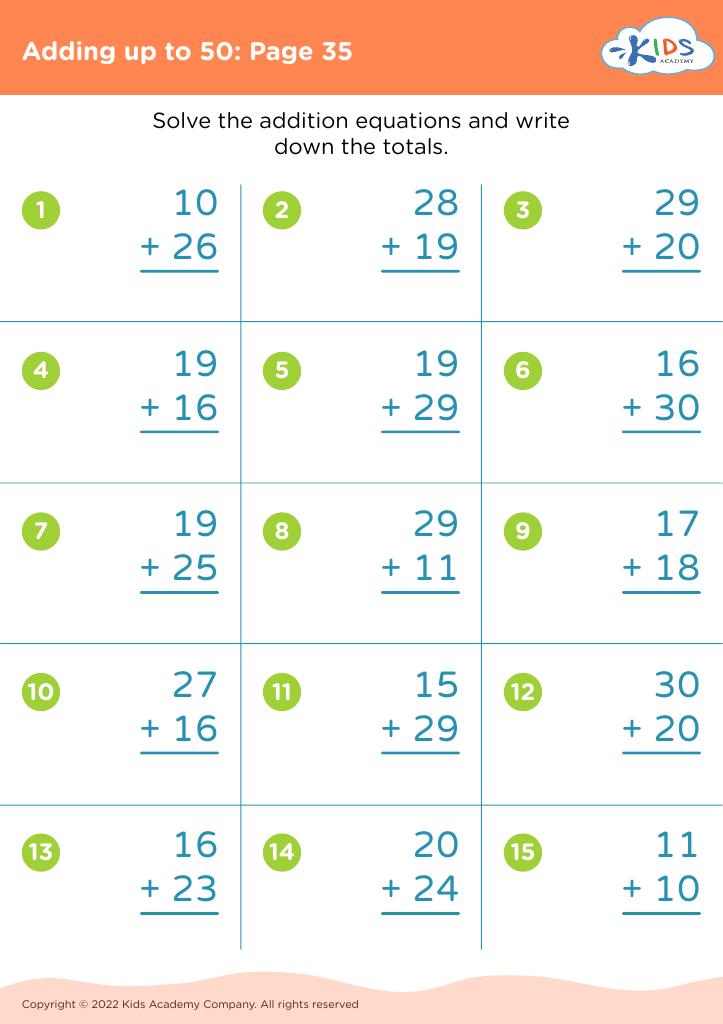
Unlock your child's potential with our engaging Critical Thinking Skills Addition Worksheets designed specifically for 7-year-olds! These interactive resources not only strengthen fundamental addition skills but also encourage youngsters to develop essential problem-solving abilities. Through fun exercises, interactive puzzles, and thought-provoking word problems, children will learn to analyze, evaluate, and apply their math knowledge in real-world contexts. Our worksheets foster independence and creativity while challenging young minds to think critically about mathematical concepts. Perfect for home or classroom use, these materials ensure that learning addition becomes a stimulating experience. Equip your child with the skills they need for future academic success!
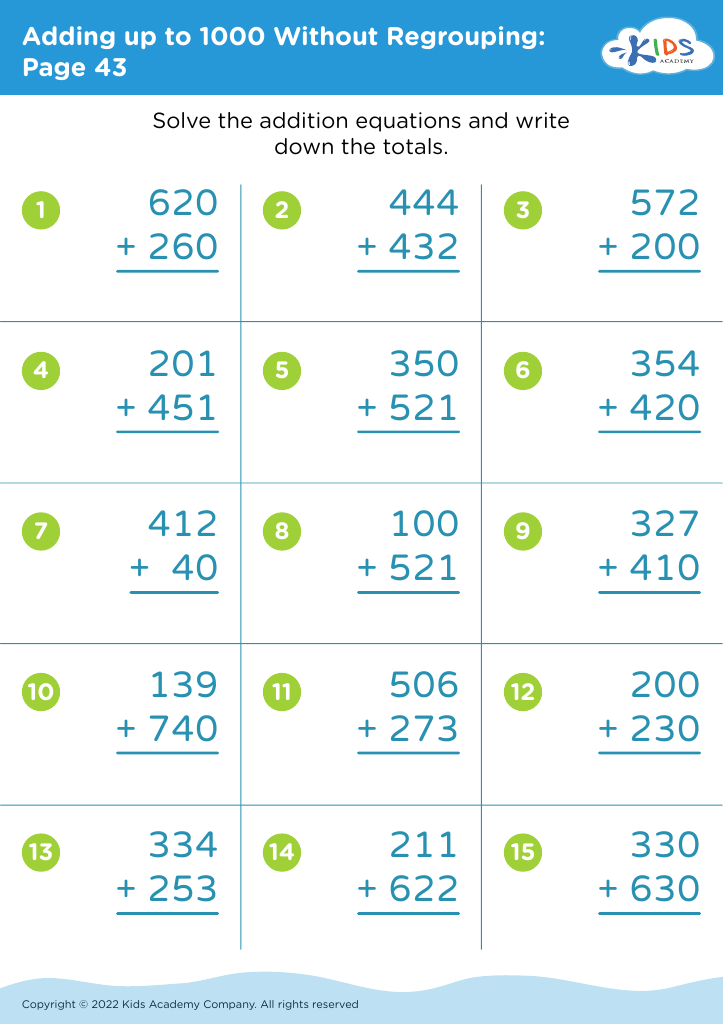








Parents and teachers should prioritize critical thinking skills in seven-year-olds for several compelling reasons. At this age, children are developing essential cognitive abilities, and nurturing critical thinking lays a solid foundation for future learning and problem-solving. Critical thinking enables children to analyze situations, make informed decisions, and approach challenges creatively. By fostering these skills early on, they become more adept at questioning, evaluating information, and recognizing biases, which are crucial skills in our information-rich society.
Moreover, developing critical thinking skills promotes independence and self-confidence. Children learn to trust their reasoning and judgments, making them more resilient in the face of academic challenges. For teachers, integrating critical thinking into the curriculum enhances engagement and encourages deeper understanding of subjects beyond rote memorization.
Additionally, critical thinking fosters collaborative skills as children learn to discuss and debate ideas with peers, enhancing their communication abilities. This skill set not only supports academic achievement but also prepares students for real-world challenges they will face in the future. Ultimately, by emphasizing critical thinking, parents and teachers equip children with tools that encourage lifelong learning and adaptability in an ever-changing world.








