Develop fine motor skills Addition Worksheets for 7-Year-Olds
9 filtered results
-
From - To
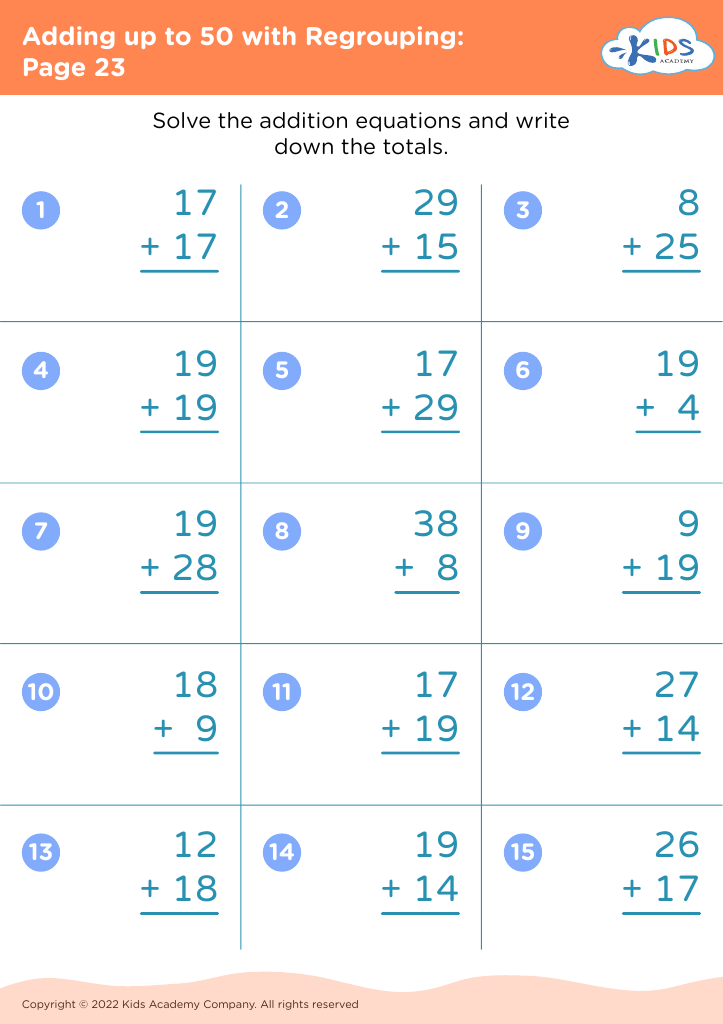
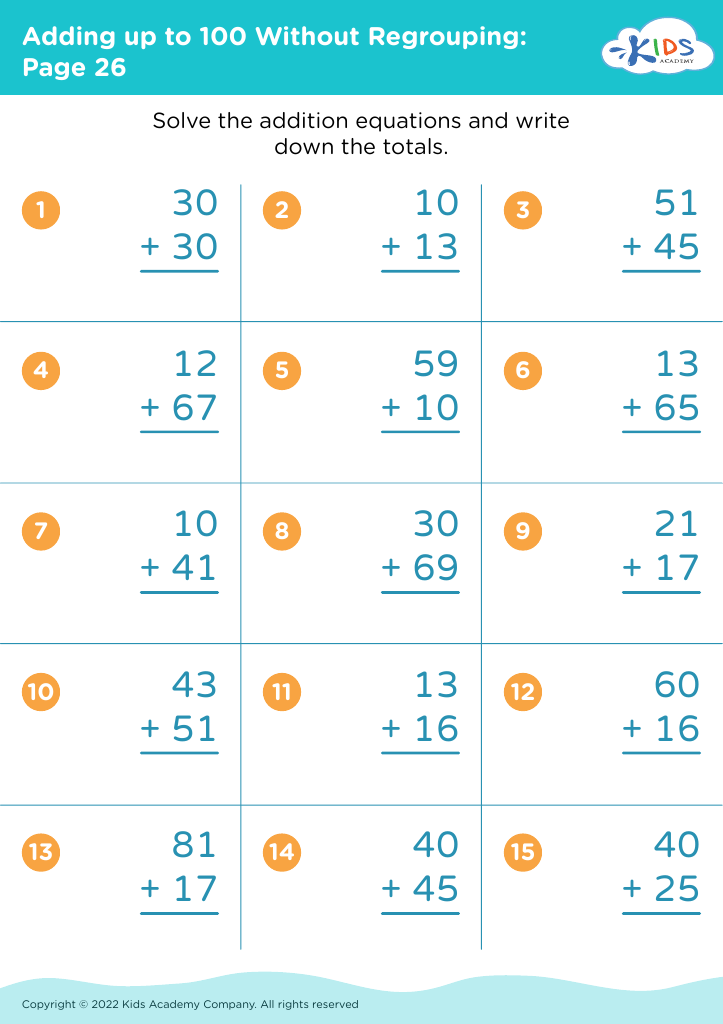
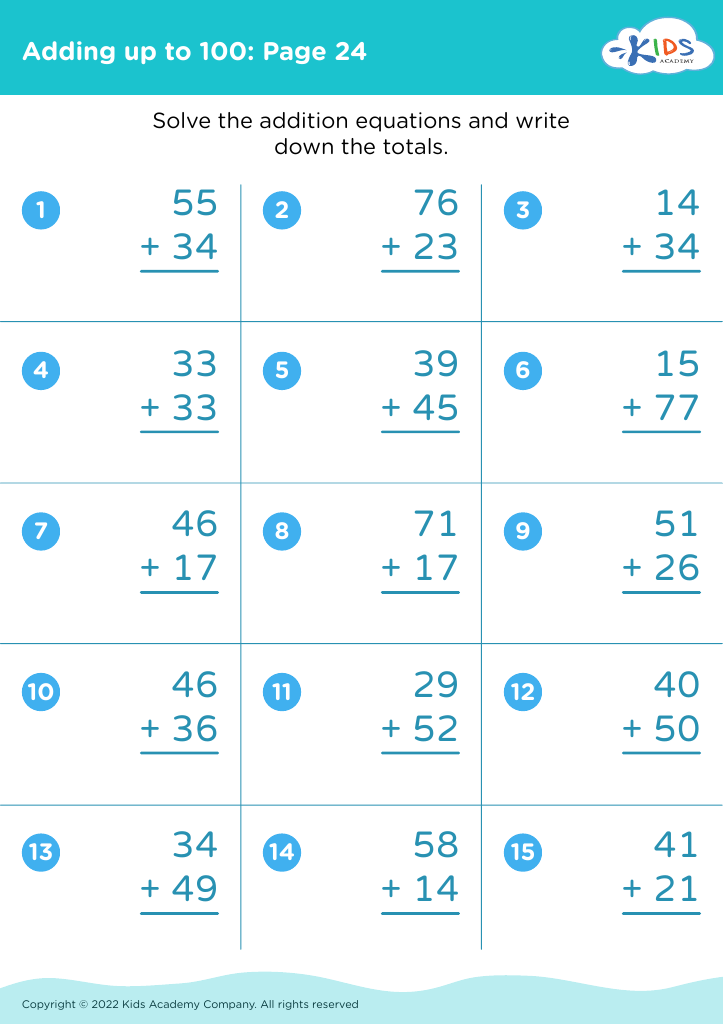
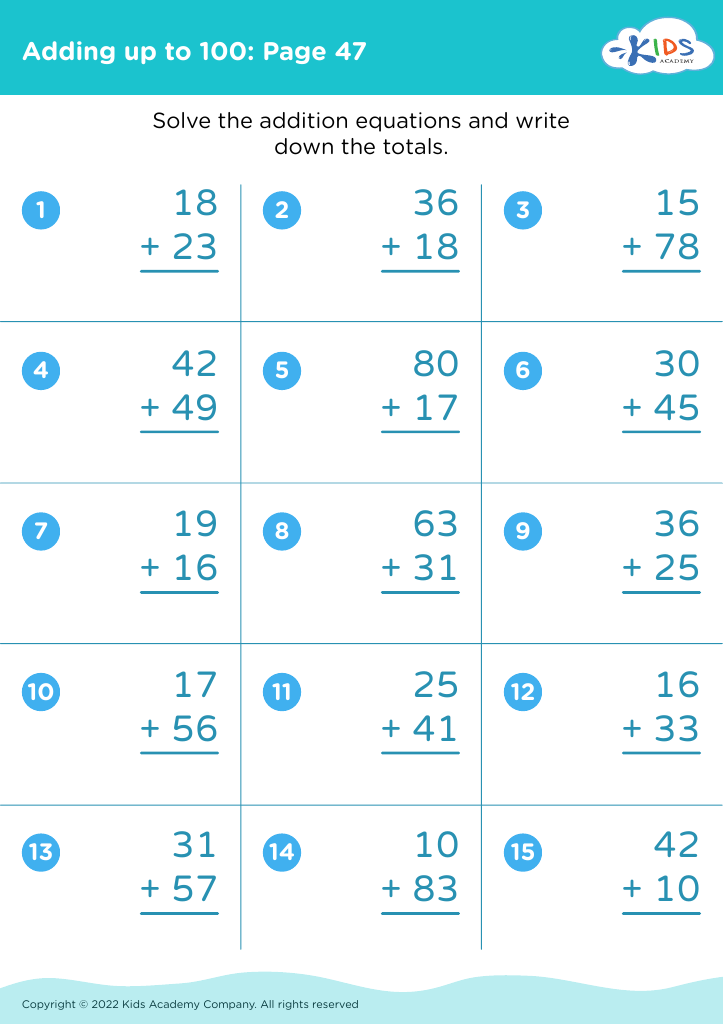
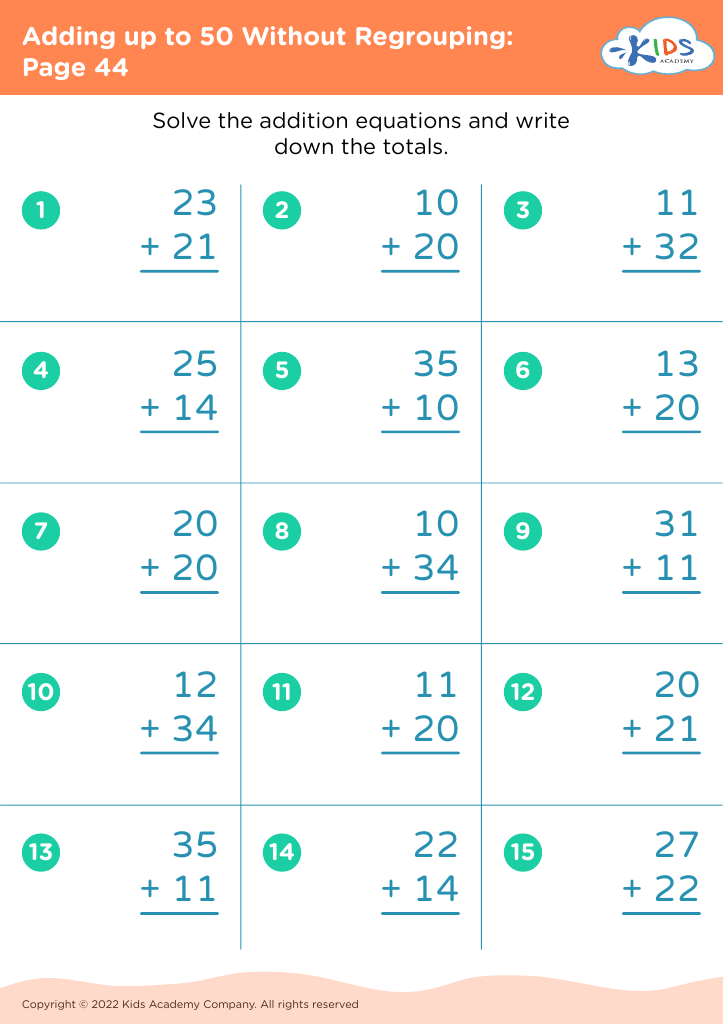
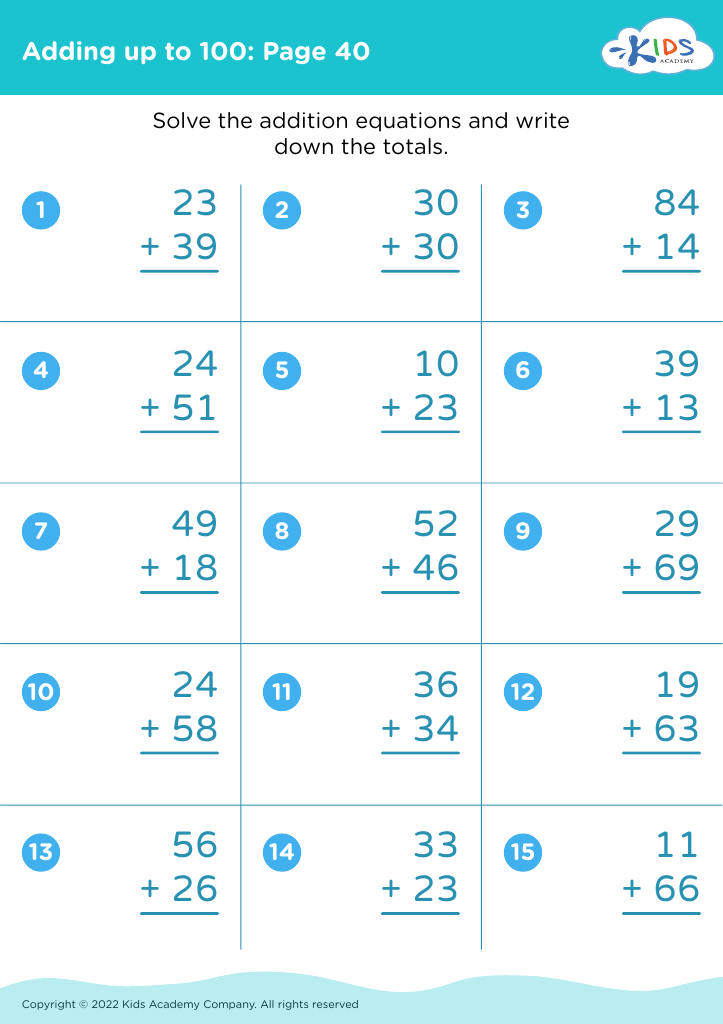
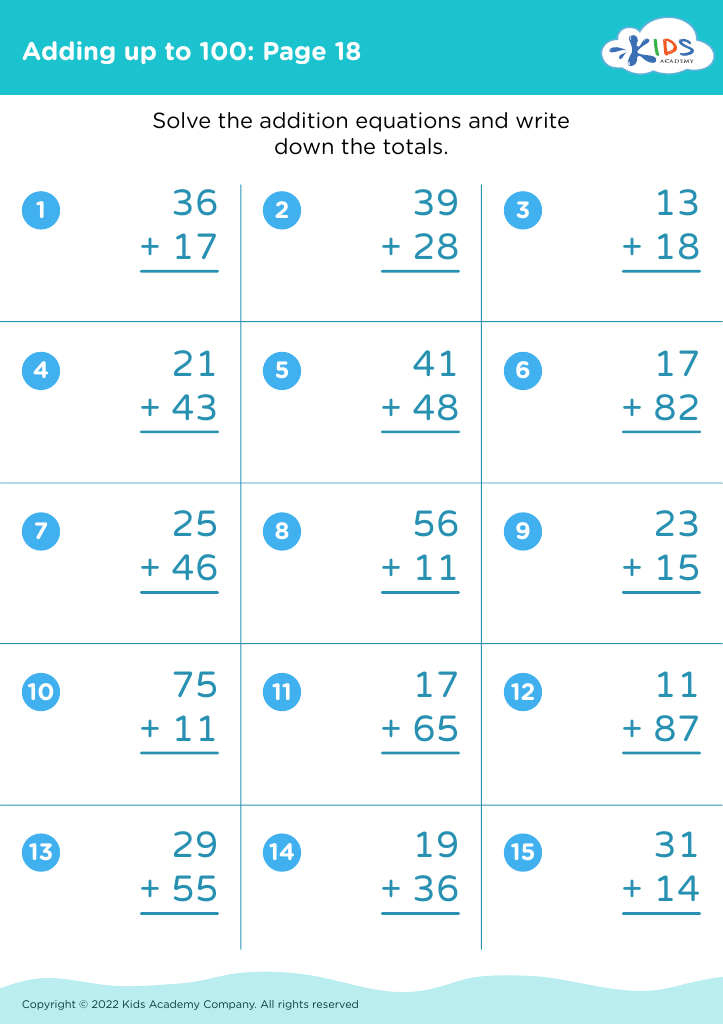
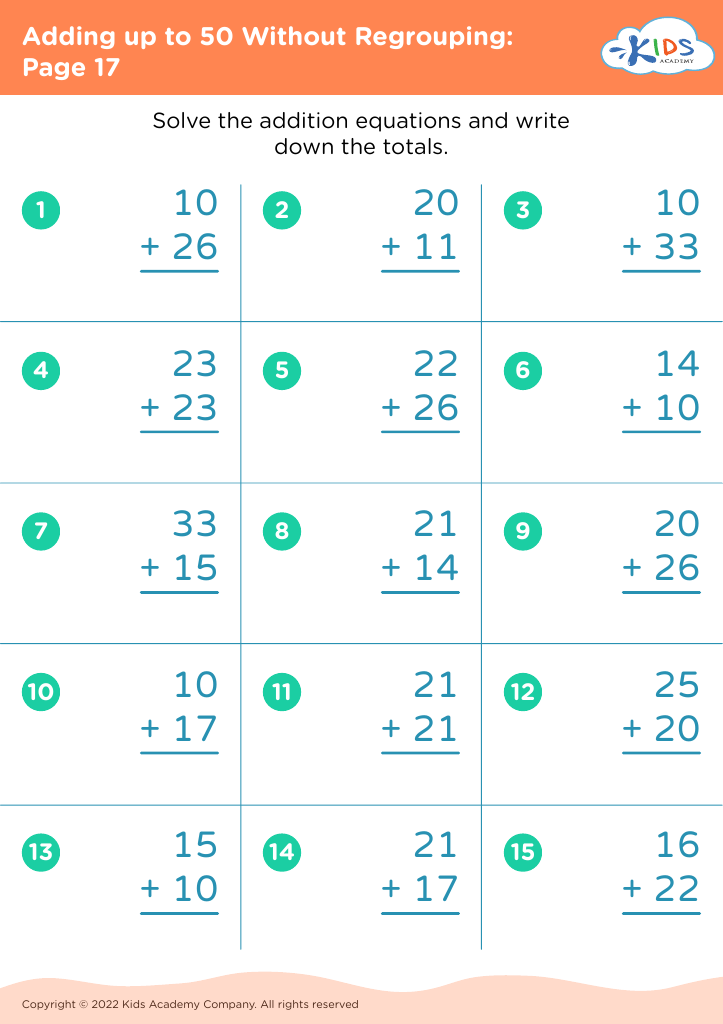
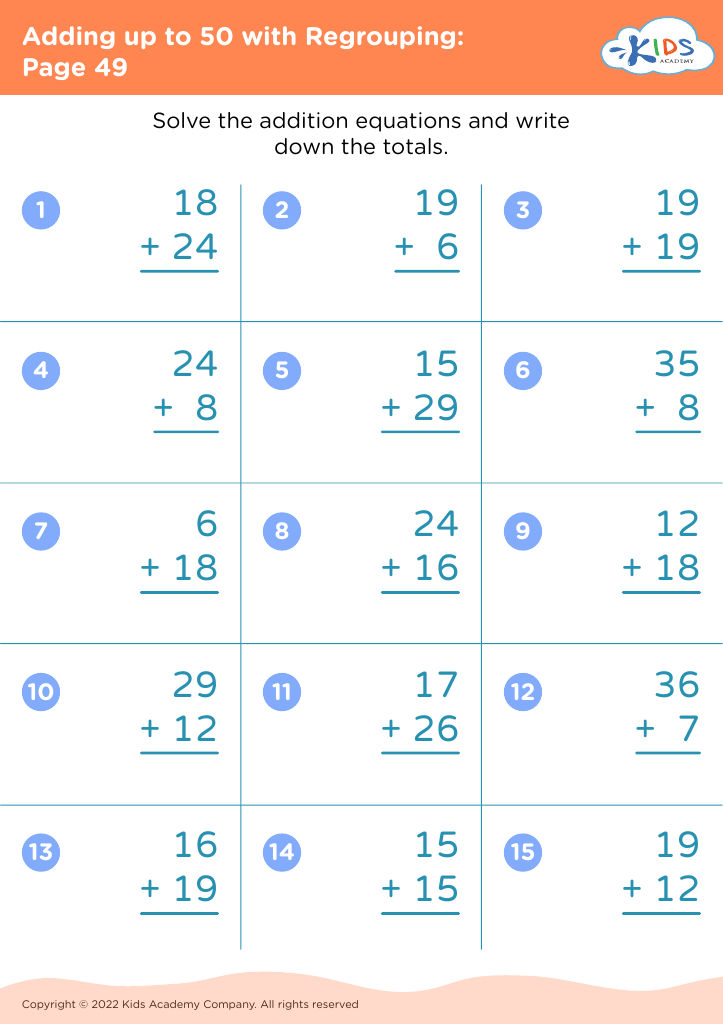
Introduce your 7-year-olds to the world of mathematics with our "Develop Fine Motor Skills Addition Worksheets." These fun, engaging, and educational exercises not only enhance their arithmetic abilities but also strengthen their fine motor skills. Each worksheet is carefully crafted to include coloring activities and traceable numbers, helping children improve hand-eye coordination and precision. Perfect for classroom use or at-home practice, these worksheets support skill development in an enjoyable way. Watch your child's confidence grow as they master addition while refining essential motor skills needed for writing and other daily tasks. Start building their foundation for future learning success today!








Parents and teachers should prioritize the development of fine motor skills in 7-year-olds because these skills are crucial for a child's overall growth and academic success. Fine motor skills involve the coordination of small muscles, particularly those in the hands and fingers, enabling children to perform tasks such as writing, buttoning clothes, and using utensils. At age seven, children typically engage more intensively in schoolwork that requires these skills, such as manipulating pencils for writing, cutting with scissors, and drawing shapes and letters accurately.
Proficient fine motor skills aid in legible handwriting and, consequently, clear communication of ideas in written form. This is fundamental not just for language subjects but across the entire curriculum, influencing how well they can demonstrate their knowledge and complete assignments independently. Additionally, these skills foster self-esteem and independence as children efficiently accomplish everyday tasks.
Early development of fine motor skills sets the stage for fluidity in these actions later in life. Activities like playing with building blocks, drawing, or even simple tasks such as tying shoelaces should not be overlooked. Engaging in these activities also stimulates neurological development, improving a child’s ability to focus and retain information. Hence, parents and teachers play a pivotal role by incorporating activities that promote fine motor skills, ensuring well-rounded growth and a solid foundation for future learning and daily life skills.








