Enhance concentration Addition Worksheets for 7-Year-Olds
4 filtered results
-
From - To
Enhance your 7-year-old's focus with our specialized Concentration Addition Worksheets! Designed to make learning math fun and engaging, these worksheets help children practice addition while improving their concentration skills. With a variety of interactive problems, our resources encourage critical thinking and problem-solving abilities. Perfect for home or classroom use, these worksheets aim to build confidence and proficiency in young learners. Each worksheet is crafted to captivate their attention, fostering a love for math along the way. Explore our collection today and watch your child thrive in their mathematical journey while honing their concentration skills!
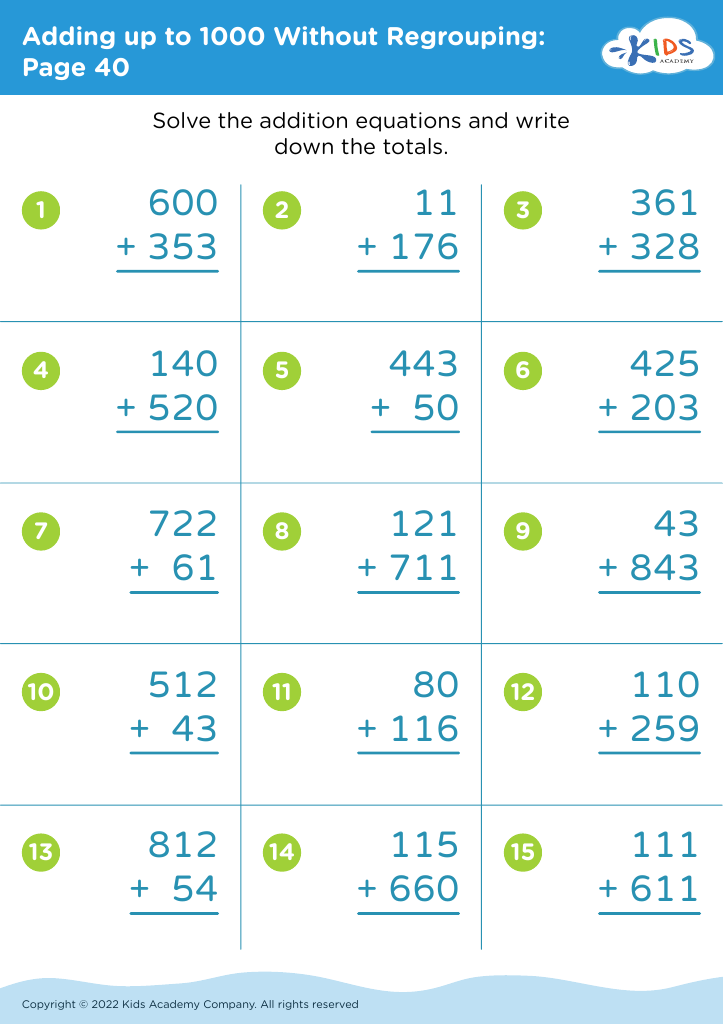
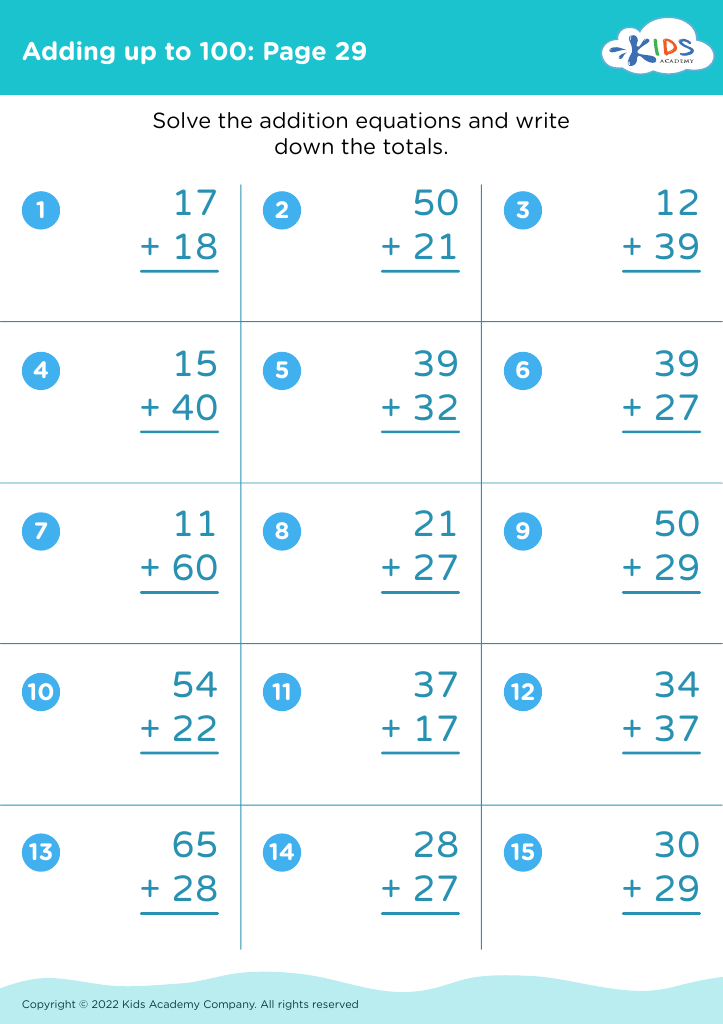
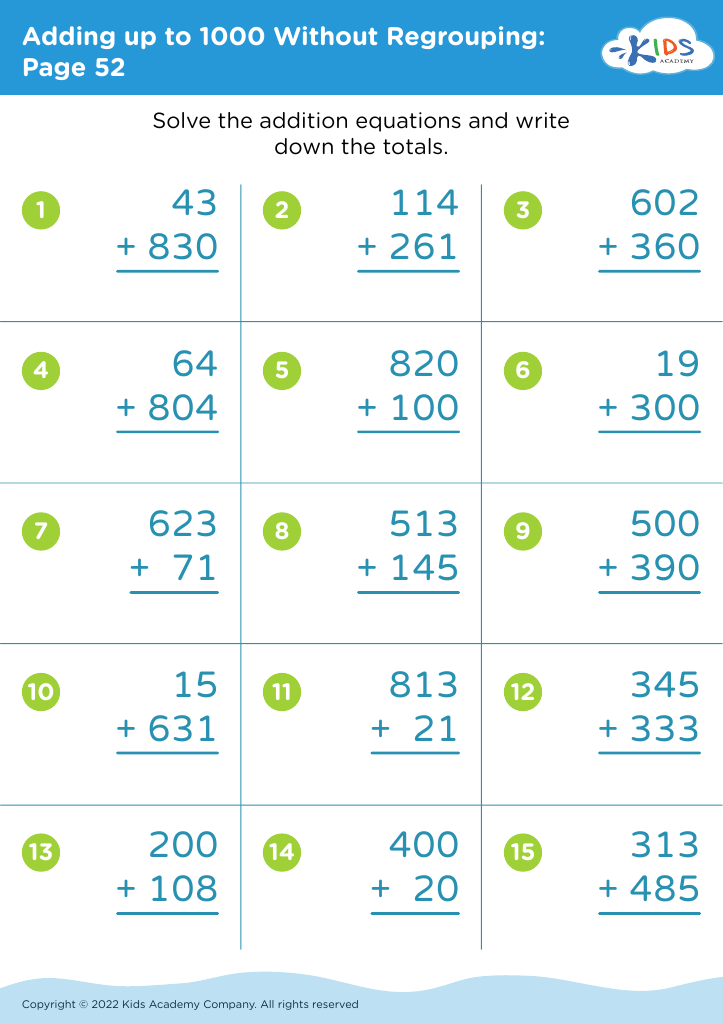
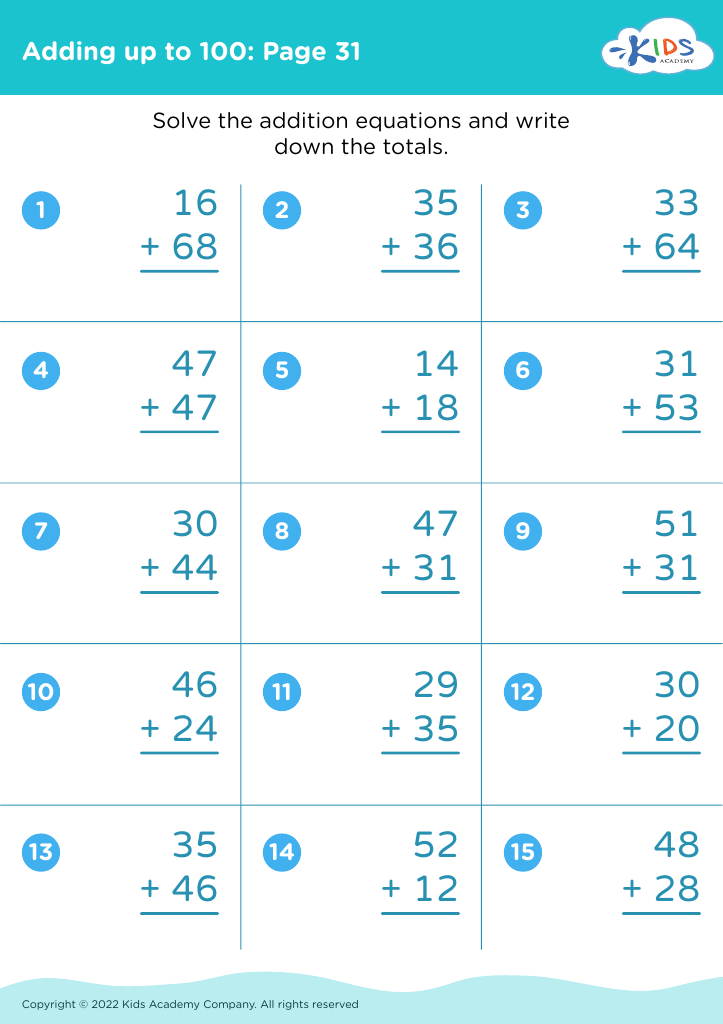








Enhancing concentration in 7-year-olds, especially in the context of addition, is crucial for several reasons. At this age, children are developing foundational skills that will support their academic success throughout their educational journey. Improved concentration helps children grasp mathematical concepts more effectively, making it easier for them to understand the relationships between numbers and perform addition tasks accurately.
When children can focus better, they are more likely to engage in learning activities, participate in class discussions, and complete their assignments with attention to detail. This not only boosts their confidence but also fosters a love for learning. Moreover, strong concentration skills extend beyond mathematics; they are essential for literacy, problem-solving, and other critical areas of education.
From a developmental perspective, children who have improved concentration are less prone to frustration and boredom, which can lead to positive classroom behavior. For parents and teachers, supporting the enhancement of concentration can lead to better academic outcomes, increased self-esteem, and a more enjoyable learning experience for both the child and the educator. In essence, investing time and strategies in boosting concentration skills shapes well-rounded, attentive learners who are equipped for future challenges.








