Enhancing creativity Addition Worksheets for 7-Year-Olds
4 filtered results
-
From - To
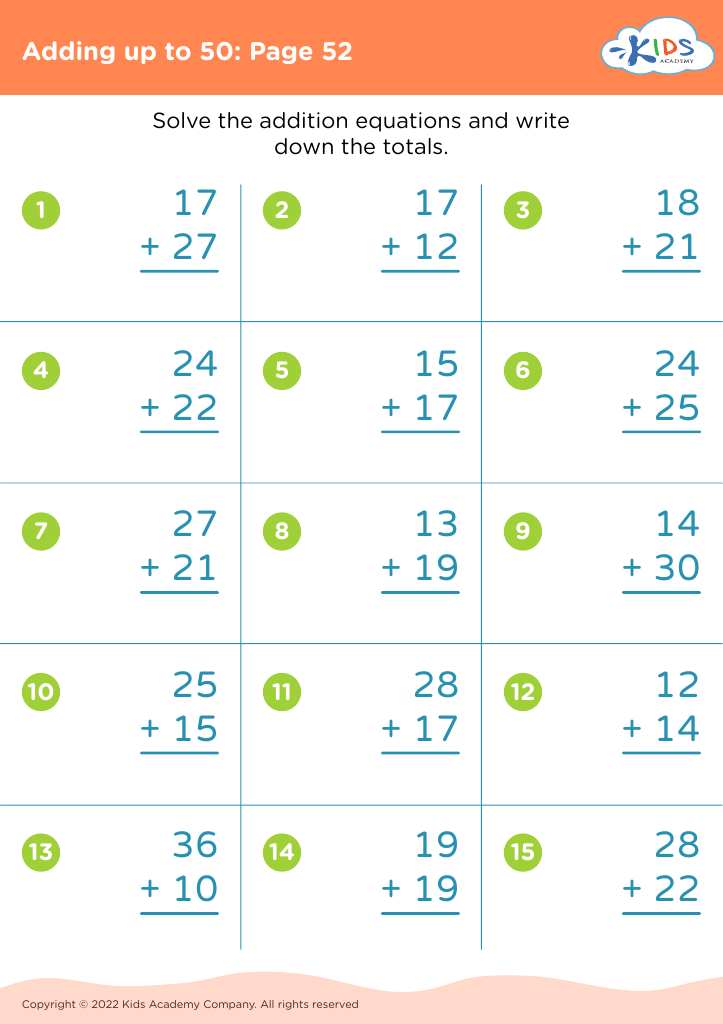
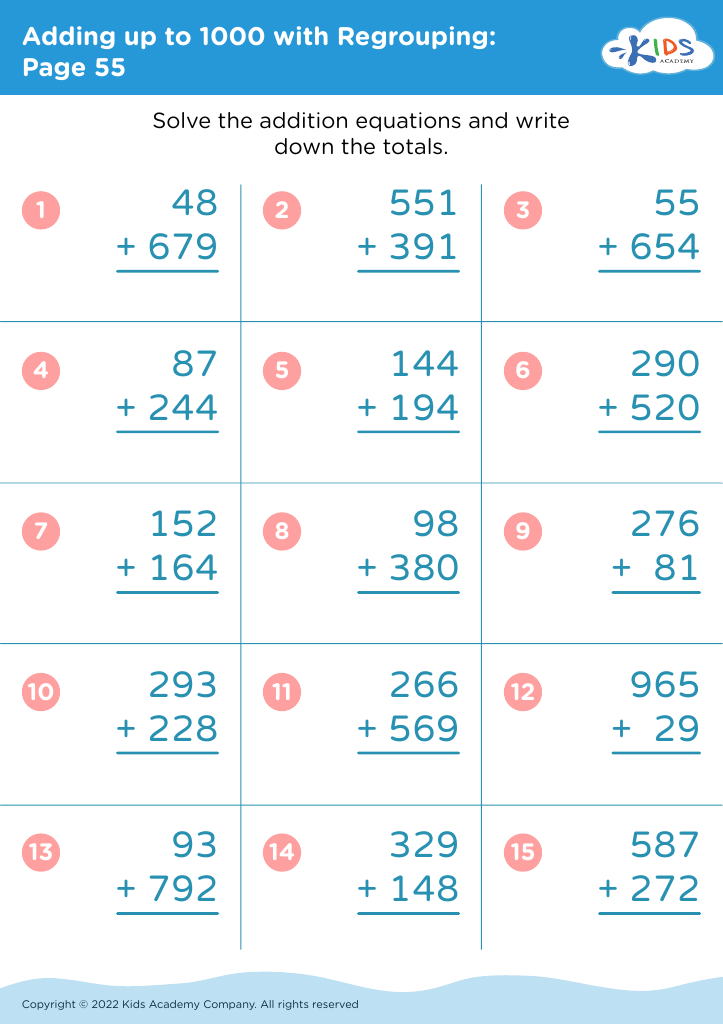
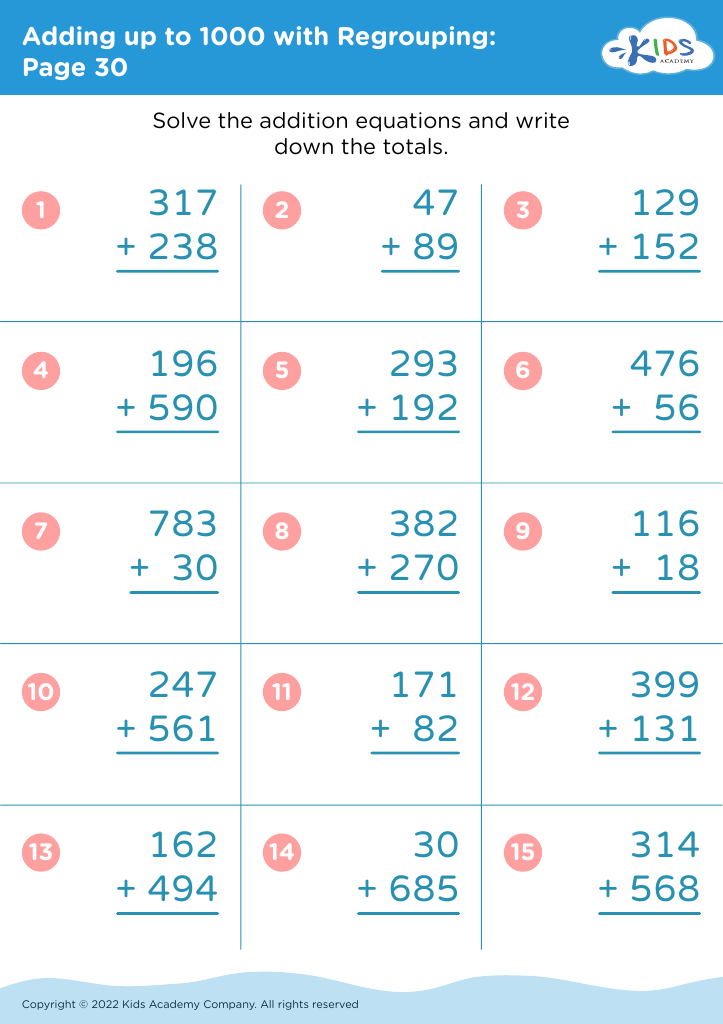
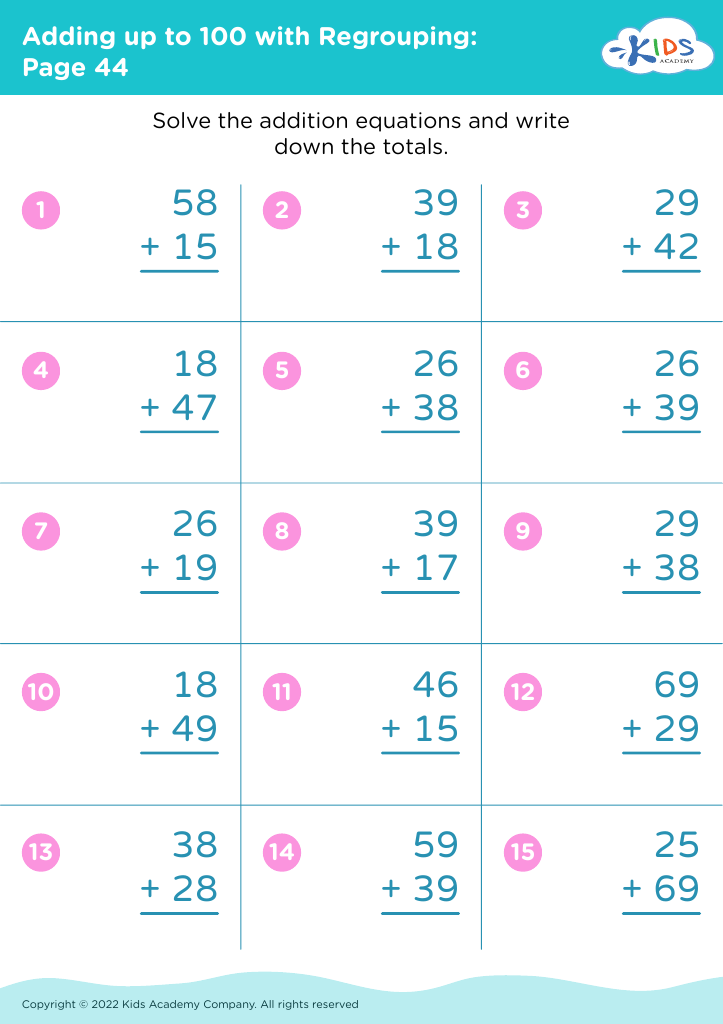
Unlock your child's potential with our "Enhancing Creativity Addition Worksheets for 7-Year-Olds." These carefully crafted worksheets inspire young learners by blending essential addition skills with engaging creative exercises. Each page challenges kids to think critically and bring their unique artistic flair to math problems. Our worksheets provide a fun, interactive approach to learning, fostering both academic growth and imaginative thinking. Ideal for home, school, or remote learning, these printable sheets make math exciting and approachable. Help your 7-year-old develop a love for math and an empowered sense of creativity with these dynamic addition activities. Explore now!








Enhancing creativity in addition for 7-year-olds is crucial for fostering mathematical understanding and critical thinking skills. At this age, children are more receptive to learning through creative and dynamic methods. Utilizing creative addition exercises can make mathematics more engaging and enjoyable, transforming a potentially tedious subject into one filled with curiosity and excitement. This positive association can cultivate a lifelong love for mathematics.
Moreover, creative addition activities often require children to think outside the box, enhancing their problem-solving and analytical skills. These abilities are foundational not just for mathematics, but for a wide range of educational and real-world scenarios. For example, approaching an addition problem from different angles can help children understand the flexibility and richness of numbers, aiding in the development of a more holistic mathematical perspective.
In addition, such creativity encourages children to experiment and make mistakes in a low-stakes environment, which is essential for effective learning. It promotes a growth mindset, teaching them that perseverance and effort lead to success.
Parents and teachers, therefore, should prioritize creative addition exercises to foster not only mathematical proficiency but also a range of cognitive skills that support overall academic and personal growth.








