Improve number recognition Addition Worksheets for 7-Year-Olds
15 filtered results
-
From - To
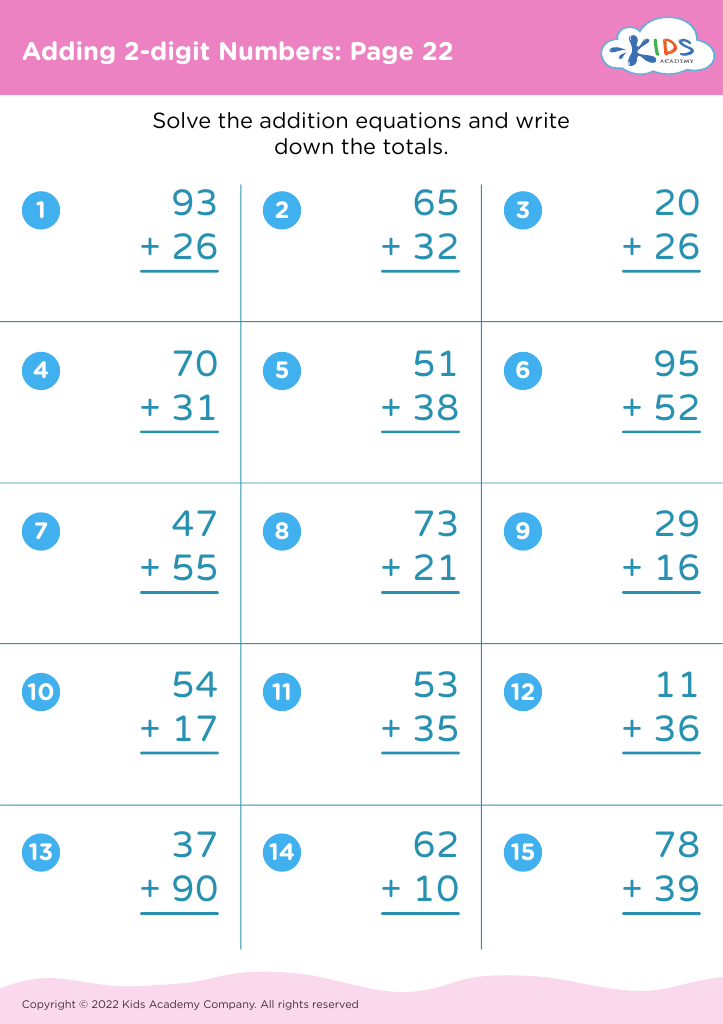
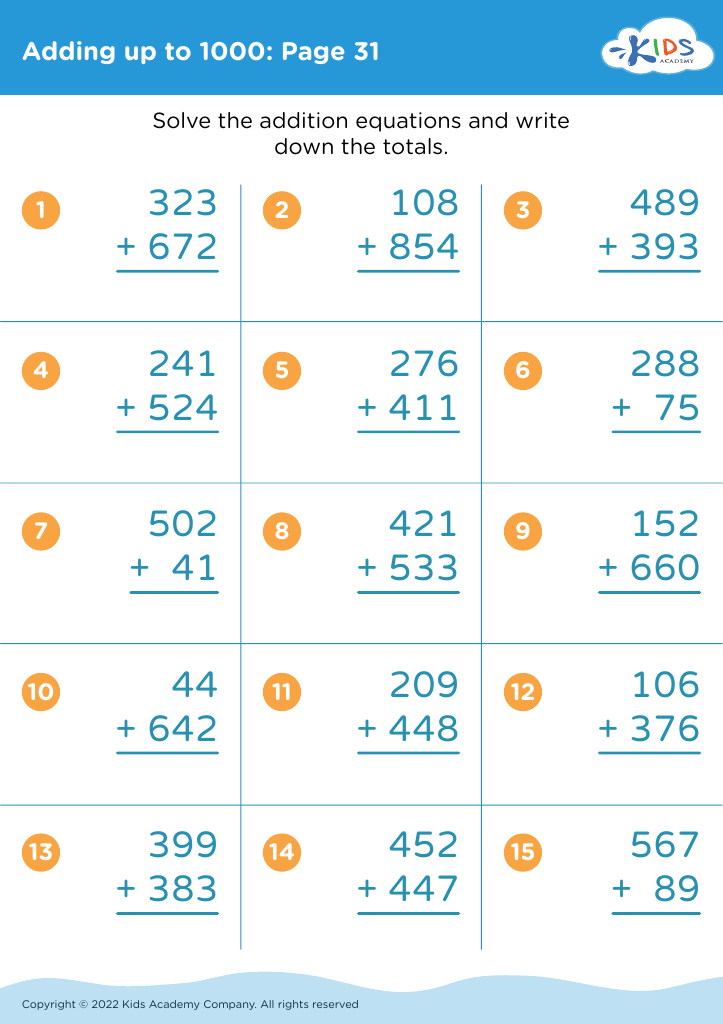
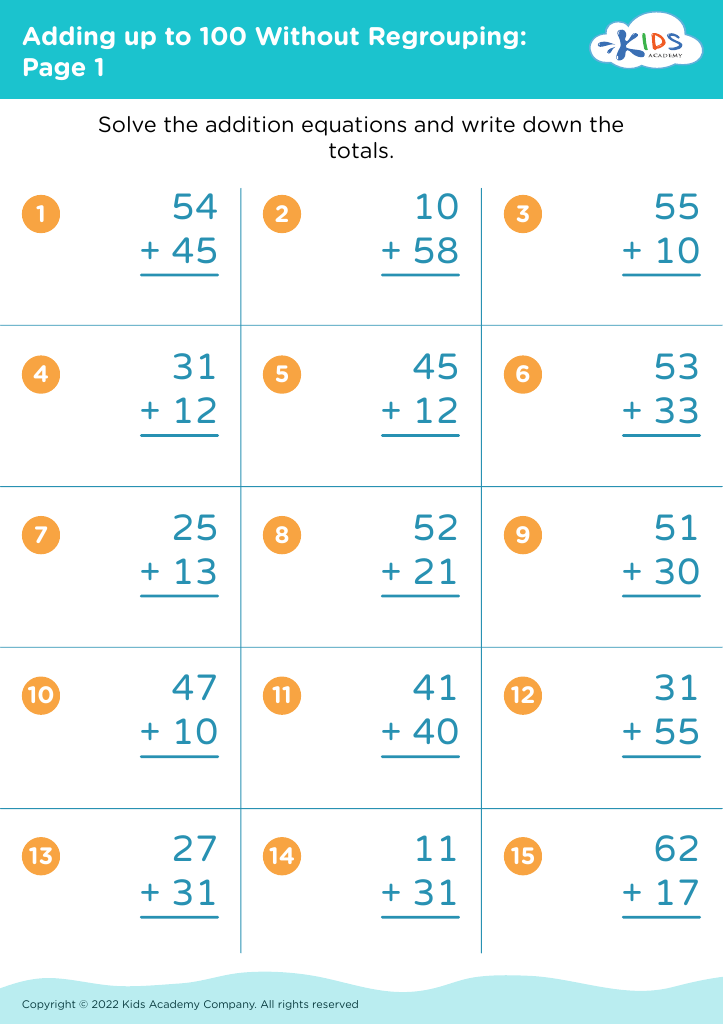
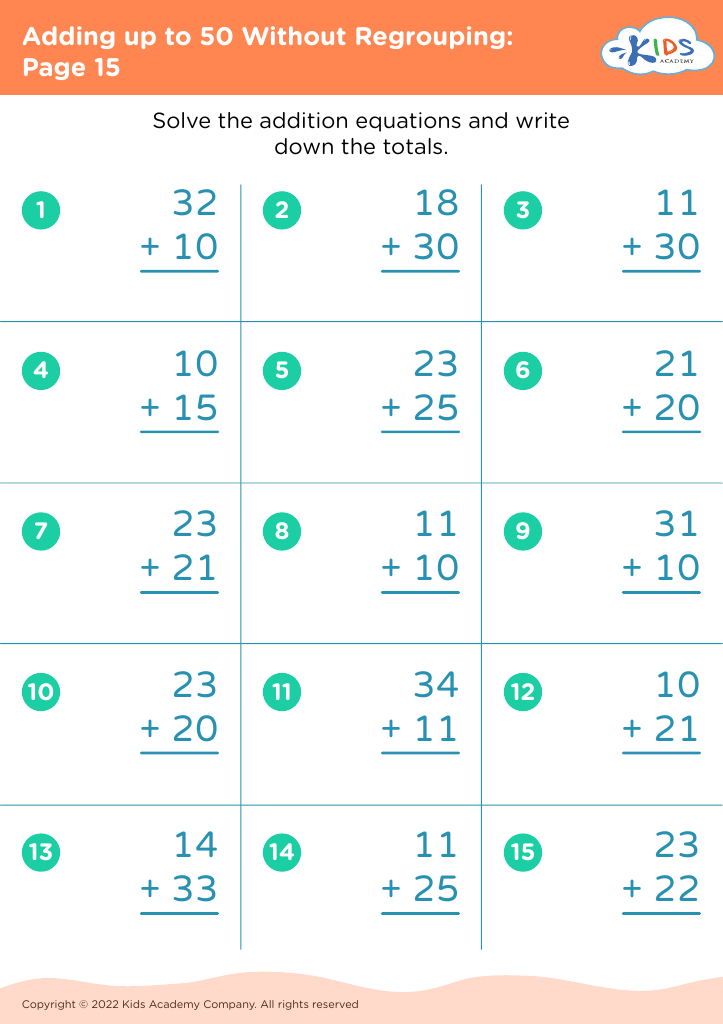
Enhance your 7-year-old’s mathematical foundation with our "Improve Number Recognition Addition Worksheets!" Designed to make learning fun and engaging, these worksheets combine number recognition with addition practice, helping children solidify essential math skills. Featuring colorful illustrations and age-appropriate challenges, our resources ensure that kids can easily identify numbers and confidently tackle addition problems. Whether used at home or in the classroom, these interactive worksheets promote essential cognitive development and nurture a love for learning. Explore our diverse collection today and encourage your child's mastery of numbers while laying the groundwork for their future in mathematics!
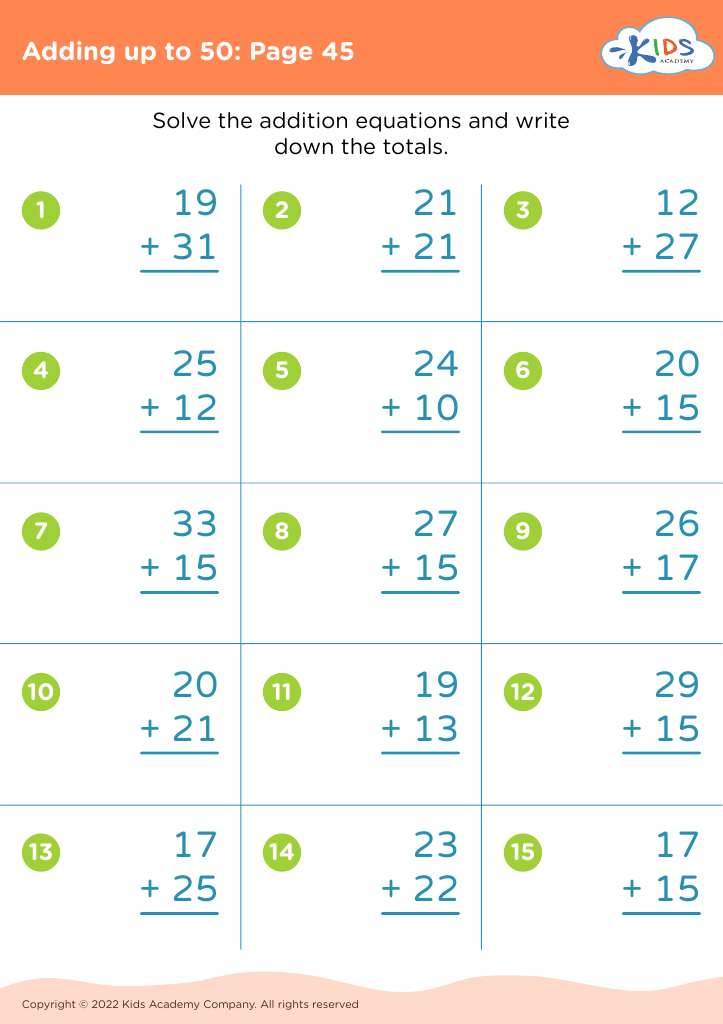
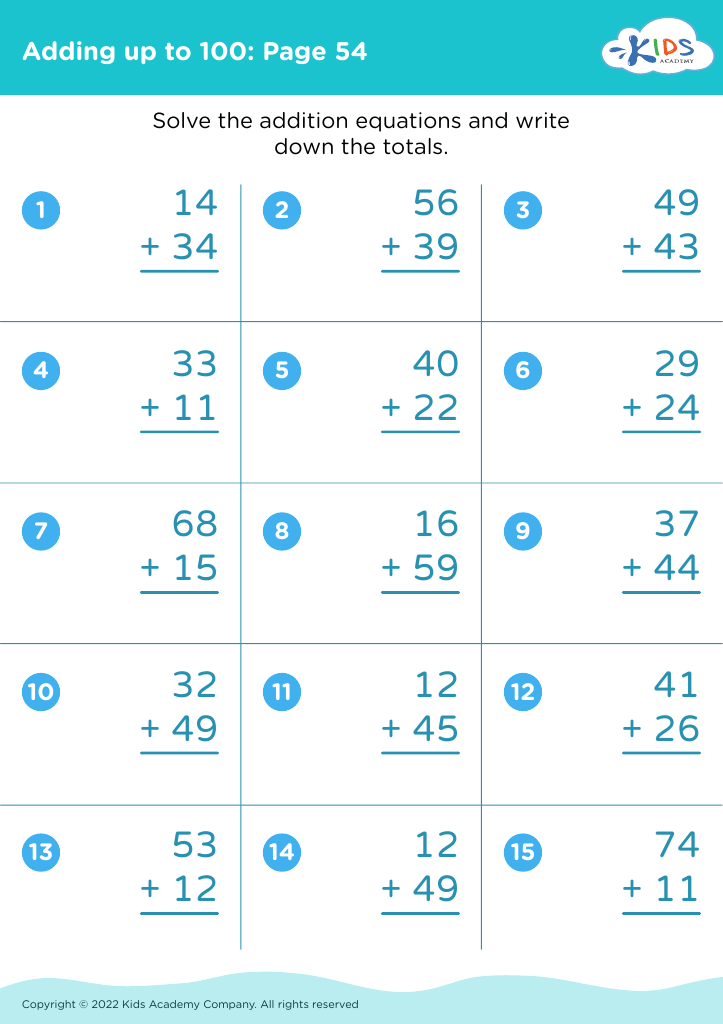
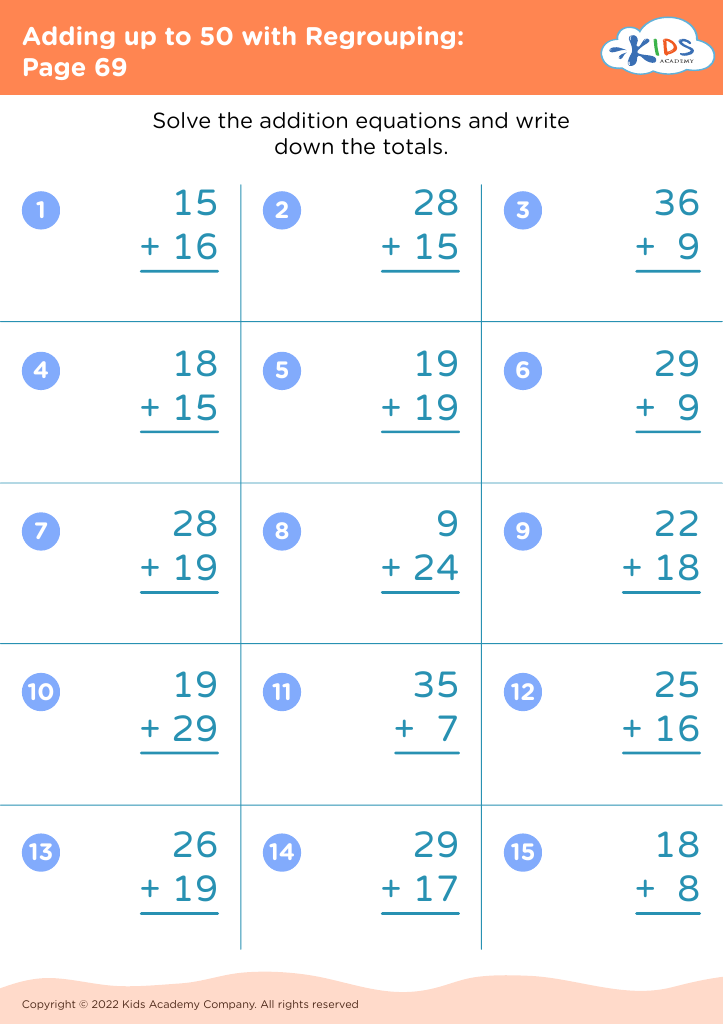
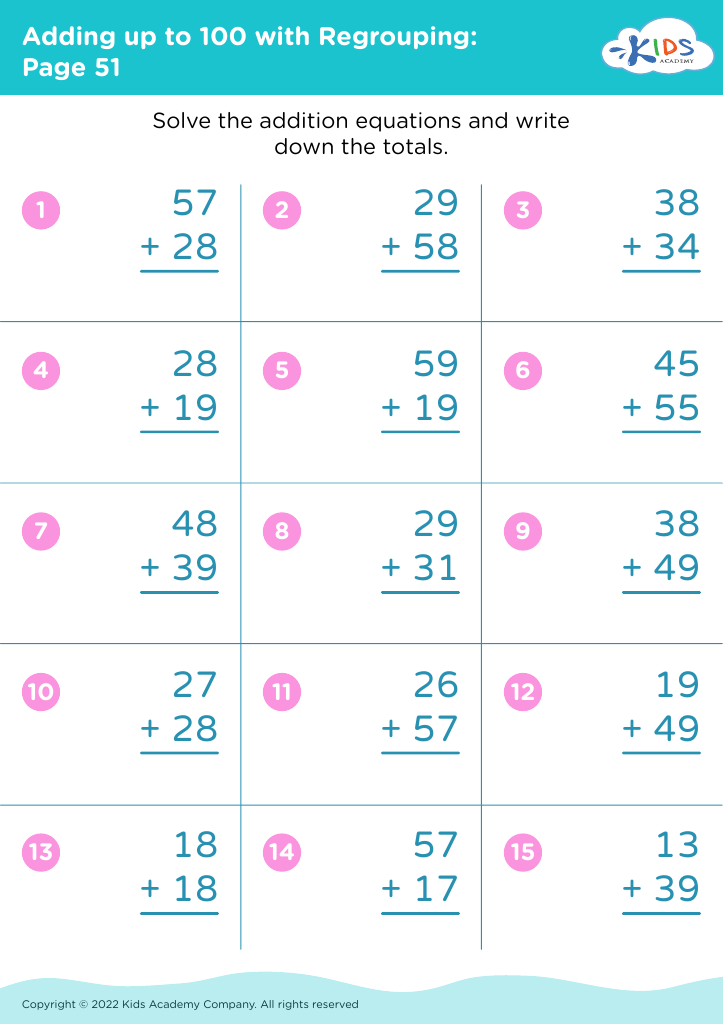
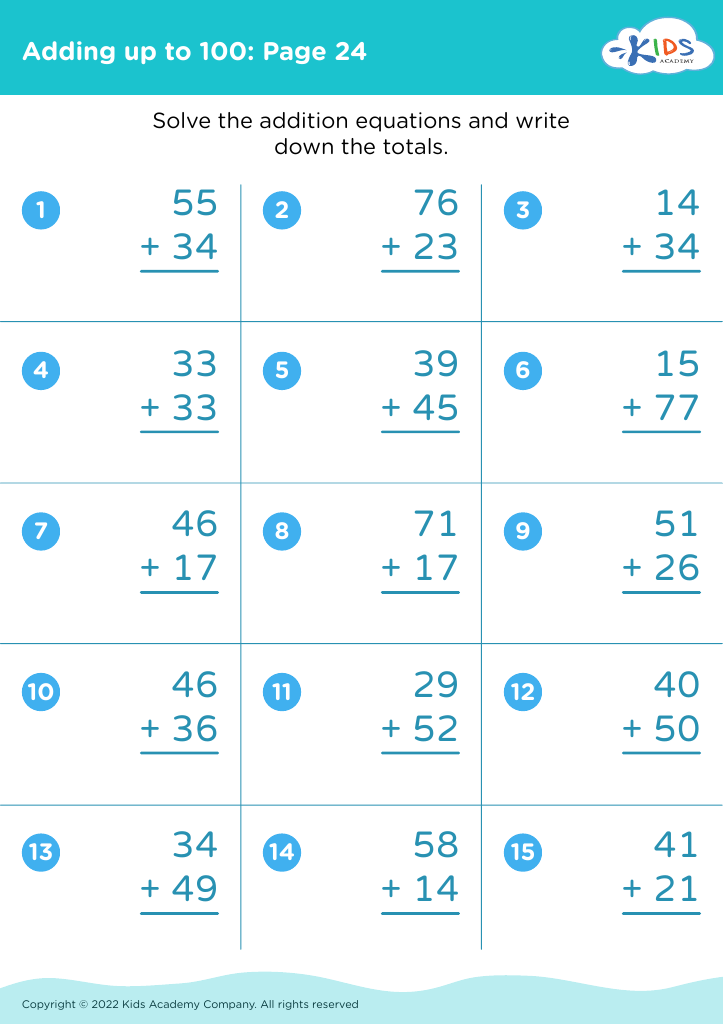
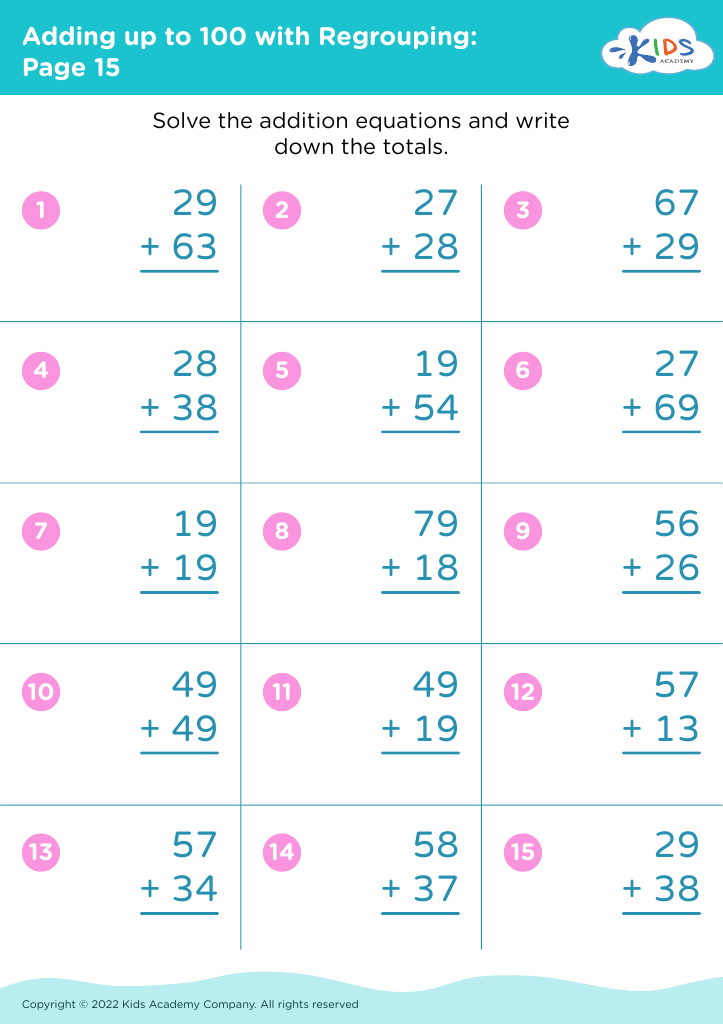
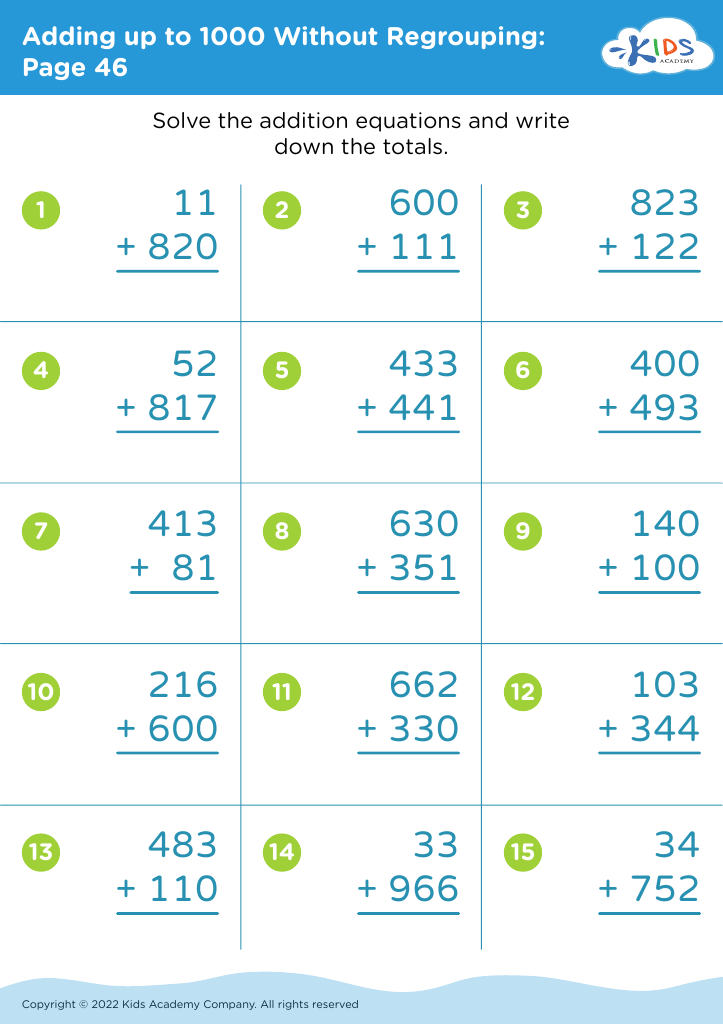
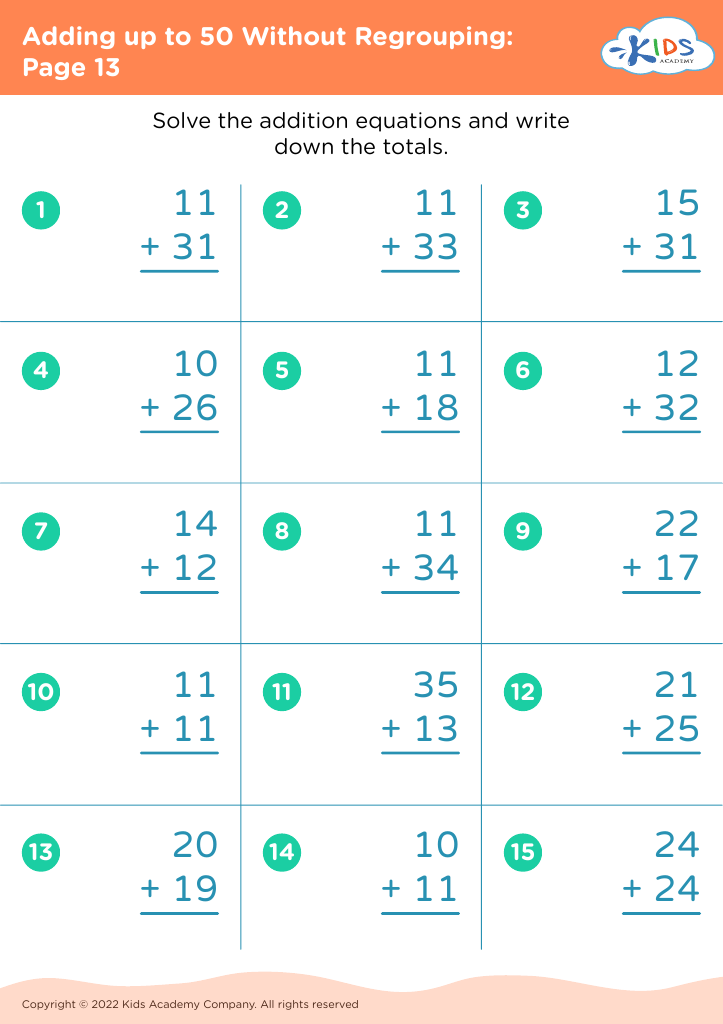
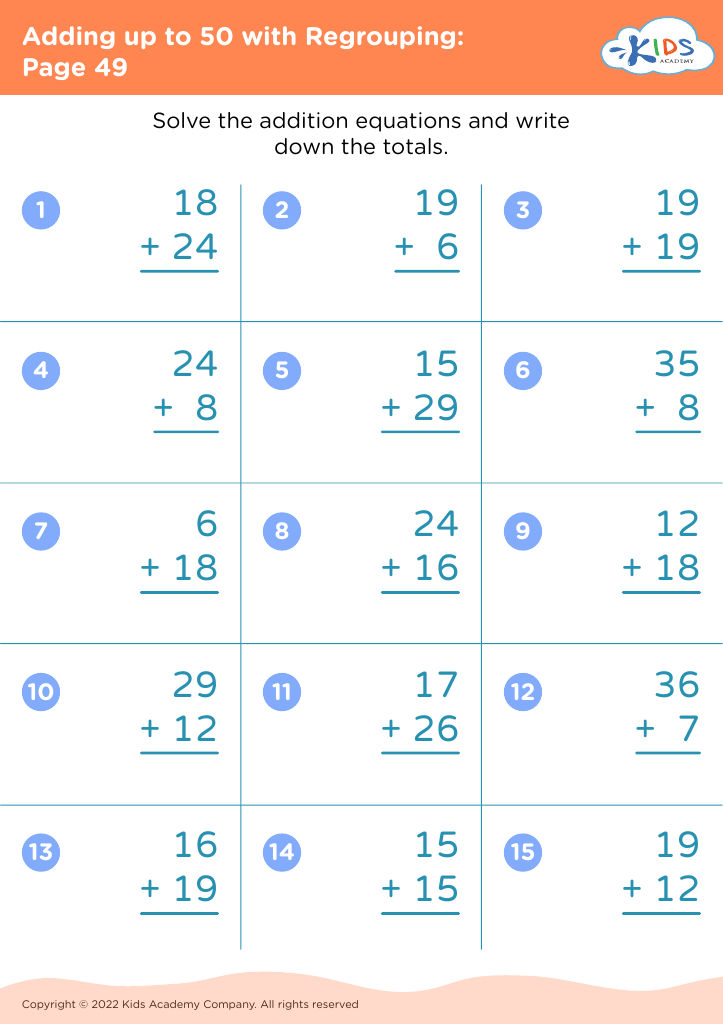
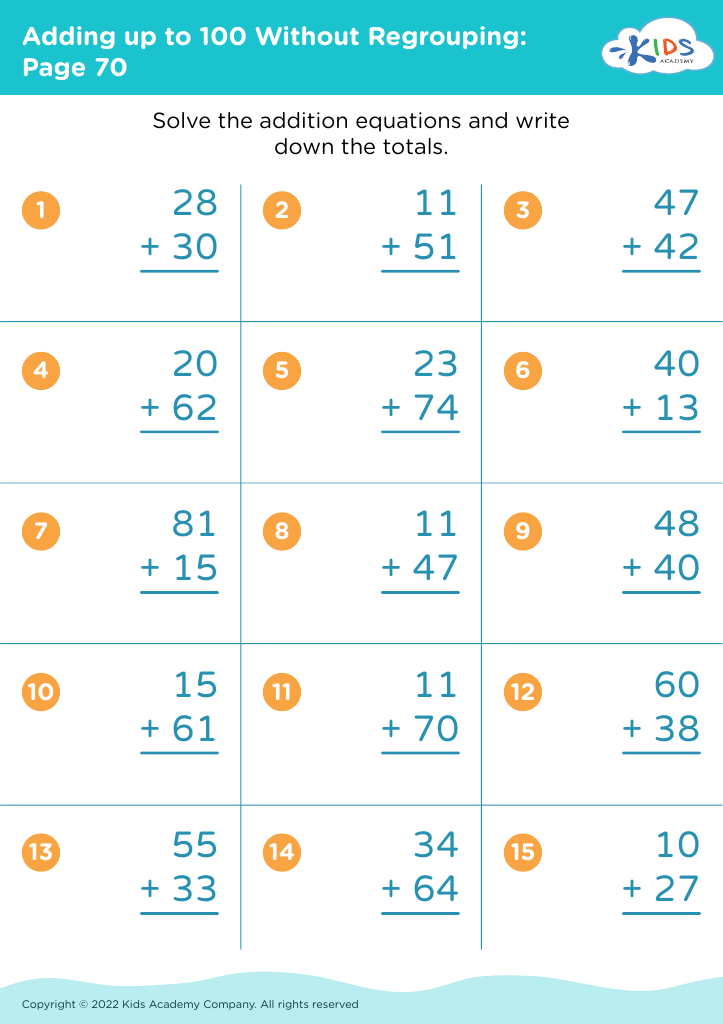
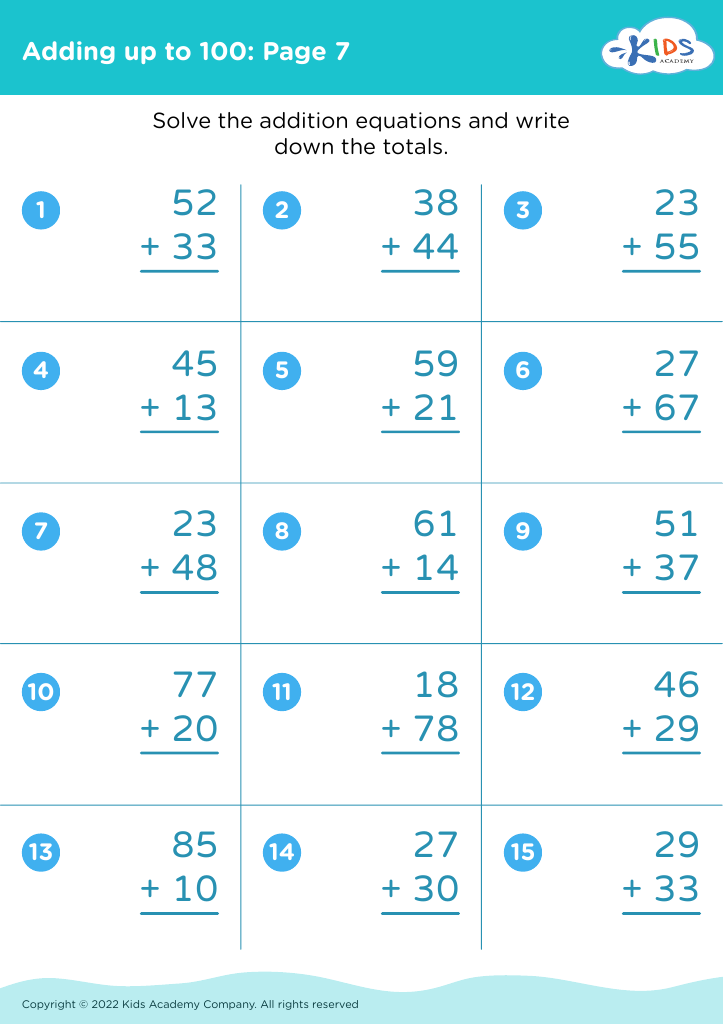








Improving number recognition and addition skills in 7-year-olds is crucial for several reasons, making it a priority for parents and teachers. At this age, children are developing foundational math skills that will serve as building blocks for their future academic success. Strong number recognition skills help children understand quantities, compare numbers, and comprehend numerical concepts. This not only boosts their confidence but also enhances their problem-solving abilities.
Furthermore, addition is one of the core mathematical operations that children utilize in daily life. Mastery of addition enables them to progress to more complex math topics, such as subtraction, multiplication, and division. It also prepares them for real-world applications, such as budgeting or comparing prices.
Moreover, early math skills have been linked to later academic achievement. Children who struggle with basic math can experience long-lasting effects, including diminished interest in mathematics and overall reduced academic performance. By focusing on improving number recognition and addition skills, parents and teachers can foster a positive learning environment, encourage a love for numbers, and ensure children develop the necessary competencies for their future educational journey. Supporting children at this stage sets them up for success, both academically and in their daily lives.








