Letter recognition Addition Worksheets for 7-Year-Olds
3 filtered results
-
From - To
Welcome to our "Letter Recognition Addition Worksheets" designed specifically for 7-year-olds! These engaging worksheets combine essential math skills with fun letter recognition activities. Kids will not only practice addition problems but also enhance their understanding of letters and their sounds. Each worksheet features colorful illustrations and interactive exercises that keep young learners motivated and excited about learning. Perfect for at-home or classroom use, these resources promote a well-rounded educational experience. Help your child strengthen their math and literacy skills simultaneously while having fun! Download your free worksheets today and watch your 7-year-old excel in both letter recognition and addition!
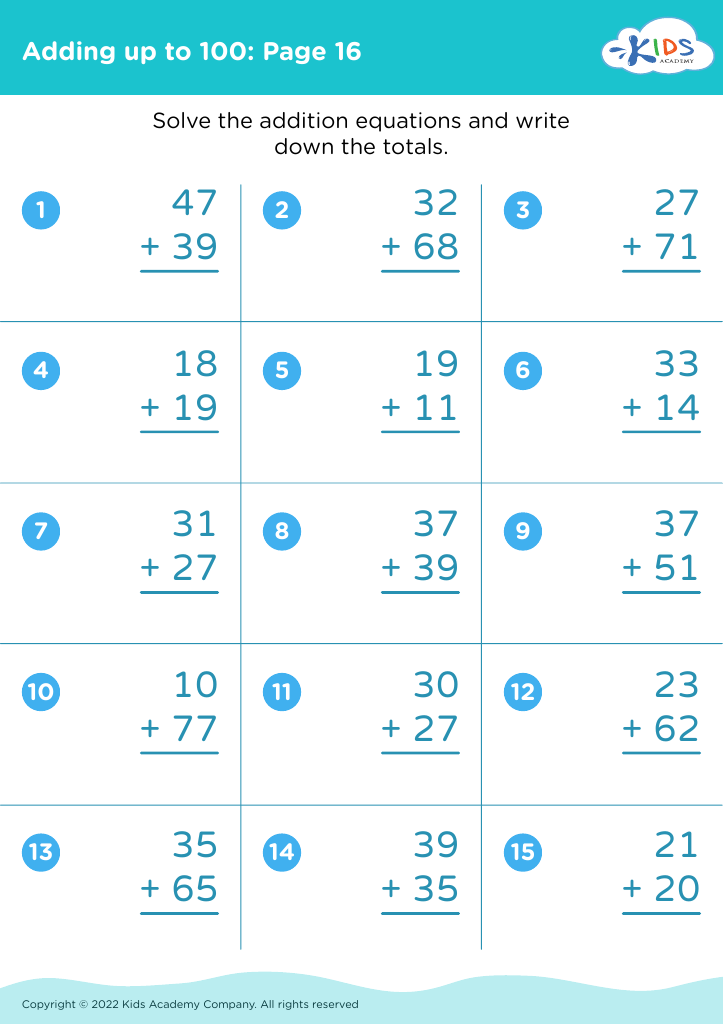
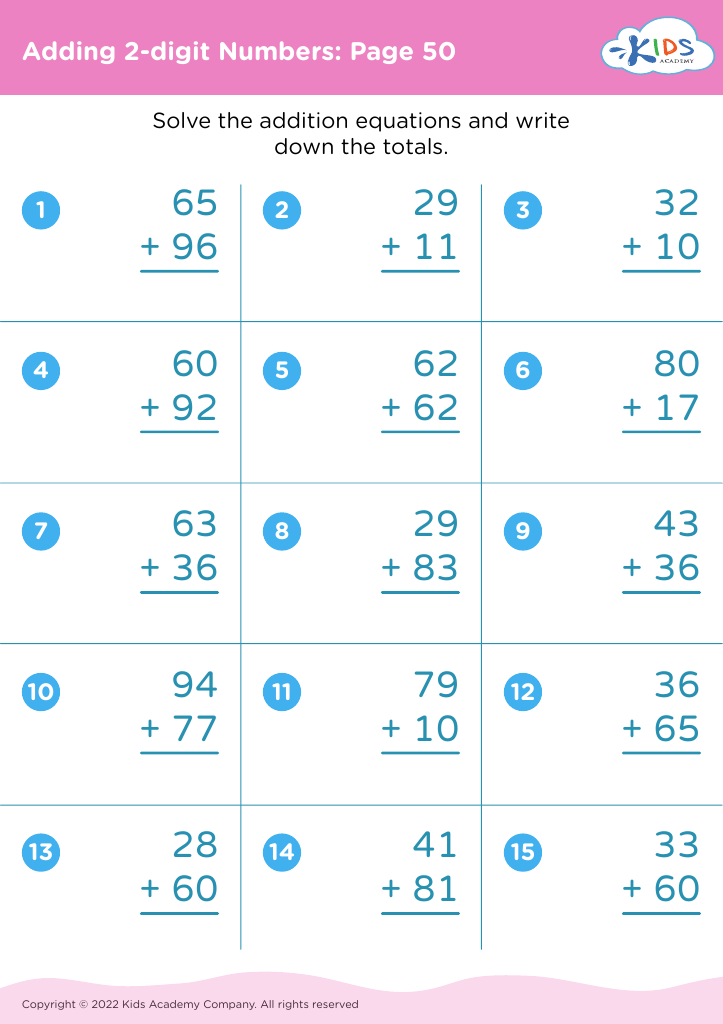
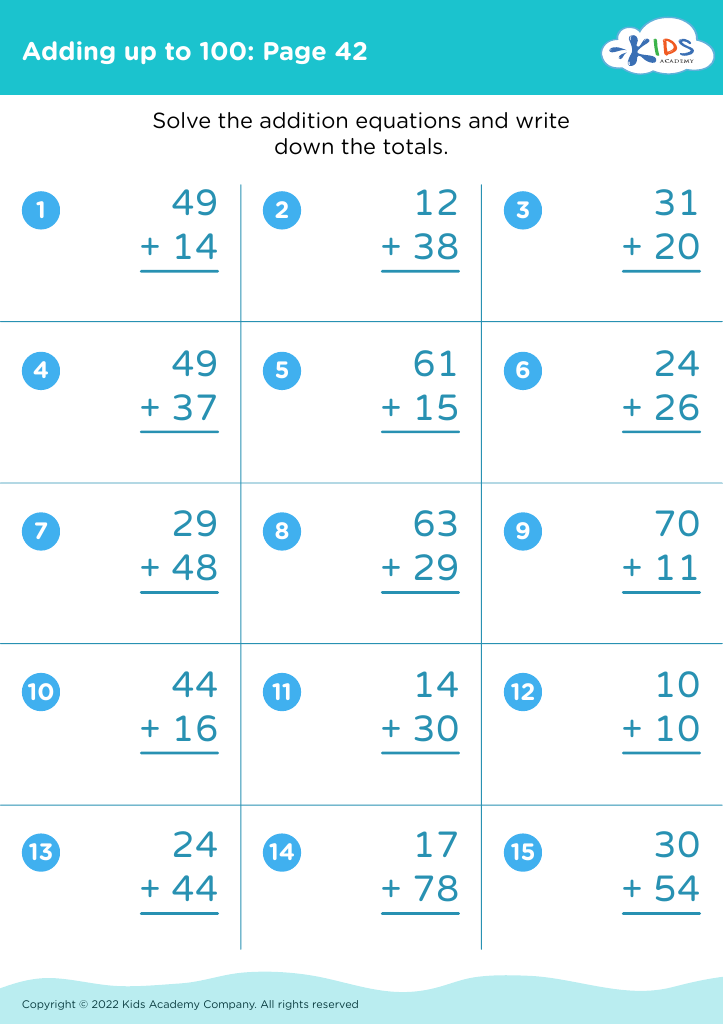








Letter recognition and addition are foundational skills that play a crucial role in a 7-year-old’s academic development. Understanding letters helps children to process language, enabling them to read, write, and communicate effectively. This skill fosters literacy, which is essential for overall learning. When children recognize letters, they can decode words, comprehend texts, and express themselves clearly, laying the groundwork for future educational success.
On the other hand, addition is a fundamental math skill that supports critical thinking, problem-solving, and logical reasoning. Mastering basic addition enables children to tackle more advanced mathematical concepts as they progress in their education. Parents and teachers should prioritize these areas, as they significantly impact a child's confidence and motivation in learning.
Furthermore, both skills promote cognitive development and encourage a love for learning. Engaging with letters and numbers through fun activities, games, and discussions can make learning enjoyable and inspiring. When parents and teachers exhibit a strong interest in these skills, it cultivates a positive educational environment, leading children to explore further and develop a growth mindset. By nurturing these essential competencies, adults can reassure children that they are equipped for future challenges in school and beyond.








