Motor skills development Addition Worksheets for 7-Year-Olds
4 filtered results
-
From - To
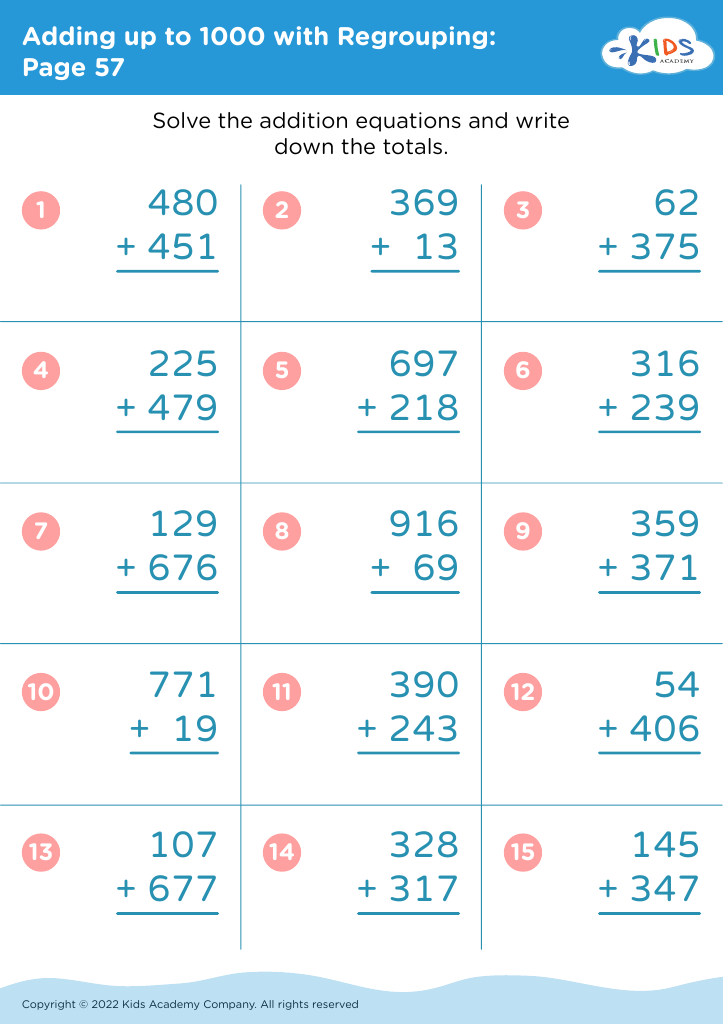
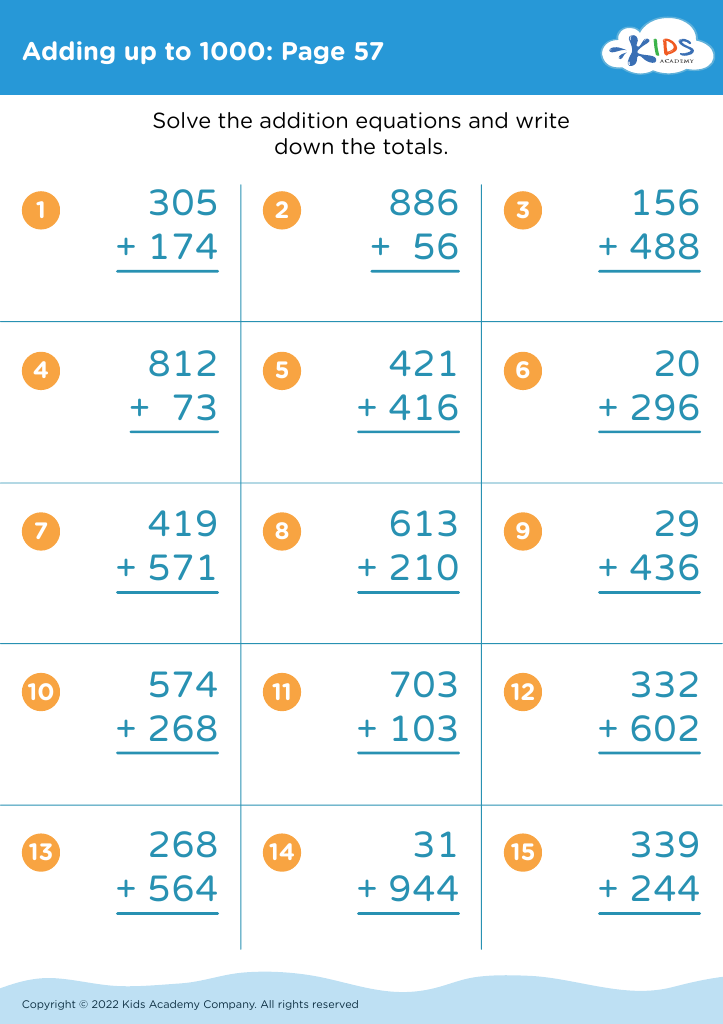
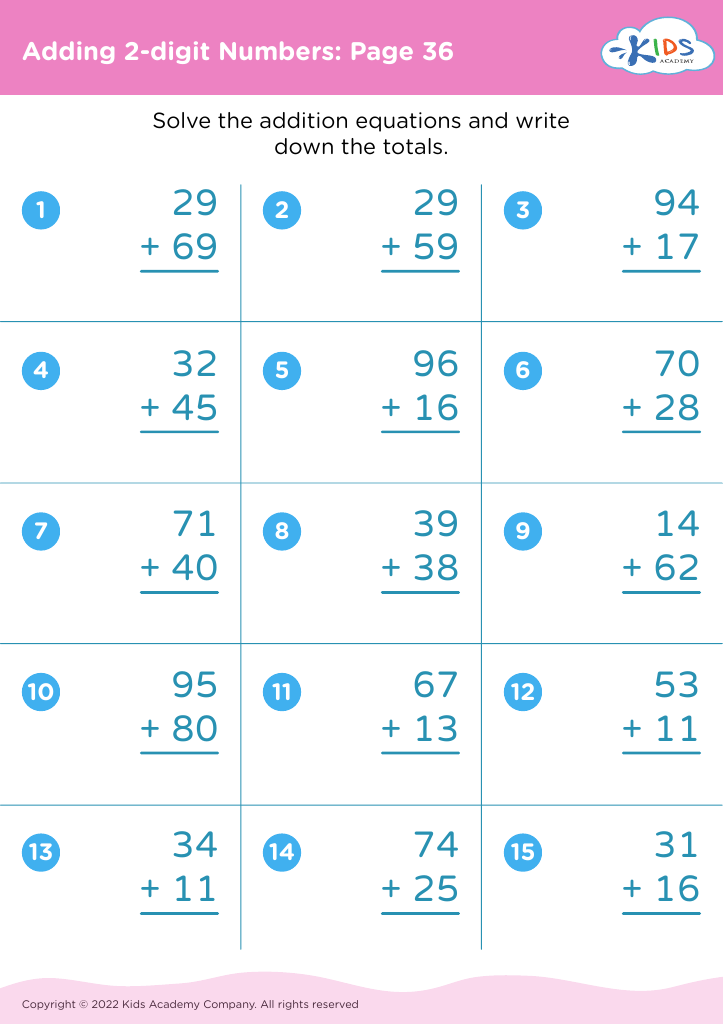
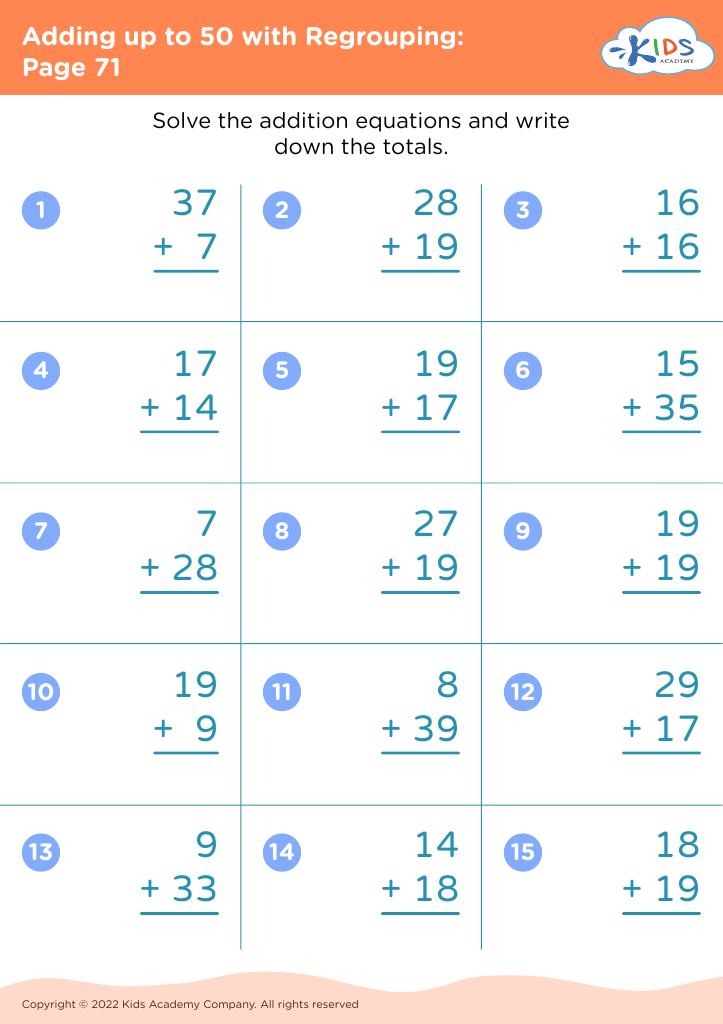
Enhance your child's motor skills while reinforcing their addition abilities with our specialized worksheets designed for 7-year-olds! Our engaging activities seamlessly combine arithmetic practice with fine motor skills development, allowing kids to strengthen hand-eye coordination and dexterity. These worksheets feature fun, age-appropriate exercises that captivate and motivate young learners. From tracing numbers to engaging in hands-on addition tasks, these interactive resources stimulate cognitive growth while keeping children actively involved. Perfect for homework or classroom use, these printable addition worksheets provide a playful, educational experience tailored to foster both math proficiency and essential motor skills. Start your child's learning adventure today!








Motor skills development is crucial for 7-year-olds as it significantly impacts their overall growth and learning. At this age, children are refining both fine and gross motor skills, which are foundational for academic success and daily living activities. Fine motor skills, such as gripping a pencil or cutting with scissors, are essential for writing and crafting, while gross motor skills, like running and jumping, support physical health, coordination, and team interactions.
Parents and teachers should care about motor skills as they are linked to critical cognitive and social-emotional development. Well-developed motor skills enhance a child’s ability to focus, learn, and participate in physical activities, contributing to improved confidence and self-esteem. Children with strong motor skills are often better able to engage in cooperative play and sports, fostering important social skills and teamwork.
Moreover, as children become more involved in structured activities, such as sports or arts, the need for adept motor skills becomes evident. Insufficient development can lead to frustration or disengagement from peers. Encouraging development through play, targeted activities, and positive reinforcement helps lay a solid foundation for lifelong skills, promoting not just physical proficiency but also cognitive and emotional well-being.








