
Multiplication practice Addition Worksheets for 7-Year-Olds
3 filtered results
Difficulty Level
Grade
Age
-
From - To
Subject
Activity
Standards
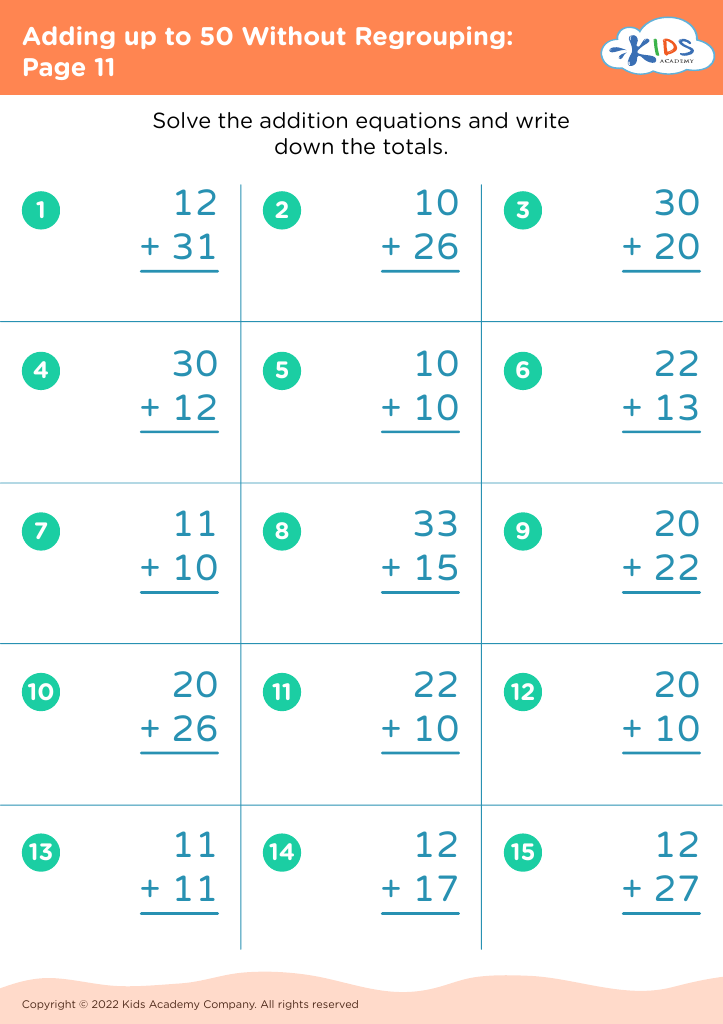
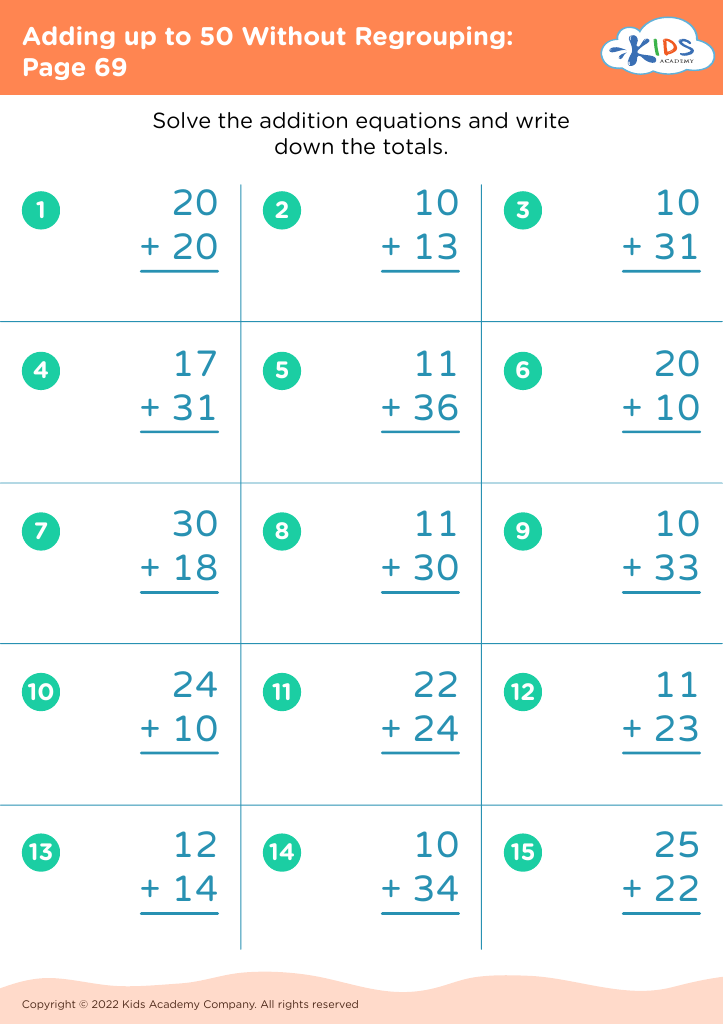
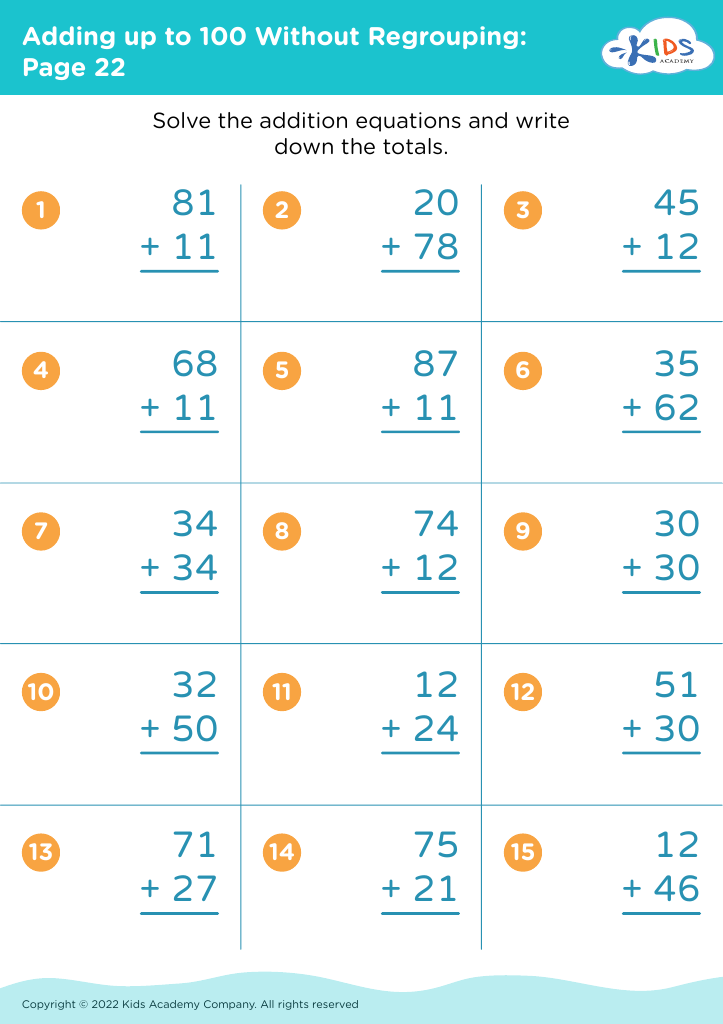
Our Multiplication Practice Addition Worksheets for 7-year-olds offer a unique blend of learning for young minds. Designed to build foundational math skills, these worksheets combine multiplication and addition problems to enhance understanding and fluency. Each sheet is crafted to challenge and engage, making math practice fun and effective. These resources help young learners strengthen their arithmetic abilities, prepare for more advanced concepts, and boost their confidence in math. Ideal for home or classroom use, they are perfect for parents and teachers aiming to provide comprehensive and supportive math education. Dive into learning with our expertly curated worksheets today!
Favorites
With answer key
Interactive
Join Kids Academy for Free
Who is primarily going to use this learning content?








Multiplication and addition practice for 7-year-olds is crucial because these foundational math skills support cognitive development and future academic success. At this age, children are developing their number sense, which is the ability to understand and work with numbers. Addition serves as the basis for more advanced mathematical operations, helping kids grasp concepts like counting, number patterns, and the relationship between numbers.
Introducing multiplication at this stage further enhances a child's understanding of how numbers relate to each other. It builds on addition by introducing repeated addition, which is much easier for children to grasp once they have strong addition skills. This prepares them for more complex math tasks and problem-solving abilities, contributing to their overall critical thinking skills.
Both practices foster confidence and a positive attitude towards math, which is essential for continued educational enthusiasm and perseverance. When parents and teachers focus on these skills, they also encourage logical reasoning and a structured approach to thinking, which can positively affect other areas of learning and everyday life. Early introduction and consistent practice in addition and multiplication set a solid mathematical foundation that helps children tackle more advanced math concepts with greater ease in subsequent grades.








