
Sequencing Skills Addition Worksheets for 7-Year-Olds
3 filtered results
Difficulty Level
Grade
Age
-
From - To
Subject
Activity
Standards
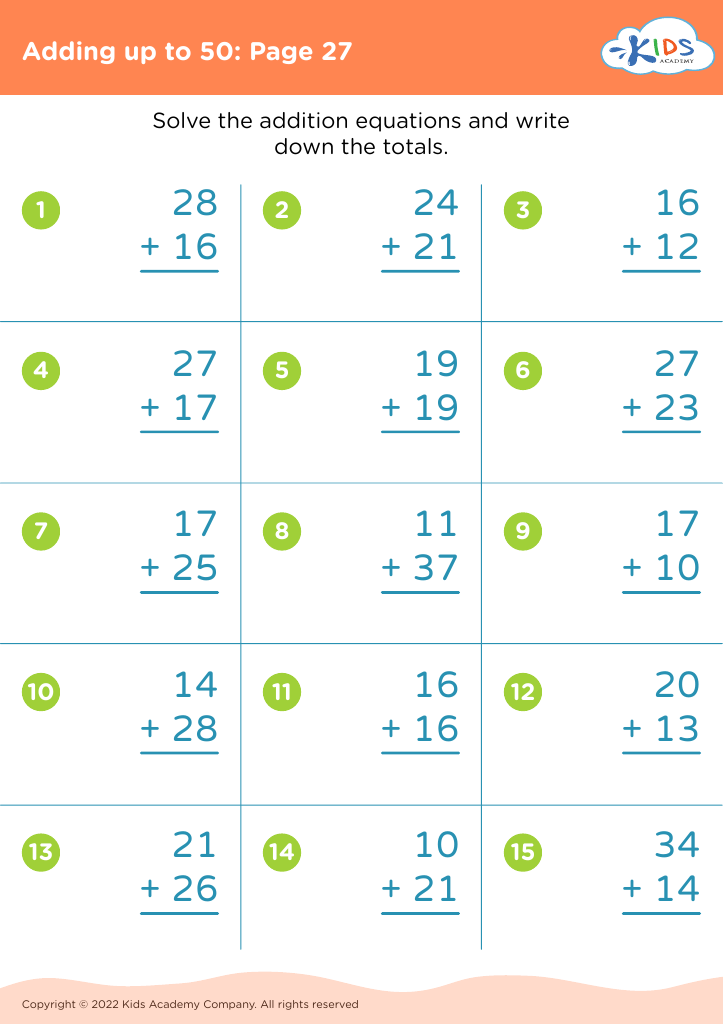
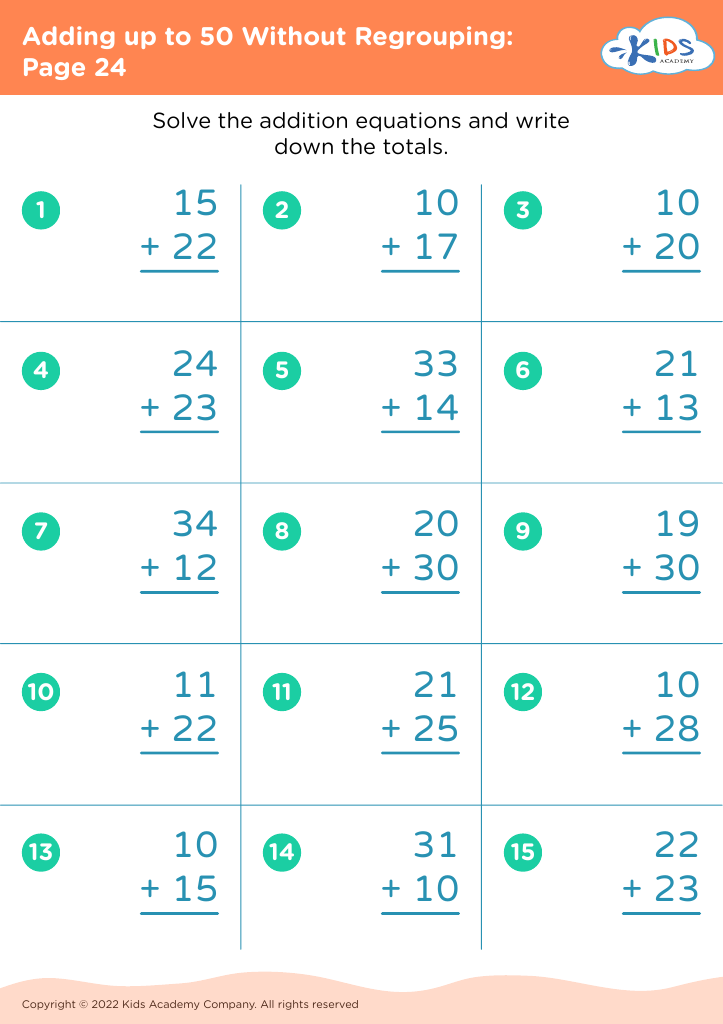
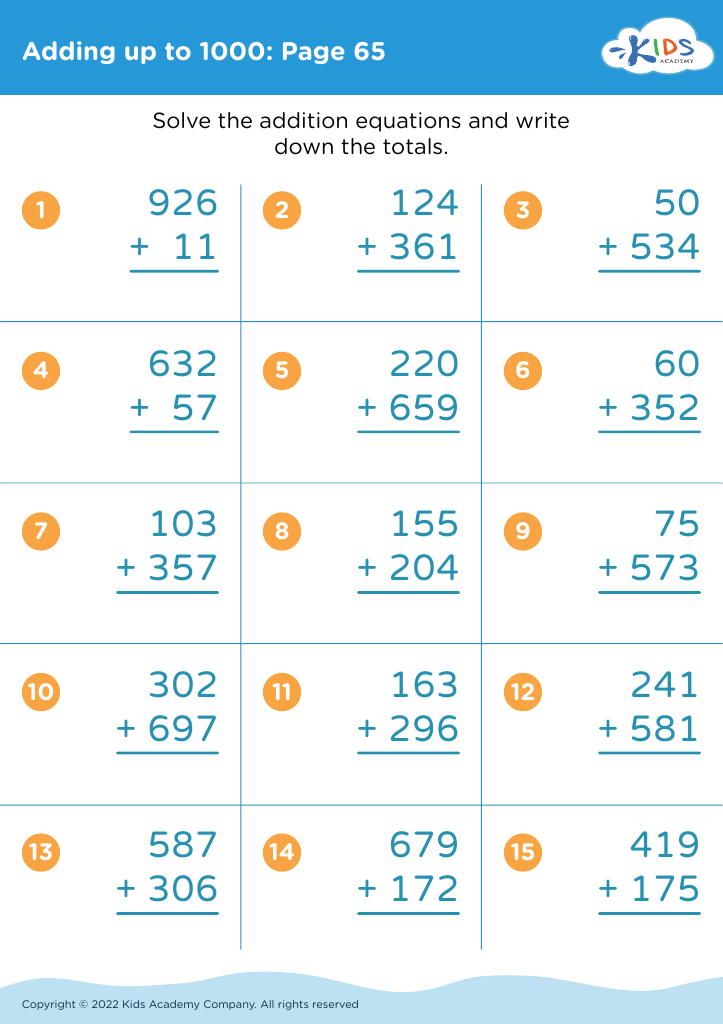
Develop your child's math abilities with our Sequencing Skills Addition Worksheets for 7-year-olds. These engaging, age-appropriate worksheets focus on enhancing sequencing skills while reinforcing addition concepts. Perfect for home or classroom use, each activity is designed to make learning fun and effective. By arranging numbers in the correct sequence and solving addition problems, children build a strong mathematical foundation. Ideal for Grade 2 students, these worksheets not only boost math proficiency but also improve logical thinking and problem-solving skills. Discover the ideal resource to support your child's learning journey today!
Favorites
With answer key
Interactive
Join Kids Academy for Free
Who is primarily going to use this learning content?








Sequencing skills are crucial for 7-year-olds as they provide a foundation for various cognitive and academic abilities. Sequencing is the ability to understand the order of events, actions, or instructions. This skill supports early literacy because comprehending a story requires understanding the sequence of events. When children can follow and retell stories in the correct order, their reading comprehension improves. Additionally, sequencing is fundamental for mathematical problem-solving. Performing multi-step arithmetic problems, like addition, involves a sequence of operations that must be followed correctly.
Sequencing skills also facilitate language development and communication. Children who can effectively sequence their thoughts and ideas are better at expressing themselves clearly and logically, both in writing and speaking. Furthermore, in everyday life, many tasks require sequencing, such as getting dressed, following a recipe, or completing a project. Children with strong sequencing abilities are generally more organized and can complete tasks more efficiently.
In essence, by helping 7-year-olds develop strong sequencing skills, parents and teachers are laying the groundwork for future success in reading, math, effective communication, and daily functioning. These skills not only boost academic performance but also enhance overall cognitive development, ensuring children are prepared for more complex tasks as they grow.








