Filters

19 filtered results

Clear all filters
Favorites
With answer key
Interactive

19 filtered results

Difficulty Level

Grade


Welcome to our "Understand Fractions Addition Worksheets" designed specifically for 7-year-olds! These engaging worksheets help young learners grasp the fundamental concepts of fraction addition in a fun and interactive way. With colorful visuals, relatable scenarios, and straightforward instructions, children can practice adding fractions with like denominators, as well as simple mixed numbers. Our exercises cater to different learning styles and ensure that kids build confidence while improving their math skills. Perfect for classroom use or at-home learning, these worksheets offer valuable practice that reinforces essential math concepts. Explore and help your child master addition with fractions today!
Check out this FREE Trial Lesson on Addition for age 7!

Sorting Objects into 3 Categories

Favorites
With answer key
Interactive
  • 7
  • Understand fractions
  • Addition
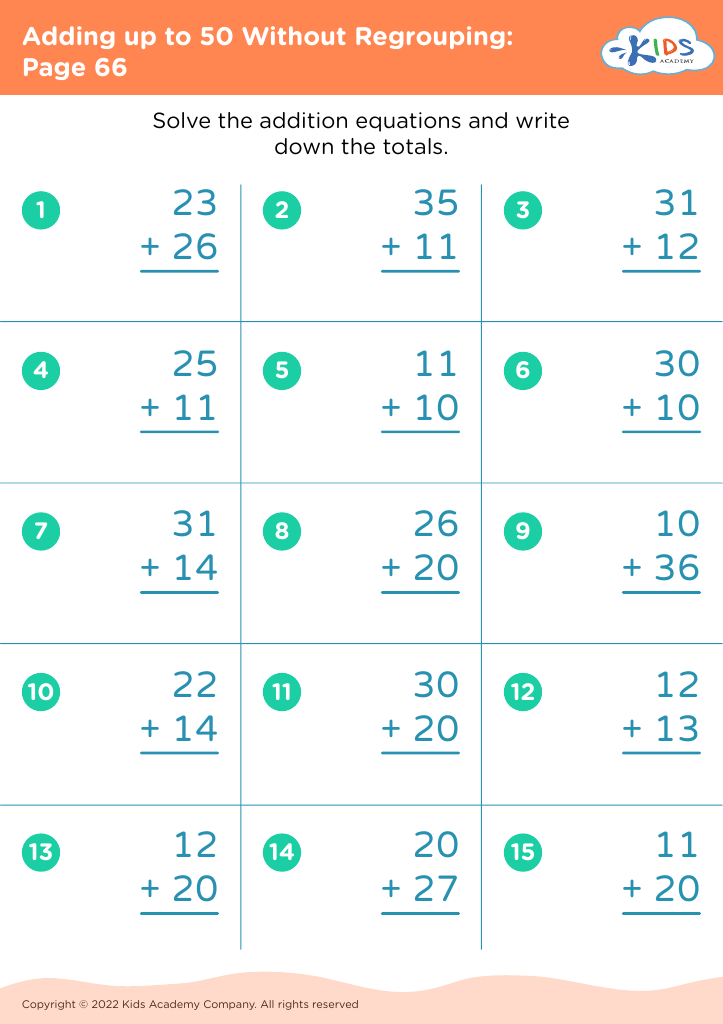
Adding up to 50 Without Regrouping: Page 66
Worksheet
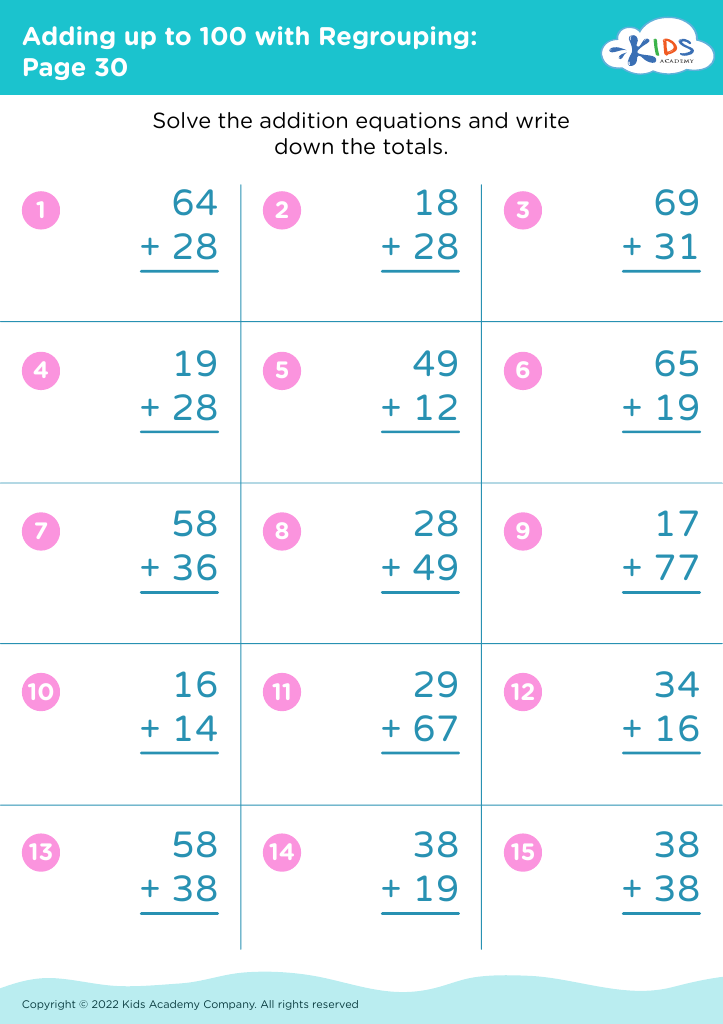
Adding up to 100 with Regrouping: Page 30
Worksheet
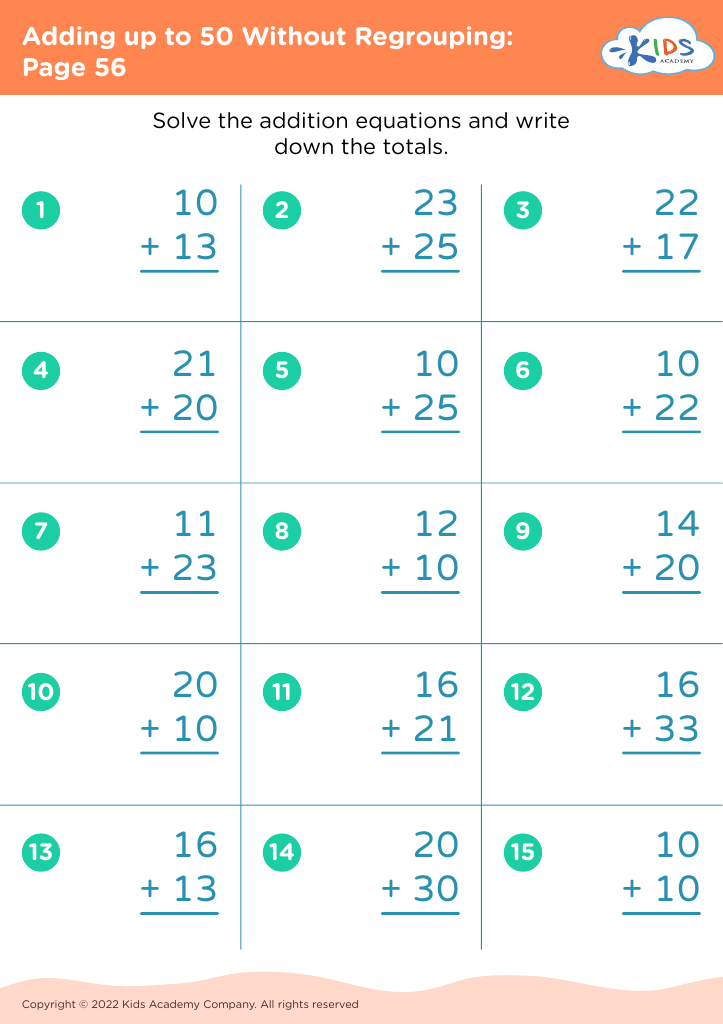
Adding up to 50 Without Regrouping: Page 56
Worksheet
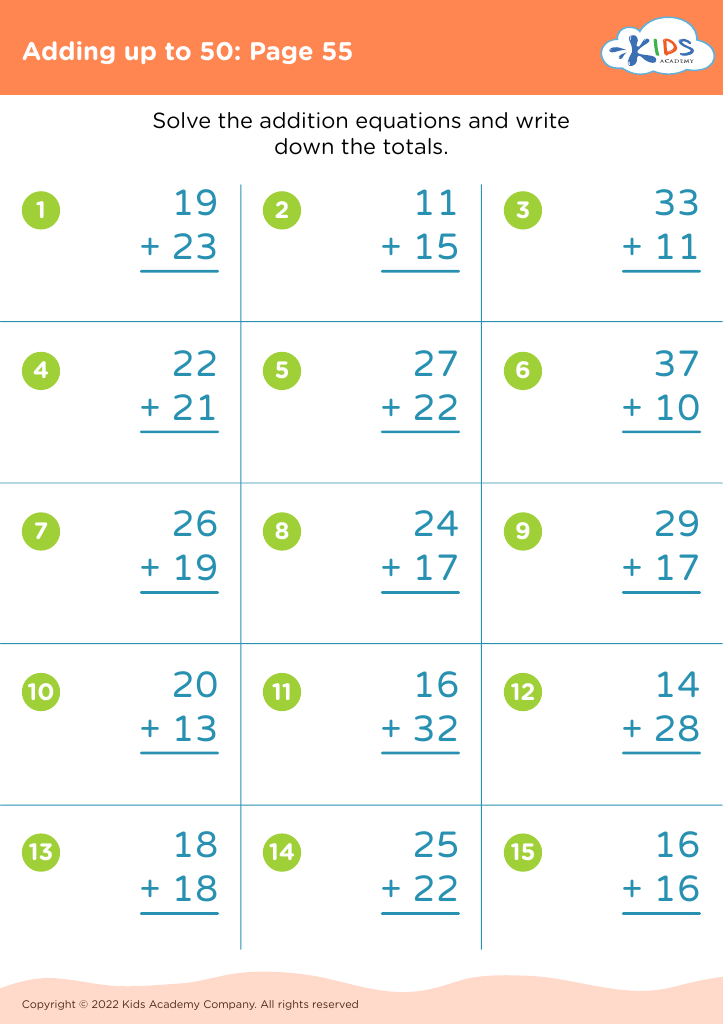
Adding up to 50: Page 55

Adding up to 50: Page 55

Adding up to 50: Page 55
Worksheet
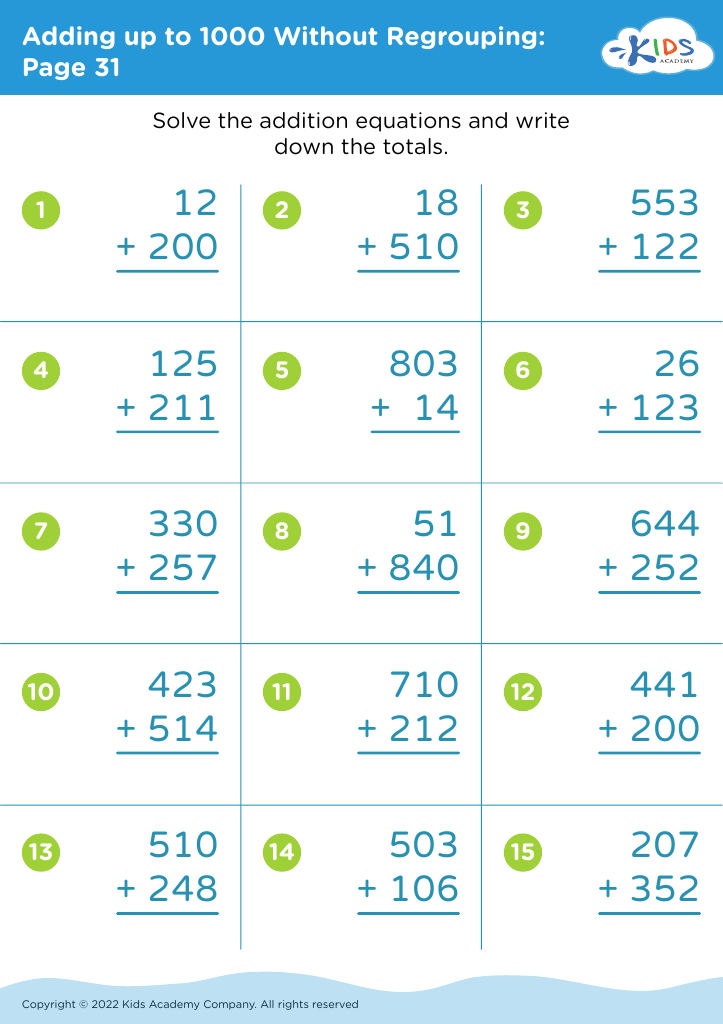
Adding up to 1000 Without Regrouping: Page 31
Worksheet
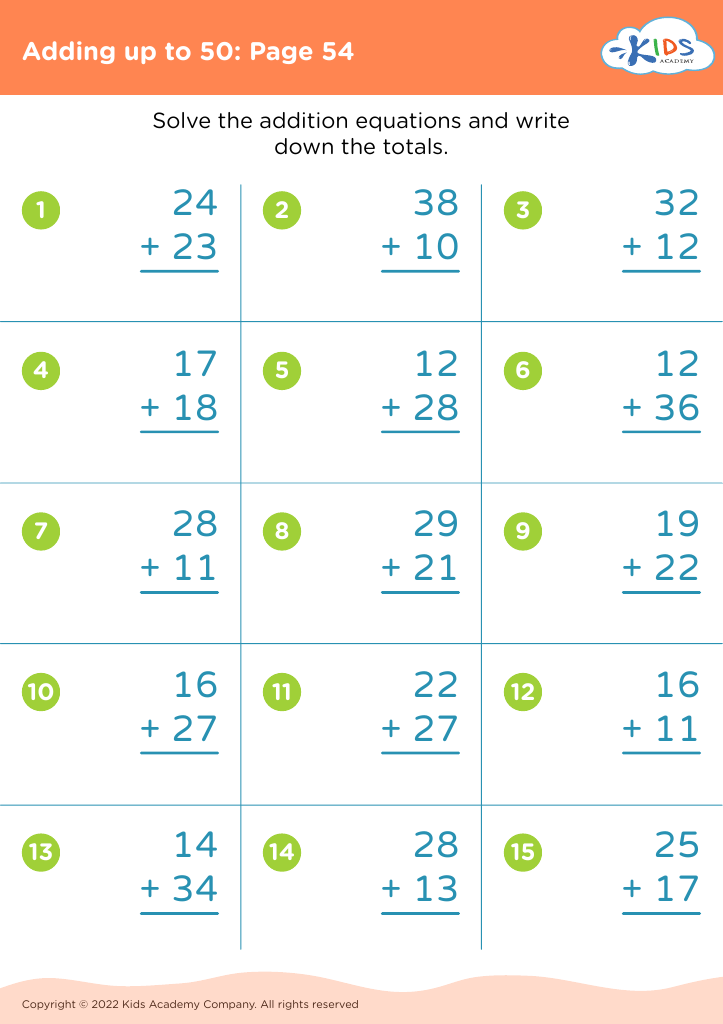
Adding up to 50: Page 54

Adding up to 50: Page 54

Adding up to 50: Page 54
Worksheet
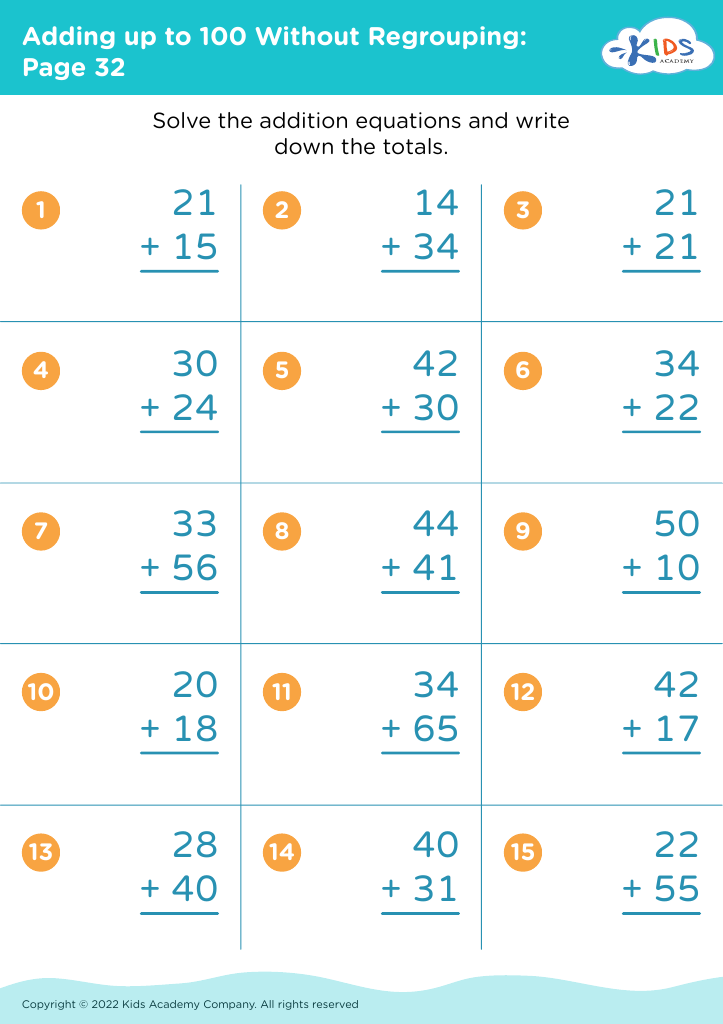
Adding up to 100 Without Regrouping: Page 32
Worksheet
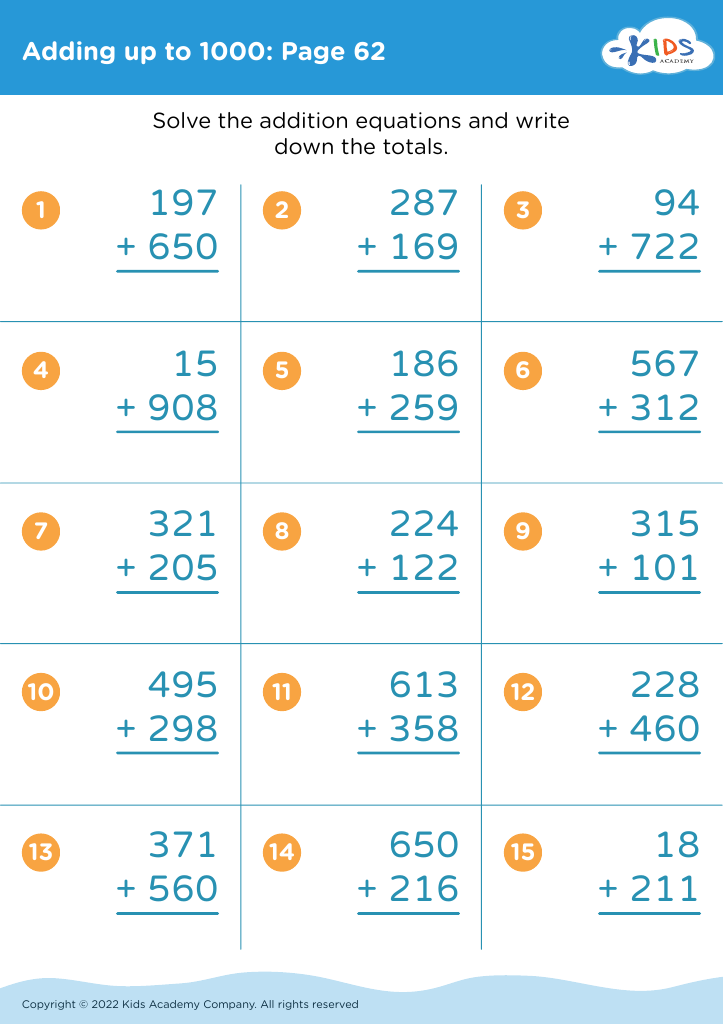
Adding up to 1000: Page 62

Adding up to 1000: Page 62

Adding up to 1000: Page 62
Worksheet
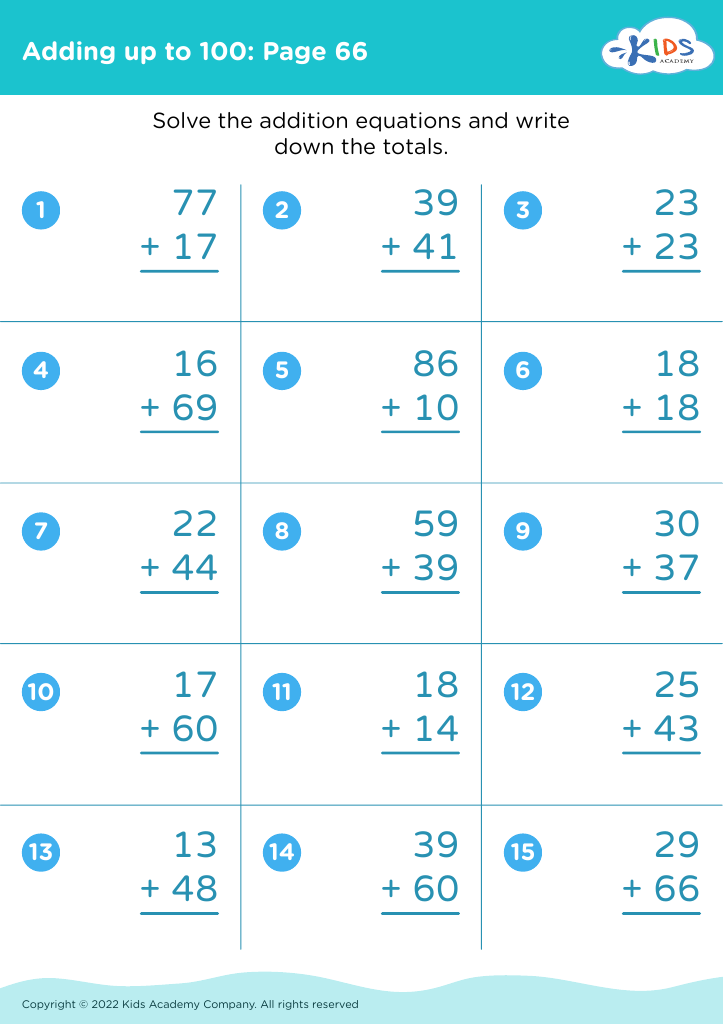
Adding up to 100: Page 66

Adding up to 100: Page 66

Adding up to 100: Page 66
Worksheet
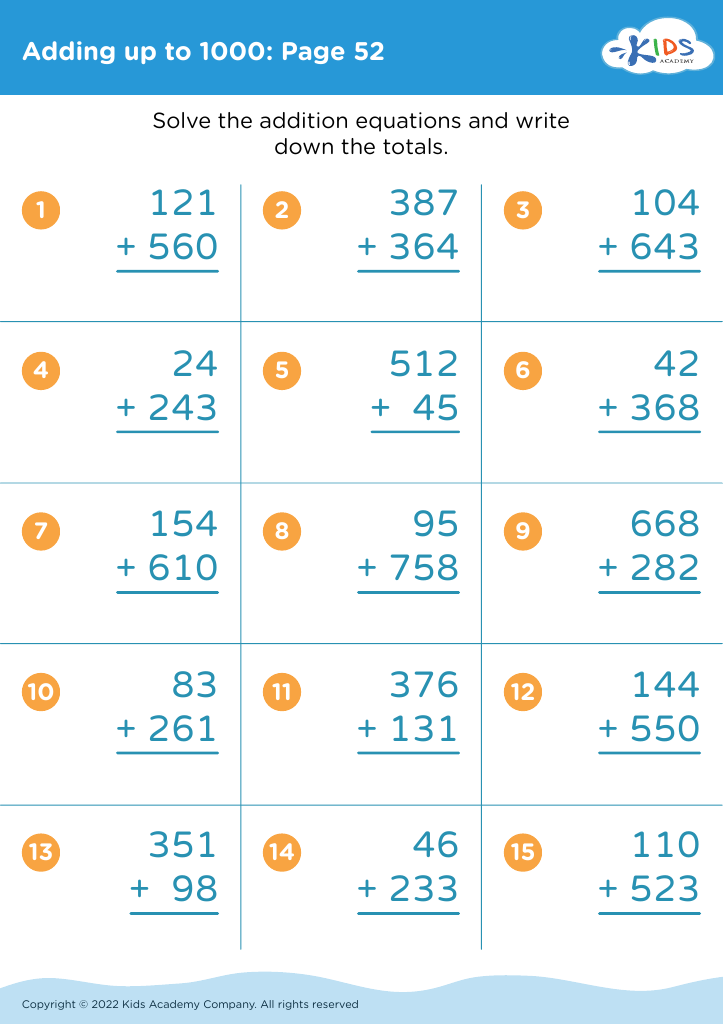
Adding up to 1000: Page 52

Adding up to 1000: Page 52

Adding up to 1000: Page 52
Worksheet
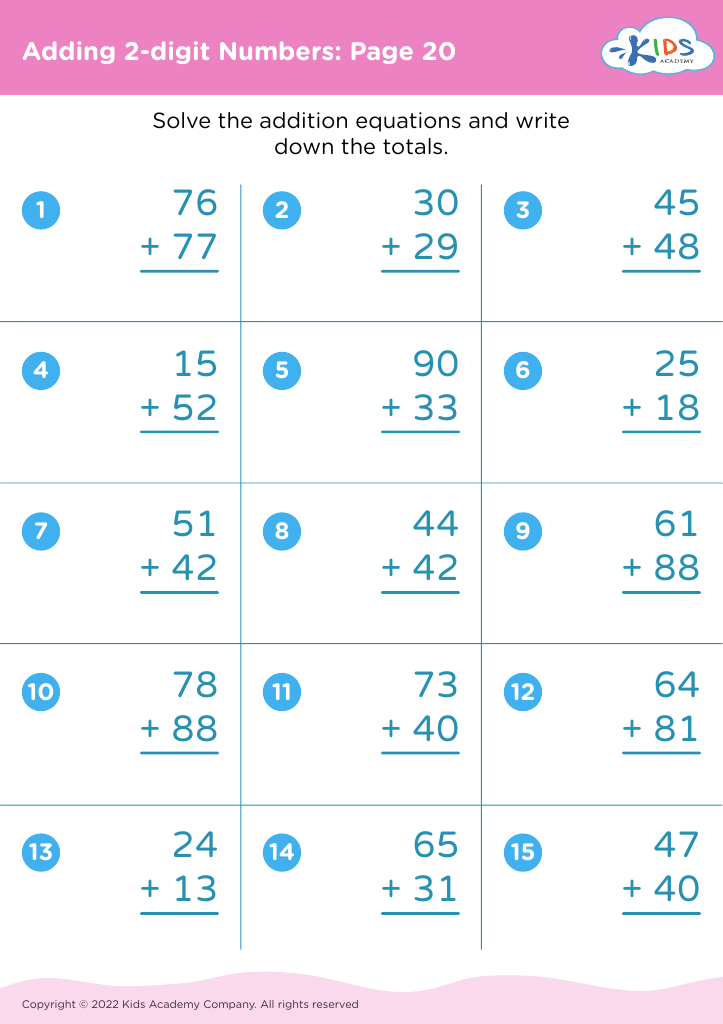
Adding 2-digit Numbers: Page 20

Adding 2-digit Numbers: Page 20

Adding 2-digit Numbers: Page 20
Worksheet
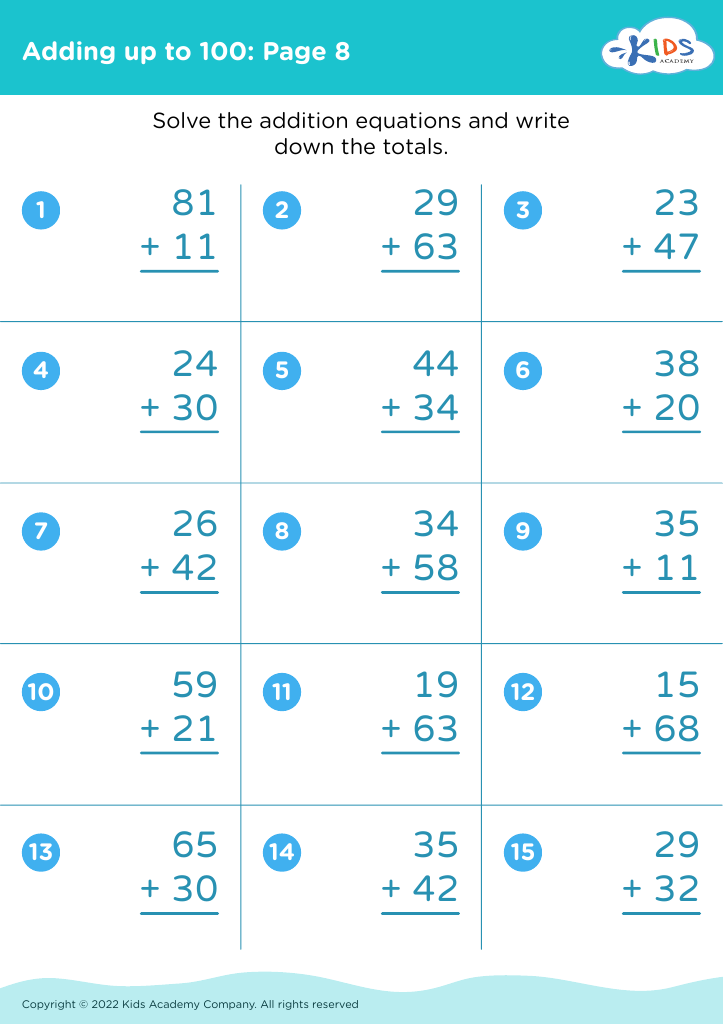
Adding up to 100: Page 8

Adding up to 100: Page 8

Adding up to 100: Page 8
Worksheet
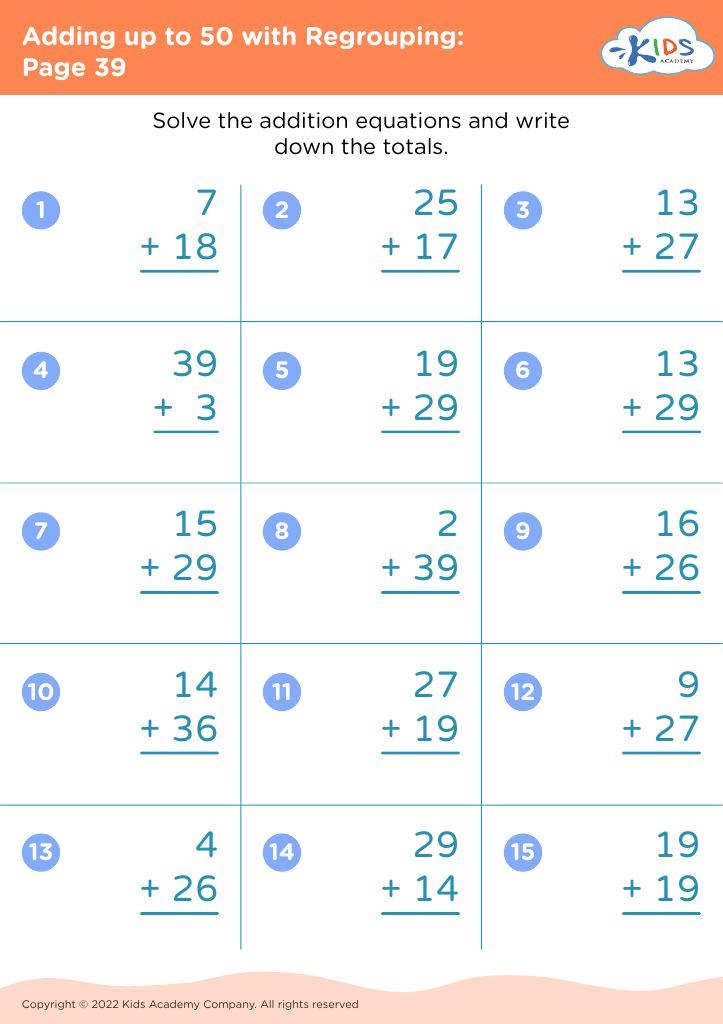
Adding up to 50 with Regrouping: Page 39
Worksheet
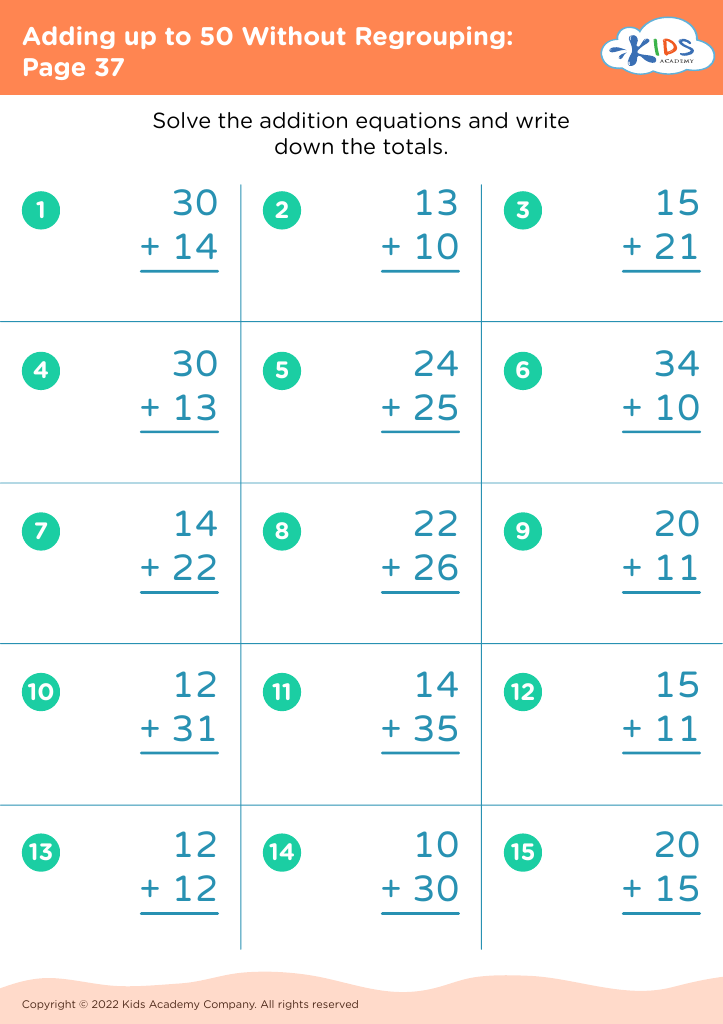
Adding up to 50 Without Regrouping: Page 37
Worksheet
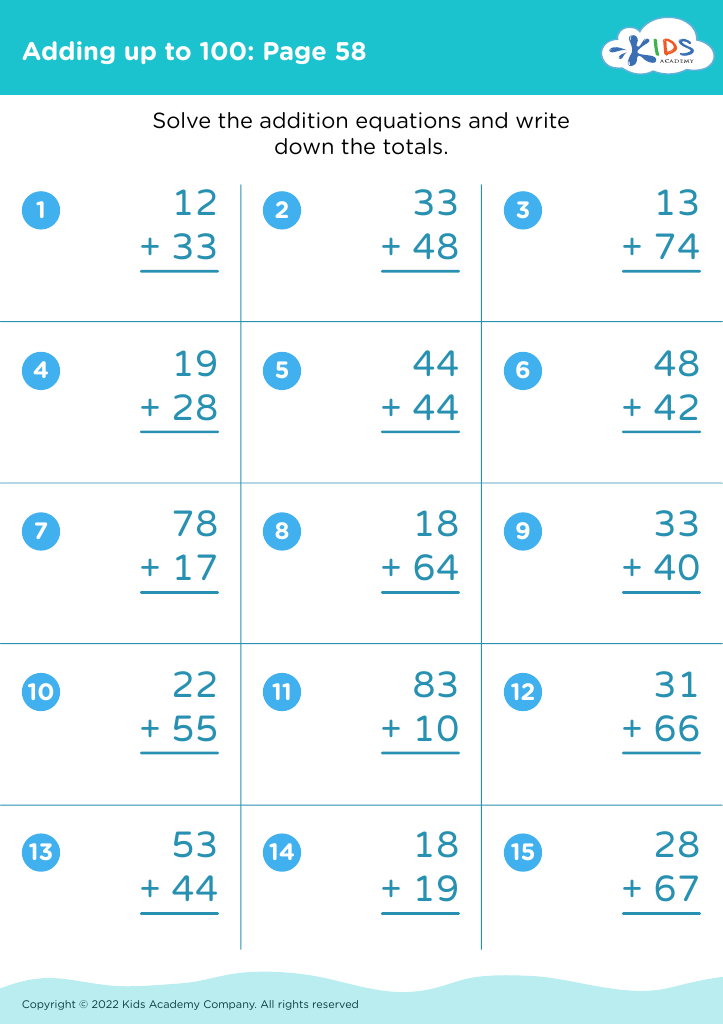
Adding up to 100: Page 58

Adding up to 100: Page 58

Adding up to 100: Page 58
Worksheet
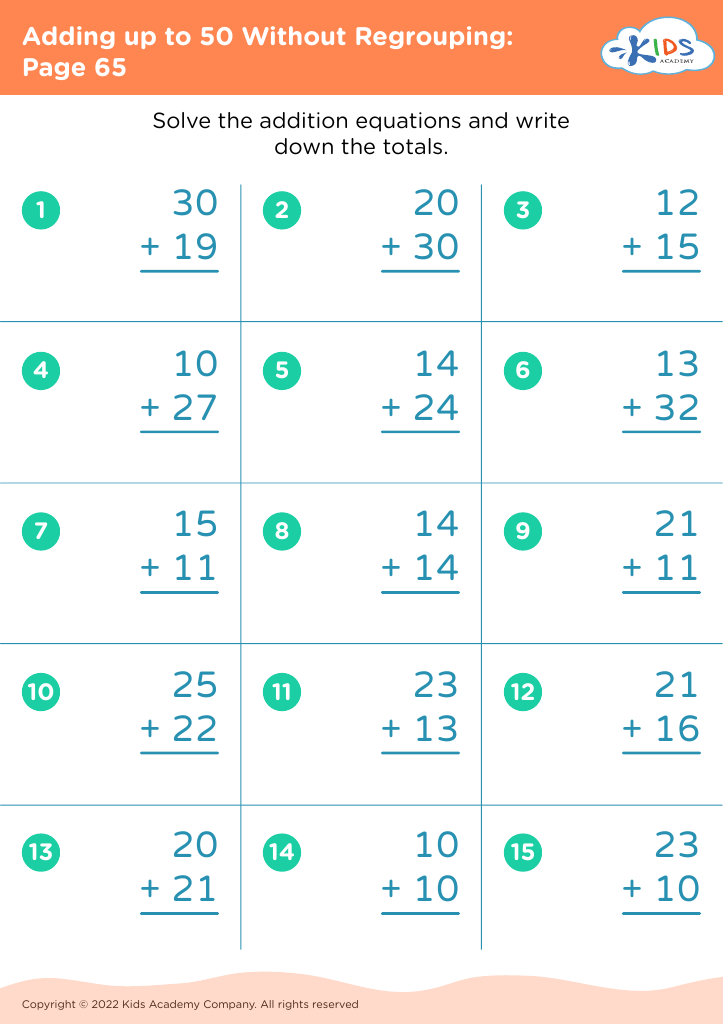
Adding up to 50 Without Regrouping: Page 65
Worksheet
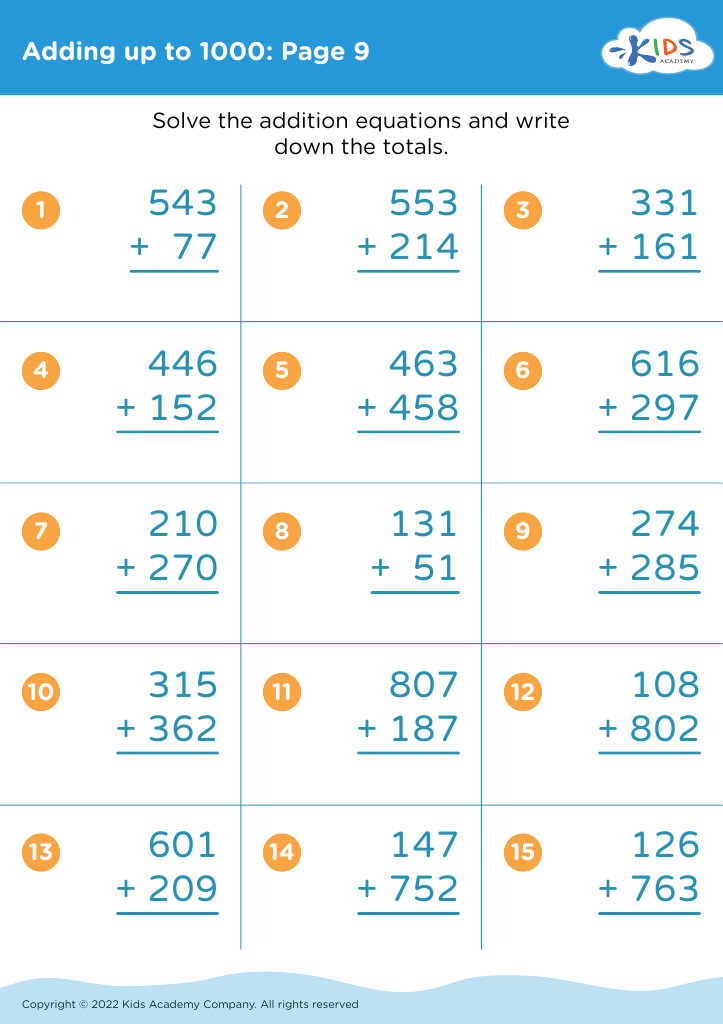
Adding up to 1000: Page 9

Adding up to 1000: Page 9

Adding up to 1000: Page 9
Worksheet
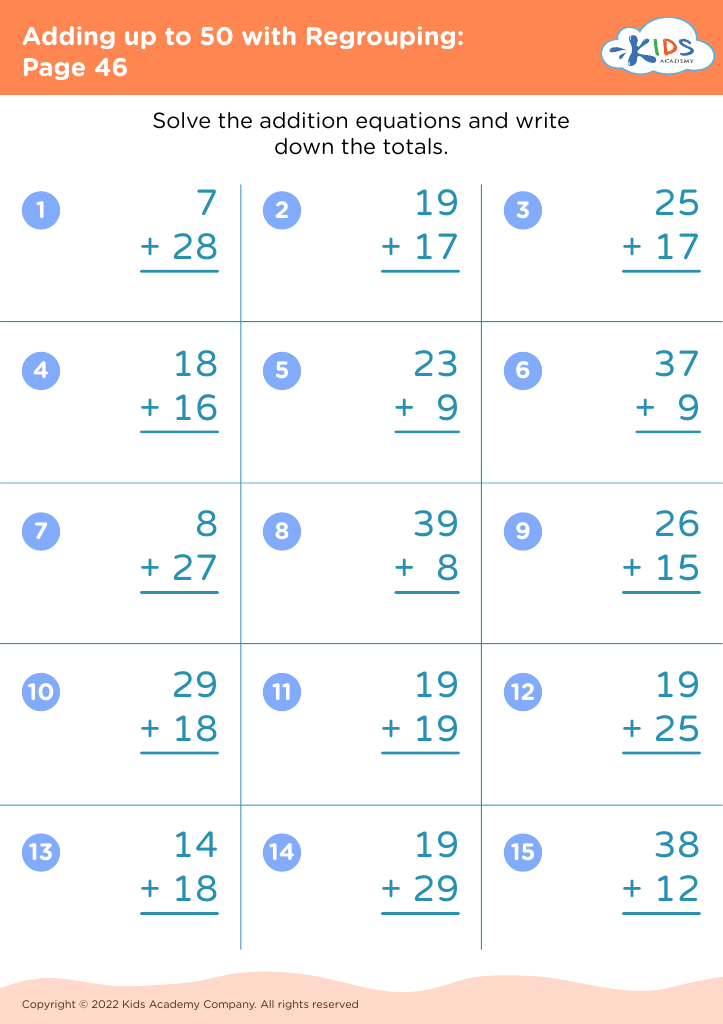
Adding up to 50 with Regrouping: Page 46
Worksheet
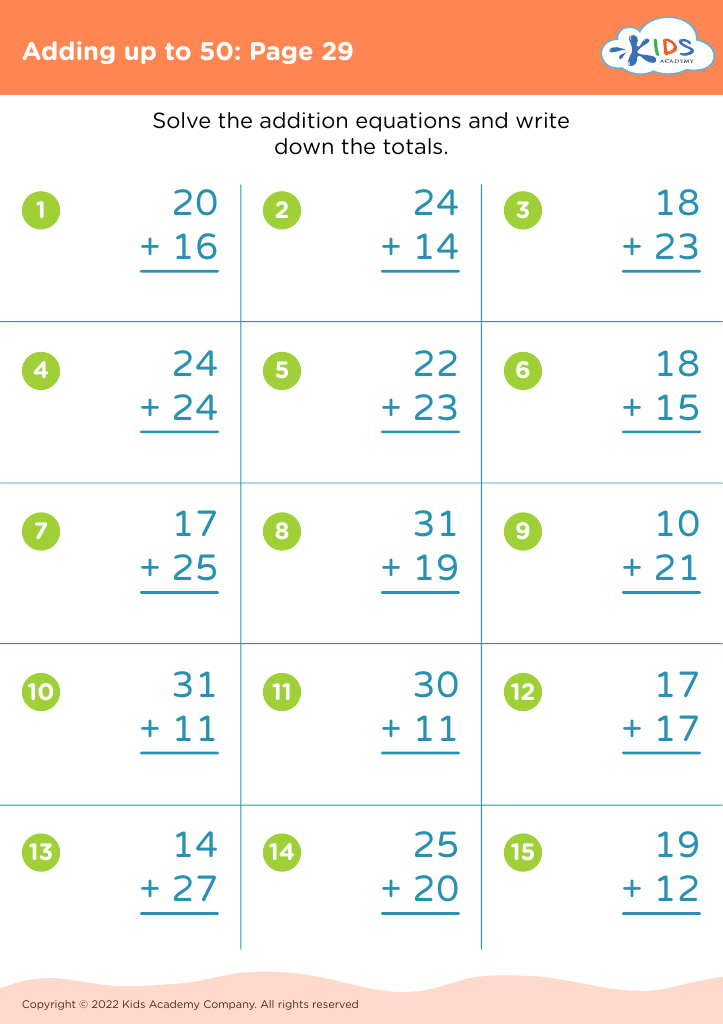
Adding up to 50: Page 29

Adding up to 50: Page 29

Adding up to 50: Page 29
Worksheet


Understanding fractions and addition is essential for 7-year-olds, as it lays a foundation for mathematical concepts they will encounter in future grades. At this age, children begin to grasp the idea of parts of a whole, which is crucial not just in mathematics but also in everyday life. For instance, understanding fractions helps them with scenarios like sharing food, measuring ingredients in recipes, or even dividing time accurately.

For parents and teachers, promoting proficiency in fractions and addition fosters critical thinking and problem-solving skills. It helps children develop a mindset that embraces math as a useful tool rather than a daunting subject. Engaging with these concepts early on encourages creativity and confidence.

Additionally, comprehension of fractions paves the way for more complex topics such as ratios, proportions, and decimals in later years. Inclusive and interactive learning methods where children encounter real-life situations involving fractions can make the subject enjoyable and relevant.

In summary, by focusing on fractions and addition, parents and teachers cultivate a positive attitude towards math in children, equipping them with skills for academic success and everyday life, thereby ensuring a solid groundwork to build upon throughout their educational journey.