Understand sequences Addition Worksheets for 7-Year-Olds
5 filtered results
-
From - To
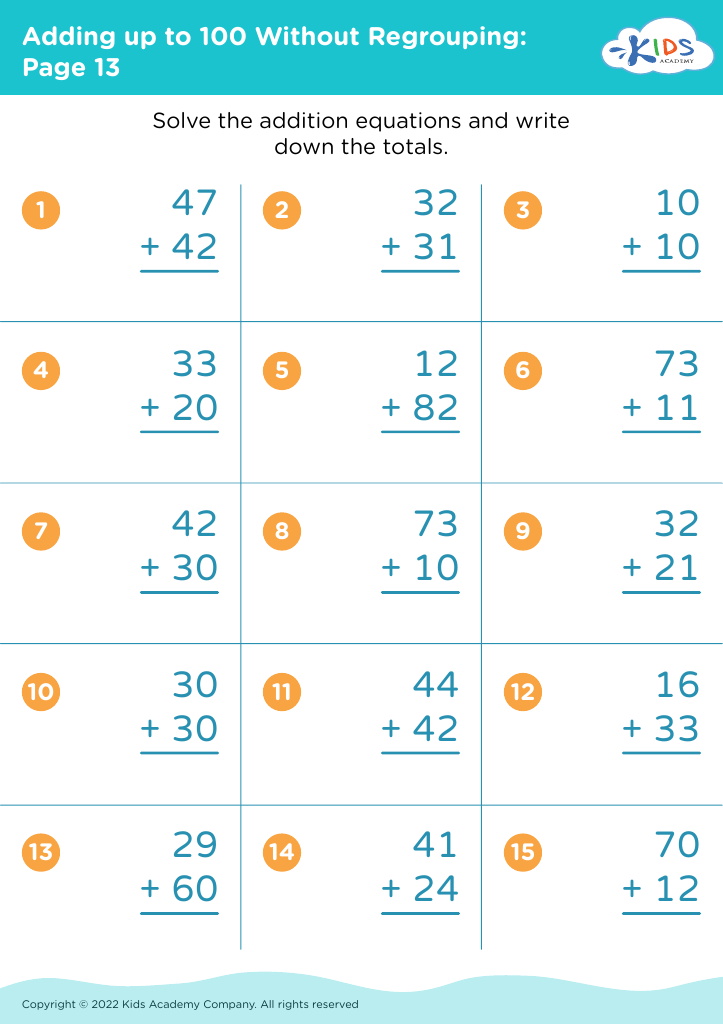
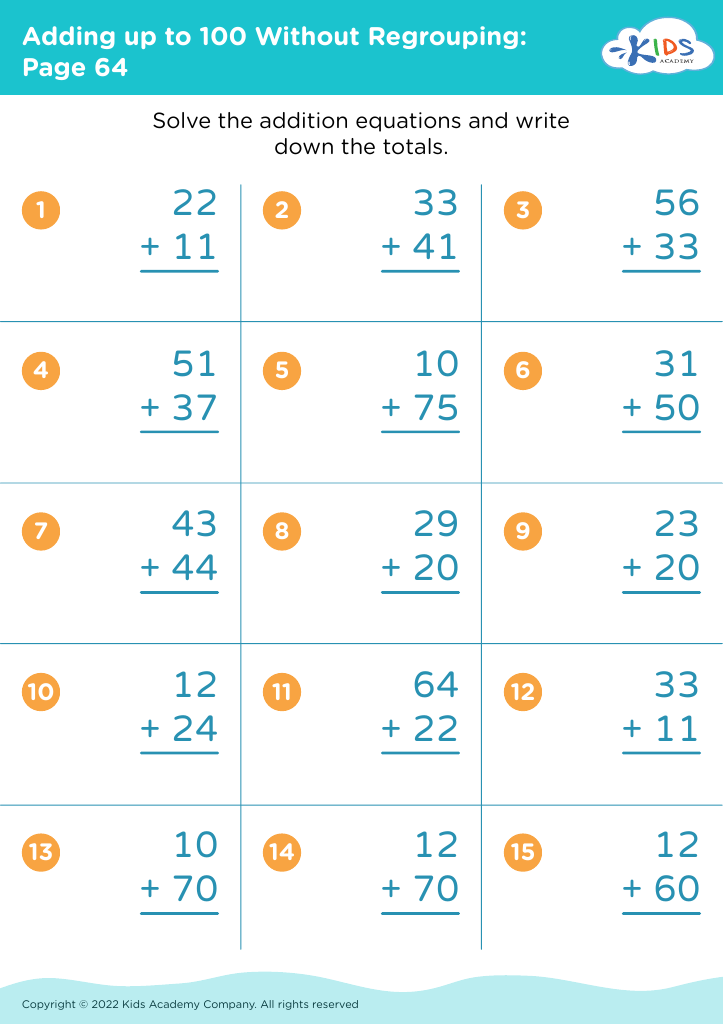
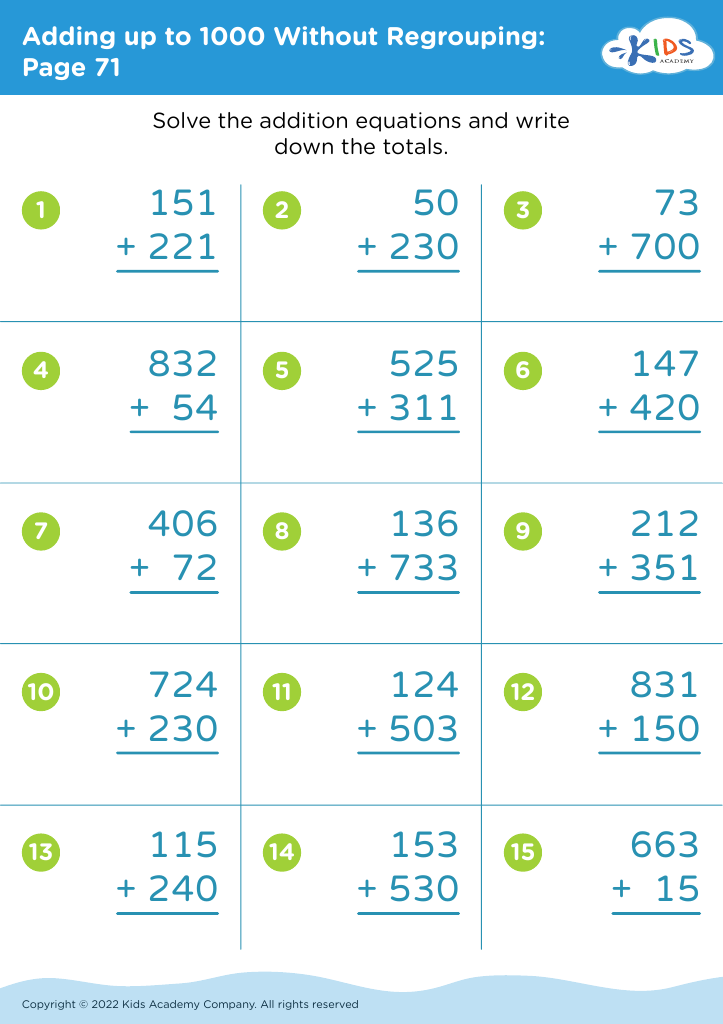
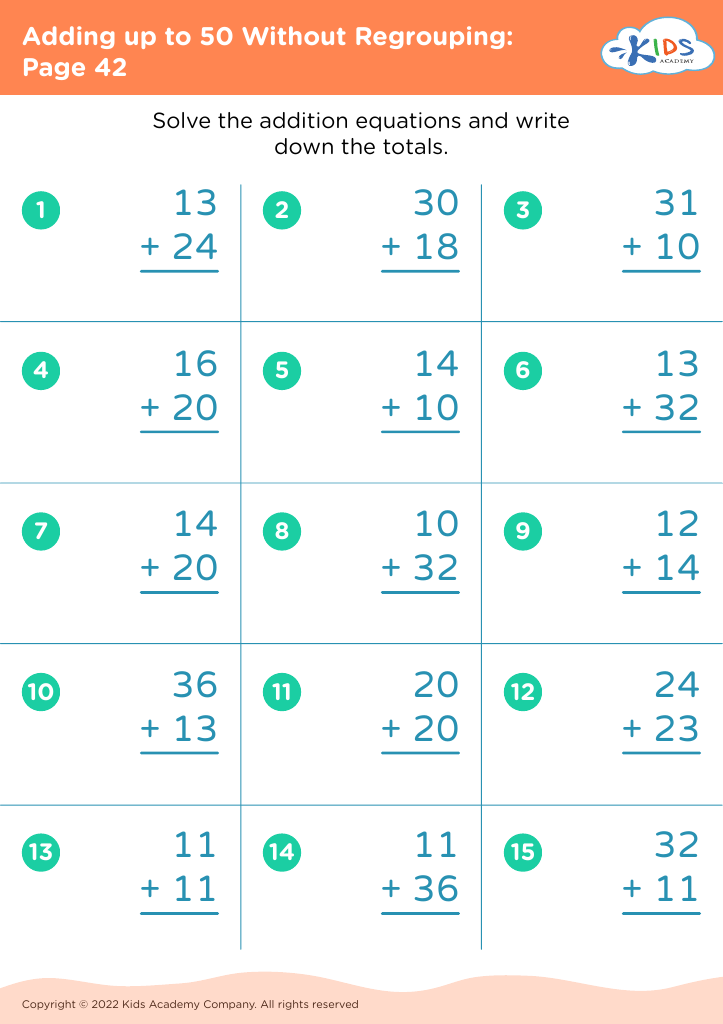
“Understand Sequences: Addition Worksheets for 7-Year-Olds” offers engaging and educational printables to help young learners master basic addition through sequences. Designed for 7-year-olds, these worksheets simplify the process of understanding numerical progressions by presenting fun, interactive problems. Through consistent practice, children will develop essential math skills that lay the foundation for future arithmetic proficiency. These resources emphasize comprehension and fluency in a step-by-step manner, making math enjoyable and accessible. Download, print, and start providing your child with a valuable learning experience right from home, bolstering their confidence and success in mathematics.
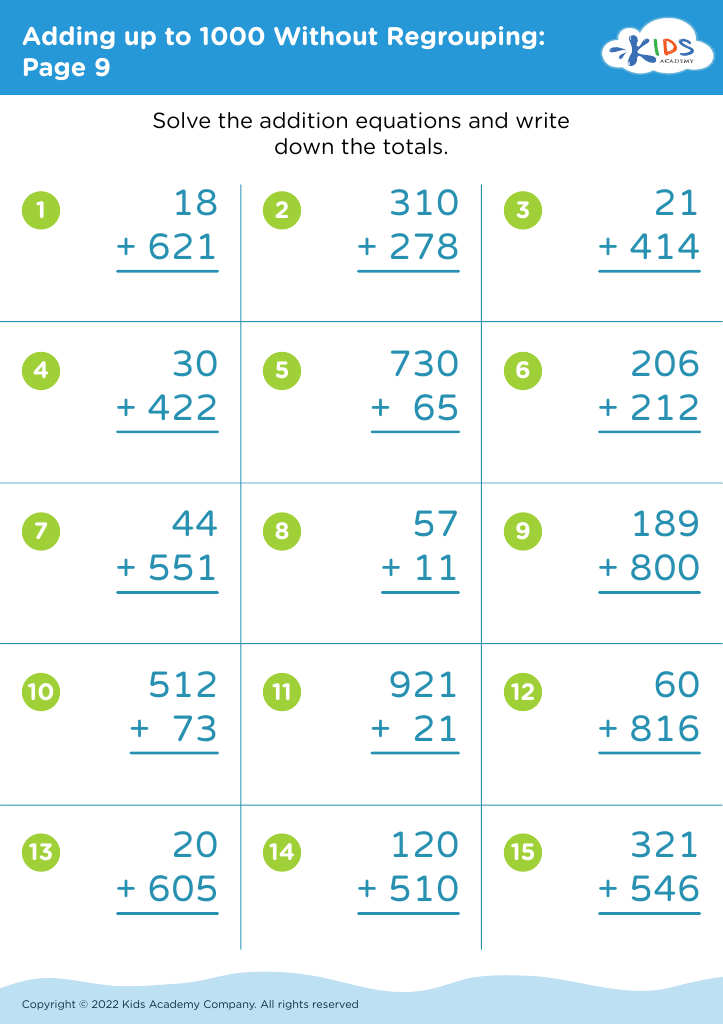








Understanding sequences in addition is a crucial foundational skill for 7-year-olds, providing several important educational and developmental benefits that parents and teachers should care about. First and foremost, mastering the concept of sequences facilitates mathematical thinking by enabling children to recognize patterns, make predictions, and solve problems more effectively. This foundational skill is integral for more advanced math topics such as multiplication, division, and algebra.
Furthermore, the ability to understand and execute sequences aids in developing logical and critical thinking skills. When children comprehend how numbers progress in a pattern, they engage in reasoning that supports cognitive development beyond mathematics, useful across various subjects and real-life scenarios.
Another key advantage is the enhancement of memory and organization skills. Learning to follow and form sequences helps children in remembering steps and information systematically, which is essential for tasks inside and outside the classroom. This type of learning also supports executive functioning skills, like planning and time management.
Emotionally, success in understanding sequences builds confidence and fosters a positive attitude towards learning math. This enhances self-esteem and motivation, encouraging a lifelong relationship with STEM (Science, Technology, Engineering, Math) subjects.
Overall, supporting 7-year-olds in mastering addition sequences equips them with essential skills for both academic success and everyday life, forming a pivotal part of their educational journey.








