Understanding patterns Addition Worksheets for 7-Year-Olds
29 filtered results
-
From - To
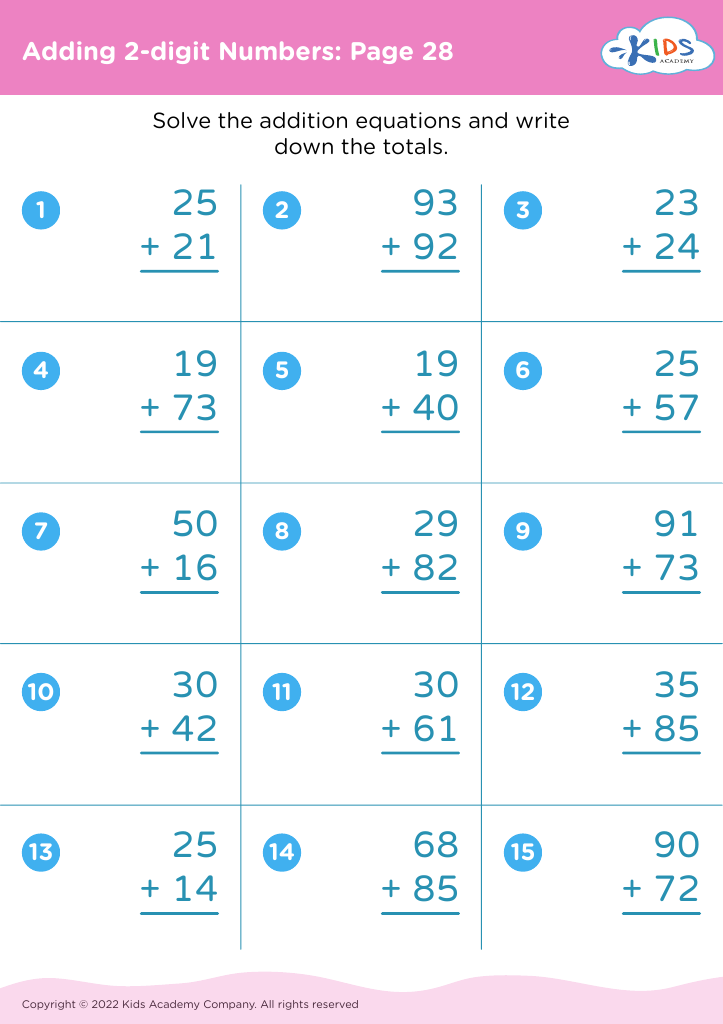
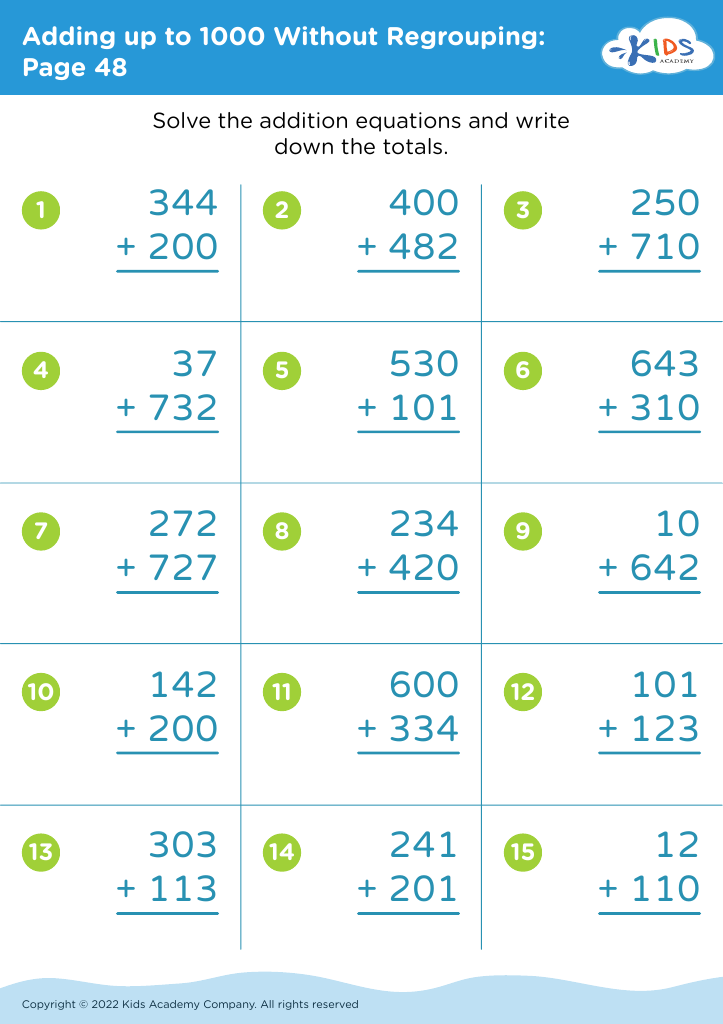
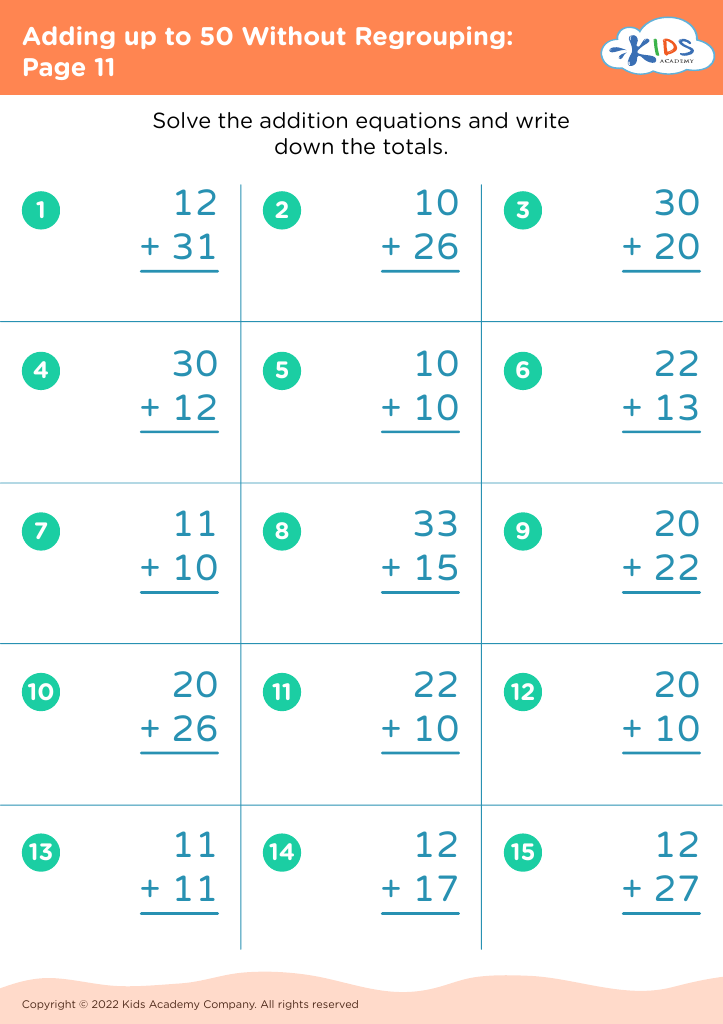
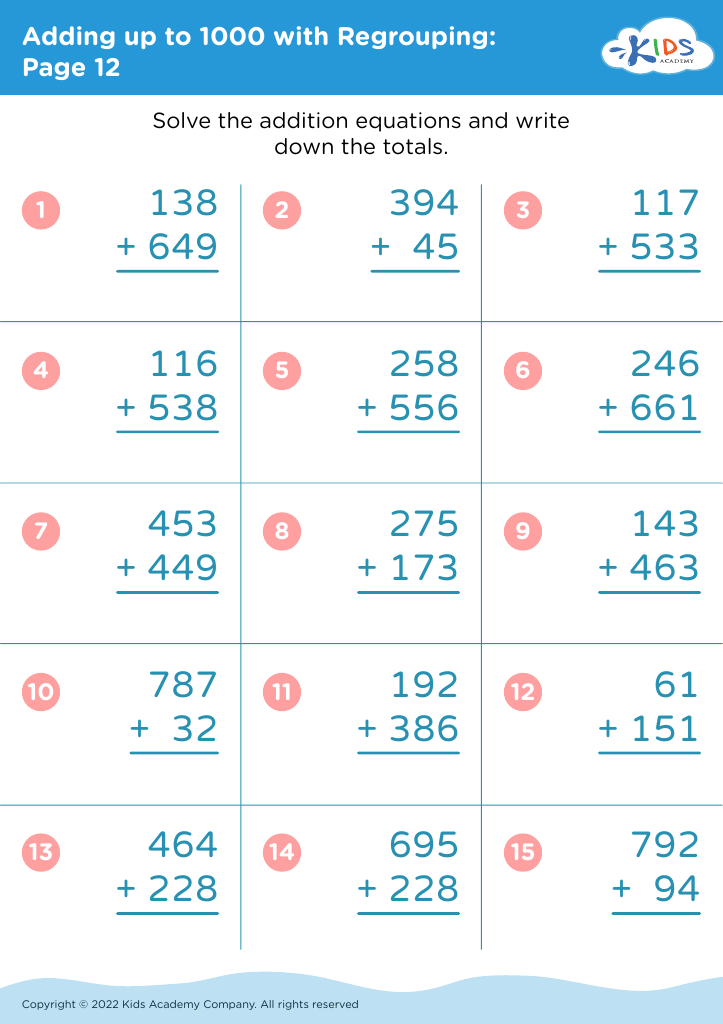
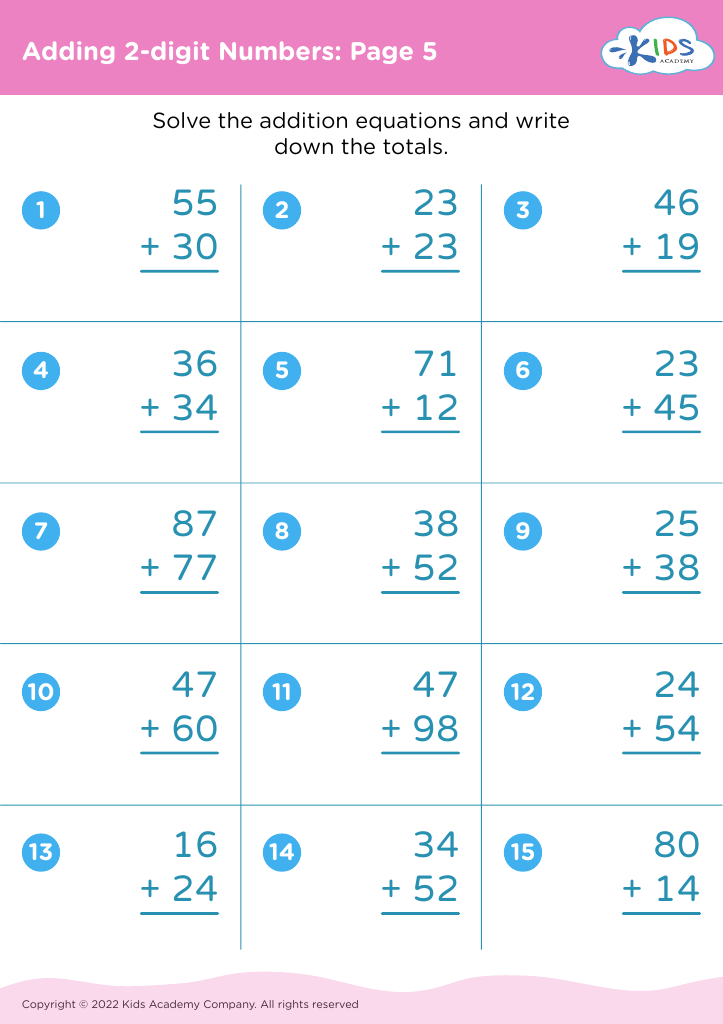
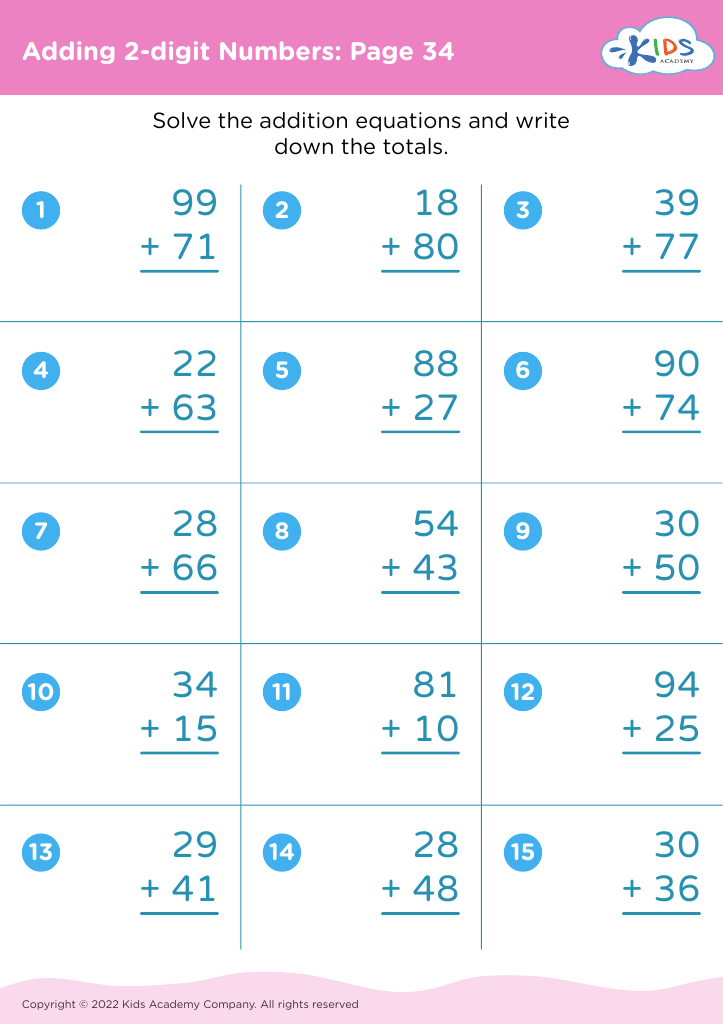
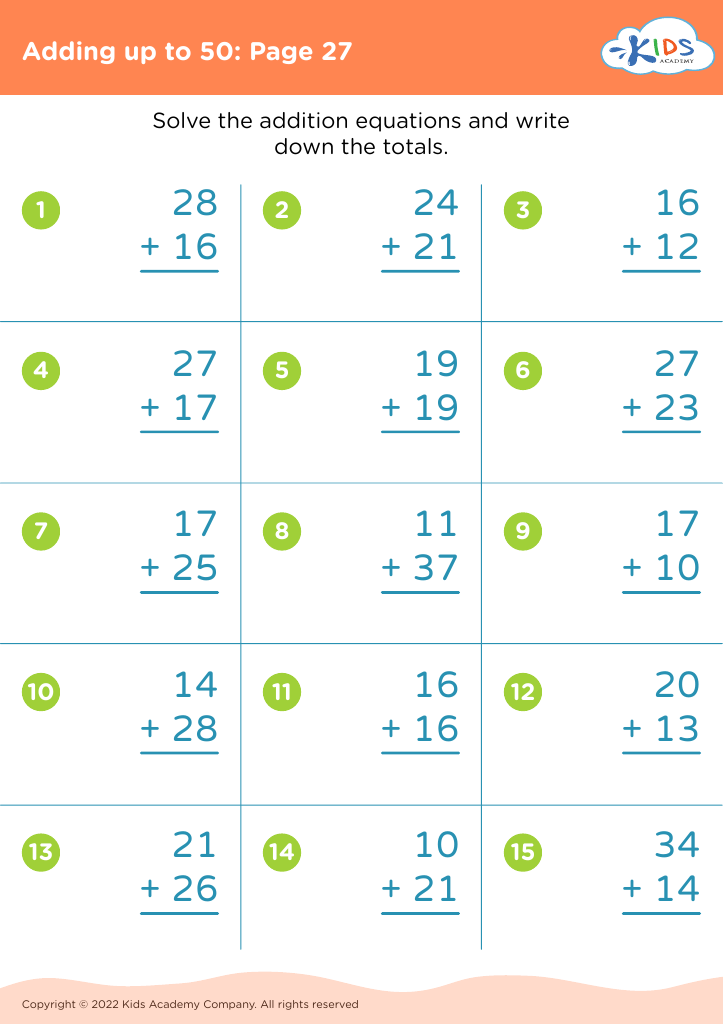
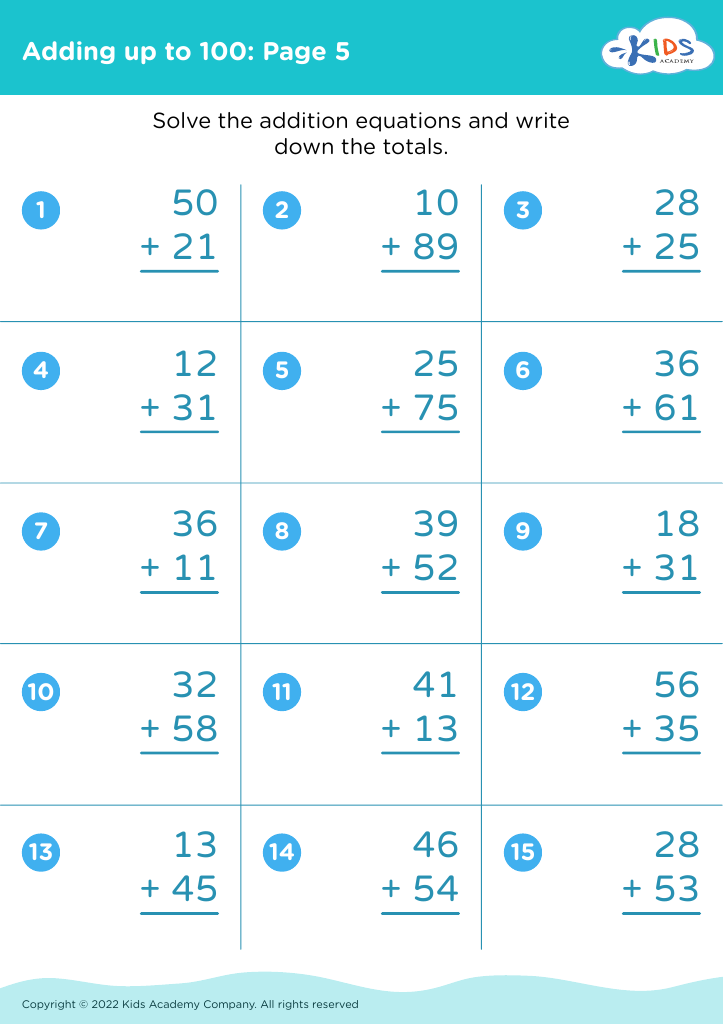
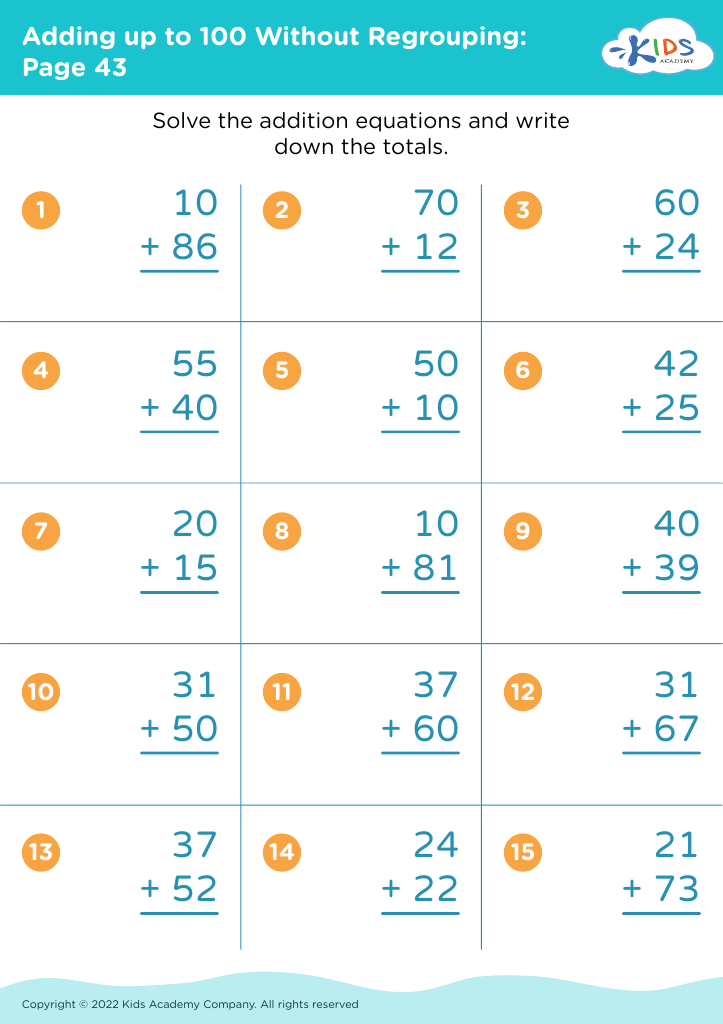
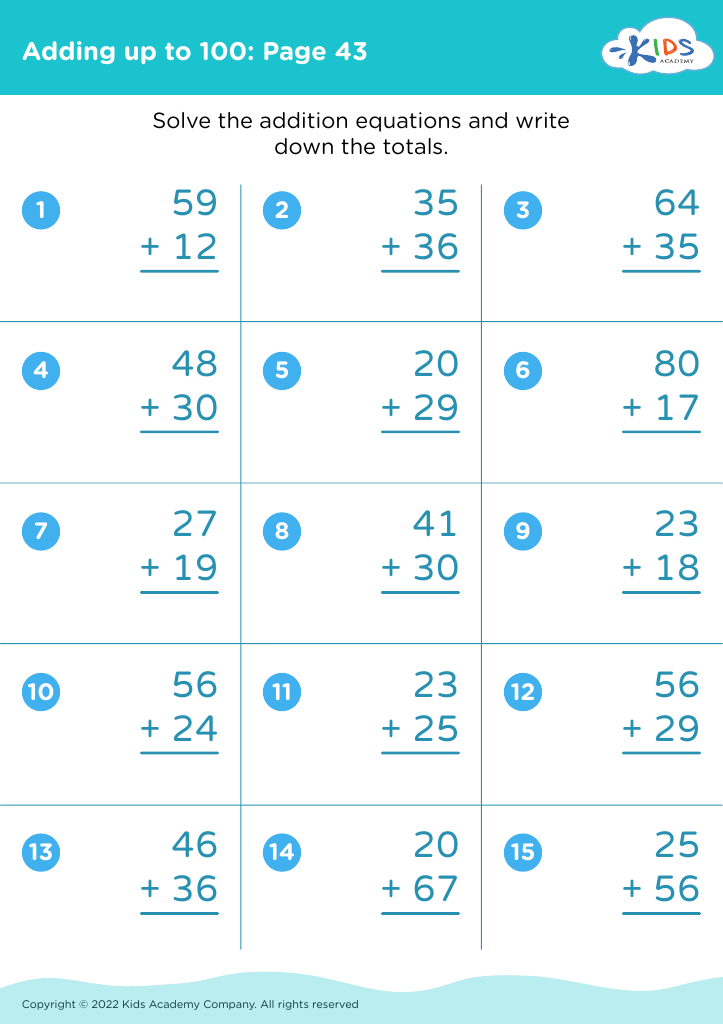
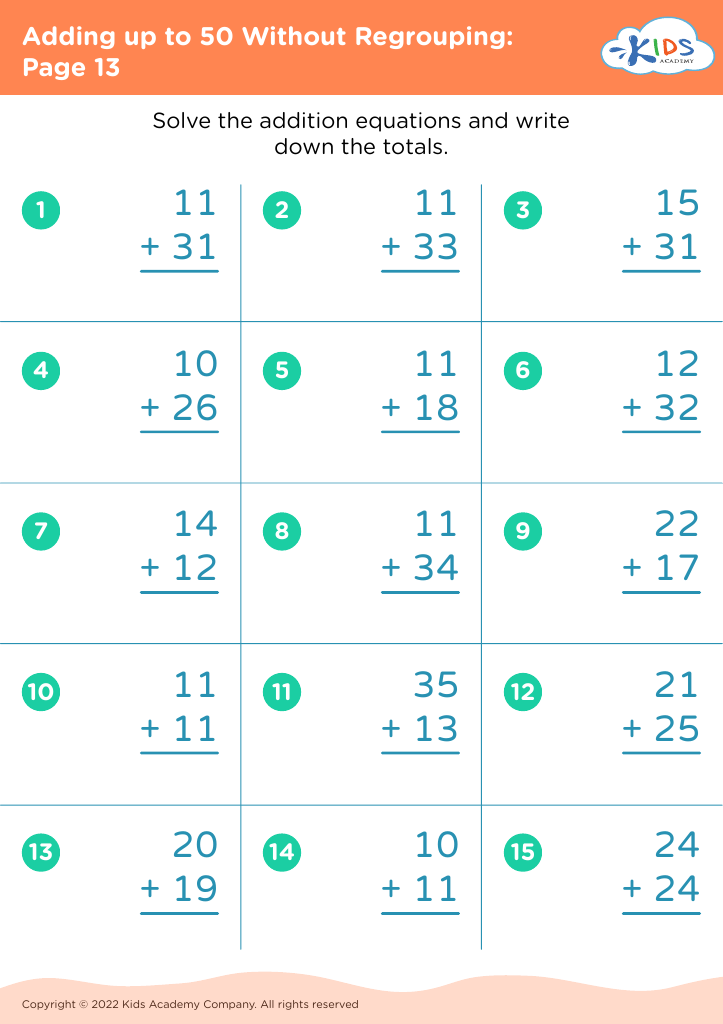
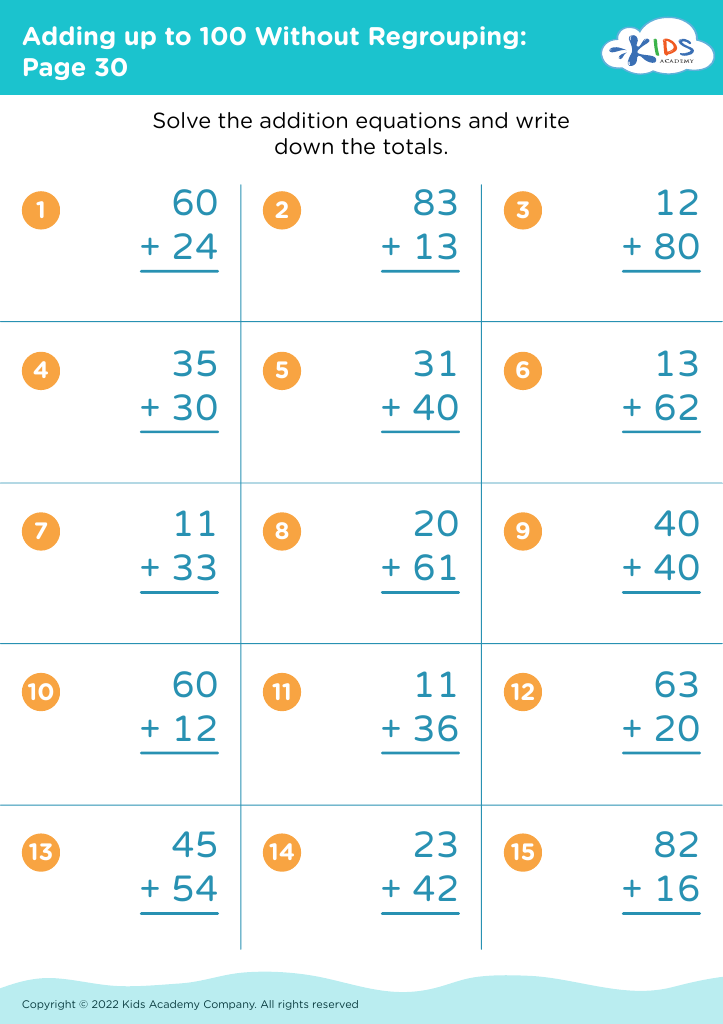
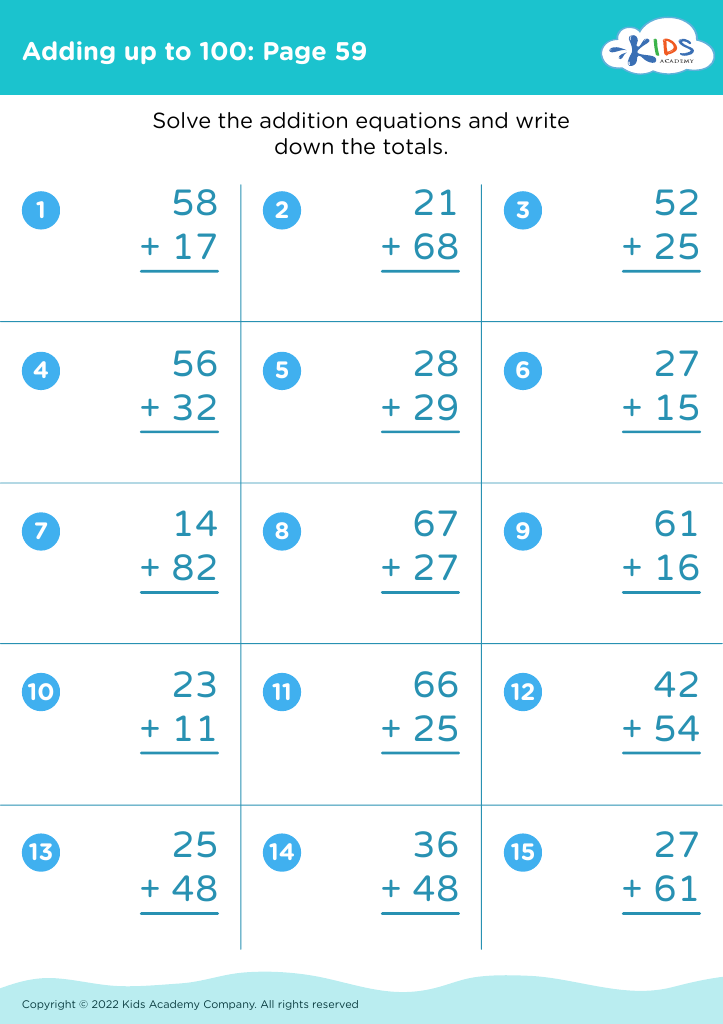
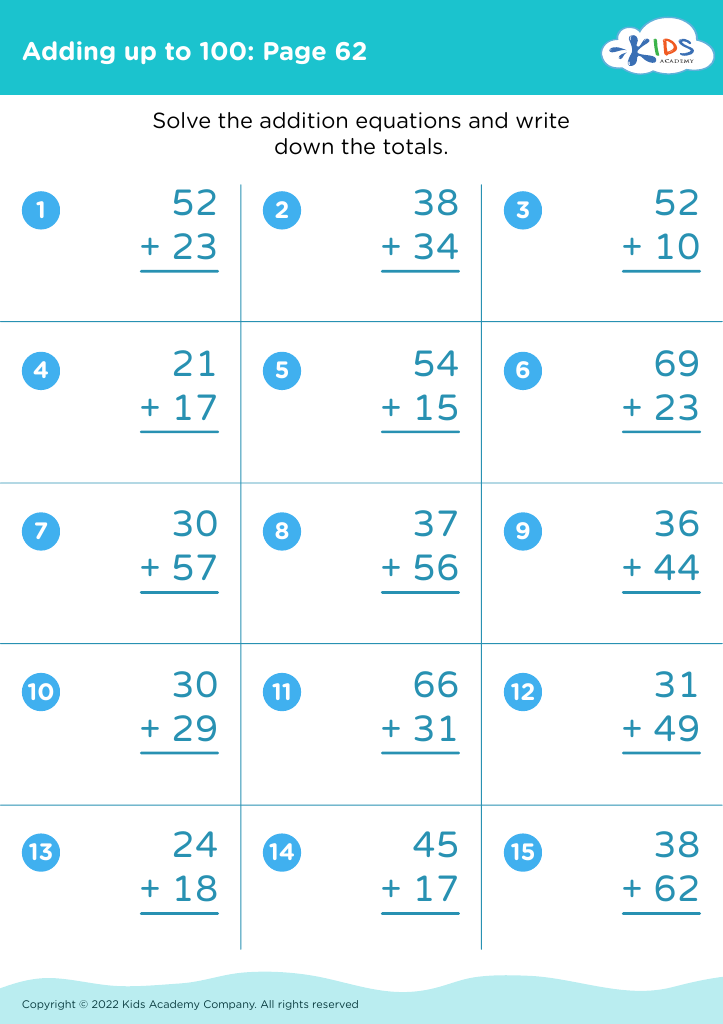
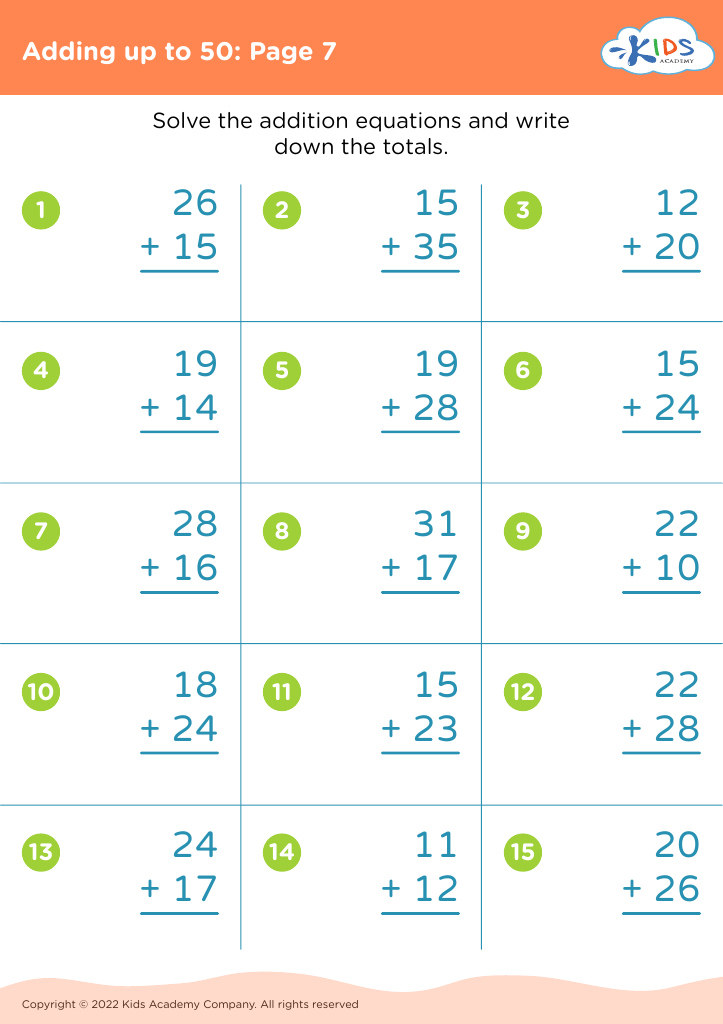
Explore our "Understanding Patterns Addition Worksheets for 7-Year-Olds" designed to enhance mathematical skills through engaging activities. These printable worksheets help children recognize and analyze patterns in addition, making math fun and interactive. By identifying patterns in numbers, kids build a solid foundation for more advanced problem-solving. Each worksheet incorporates colorful visuals and age-appropriate challenges that boost confidence and understanding. Ideal for both classroom settings and at-home learning, these resources promote critical thinking and reasoning. Support your child's learning journey with our carefully crafted worksheets that make mastering addition patterns easy and enjoyable. Perfect for young learners eager to succeed in math!
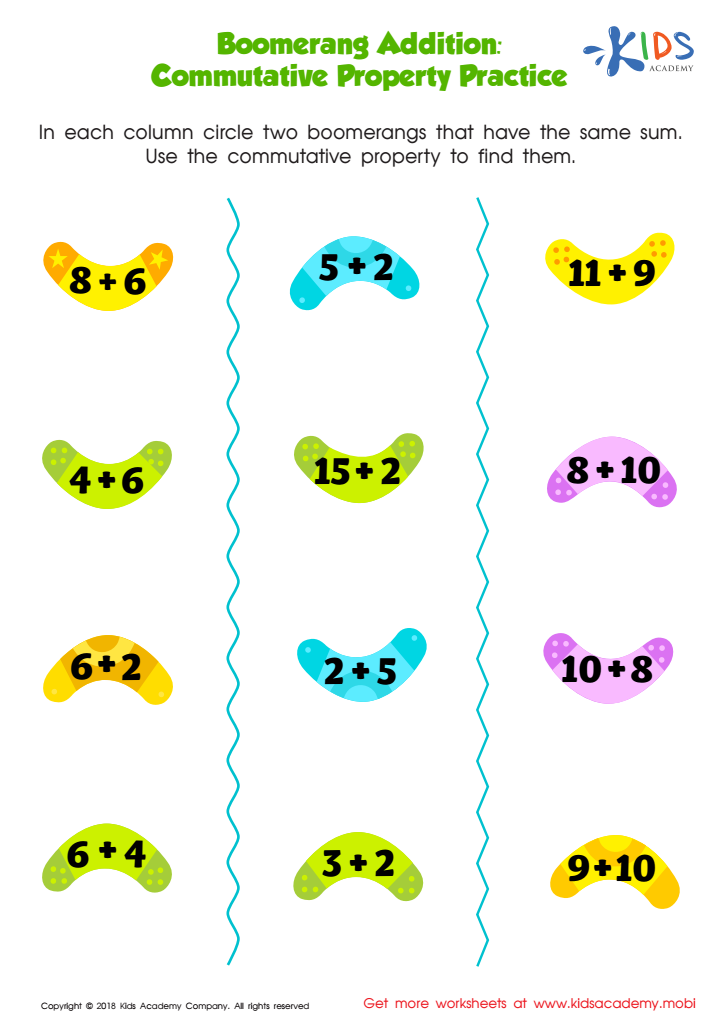
Boomerang Addition Worksheet
 Assign to My Students








Understanding patterns in addition is crucial for 7-year-olds, as it lays a foundation for mathematical thinking and problem-solving. At this age, children are developing their number sense, and recognizing patterns helps them make connections between numbers, facilitating mental calculations and more complex arithmetic in the future.
When children grasp addition patterns, such as understanding that 5 + 3 relates to 6 + 2, they develop strategies that enhance fluency. This comprehension not only boosts their confidence but also enables them to approach math with a more positive attitude, reducing anxiety over calculations.
Moreover, recognizing patterns enhances logical reasoning. As teachers and parents, fostering this skill holds significant importance, as children will begin to see the predictability in math, which encourages perseverance when faced with challenging problems.
Additionally, understanding patterns connects to various real-world applications, making learning more relevant and engaging. Whether it's budgeting, time management, or sorting, math heavily relies on recognizing relationships between numbers.
Ultimately, nurturing a child’s understanding of addition patterns equips them with essential skills that extend beyond math itself, preparing them for future academic success and everyday problem-solving.








