Vocabulary development Addition Worksheets for 7-Year-Olds
5 filtered results
-
From - To
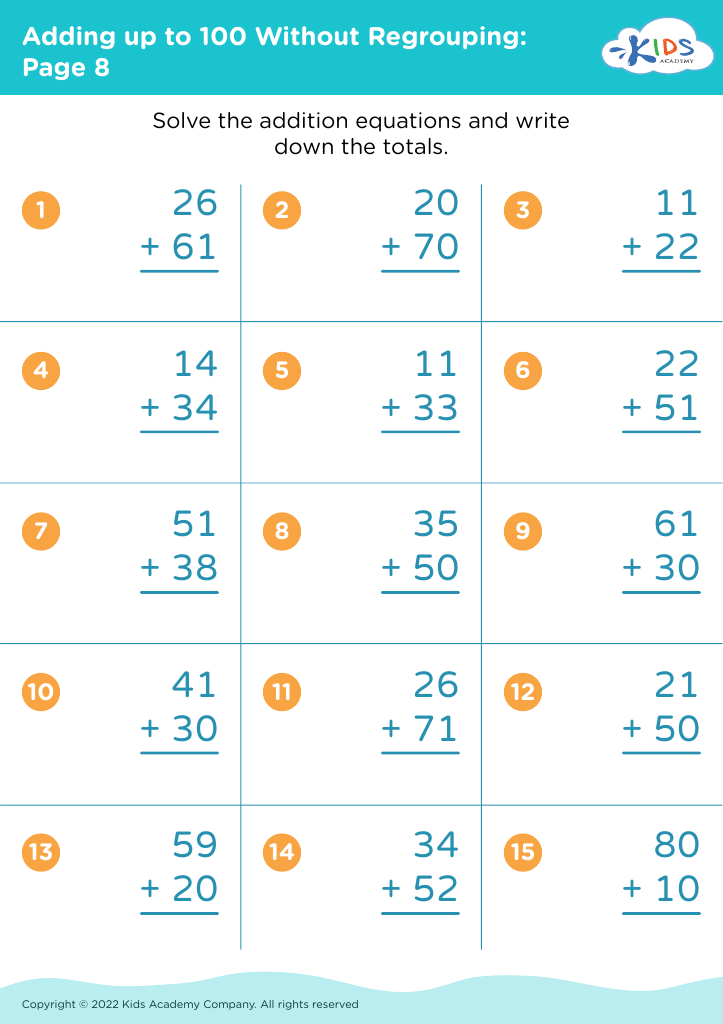
Enhance your 7-year-old's mathematical and language skills with our Vocabulary Development Addition Worksheets. Specially designed for young learners, these worksheets integrate math practice and vocabulary building, helping kids master addition while expanding their language abilities. Each fun and engaging worksheet includes word problems and math exercises that encourage critical thinking and comprehension. With our expertly crafted resources, children will boost their mathematical proficiency and develop a rich vocabulary, setting a strong foundation for future academic success. Perfect for classroom or homeschool use, these worksheets offer an educational blend of math and language development.








Vocabulary development is a fundamental aspect of a child’s education, especially for 7-year-olds who are at a critical stage of their cognitive and linguistic growth. Parents and teachers should prioritize vocabulary enrichment because it profoundly influences overall academic performance, literacy skills, and social communication abilities.
First, a strong vocabulary is directly linked to reading comprehension. When children recognize and understand words effortlessly, they spend less cognitive energy decoding language and more on grasping the meaning of the text, enhancing their overall learning experience. Extensive vocabulary also supports writing skills by giving children the tools to express their thoughts vividly and precisely.
Secondly, vocabulary development fosters cognitive skills and intellectual curiosity. It helps children categorize their knowledge, enhances memory recall, and stimulates critical thinking by introducing them to new concepts and ideas.
Finally, a rich vocabulary plays an essential role in social and emotional development. It enables children to articulate their feelings, interact effectively with peers, and build self-confidence. Strong communication skills contribute to successful interpersonal relationships and reduce the likelihood of misunderstandings and conflicts.
In sum, active involvement in a child's vocabulary development by parents and teachers not only lays the foundation for academic achievement but also bolsters essential life skills, ensuring well-rounded, competent individuals.








