Financial literacy Coins Worksheets for 7-Year-Olds
4 filtered results
-
From - To
Explore our engaging Financial Literacy Coins Worksheets designed specifically for 7-year-olds! These interactive worksheets help young learners grasp the basics of identifying, counting, and managing coins. By integrating fun activities with essential math skills, children can develop a solid foundation in financial literacy while enhancing their counting abilities. Our resources promote understanding of money concepts, making learning enjoyable and effective. Perfect for classroom or home use, these worksheets encourage hands-on practice and critical thinking with real-life applications. Equip your child with the necessary skills to navigate financial transactions confidently. Start their journey toward financial awareness today with our thoughtfully crafted worksheets!
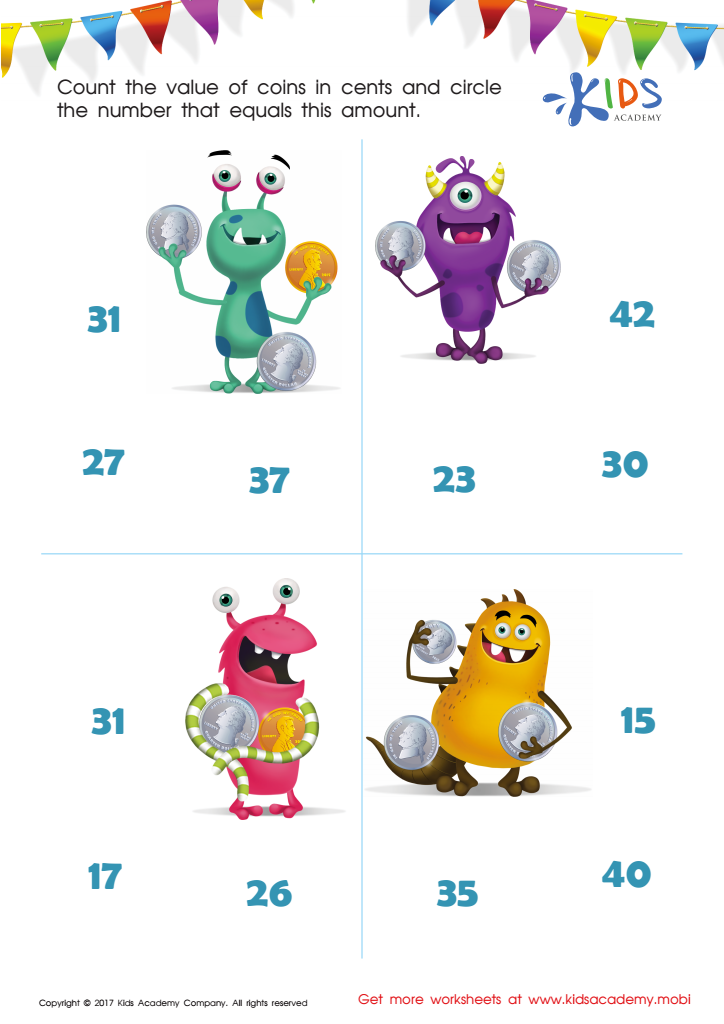
How Many Coins Money Worksheet
 Assign to My Students
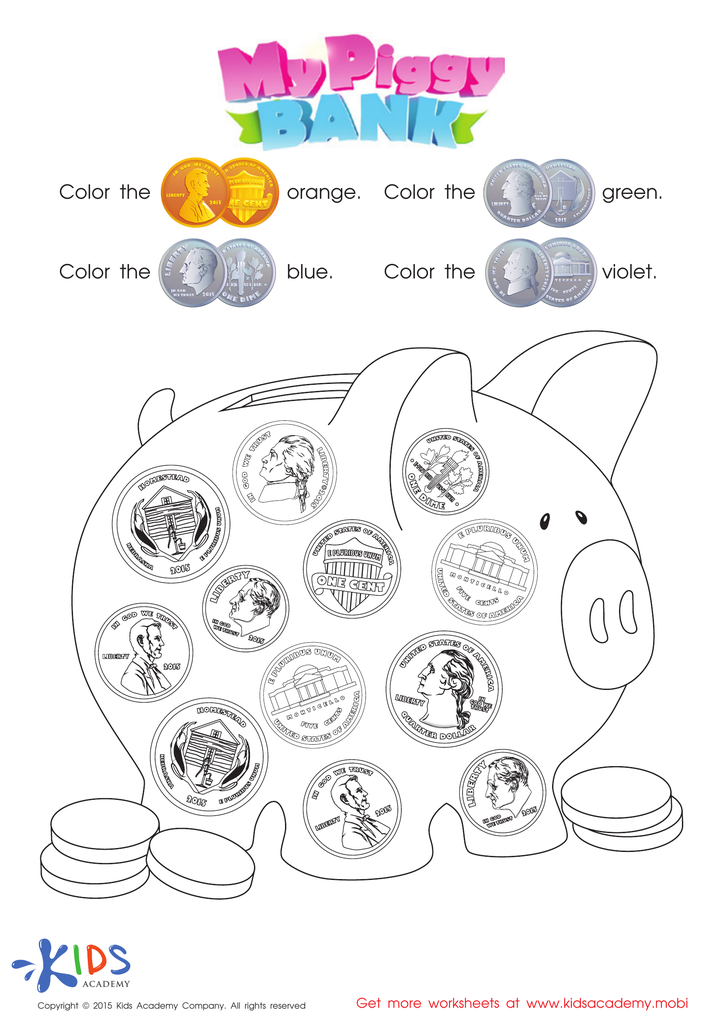
Recognizing Money Money Worksheet
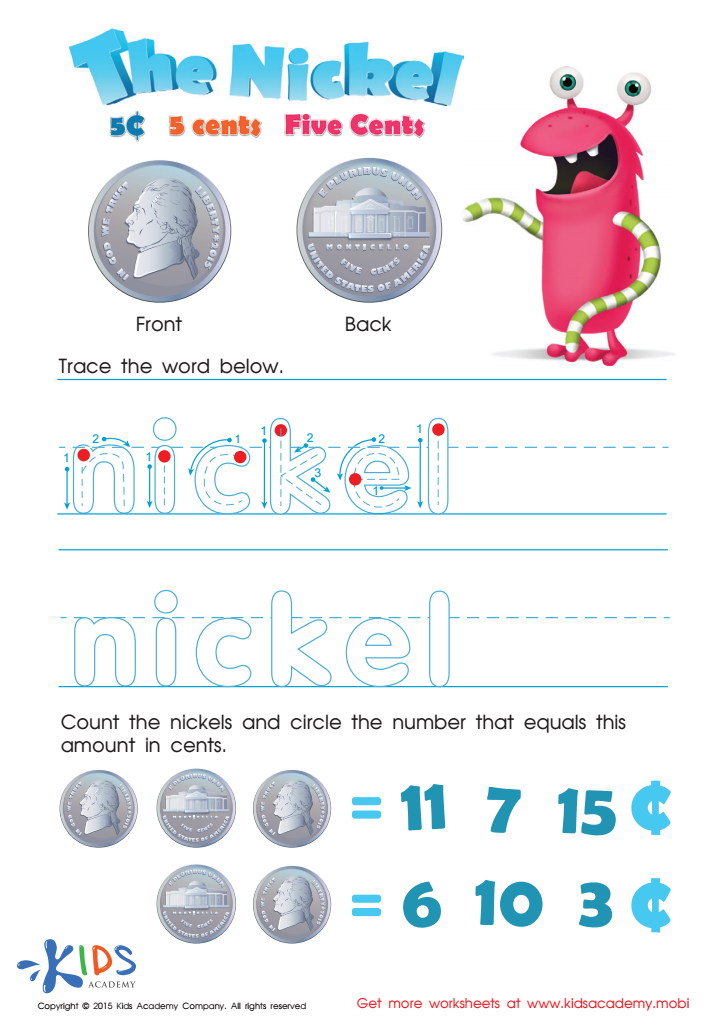
Five Cents or the Nickel Money Worksheet
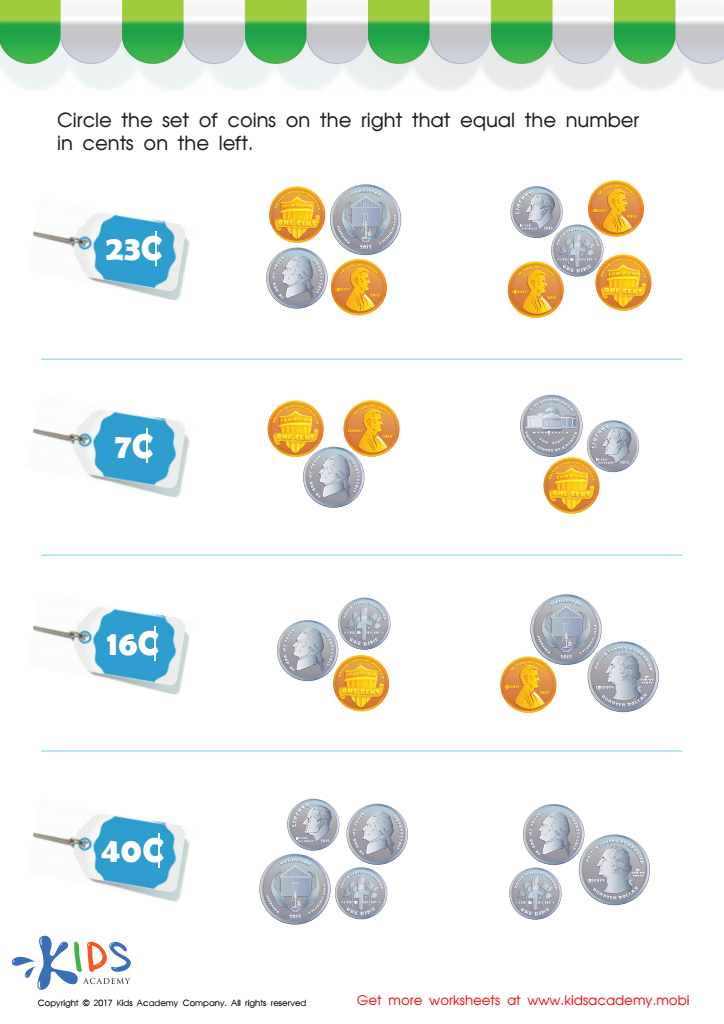
Picking the Coins You Need Money Worksheet








Financial literacy is a crucial life skill that empowers children to make informed decisions about money. Teaching financial concepts to seven-year-olds using coins is both practical and engaging. At this age, children are beginning to develop their understanding of value, numeracy, and basic arithmetic, and coins offer a tangible way to visualize money.
By introducing financial literacy early on, parents and teachers can help children grasp the importance of saving, spending, and budgeting. Concepts like identifying coins, understanding their values, and practicing simple transactions lend themselves to everyday activities, from pretending to shop at home to playing finance-related games.
Early exposure to financial principles nurtures a sense of responsibility and self-discipline regarding money management. Children learn the difference between needs and wants, and the significance of delayed gratification, preparing them for personal finance challenges as they grow. Furthermore, foundational financial literacy can provide a sense of independence, allowing kids to feel empowered to make choices with their allowances or savings.
In summary, parents and teachers should prioritize teaching financial literacy through coins to instill important skills and knowledge that will benefit children throughout their lives—equipping them to become thoughtful, responsible adults in an increasingly complex financial world.








