Filters

7 filtered results

Clear all filters
Favorites
With answer key
Interactive

7 filtered results

Difficulty Level

Grade


Ignite your child's mathematical journey with our Counting Skills Geometry Worksheets for 7-Year-Olds. Tailored for young learners, these worksheets seamlessly blend fun and education to bolster counting skills within geometric contexts. Kids will explore shapes, patterns, and objects through engaging activities that enhance their ability to identify and count geometric elements. Designed to build a strong math foundation, our worksheets provide a balanced mix of challenge and excitement, encouraging children to develop their problem-solving and analytical skills. Perfect for classroom or at-home practice, these worksheets make learning an enjoyable and rewarding experience. Visit us today to start your child's adventure in geometry!

Check out this FREE Trial Lesson on Geometry for age 7!

Making Shapes 3D

Favorites
With answer key
Interactive
  • 7
  • Counting skills
  • Geometry
Birthday 3D Shapes Worksheet

Birthday 3D Shapes Worksheet

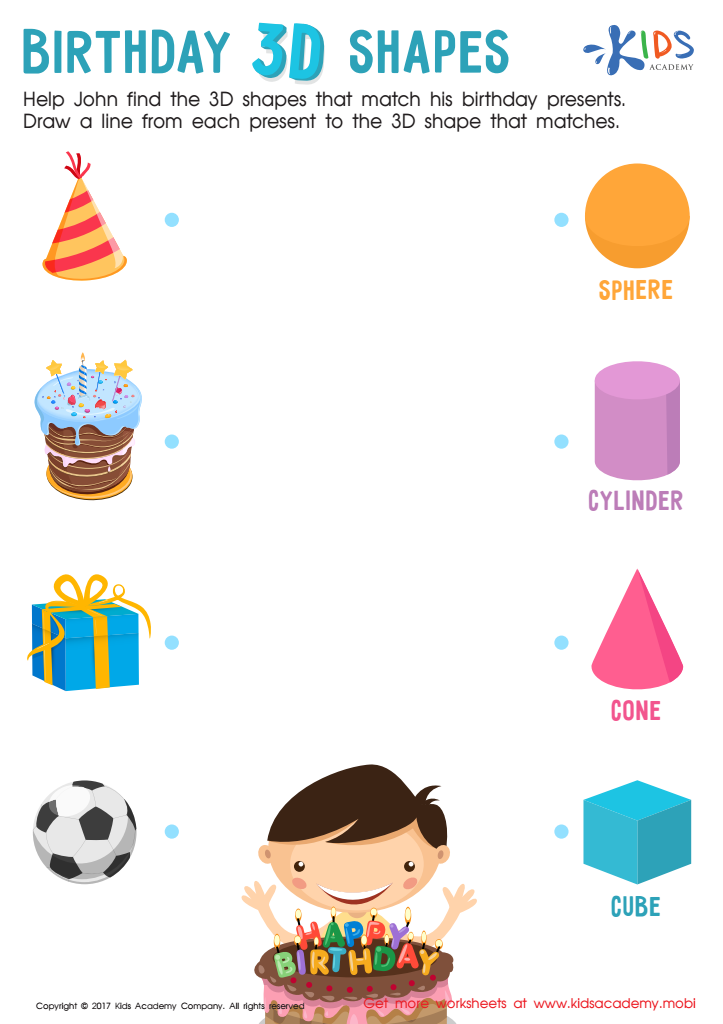
It's John's birthday and he needs your help. Ask your kids to draw a line from each present to the matching 3D shape. First, check they understand the difference between 2D and 3D shapes. Then, they can help John figure out which 3D shape matches each present.
Birthday 3D Shapes Worksheet
Worksheet
Cone Hide-and-Seek Worksheet

Cone Hide-and-Seek Worksheet

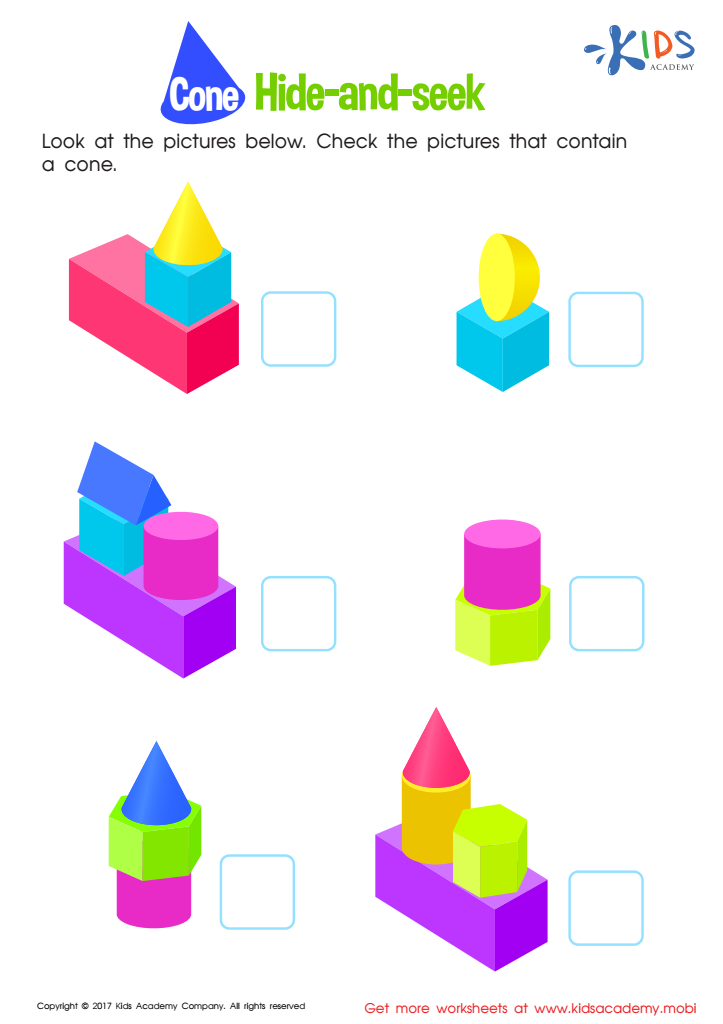
Prior to starting this worksheet, quiz your kid on shapes. If they gave quite a few, you've done well! This pdf will teach them more about cones; show them the pictures in the printout and have them identify which ones contain a cone.
Cone Hide-and-Seek Worksheet
Worksheet
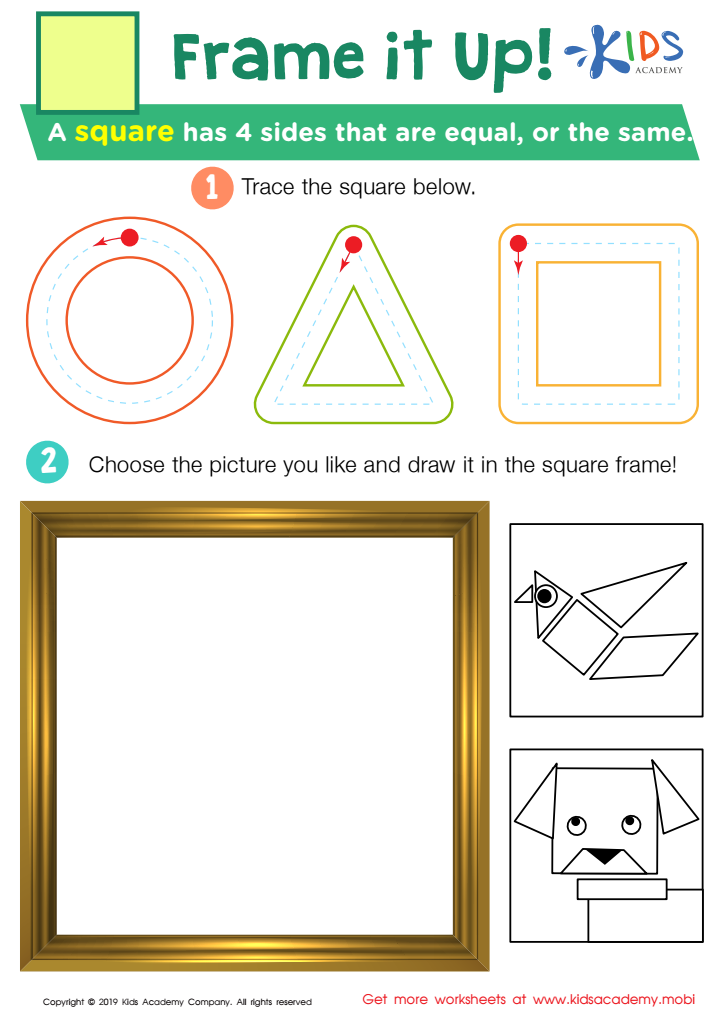
Frame it Up Worksheet

Frame it Up Worksheet

This worksheet helps kids learn the difference between squares and other shapes. It guides them to trace a square and draw a picture inside it. Examples of shapes-based drawings are included. Kids will have fun and clear up any confusion about squares.
Frame it Up Worksheet
Worksheet
Woodpecker and Triangles Worksheet

Woodpecker and Triangles Worksheet

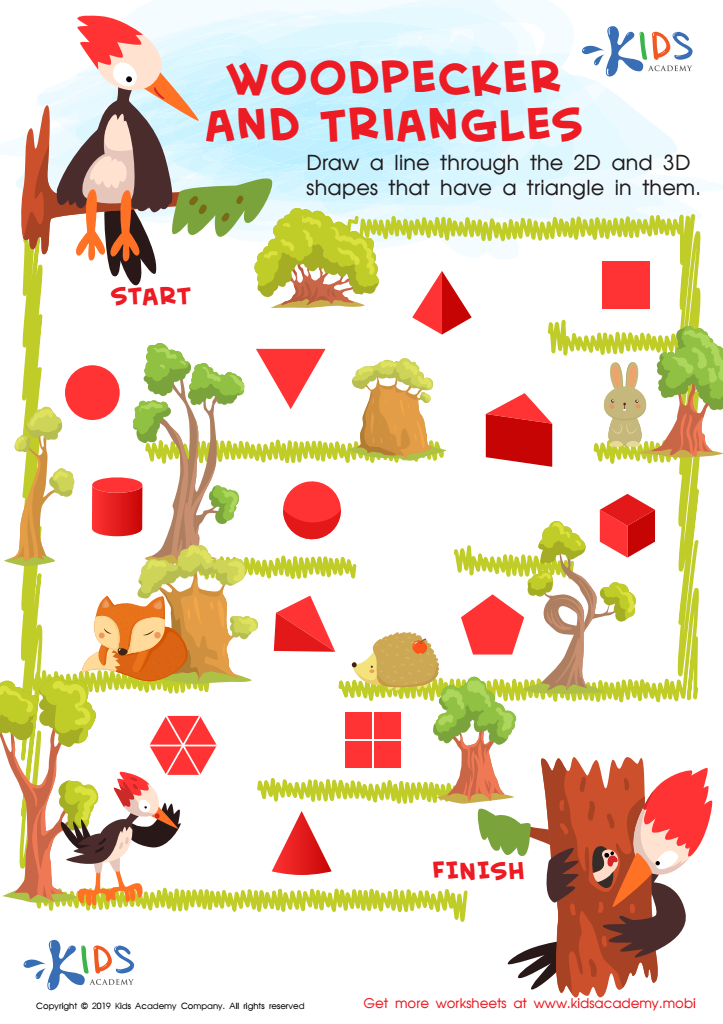
Woodpeckers peck wood, and this printout helps kids learn about triangles. Ask your kindergartners to draw a triangle, then draw a line through the shapes that have a triangle in them to help the woodpecker get out of the maze.
Woodpecker and Triangles Worksheet
Worksheet
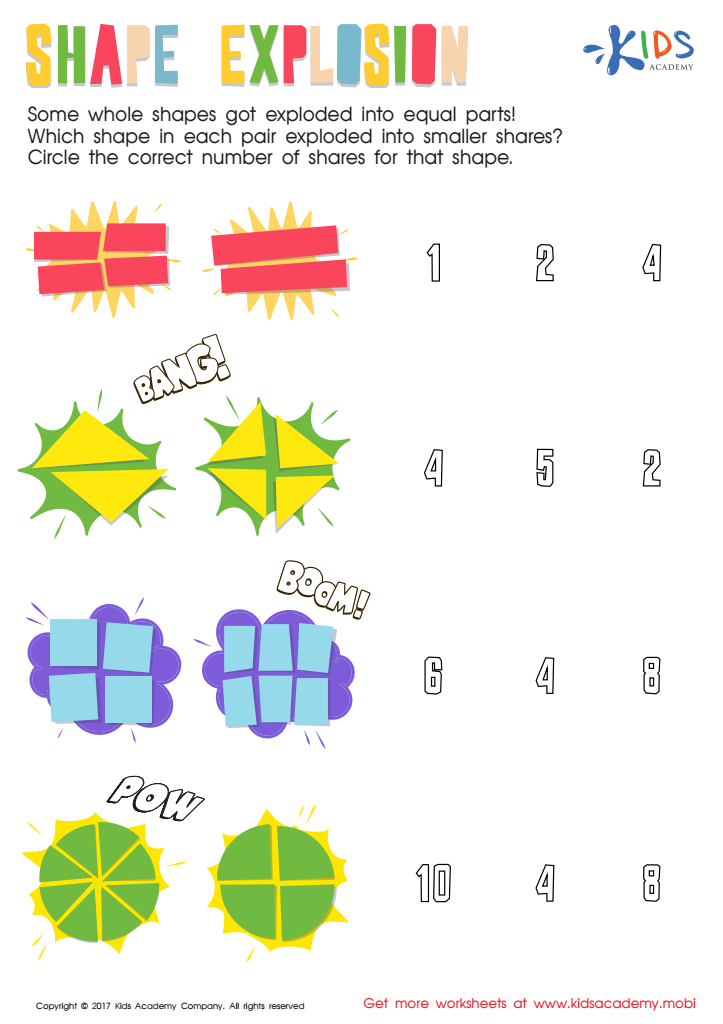
Shape Explosion Worksheet

Shape Explosion Worksheet

This worksheet shows students how some shapes explode into two or more equal parts. On the left side are four shapes, each splitting into two or more parts. Ask your child to point out which shape has the smaller share, and help them circle the correct number of shares.
Shape Explosion Worksheet
Worksheet
How Many Triangles Worksheet

How Many Triangles Worksheet

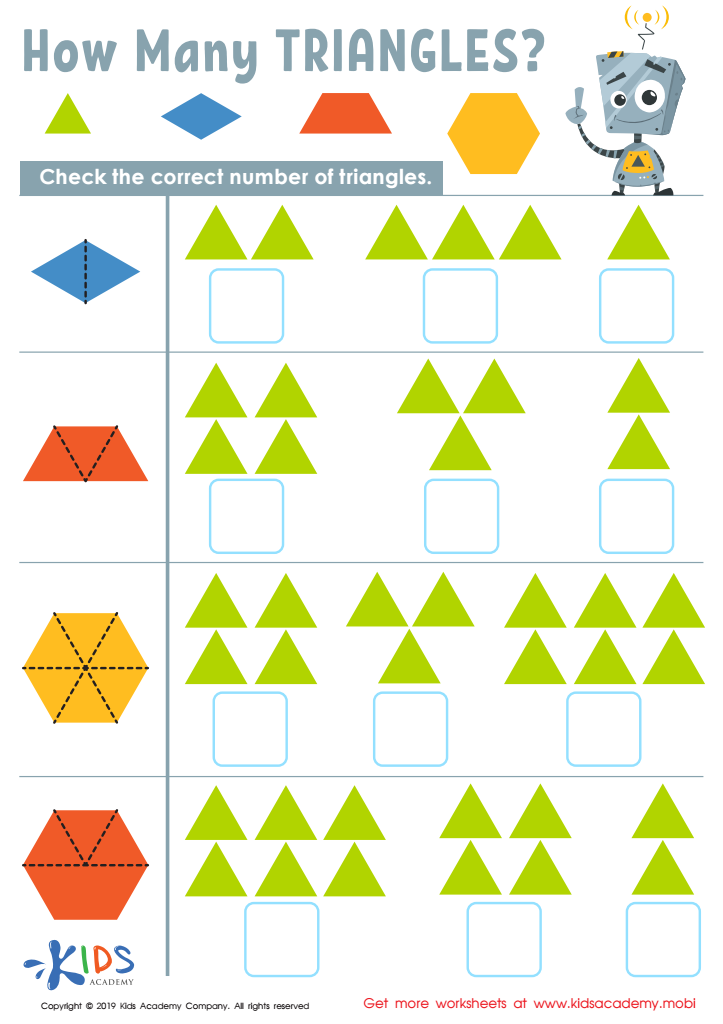
Kids will learn shapes as they explore new topics. Begin with circles, squares and triangles. With this worksheet, teach more about the triangle - three sides, three corners. Show your kids the many triangles drawn and help them count them. Encouraging them to identify and draw triangles is a great way to help them learn.
How Many Triangles Worksheet
Worksheet
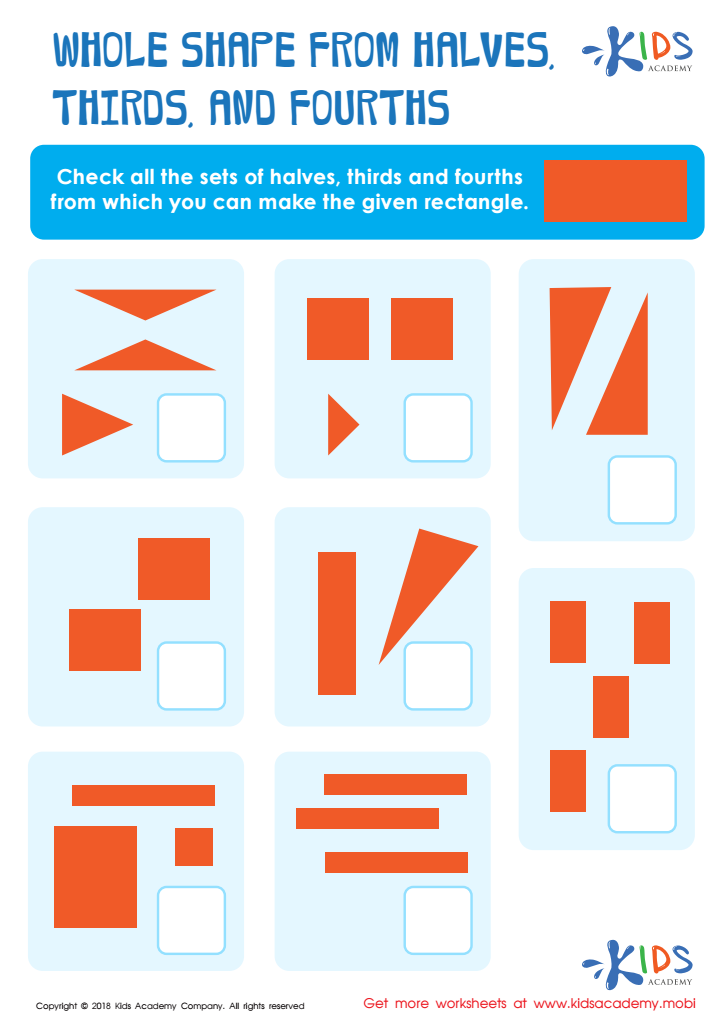
Whole Shape from Halves, Thirds and Fourths Worksheet


Whole Shape from Halves, Thirds and Fourths Worksheet

Explain to your students that they can make a new shape by combining halves, thirds, and fourths of a shape. Show them the worksheet with the rectangle at the top and ask them to find which sets of halves, thirds, and fourths make it. Have them check all the correct sets.
Whole Shape from Halves, Thirds and Fourths Worksheet

Worksheet


Counting skills and basic geometry play pivotal roles in building a strong mathematical foundation for 7-year-olds, fostering cognitive development and preparing them for more complex mathematical concepts. At this age, counting skills go beyond simply reciting numbers—they involve recognizing patterns, understanding the order of numbers, and grasping the concept of quantity. These skills are essential for problem-solving and logical thinking, which are crucial for everyday decision-making and later academic success.

Geometry, on the other hand, introduces young learners to shapes, spatial awareness, and the properties of objects. By exploring geometric concepts, children develop their understanding of the physical world, aiding in crucial activities like navigating spaces and understanding the relationship between objects. Recognizing and comparing shapes can also enhance visual-spatial skills, critical for tasks such as reading and handwriting.

Moreover, both counting and geometry nurture the ability to reason and make sense of complex ideas, which transcends math and applies to other subjects and real-world situations. Encouraging a solid grasp of these early math skills can boost a child's confidence and foster a positive attitude toward learning, empowering them to tackle future academic challenges with enthusiasm and resilience. Therefore, parents and teachers should prioritize these skills to support holistic learning and development.