Understanding number relationships Numbers Worksheets for 7-Year-Olds
3 filtered results
-
From - To
Welcome to our "Understanding Number Relationships" worksheets for 7-year-olds! These engaging resources are designed to enhance your child's math skills by exploring the connections between numbers. Through fun activities and exercises, young learners will grasp essential concepts such as addition, subtraction, and numerals, enabling them to analyze and compare quantities. Our worksheets encourage critical thinking and problem-solving, making math enjoyable and accessible. Perfect for both classroom and home learning, these printables provide the perfect balance of challenge and support. Help your child build a strong foundation in mathematics and instill confidence in their number-based skills today!
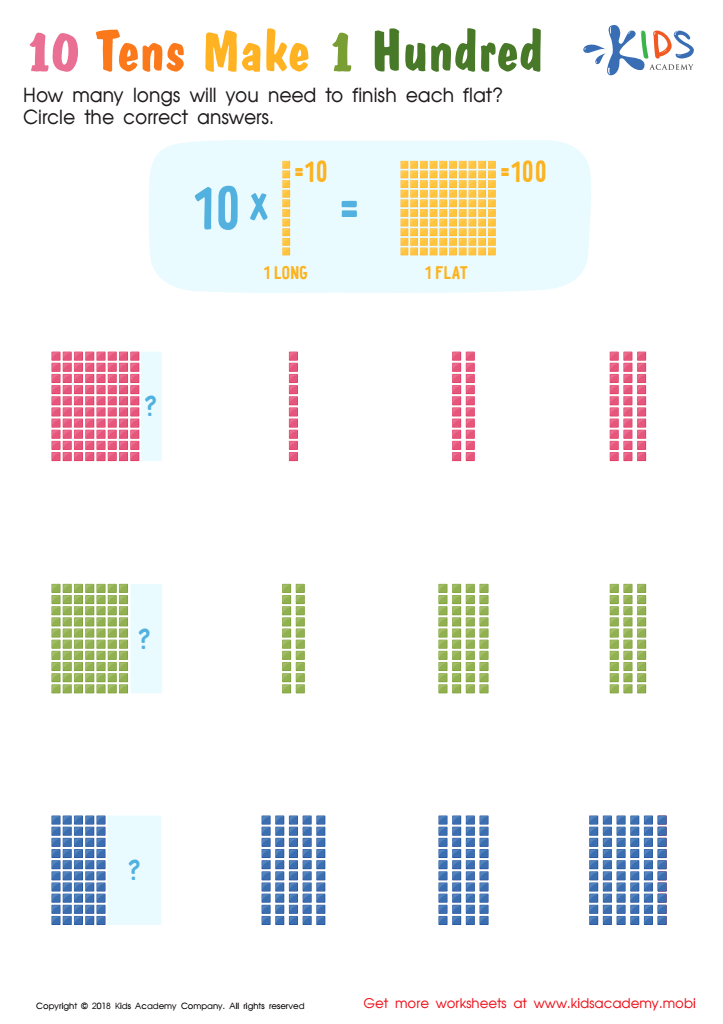
10 Tens Make 1 Hundred Worksheet
 Assign to My Students
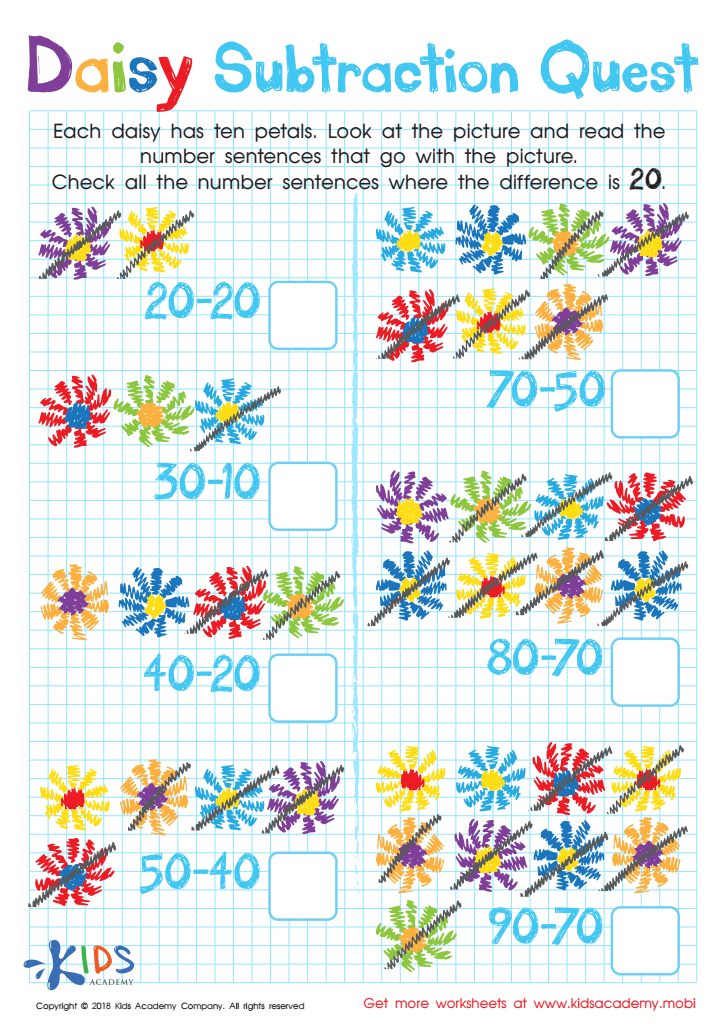
Daisy Subtraction Quest Worksheet
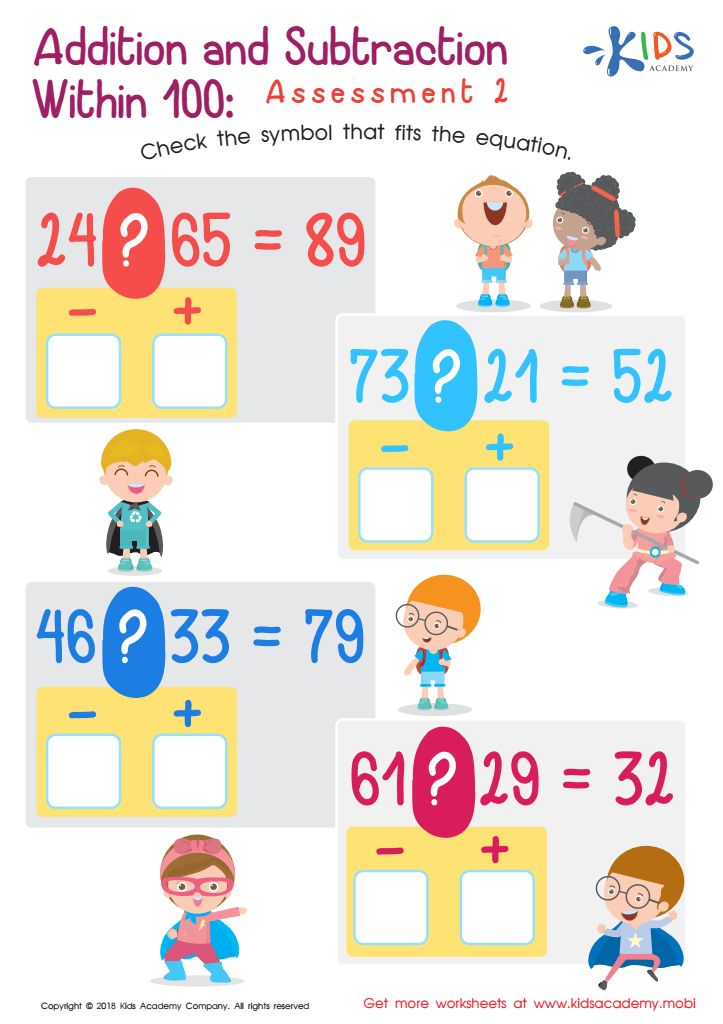
Addition and Subtraction Within 1: Assessment 2 Worksheet








Understanding number relationships is crucial for 7-year-olds as it lays the foundation for their mathematical learning and problem-solving abilities. At this age, children begin to grasp more complex concepts, such as addition and subtraction beyond single digits, multiplication, division, and other operations that form the basis of later math education. Parents and teachers should care because a solid understanding of number relationships fosters numerical fluency, enabling children to manipulate numbers confidently and effectively.
Moreover, when children understand how numbers relate to one another—like the concept of sums, differences, and multiples—they can apply this knowledge to real-world situations, enhancing their critical thinking and reasoning skills. A strong grasp of these concepts also boosts their confidence, making them more willing to tackle challenging math topics as they progress in school.
Additionally, recognizing number relationships helps children develop a sense of pattern and structure essential for later mathematics, including algebra and geometry. This not only supports their academic success but also equips them with problem-solving skills that are beneficial in everyday life. Thus, prioritizing number relationships is vital for both immediate learning and long-term academic growth. Ultimately, engaged parents and teachers play a critical role in nurturing these foundational skills.








