
Analog clock reading Math Worksheets for 7-Year-Olds
4 filtered results
Difficulty Level
Grade
Age
-
From - To
Subject
Activity
Standards
Teach your 7-year-old the essential skill of telling time with our engaging analog clock reading math worksheets. Tailored specifically for second graders, these worksheets blend education and fun, helping children practice reading clock faces, understanding hour and minute hands, and mastering the concept of time. Each activity builds foundational skills critical for everyday time management. Colorful designs and age-appropriate exercises make learning enjoyable and effective, ensuring your child becomes confident in reading analog clocks. Use our expertly crafted worksheets to turn analog clock reading into an interactive and rewarding learning adventure that kids will love.
Favorites
With answer key
Interactive
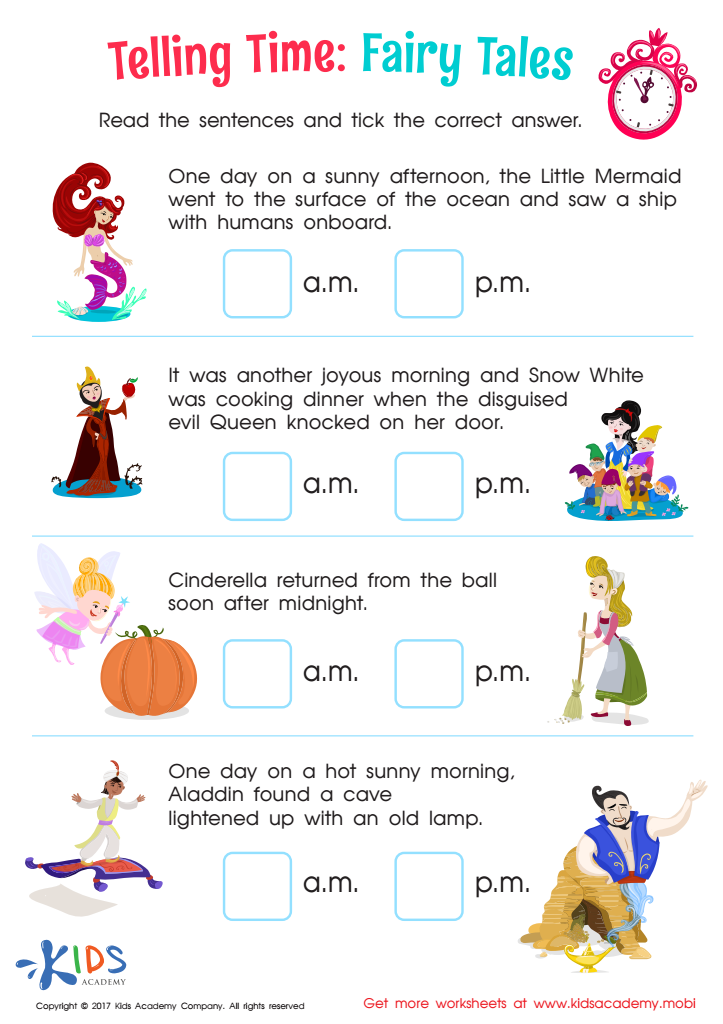
Telling Time: Fairy Tales Worksheet
Bring your child's imagination to life with classic fairy tales! This colorful telling time worksheet has it all: The Little Mermaid, Cinderella, and more! Plus, your child will have fun learning to distinguish a.m. from p.m. with this charming worksheet.
 Assign to My Students
Telling Time: Fairy Tales Worksheet
Worksheet
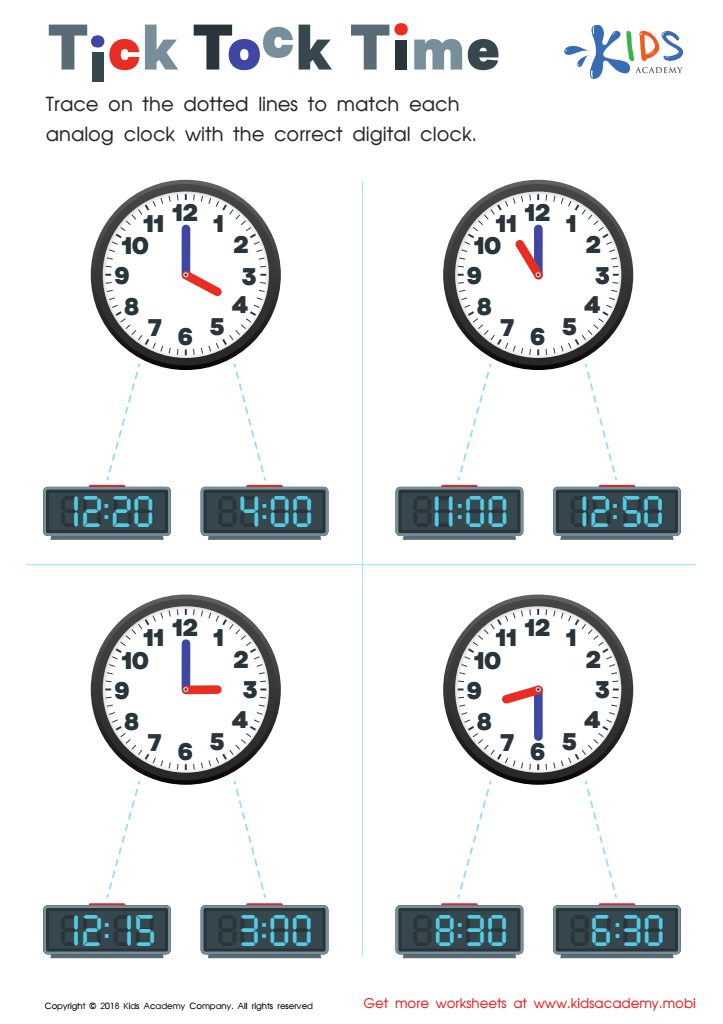
Tick Tock Time Worksheet
Trace the dotted lines on this worksheet to match analog and digital clocks! It's a great way to help your kids learn time-telling. They'll get better at converting analog to digital, and vice versa. Get your children to try it - it's a fun way to practice!
Tick Tock Time Worksheet
Worksheet
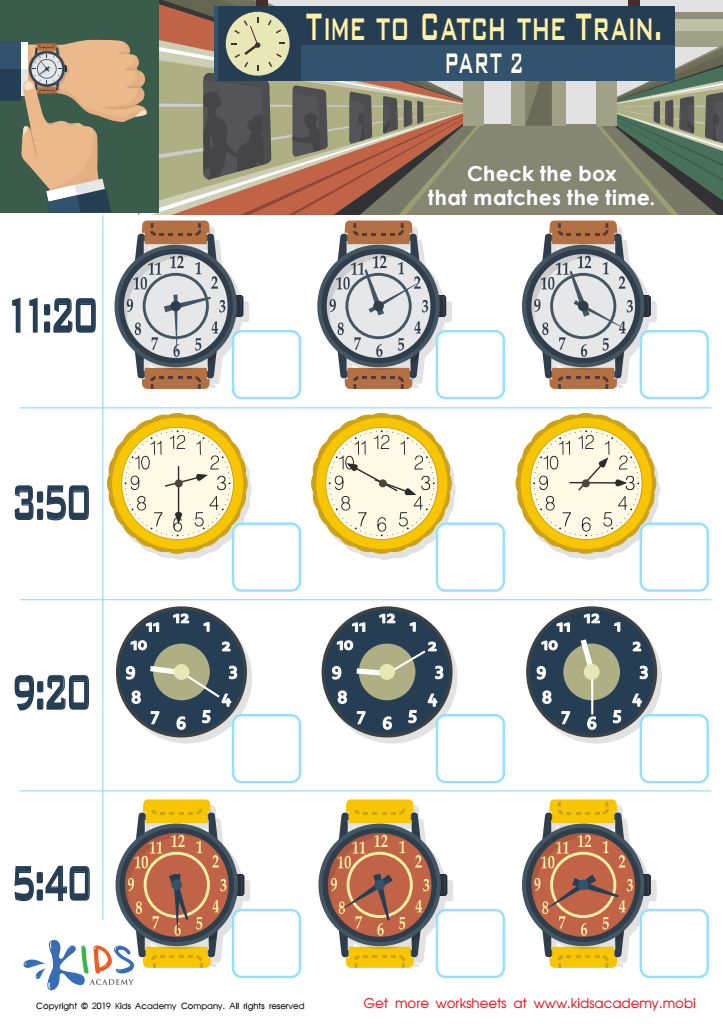
Time to Catch the Train Part 2 Worksheet
Teach your kids the importance of telling time and how to do it. Explain that there are multiple ways to show the time, such as written on the left side or watches in the picture. Guide them to check the box that matches the time. Knowing the time is essential to get things done and create order. Ensure your kids understand this and they will reap the benefits.
Time to Catch the Train Part 2 Worksheet
Worksheet
Join Kids Academy for Free
Who is primarily going to use this learning content?







Teaching 7-year-olds to read analog clocks is important for several reasons. First and foremost, it helps kids grasp the concept of time. Understanding hours and minutes helps develop their sense of daily routines and schedules, making them more aware of how to manage their time for activities like study, play, and sleep.
Analog clock reading also enhances basic math skills, including counting by fives, recognizing numbers, and basic addition and subtraction. For instance, figuring out the difference between the minute and hour hands promotes logical thinking and problem-solving skills, essential for academic growth.
Moreover, reading analog clocks fosters fine motor skills and hand-eye coordination, particularly as children practice moving the clock hands to match given times. It’s also a great exercise in patience and attention to detail, traits that are valuable beyond the classroom.
Additionally, not relying only on digital clocks can be beneficial in case of power outages or situations where digital devices aren't available. It creates a well-rounded understanding of timekeeping and connects them with an earlier generation’s methods of time management.
In summary, incorporating analog clock reading in early education enriches children socially and academically, laying the groundwork for a structured, mathematically sound, and adaptable future.








