Applying math skills Math Worksheets for 7-Year-Olds
3 filtered results
-
From - To
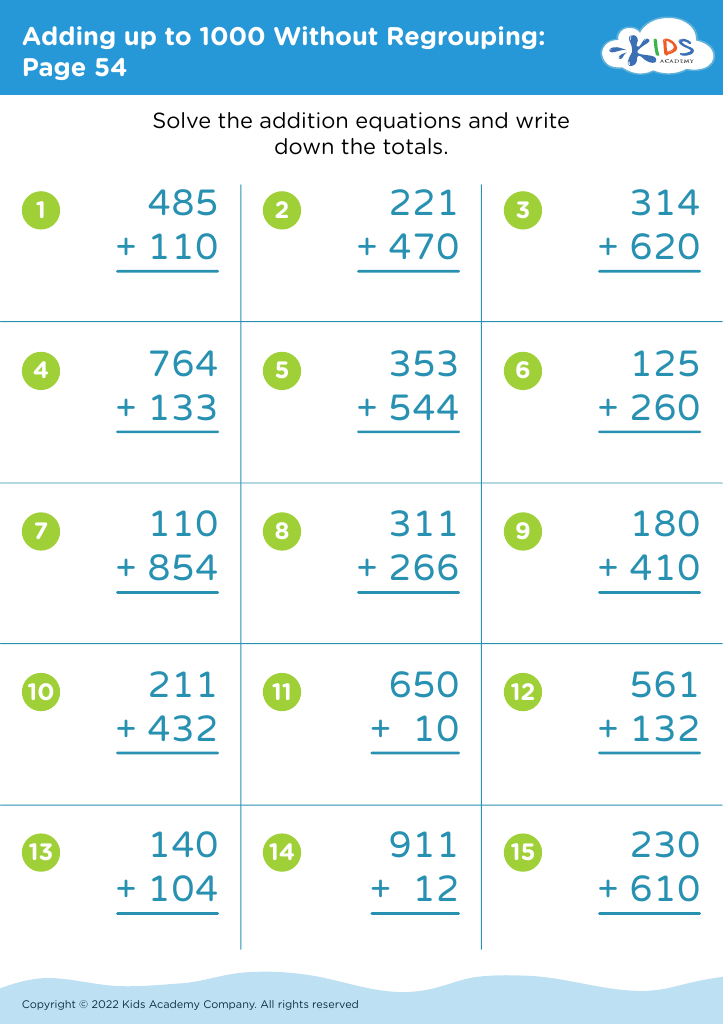
Discover engaging and educational math worksheets designed for 7-year-olds to enhance their problem-solving abilities! Our collection at Kids Academy focuses on applying essential math skills through fun, printable activities. These math worksheets offer a variety of exercises, including addition, subtraction, and simple word problems, to help children build confidence and proficiency in their mathematical abilities. Perfect for both in-class learning and at-home practice, these resources are tailored to meet the developmental needs of young learners. Visit Kids Academy to explore our diverse and age-appropriate worksheets that make learning math both enjoyable and effective!
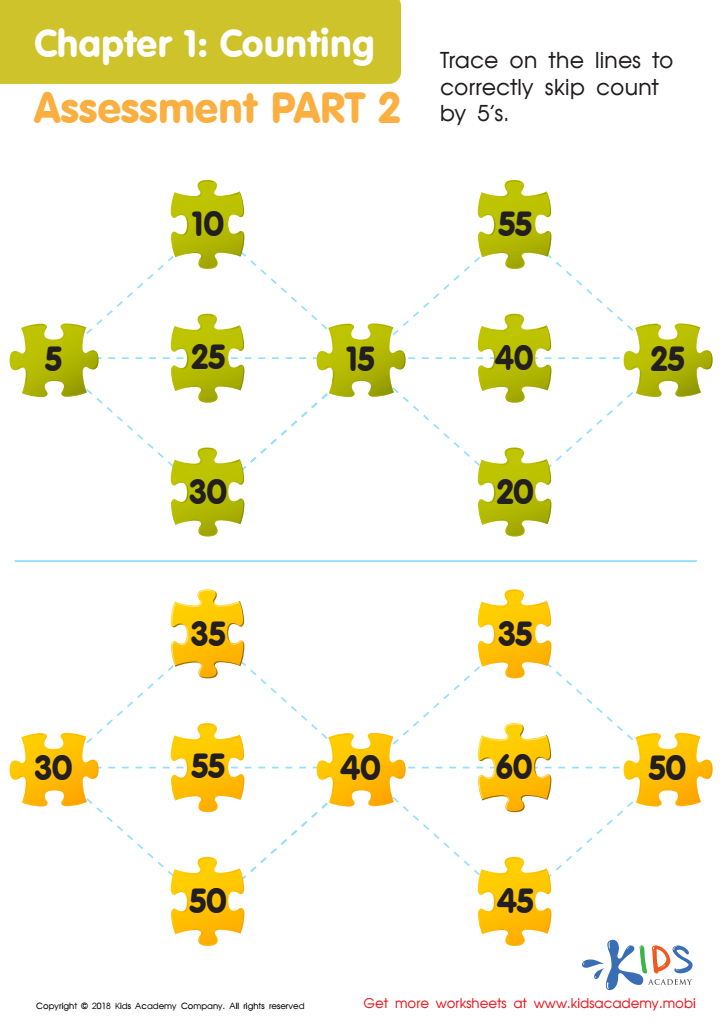
Counting: Assessment 2 Worksheet
 Assign to My Students
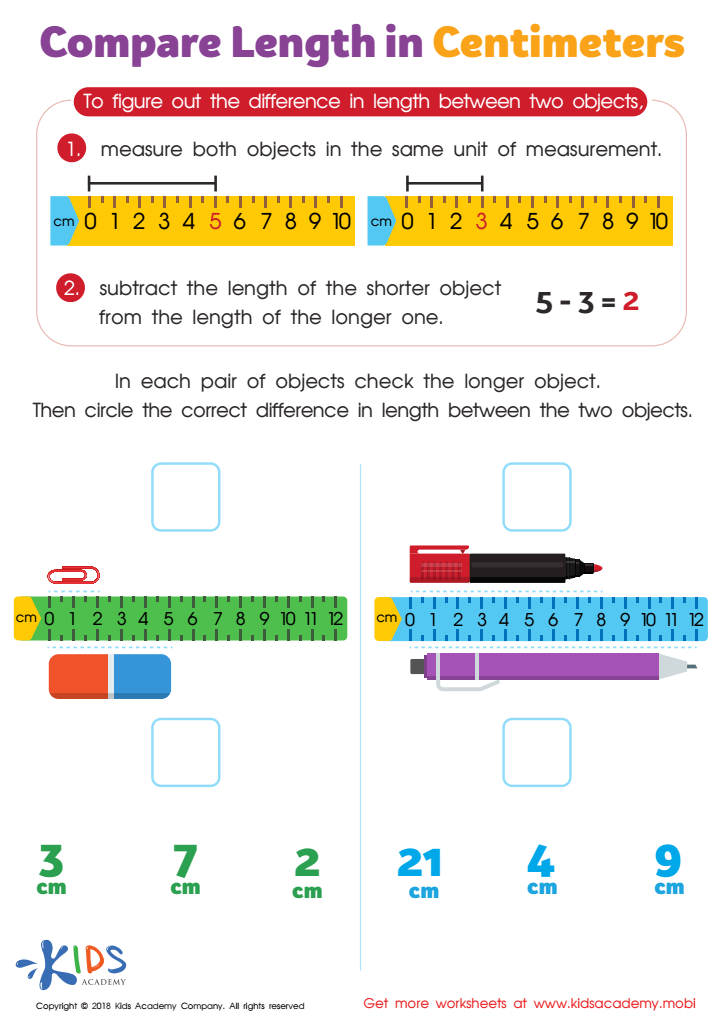
Compare Length in Centimeters Worksheet



.jpg)



.jpg)
Understanding the importance of applying math skills for 7-year-olds is crucial for both parents and teachers. At this age, children's cognitive development reaches a stage where they can grasp foundational concepts that will set the stage for future learning. Math is not just about numbers; it helps in developing critical thinking and problem-solving skills.
By integrating math skills early on, children learn to understand patterns, measurements, and the relationships between numbers, which are essential in everyday life. These skills help them develop logical thinking and spatial awareness, essential for subjects like science and engineering.
For parents, fostering an appreciation of math at home can create a positive learning environment where children feel more confident and enthusiastic about the subject. Simple activities like counting objects, measuring ingredients for a recipe, or playing math-related games can significantly enhance their skills and make learning enjoyable.
For teachers, introducing math in a fun, engaging way can help eliminate the fear or anxiety often associated with the subject. Using visual aids, interactive activities, and practical applications ensures that children see the relevance of math in their daily lives.
Overall, investing time and effort into applying math skills at an early age builds a strong academic foundation, encouraging lifelong learning and success across various disciplines.








