
Comparative analysis Math Worksheets for 7-Year-Olds
3 filtered results
Difficulty Level
Grade
Age
-
From - To
Subject
Activity
Standards
Unlock the potential of young learners with our comprehensive set of Comparative Analysis Math Worksheets for 7-Year-Olds. Designed to challenge and delight, these worksheets promote critical thinking and analytical skills by encouraging children to compare, contrast, and draw conclusions from various math problems. Packed with engaging exercises, they cover fundamental topics appropriate for their age group, fostering a deeper understanding of mathematical concepts. Perfect for both teachers and parents, our worksheets provide a fun and interactive way to build confidence and boost academic performance in young mathematicians. Explore today and support your child’s journey towards math proficiency!
Favorites
With answer key
Interactive
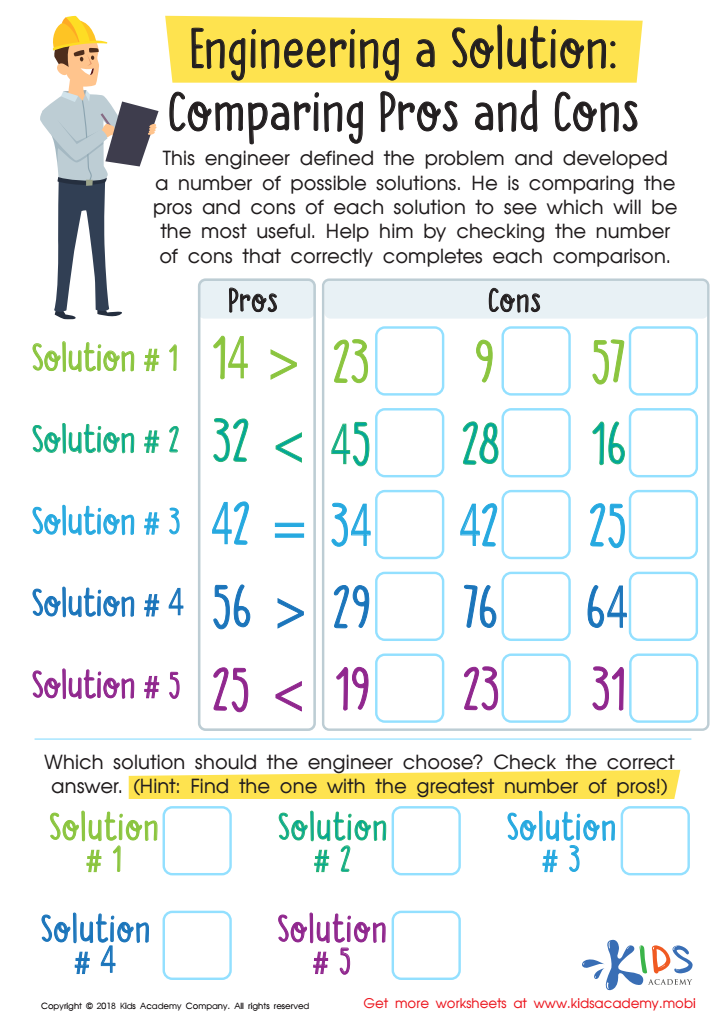
Engineering a Solution: Comparing Pros and Cons Worksheet
Help our little engineers assist the engineer in making a decision! They will solve the equations using greater than, less than, and equal to, and then decide the best solution for the problem using the pros and cons of each.
 Assign to My Students
Engineering a Solution: Comparing Pros and Cons Worksheet
Worksheet
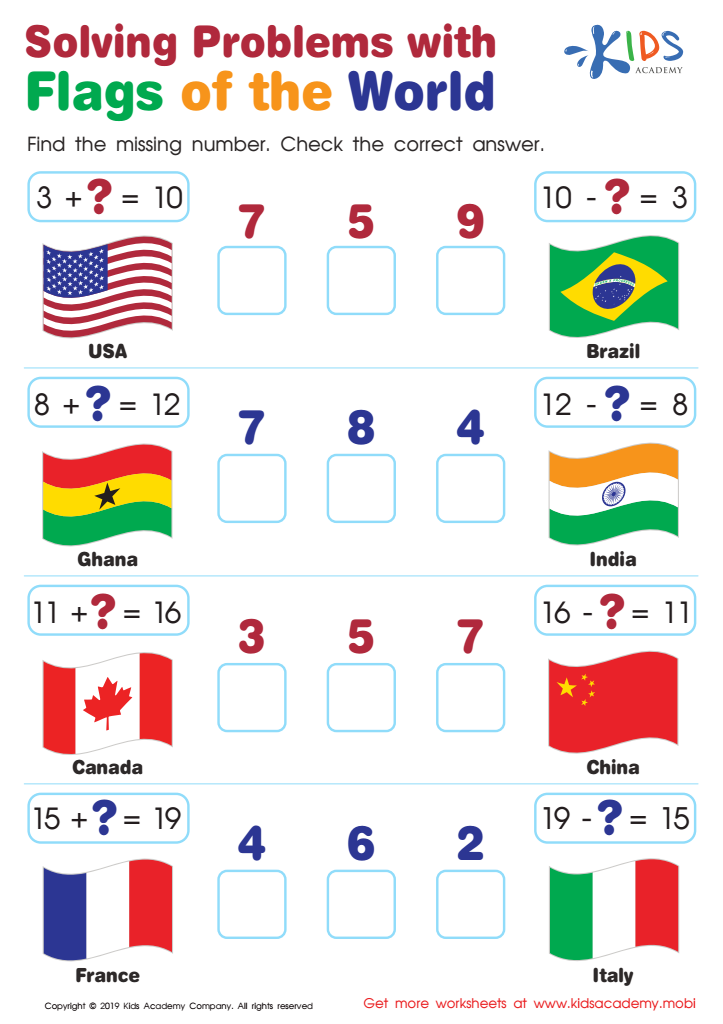
Solving Problems with Flags of the World Worksheet
Name some countries you know with your kids, then introduce their flags with this worksheet. Help them find the missing number in each addition problem, and then check the answer. It's a fun way to learn about different countries near and far.
Solving Problems with Flags of the World Worksheet
Worksheet
Join Kids Academy for Free
Who is primarily going to use this learning content?


.jpg)

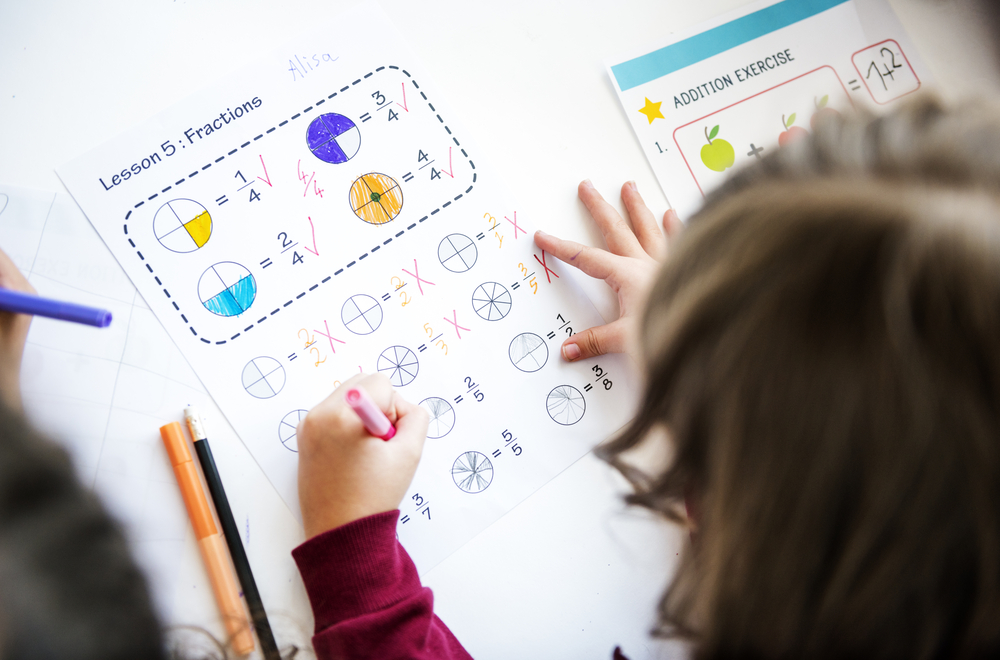



Comparative analysis in math for 7-year-olds is crucial for parents and teachers because it fosters critical thinking, problem-solving skills, and a deeper understanding of numerical relationships. At this developmental stage, children are naturally curious and starting to form their foundational math concepts. Introducing them to comparative analysis—such as identifying greater than, less than, or equal to—helps build mental math abilities and logical reasoning.
Parents and teachers should care because these skills translate directly into everyday decision-making and academic success in more advanced subjects. When children learn to compare numbers, they start discerning patterns, making predictions, and understanding mathematical relationships—skills essential for future math topics, and even for subjects beyond math.
Moreover, engaging in comparative analysis can make learning math more interactive and enjoyable. Through playful activities like comparing quantities during grocery shopping or using blocks for hands-on comparisons, children develop a more positive attitude toward math. This enthusiasm can lead to better performance and a lifelong love for learning.
Lastly, understanding a child's progress in comparative math skills enables parents and teachers to provide targeted support, ensuring each child solidly grasps these essential concepts. In sum, emphasizing comparative analysis for 7-year-olds is a stepping stone for their future educational success and everyday logical reasoning.








