
Counting money Math Worksheets for 7-Year-Olds
3 filtered results
Difficulty Level
Grade
Age
-
From - To
Subject
Activity
Standards
Discover an engaging collection of counting money math worksheets designed specifically for 7-year-olds! These worksheets provide fun, interactive exercises that enhance your child's understanding of currency, including identifying coins and bills, counting money, and making change. Tailored to foster essential math skills, our resources encourage hands-on learning and help build confidence in financial literacy. Perfect for both classroom and home use, these worksheets challenge young minds while keeping them entertained. Explore the world of money with vibrant visuals and practical problems that make learning enjoyable. Start your child's journey to mastering money concepts today with our easily accessible worksheets!
Favorites
With answer key
Interactive
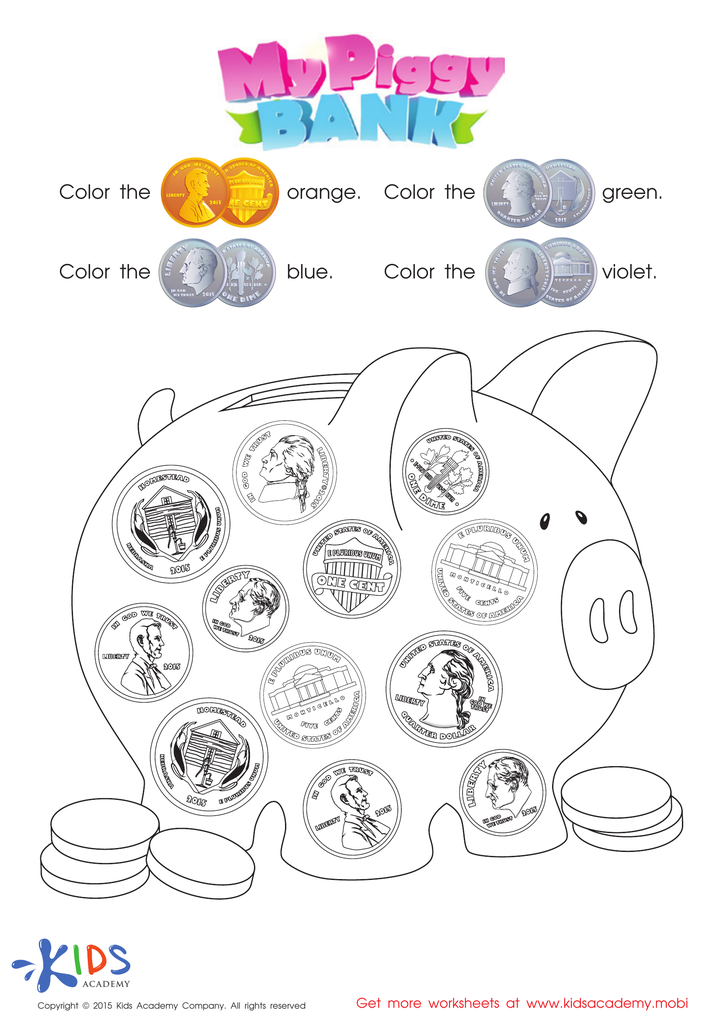
Recognizing Money Money Worksheet
Help the piggy bank by coloring its coins with Kids Academy's free money worksheets! Learn the different coins and their values with your kids. Printable worksheets are available to continue the lesson. Let's learn and have fun!
Recognizing Money Money Worksheet
Worksheet
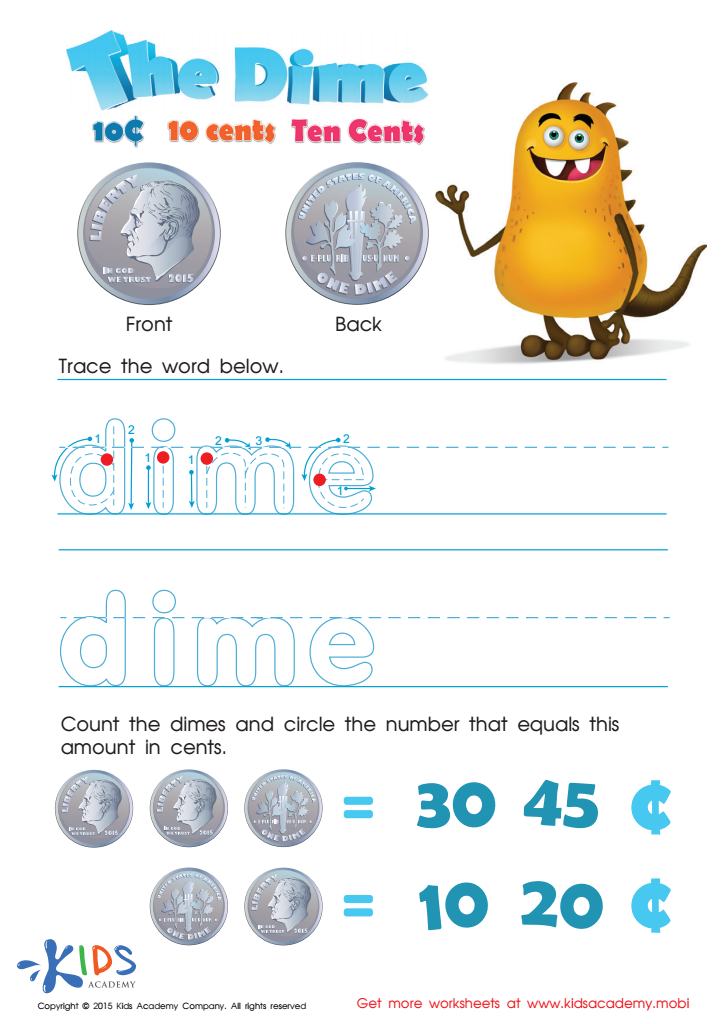
Ten Cents or the Dime Money Worksheet
Introduce your kids to coin games! Start with a dime: trace the word on both sides and count the dimes. Kids Academy has printable worksheets to help your kids learn how to count money.
 Assign to My Students
Ten Cents or the Dime Money Worksheet
Worksheet
Join Kids Academy for Free
Who is primarily going to use this learning content?








Counting money is a crucial skill for 7-year-olds that extends beyond basic math. This practical ability enhances a child's understanding of numbers, promotes critical thinking, and prepares them for real-life situations. Parents and teachers should care about this skill because it builds foundational math concepts such as addition, subtraction, and problem-solving.
Learning to count money teaches children to recognize various denominations, understand values, and make change, which fosters financial literacy from a young age. As children learn to manage money, they develop a sense of responsibility and independence. This skill can also instill confidence; when they handle transactions, they gain assurance in their abilities.
Furthermore, counting money activities can be enjoyable and engaging, turning essential learning into fun experiences. Using games, role-play, or practical situations teaches collaboration, communication, and social skills.
Incorporating money counting in the curriculum offers an opportunity to connect mathematical concepts with everyday life, ensuring that children see the relevance of what they learn. Overall, fostering these skills can lead to responsible adults who understand the value of money, making it a critical area of focus for parents and educators alike.








