Counting skills improvement Math Worksheets for 7-Year-Olds
3 filtered results
-
From - To
Unlock your child's potential with our Counting Skills Improvement Math Worksheets designed specifically for 7-year-olds! Our engaging and age-appropriate activities not only support foundational math skills but also make learning fun. These worksheets feature a variety of exercises that foster understanding of numbers, counting, and basic arithmetic. From visual aids to interactive tasks, each worksheet encourages critical thinking and boosts confidence in math. Perfect for classroom use or at-home practice, our resources help children master counting in a stress-free environment. Enhance your child's counting abilities while promoting a love for math with these comprehensive worksheets tailored to young learners!
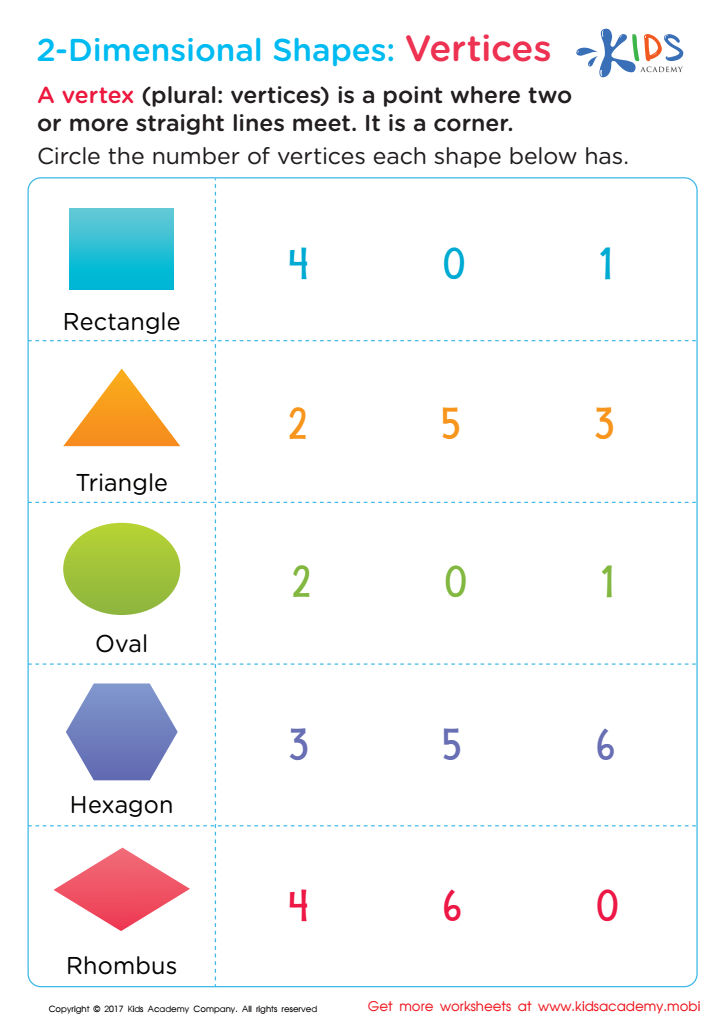
Two–Dimensional Shapes: Vertices Printable
 Assign to My Students
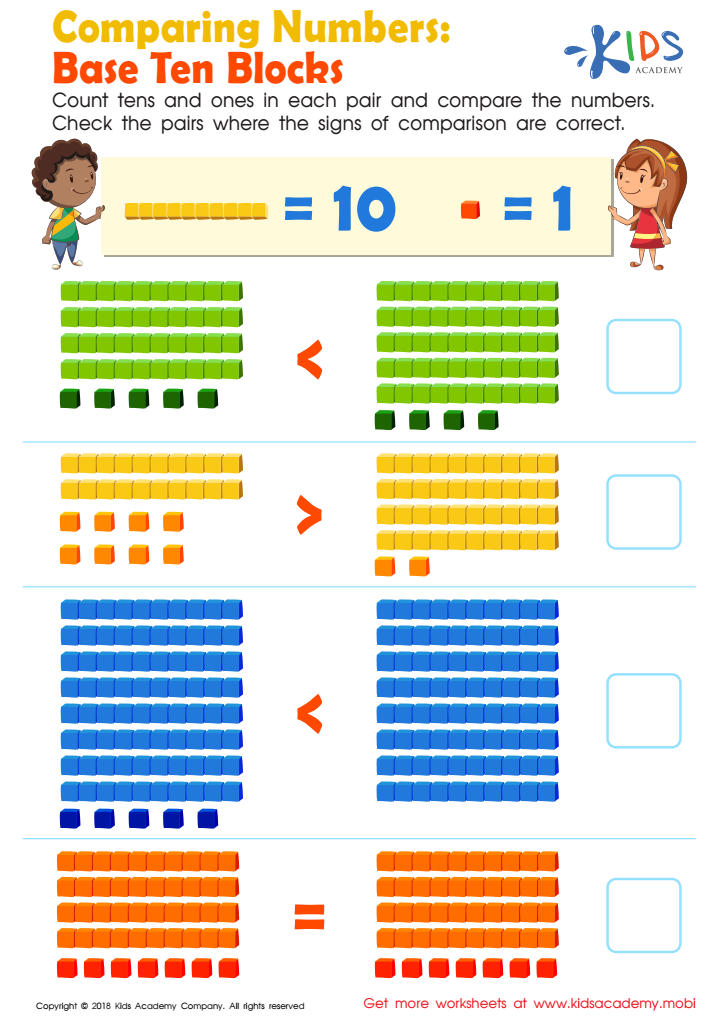
Comparing Numbers: Base Ten Blocks Worksheet
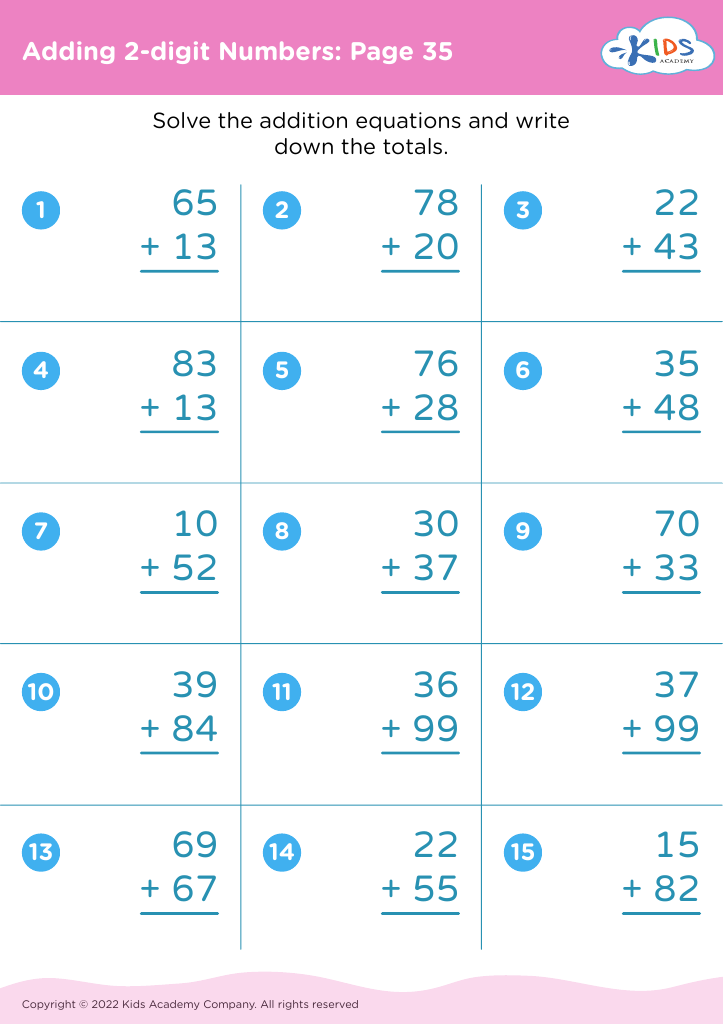







Counting skills are foundational to a child's mathematical understanding and critical for their academic success. For 7-year-olds, this stage is pivotal as they transition from concrete counting to abstract mathematical concepts. Parents and teachers should prioritize the improvement of counting skills because they form the basis for more complex operations such as addition, subtraction, and even early multiplication and division.
Strong counting abilities enable children to develop number sense, which enhances problem-solving skills and boosts overall confidence in math. An adeptness in counting can also foster logical thinking; it encourages children to recognize patterns and relationships between numbers. Moreover, proficiency in counting is linked to later achievements in math, impacting their performance in school and potential career options in a world increasingly reliant on quantitative skills.
Additionally, counting skills offer valuable everyday applications. Recognizing quantity, estimation, and basic arithmetic in daily scenarios helps children to engage practically with the subject matter, enhancing learning through contextual understanding. Teachers and parents play a vital role in nurturing these skills through games, interactive activities, and real-world applications, ensuring that children not only excel academically but also view math as a fun and applicable part of their lives.








