Enhance your 7-year-old's math skills with our engaging math worksheets designed specifically for young learners. Our collection includes a variety of fun and interactive activities that cover essential concepts such as addition, subtraction, measurement, and basic geometry. Each worksheet encourages critical thinking and problem-solving while ensuring your child develops a solid math foundation. Perfect for classroom use or home practice, these worksheets provide the ideal balance of challenge and enjoyment, helping to build confidence and mastery in math. Explore our math worksheets today and watch your child improve their math skills while having fun!
Check out this FREE Trial Lesson on Math for age 7!

My Family

Favorites
With answer key
Interactive
  • 7
  • Improve math skills
  • Math
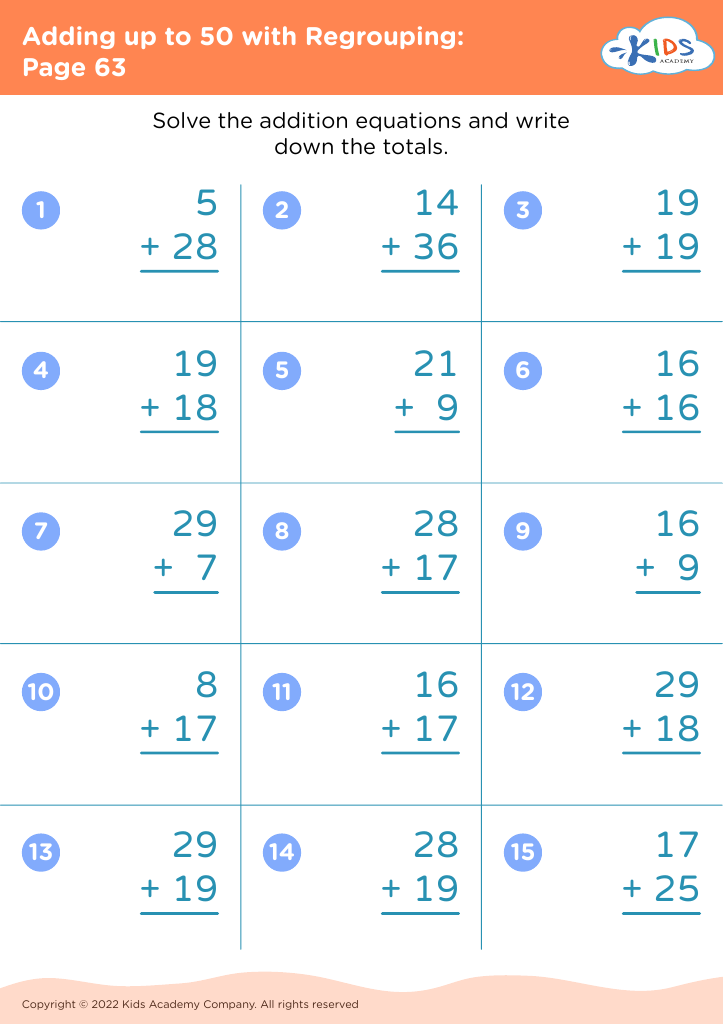
Adding up to 50 with Regrouping: Page 63
Worksheet
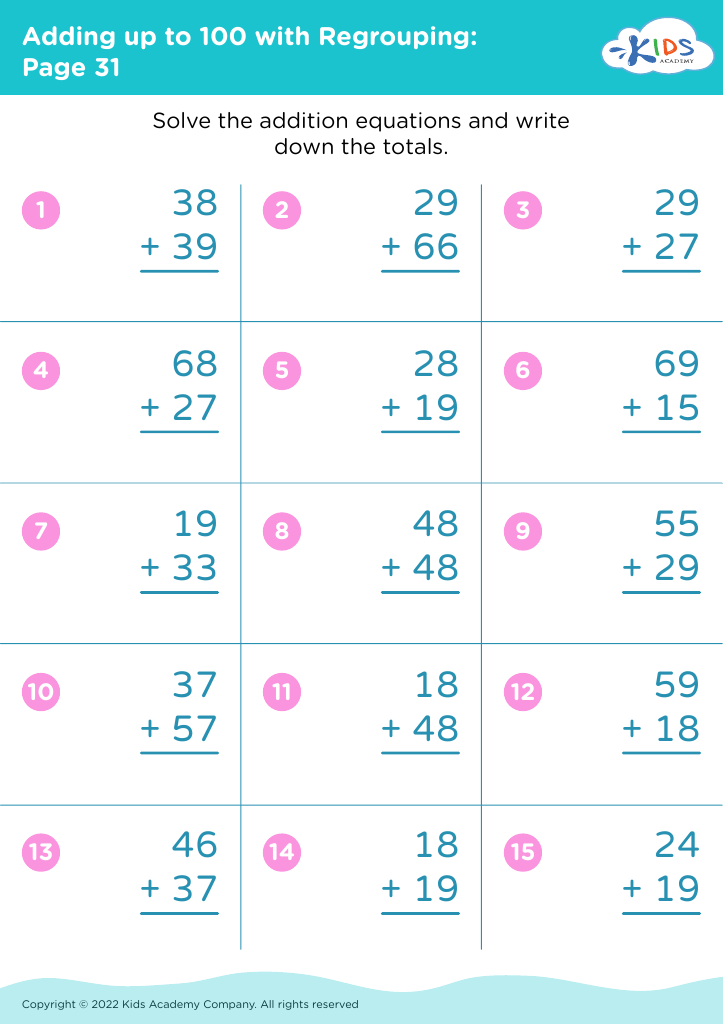
Adding up to 100 with Regrouping: Page 31
Worksheet
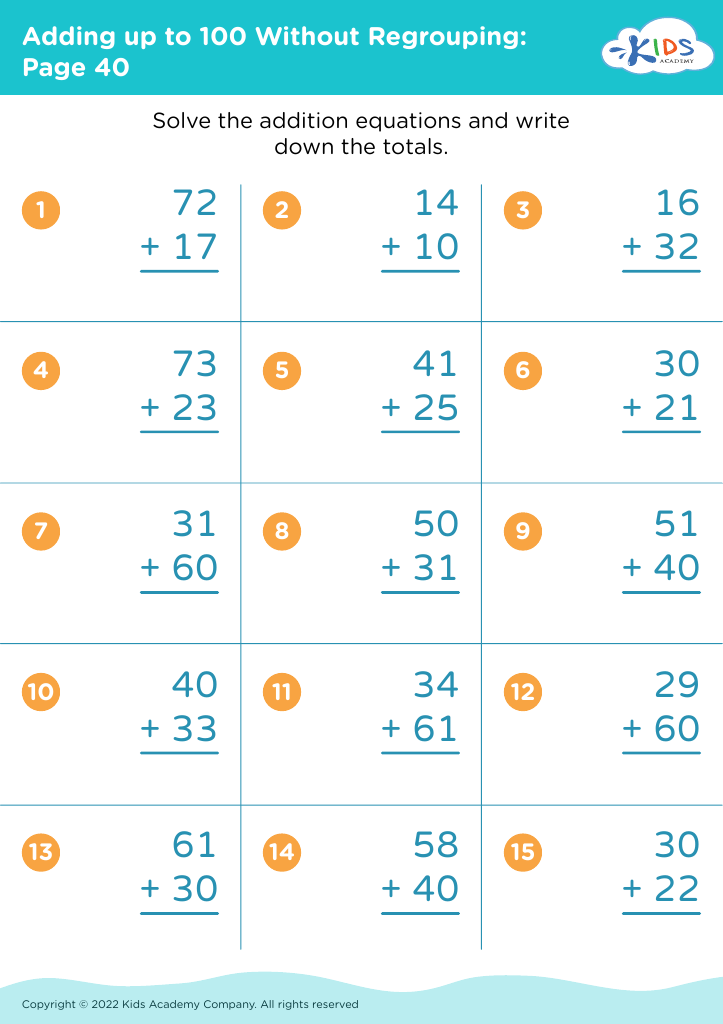
Adding up to 100 Without Regrouping: Page 40
Worksheet
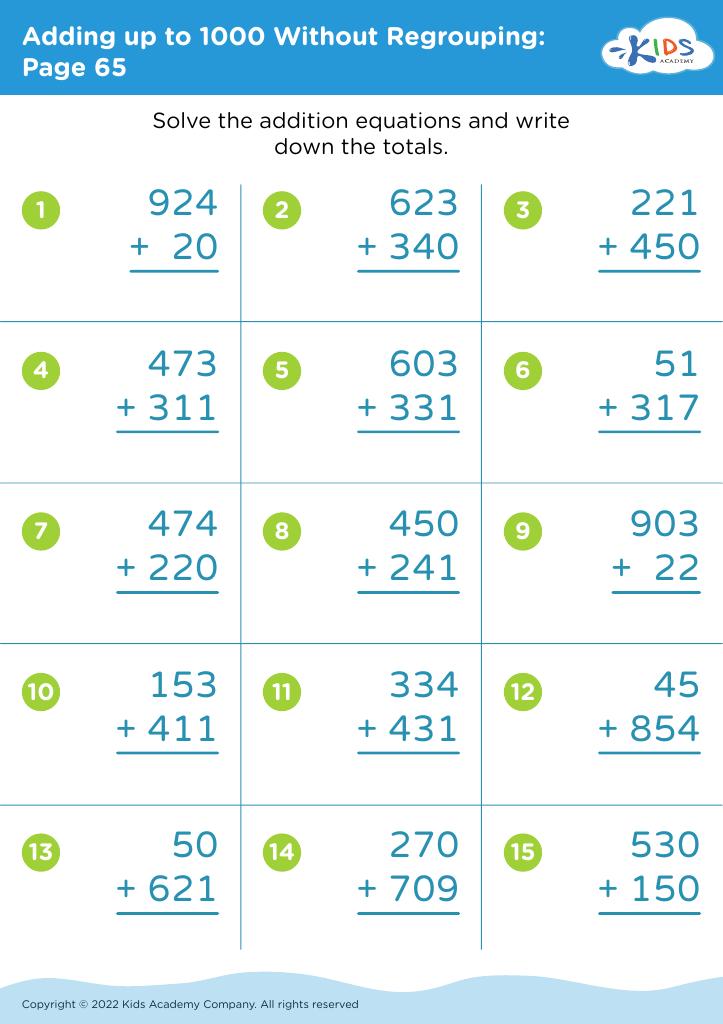
Adding up to 1000 Without Regrouping: Page 65
Worksheet
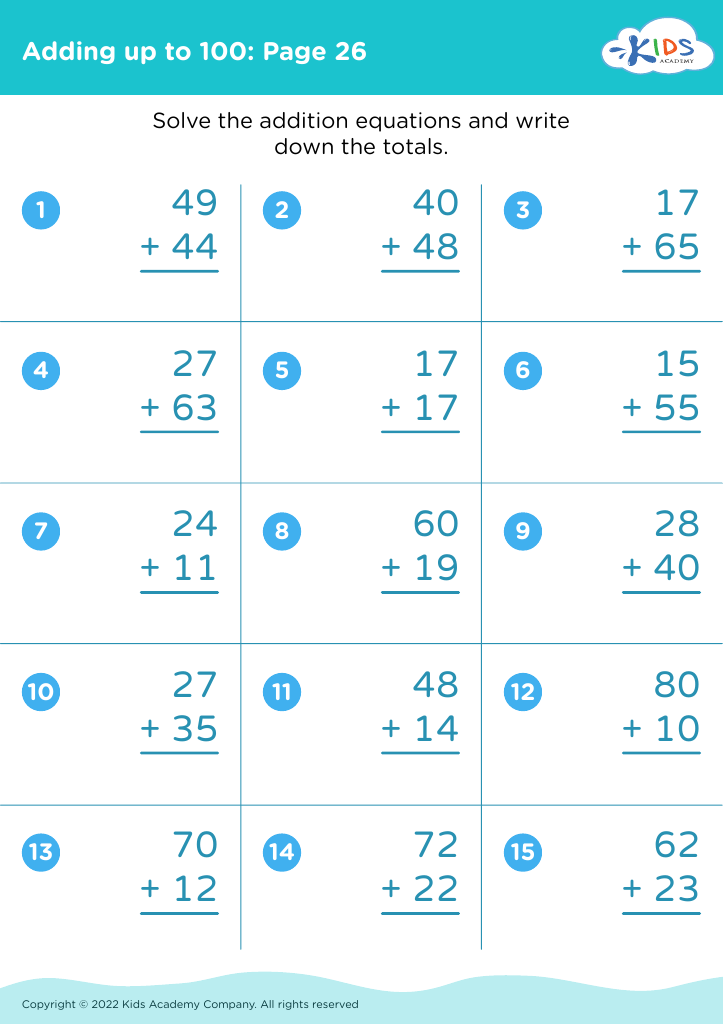
Adding up to 100: Page 26

Adding up to 100: Page 26

Adding up to 100: Page 26
Worksheet
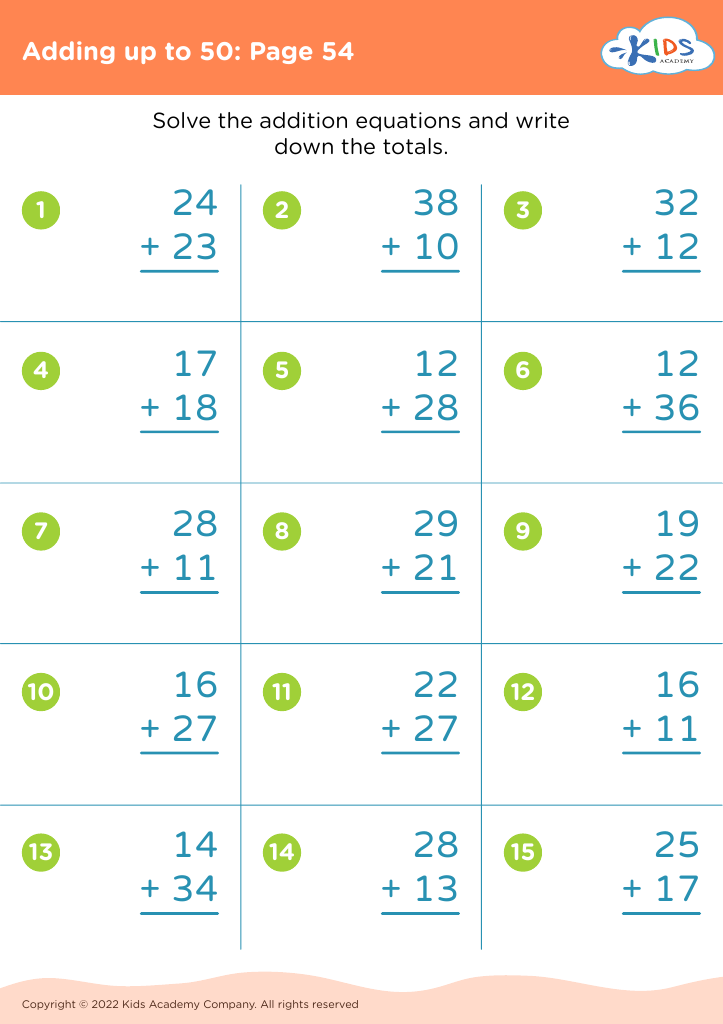
Adding up to 50: Page 54

Adding up to 50: Page 54

Adding up to 50: Page 54
Worksheet
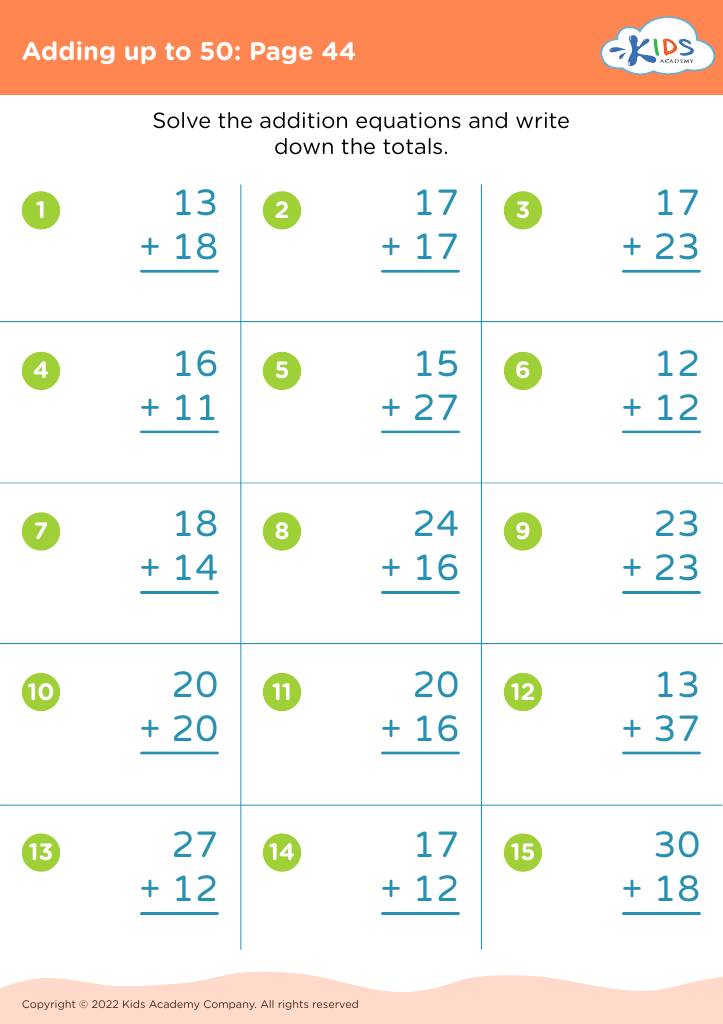
Adding up to 50: Page 44

Adding up to 50: Page 44

Adding up to 50: Page 44
Worksheet
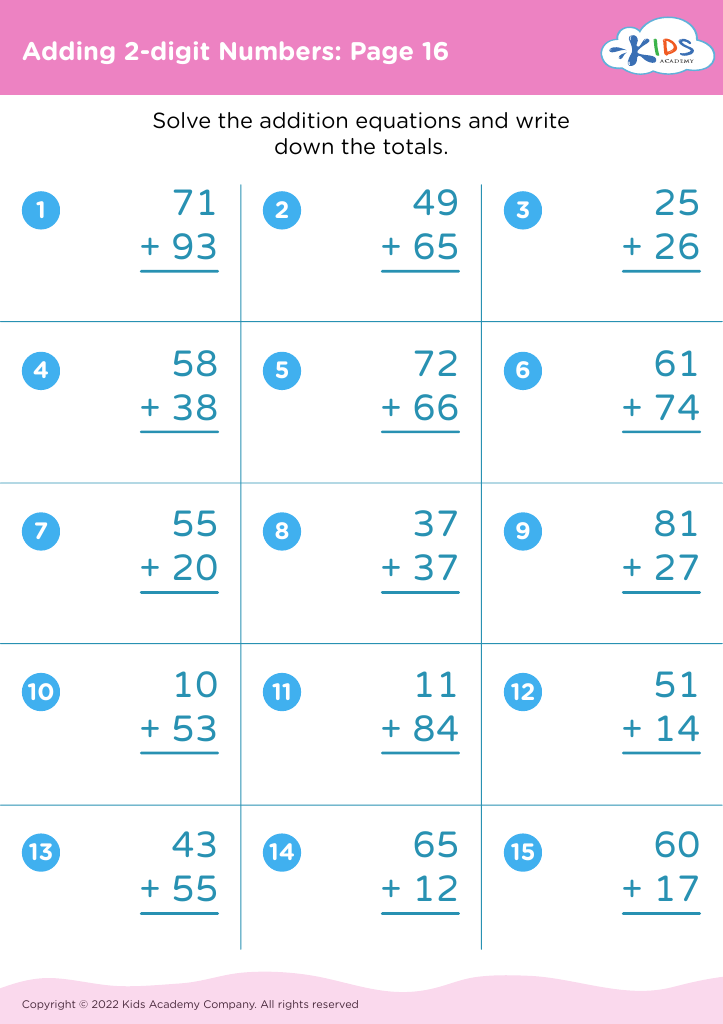
Adding 2-digit Numbers: Page 16

Adding 2-digit Numbers: Page 16

Adding 2-digit Numbers: Page 16
Worksheet
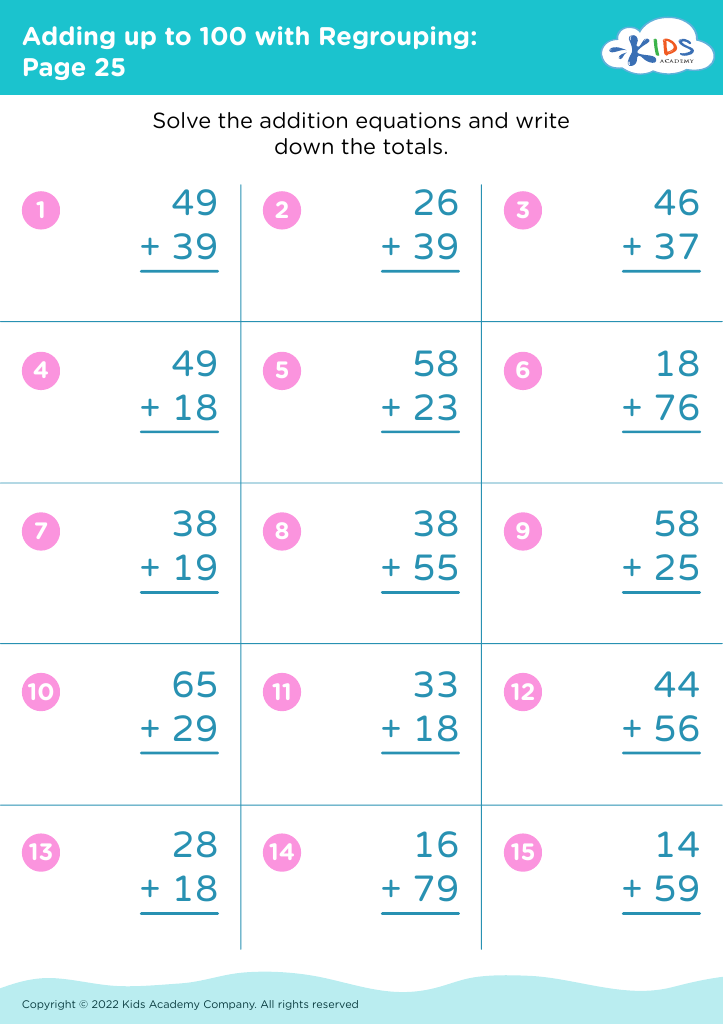
Adding up to 100 with Regrouping: Page 25
Worksheet
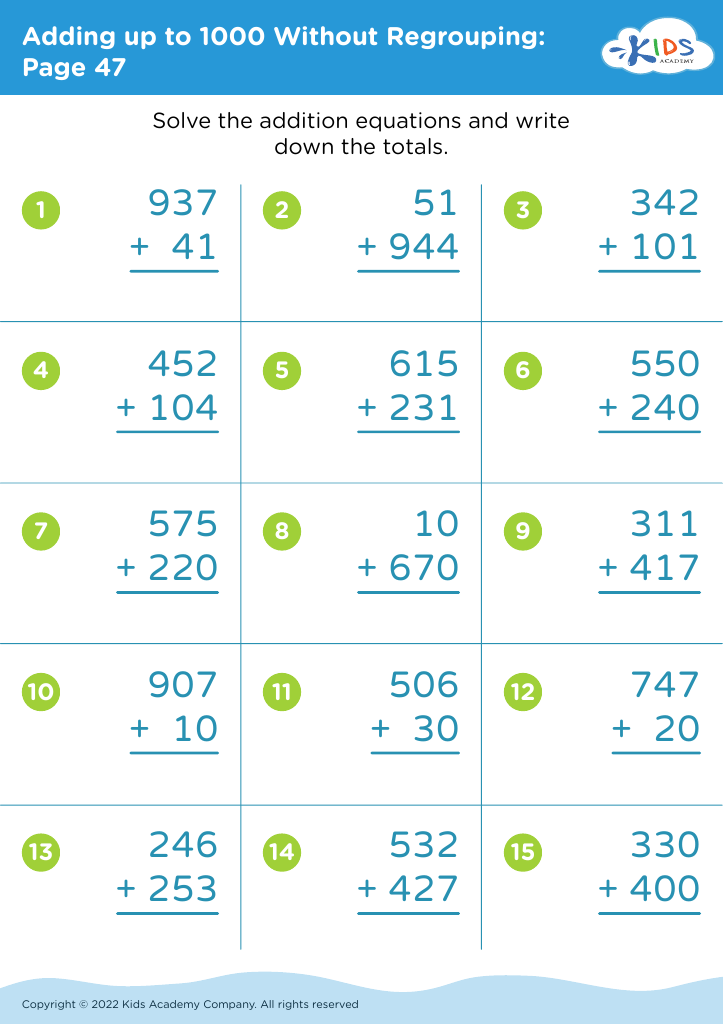
Adding up to 1000 Without Regrouping: Page 47
Worksheet
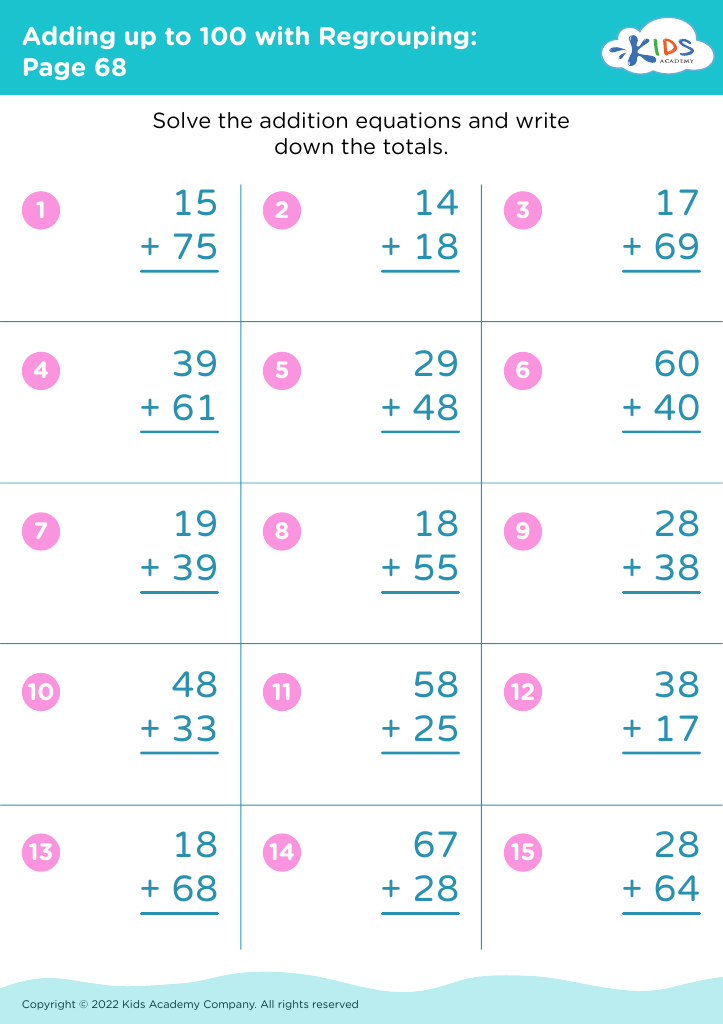
Adding up to 100 with Regrouping: Page 68
Worksheet
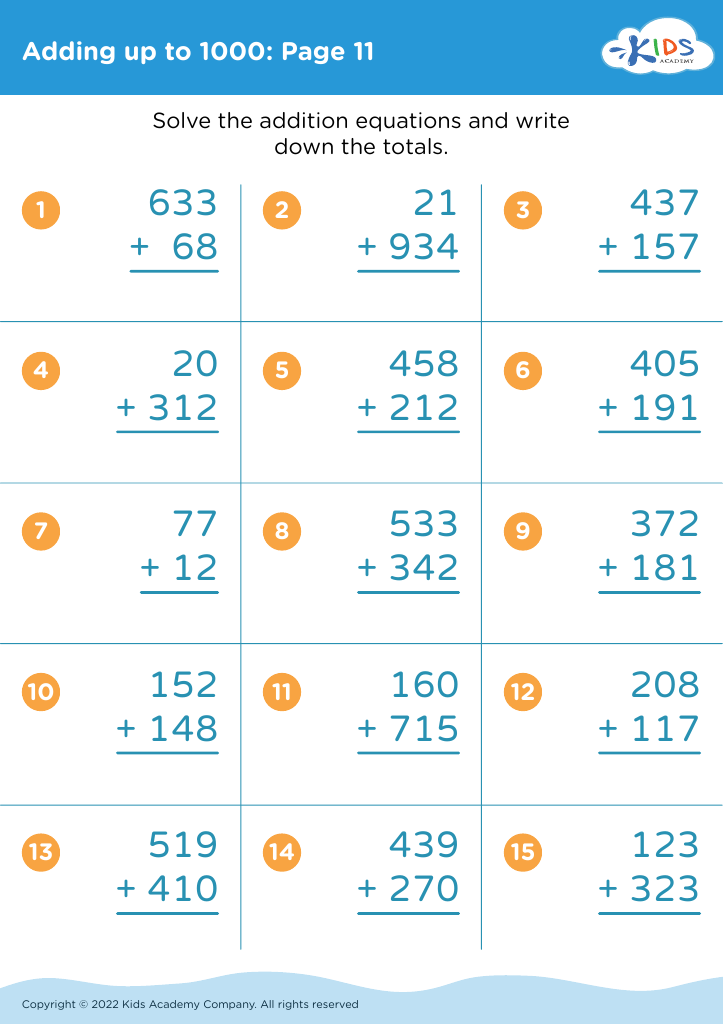
Adding up to 1000: Page 11

Adding up to 1000: Page 11

Adding up to 1000: Page 11
Worksheet
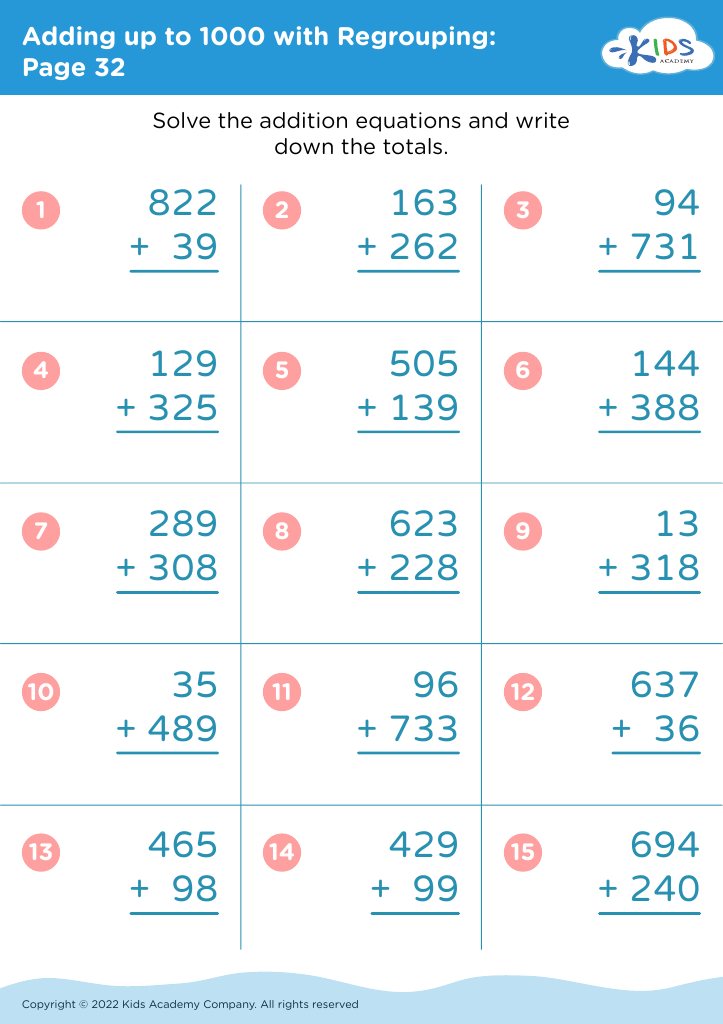
Adding up to 1000 with Regrouping: Page 32
Worksheet
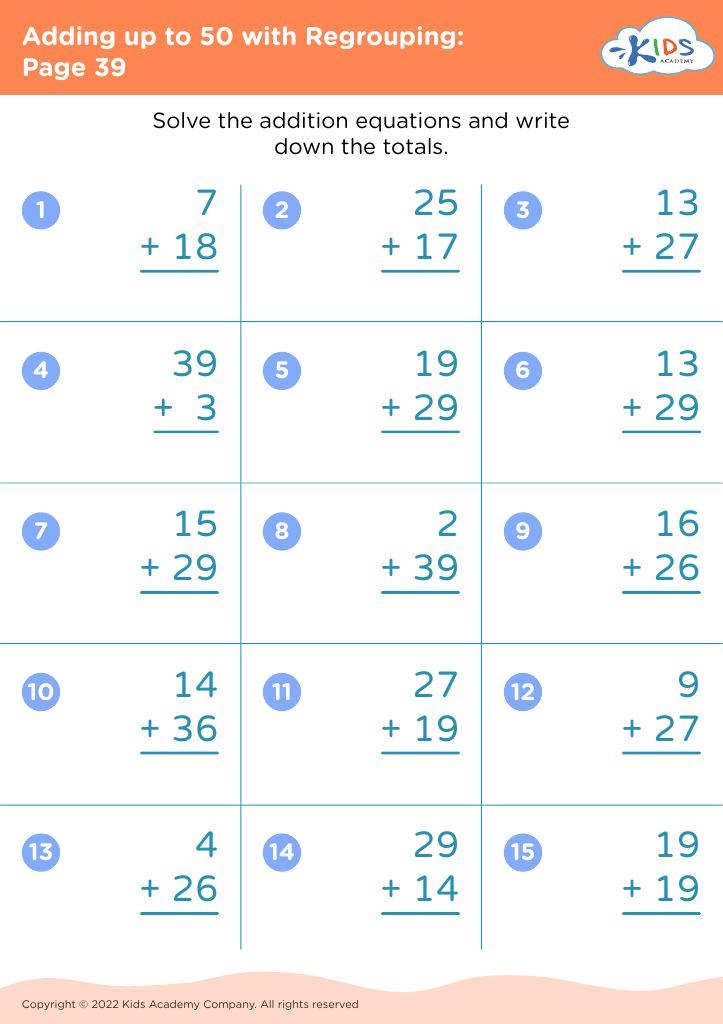
Adding up to 50 with Regrouping: Page 39
Worksheet
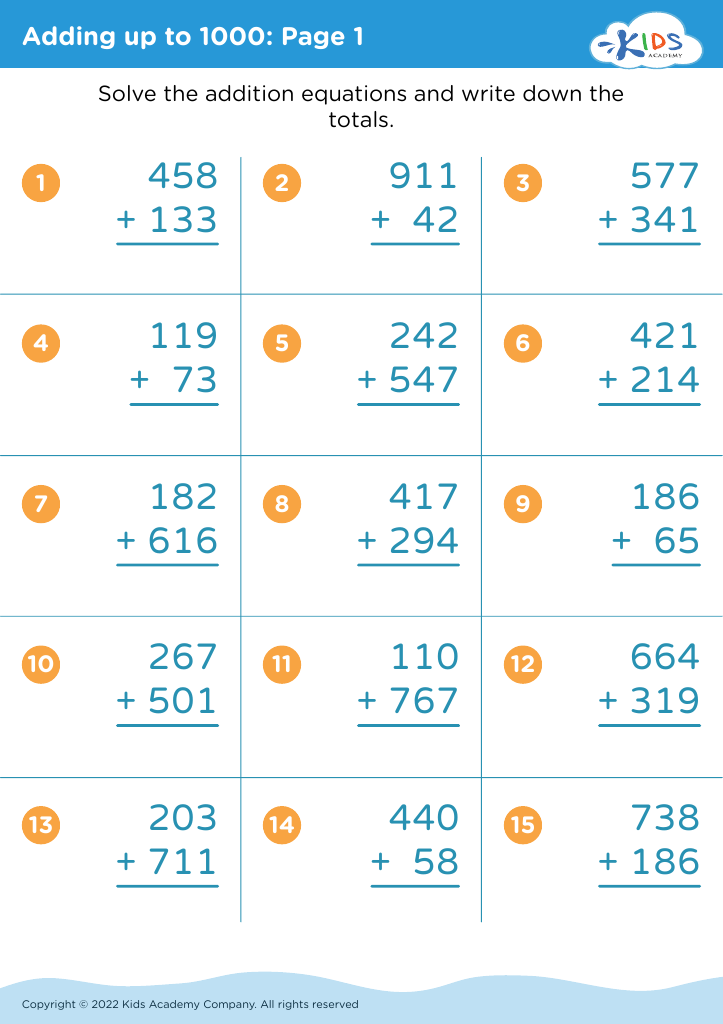
Adding up to 1000: Page 1

Adding up to 1000: Page 1

Adding up to 1000: Page 1
Worksheet
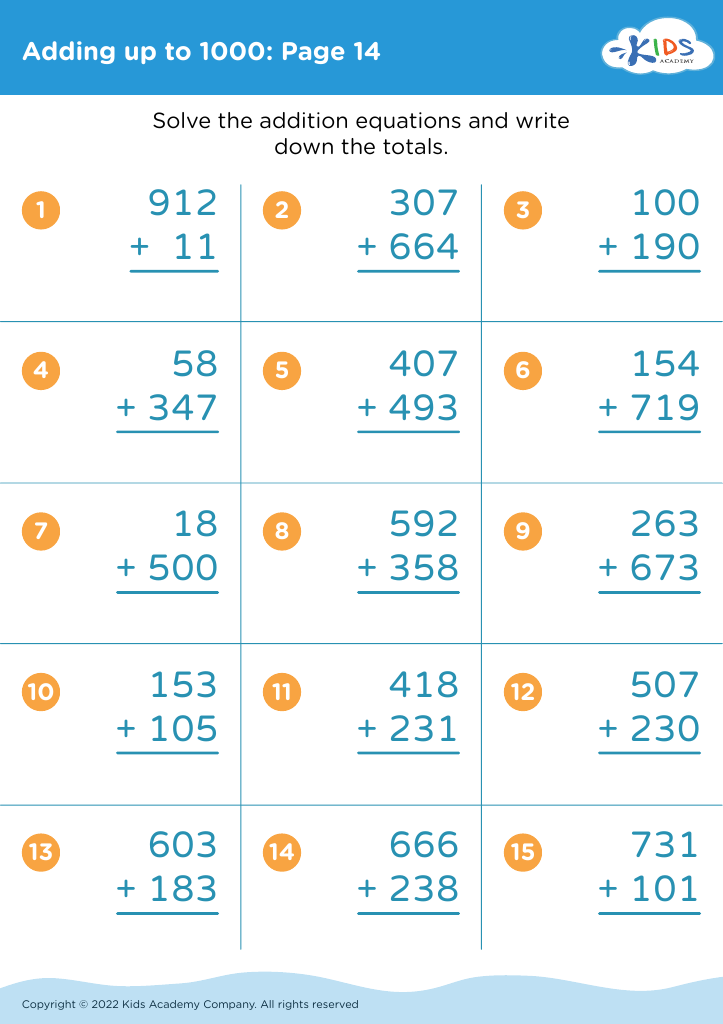
Adding up to 1000: Page 14

Adding up to 1000: Page 14

Adding up to 1000: Page 14
Worksheet
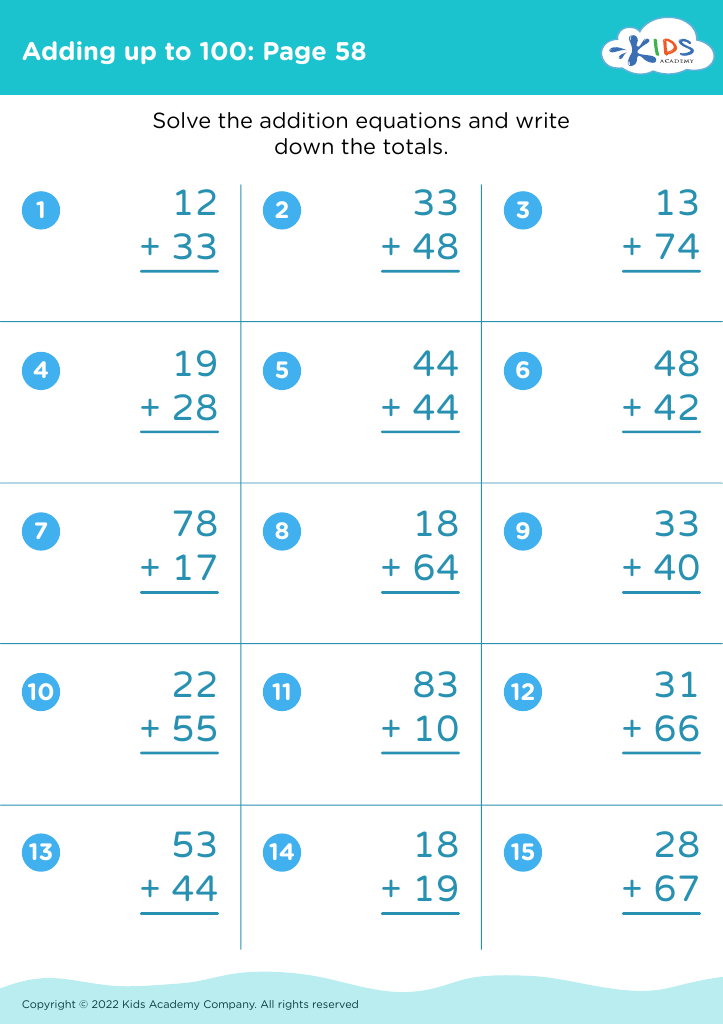
Adding up to 100: Page 58

Adding up to 100: Page 58

Adding up to 100: Page 58
Worksheet


Improving math skills in 7-year-olds is essential for several reasons. At this age, children are developing critical foundational skills that serve as the building blocks for more complex mathematical concepts. Mastery of basic arithmetic, such as addition and subtraction, directly impacts their ability to tackle challenging math problems in higher grades.

Moreover, strong math skills foster logical thinking and problem-solving abilities, which are crucial not solely in academics but throughout life. Competency in math boosts a child's confidence and self-esteem, diminishing feelings of anxiety related to the subject. As they succeed in math, children cultivate a growth mindset that encourages persistence in facing challenges.

Furthermore, collaborative opportunities in math can enhance social skills, as students often engage in group activities that require communication and teamwork. Parental and teacher involvement in enhancing these skills signals to children that math is valuable, building long-term positive attitudes toward learning.

Thus, prioritizing math education at this formative stage equips children not only with the tools necessary for academic success but also important skills needed in everyday life, ultimately contributing to well-rounded, capable individuals.