Improving math skills Math Worksheets for 7-Year-Olds - Page 2
32 filtered results
-
From - To
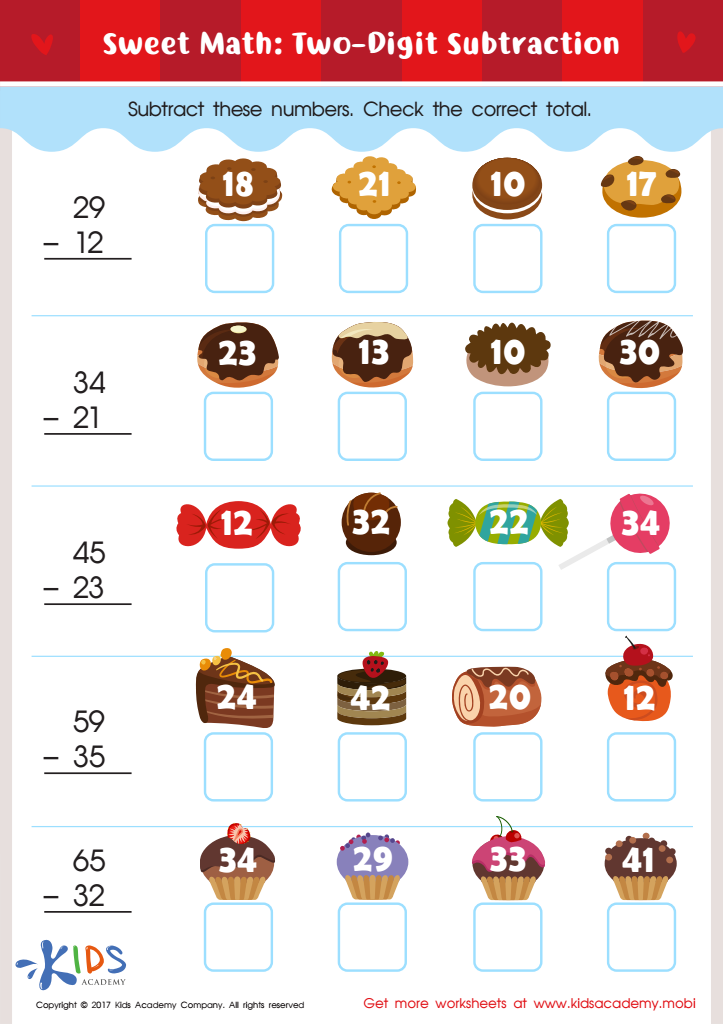
Two Digit Subtraction Worksheet
 Assign to My Students
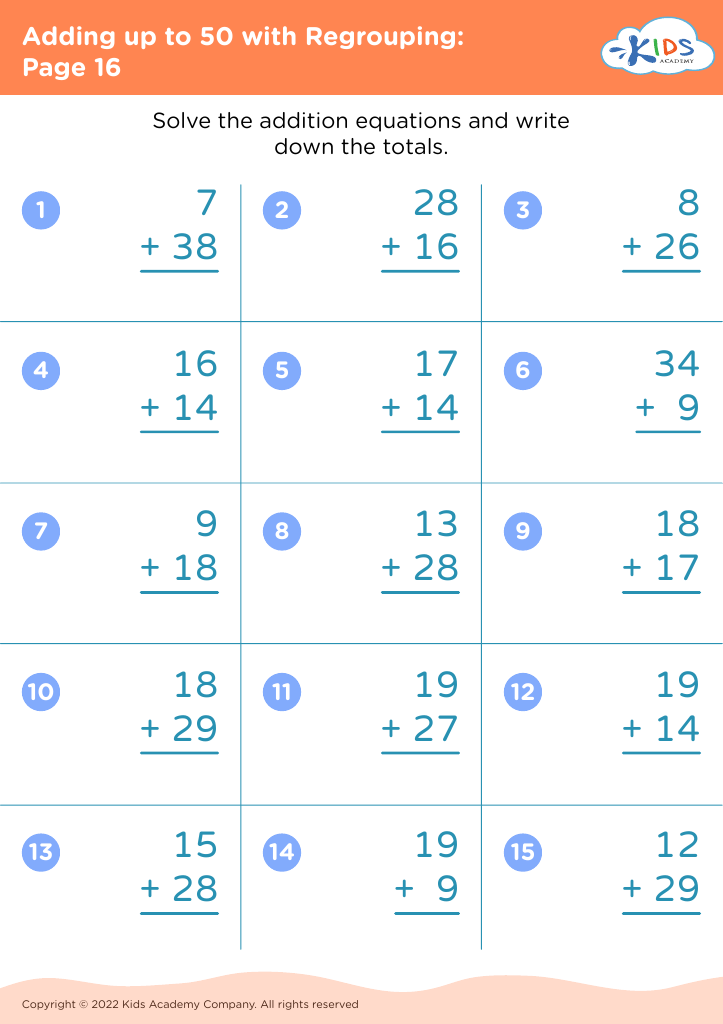
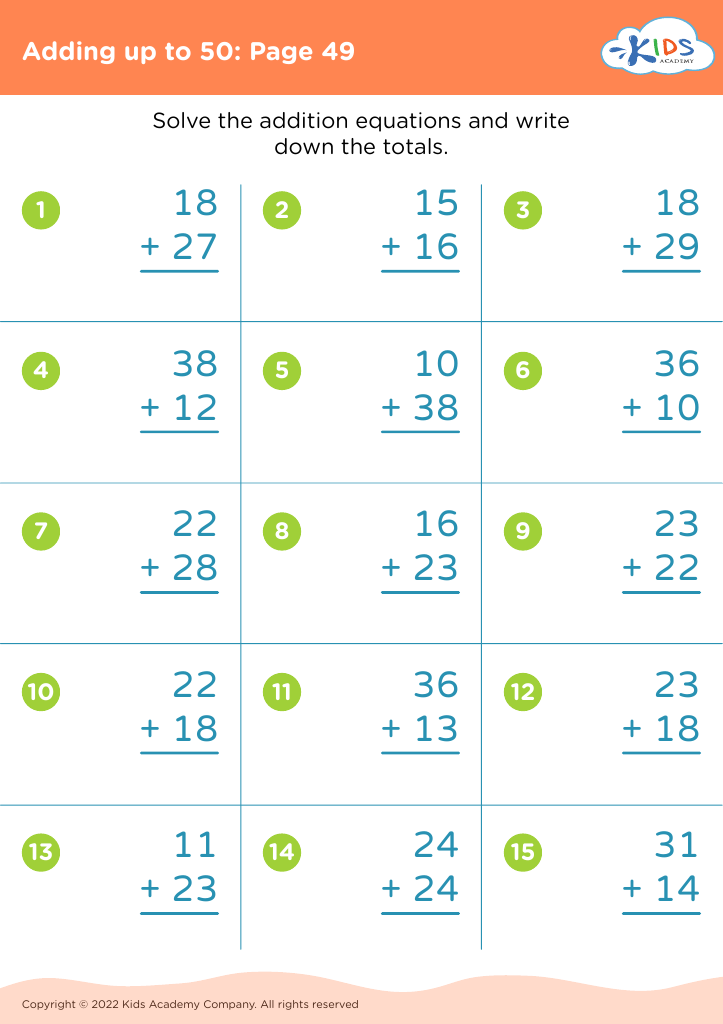
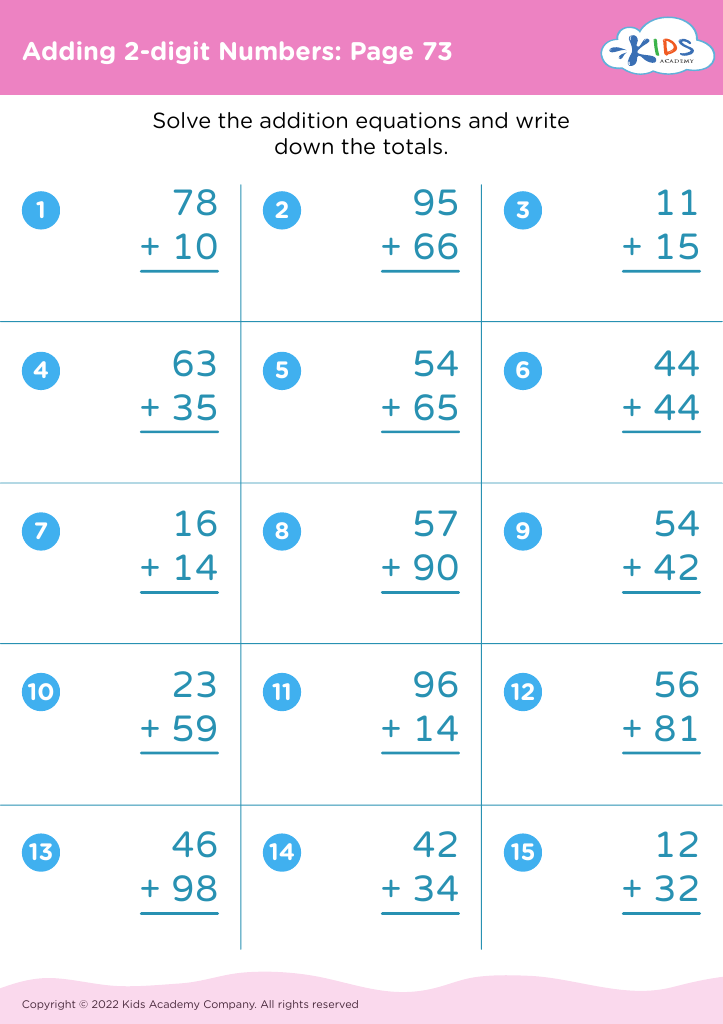
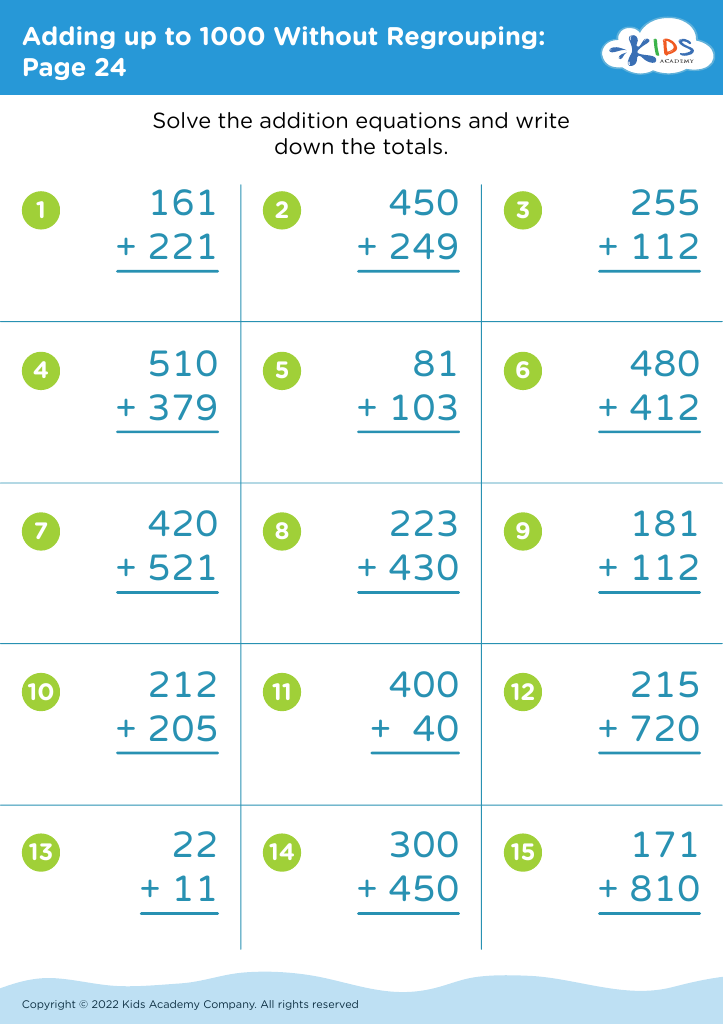








Improving math skills for 7-year-olds is crucial for several reasons. At this age, children are in a sensitive period for cognitive development, making it the ideal time to build a strong mathematical foundation. Math not only contributes to logical thinking but also strengthens problem-solving abilities, which are essential life skills.
When children develop math skills early, they gain confidence in their abilities to tackle various challenges, both academic and real-world. This confidence can reduce math anxiety and promote a positive attitude toward learning. Moreover, basic math concepts are integral to understanding more complex topics in later grades. A solid grasp of early math skills sets the stage for future academic success in subjects like science and engineering.
For parents and teachers, nurturing math skills can be as simple as incorporating math-related activities into daily routines. Cooking involves measuring ingredients, shopping involves budgeting and understanding prices, and playtime can include counting games. Engaged and motivated children are more likely to retain and apply what they learn.
Additionally, strong early math skills are often correlated with higher overall academic achievement. Therefore, investing effort into enhancing children's math skills can yield long-term educational benefits, equipping them with the critical thinking skills needed to navigate their future academic and personal lives.








