Learning number patterns Math Worksheets for 7-Year-Olds
4 filtered results
-
From - To
Explore our engaging Learning Number Patterns Math Worksheets, specifically designed for 7-year-olds. These educational worksheets help young learners master the concept of numerical patterns in a fun and interactive way. Children will practice identifying sequences, predicting future numbers, and understanding arithmetic progressions. With colorful designs and age-appropriate challenges, each worksheet not only sharpens math skills but also boosts critical thinking and problem-solving abilities. Ideal for both classroom and home use, our worksheets make learning enjoyable and effective. Unleash your child's full math potential with our expertly crafted resources tailored to their developmental stage!
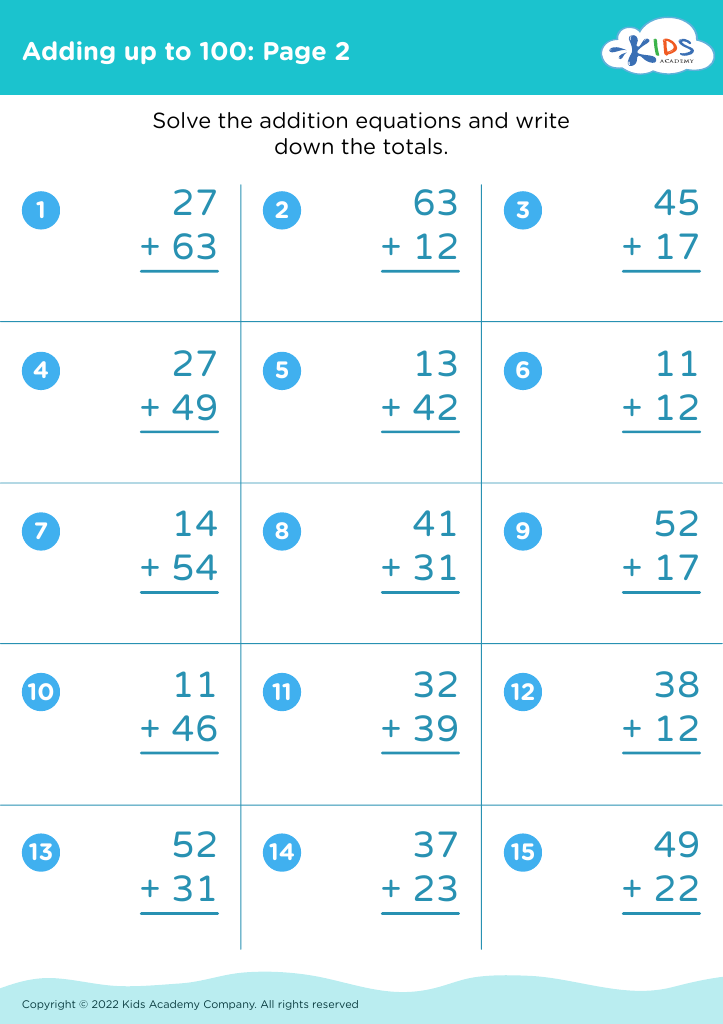
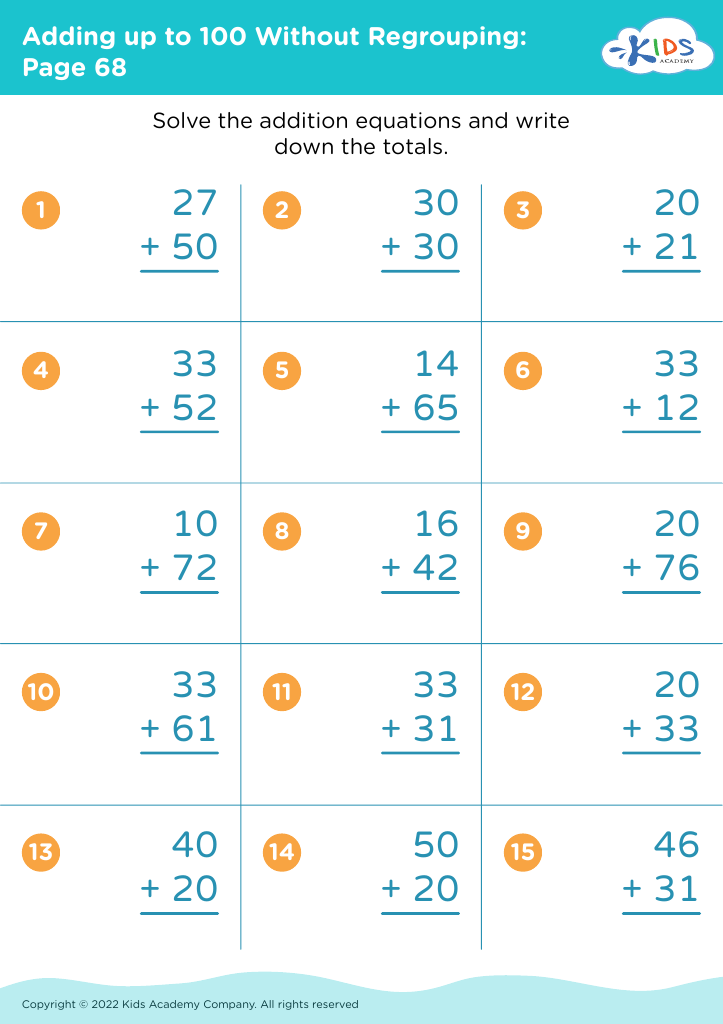
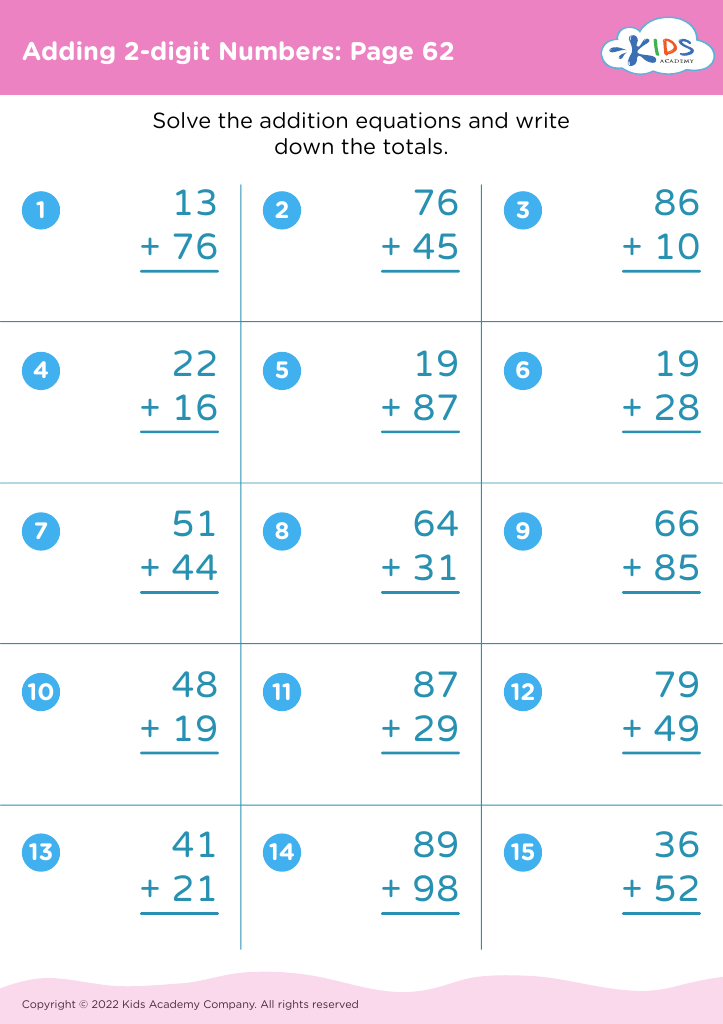
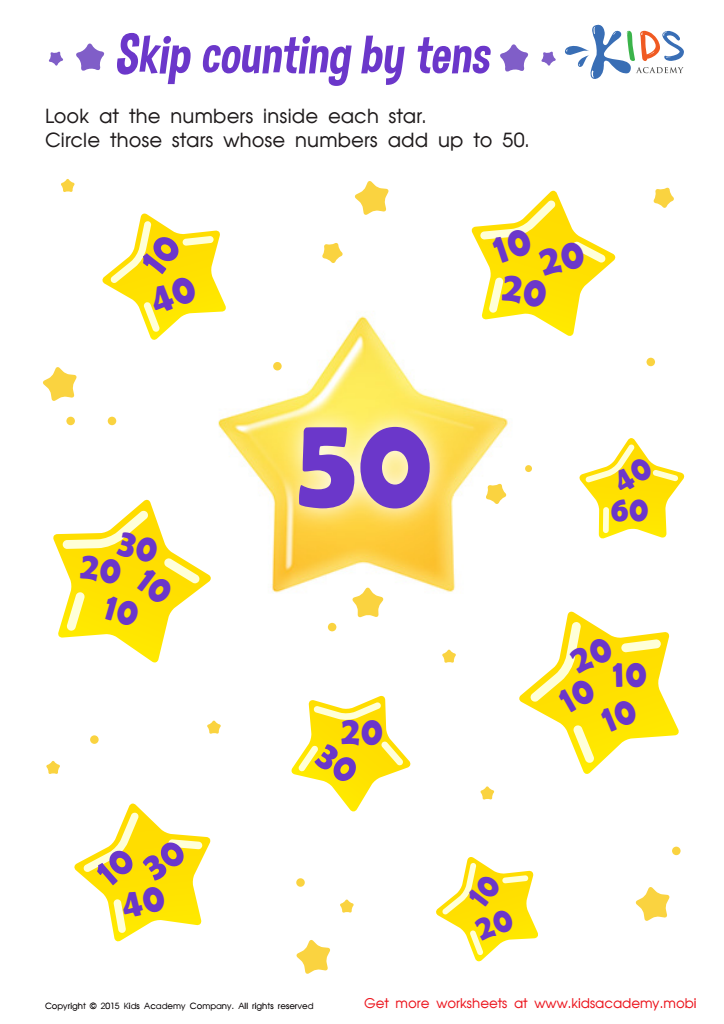
Learn Dozens: Skip Counting by Tens Printable
 Assign to My Students







Learning number patterns in math is crucial for 7-year-olds because it establishes a foundational understanding that supports advanced mathematical concepts and real-life problem-solving skills. Number patterns help children recognize order and develop logical thinking. By identifying and predicting sequences, students strengthen their arithmetic skills, such as addition, subtraction, and multiplication, which are vital for all areas of mathematics. Engaging with number patterns also enhances their ability to notice relationships and make connections between numbers, which is essential for algebraic thinking later on.
For parents and teachers, fostering an appreciation for number patterns aids in nurturing both critical and creative problem solvers. It motivates students' curiosity and enjoyment in math, turning abstract concepts into fun, concrete activities. Such early exposure to structure and repetition is invaluable as it improves cognitive flexibility and memory.
Additionally, recognizing and understanding patterns is not limited to math alone; these skills are transversal, aiding in reading, music, science, and daily tasks such as organizing and planning. Ultimately, by supporting young learners in mastering number patterns, parents and teachers equip them with essential tools that underpin lifelong learning and innovative thinking. The ability to discern patterns strengthens not only academic fluency but also provides the cognitive tools necessary for future success.








