
Practice addition Math Worksheets for 7-Year-Olds
5 filtered results
Difficulty Level
Grade
Age
-
From - To
Subject
Activity
Standards
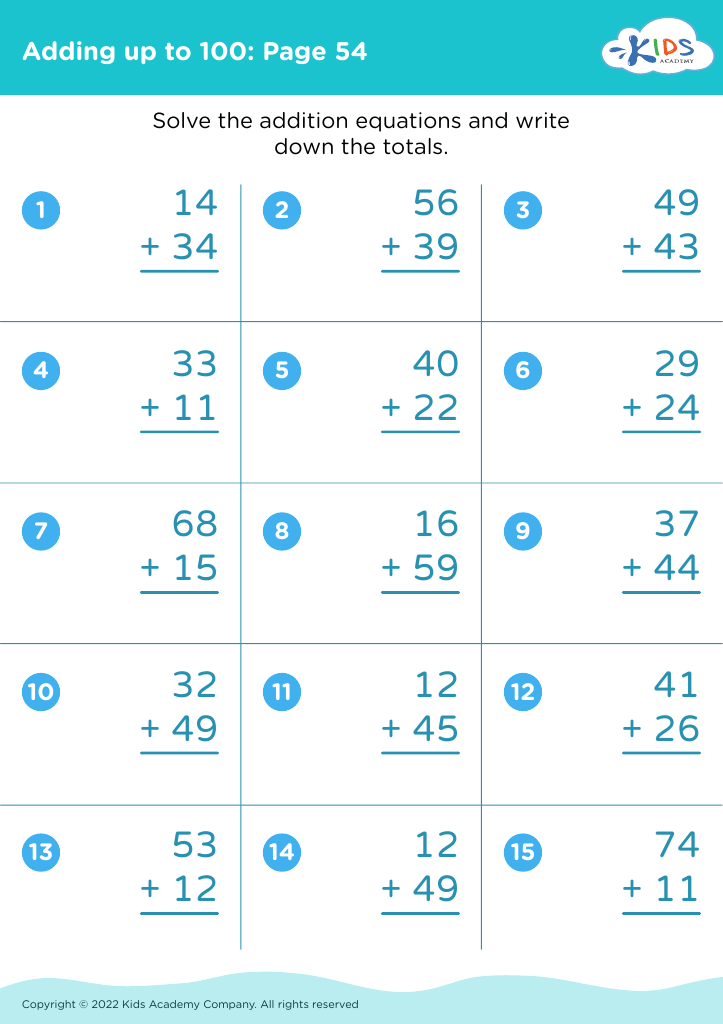
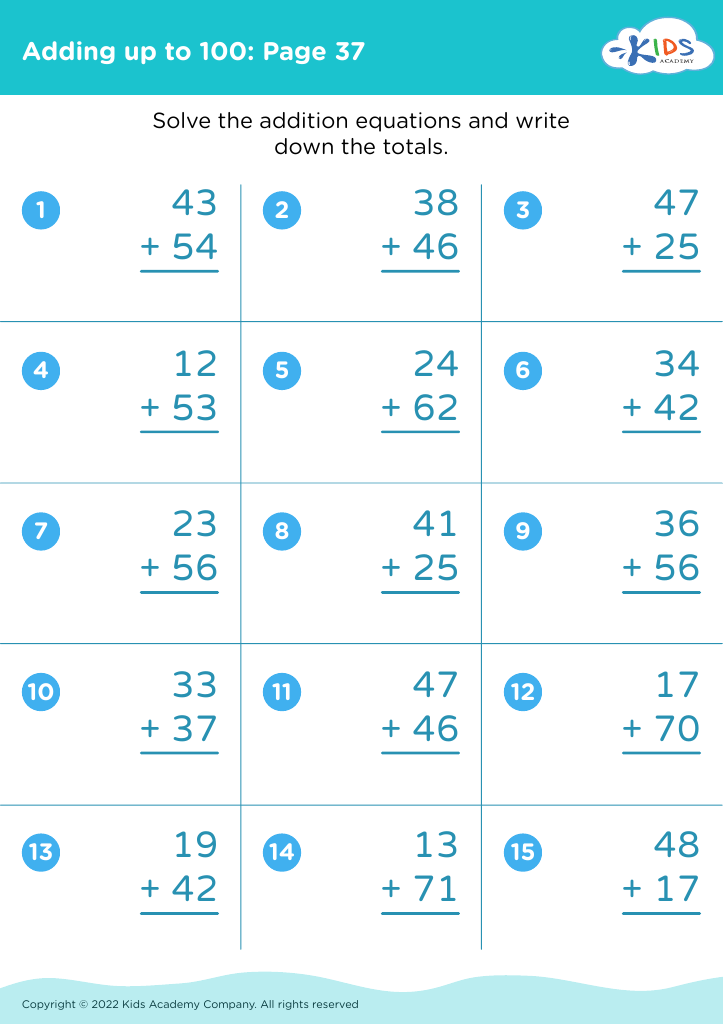
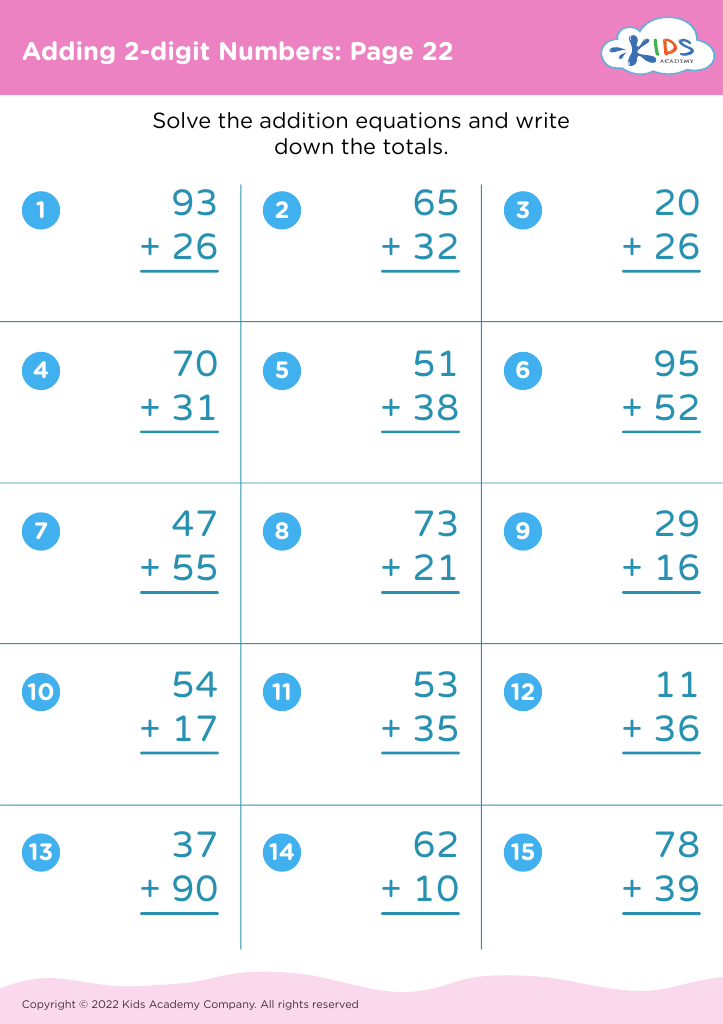
Explore our engaging collection of practice addition math worksheets designed specifically for 7-year-olds! These worksheets provide a fun and effective way for children to enhance their addition skills while building a strong mathematical foundation. Covering various concepts, including single and multi-digit addition, our worksheets feature interactive exercises that promote critical thinking and problem-solving. Each activity is crafted to make learning enjoyable, allowing kids to practice at their own pace. Ideal for classroom use or home study, these worksheets will boost confidence and foster a love for math. Download now and watch your child's addition skills thrive!
Favorites
With answer key
Interactive
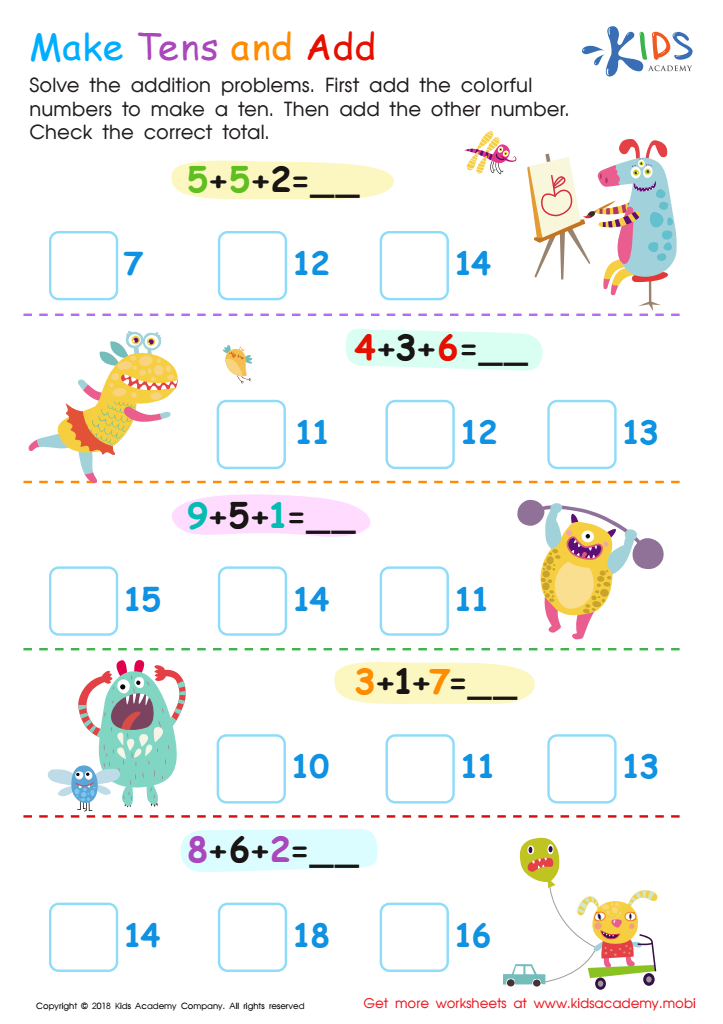
Make Tens and Add Worksheet
Making a "ten" is a powerful strategy to use when computing, but we may not realize it. This PDF worksheet will help kids understand how easy it is to add three numbers with this strategy. Plus, they'll have fun with the monsters and strengthen fine motor skills as they check the right answer boxes.
 Assign to My Students
Make Tens and Add Worksheet
Worksheet
Join Kids Academy for Free
Who is primarily going to use this learning content?







Practicing addition math for 7-year-olds is crucial for several reasons that impact a child's educational journey and overall development. At this age, children are in a formative stage of learning where foundational skills in math are established. Mastery in addition not only enhances their computational efficiency but also fosters critical thinking and problem-solving abilities. Strong addition skills enable children to tackle more complex math concepts, such as subtraction, multiplication, and even division, later on.
Moreover, practicing addition strengthens a child's confidence. When children feel competent in basic math, they are more likely to engage actively in lessons and participate in class. This confidence translates into a positive attitude toward learning, encouraging lifelong education.
From a broader perspective, an emphasis on foundational math skills prepares students for real-life situations, such as budgeting or cooking, where addition is frequently used. It also equips them with essential skills for standardized tests and measures of academic performance. Therefore, for teachers and parents, investing time and resources into practicing addition math at this age can yield significant benefits that promote academic excellence and well-rounded development in children.








