
Practice counting Math Worksheets for 7-Year-Olds
6 filtered results
Difficulty Level
Grade
Age
-
From - To
Subject
Activity
Standards
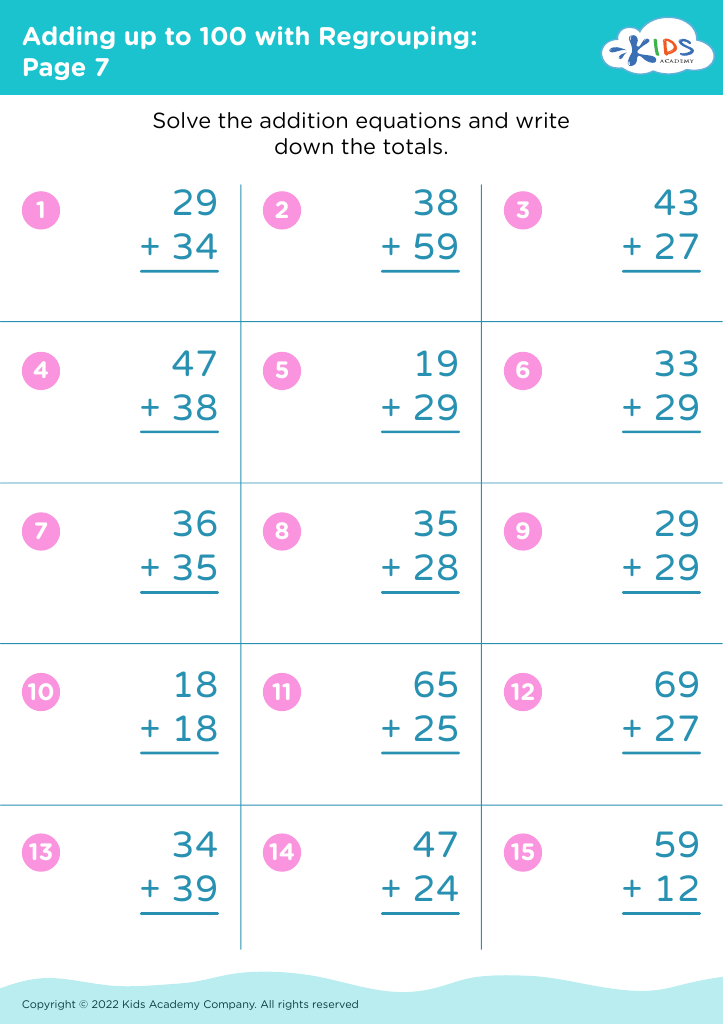
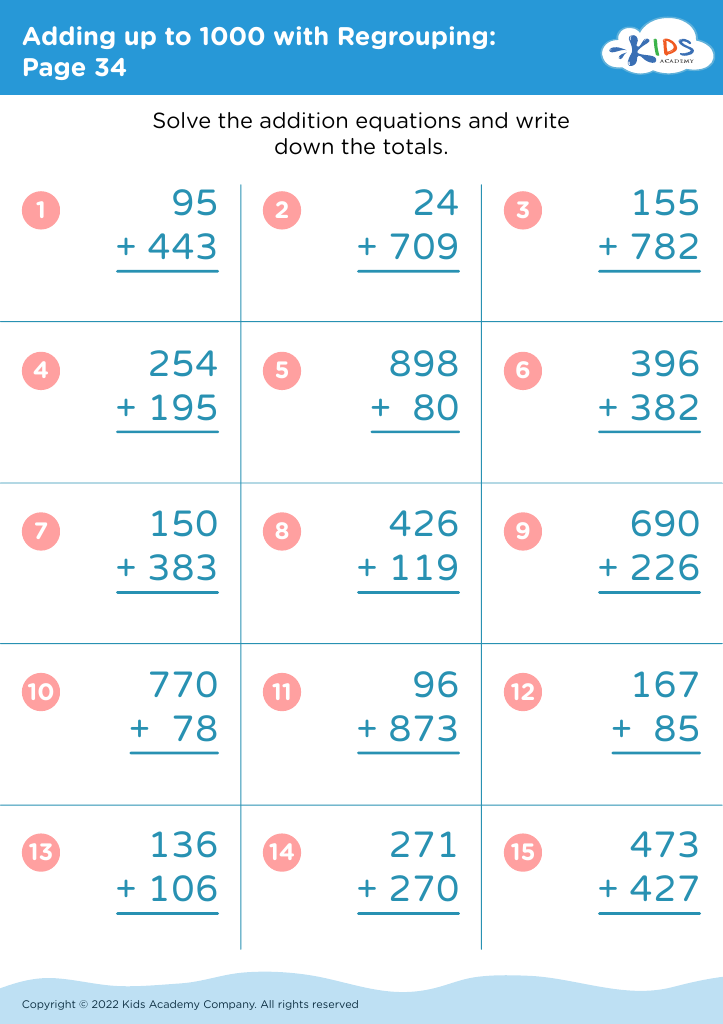
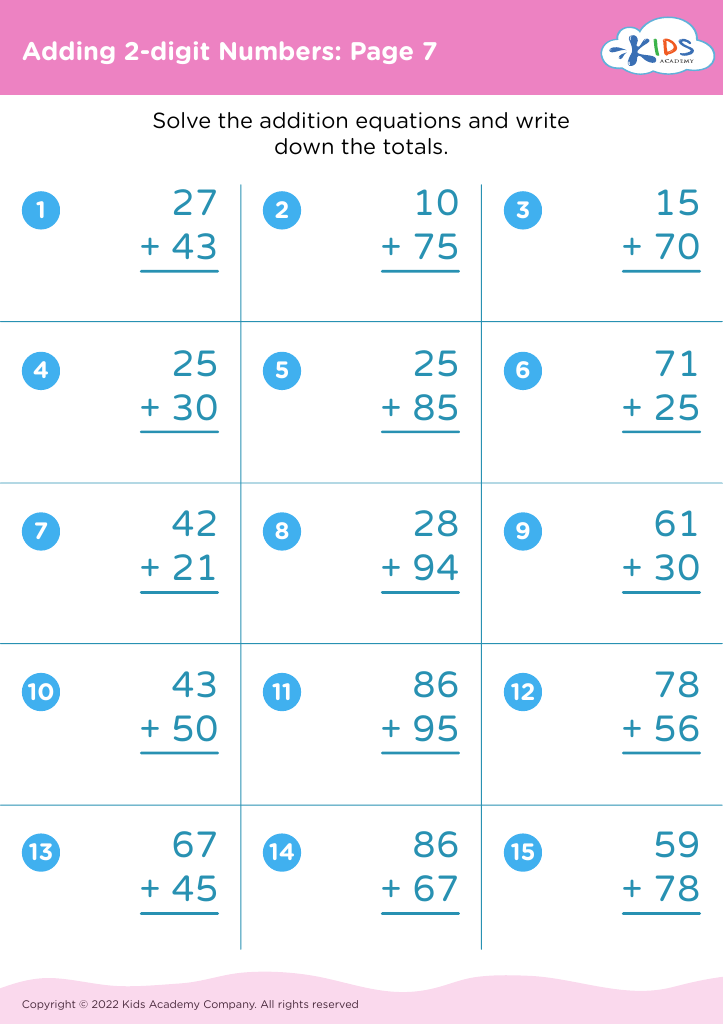
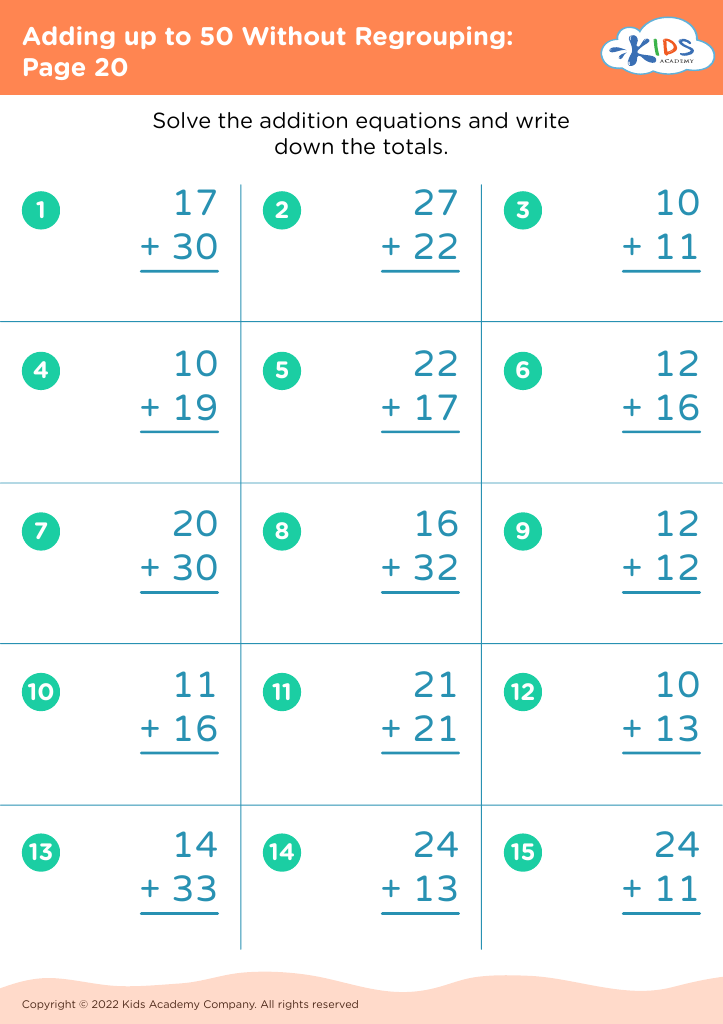
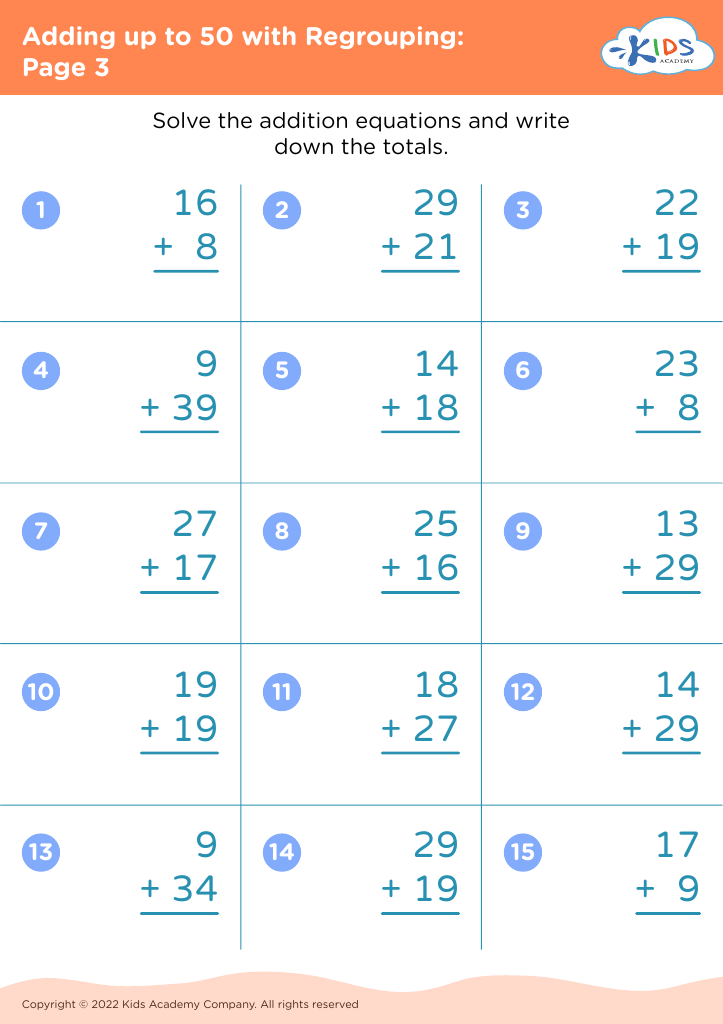
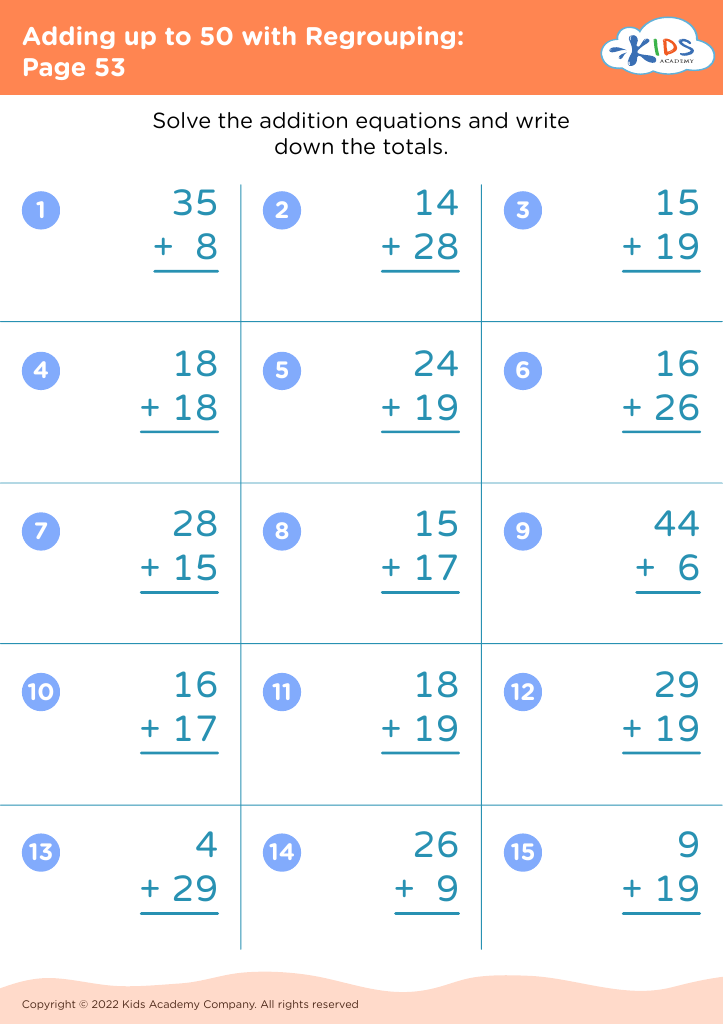
Our "Practice Counting Math Worksheets for 7-Year-Olds" offer engaging and interactive activities designed to enhance your child's counting skills. Perfectly tailored for young learners, these worksheets help build a strong mathematical foundation through fun exercises and colorful visual aids.Your child will enjoy the challenge of mastering counting sequences, recognizing numbers, and understanding basic arithmetic concepts. Each worksheet is designed to keep young minds curious and motivated, making learning an exciting adventure. Ideal for both classroom and home use, our counting math worksheets are your go-to resource for fostering a love for numbers. Download now and start counting fun!
Favorites
With answer key
Interactive
Join Kids Academy for Free
Who is primarily going to use this learning content?







Mathematics is a fundamental life skill, and consistent practice in counting is crucial for 7-year-olds as it lays the foundation for their numerical literacy and overall cognitive development. At this pivotal age, children's brains are highly receptive to learning patterns, sequences, and basic arithmetic operations such as addition and subtraction. These initial skills directly impact their ability to understand more complex math concepts later on.
Engaging in counting practice helps develop a child's number sense—an intuitive feel for numbers and their relationships. This proficiency is essential not only for academic success but also for problem-solving in everyday life. For instance, understanding measurements, time, money transactions, and even basic organizational tasks all require good counting skills.
Moreover, regular practice in math boosts a child’s confidence and reduces math anxiety, fostering a positive attitude toward the subject. It encourages a logical and structured way of thinking, improves memory skills, and enhances attention to detail. Parents and teachers play a crucial role here: their involvement and encouragement can make math practice enjoyable and stress-free by incorporating it into fun activities, games, and day-to-day conversations.
In summary, cultivating robust counting skills in 7-year-olds equips them with critical tools for academic achievement and everyday problem-solving, fostering long-term intellectual growth and confidence in their mathematical abilities.








