Understanding equality Math Worksheets for 7-Year-Olds
3 filtered results
-
From - To
Unlock the power of mathematics with "Understanding Equality Math Worksheets for 7-Year-Olds." Designed to build a strong foundation, these worksheets focus on developing your child's skills in recognizing and creating balanced equations. Each worksheet is thoughtfully crafted to engage young learners through colorful and interactive exercises that make learning fun. Whether comparing numbers or solving for unknowns, these activities promote critical thinking and problem-solving abilities. Perfect for both classroom and at-home learning, these resources are aligned with educational standards and aimed at boosting your child's confidence and proficiency in math. Make equality an enjoyable journey!
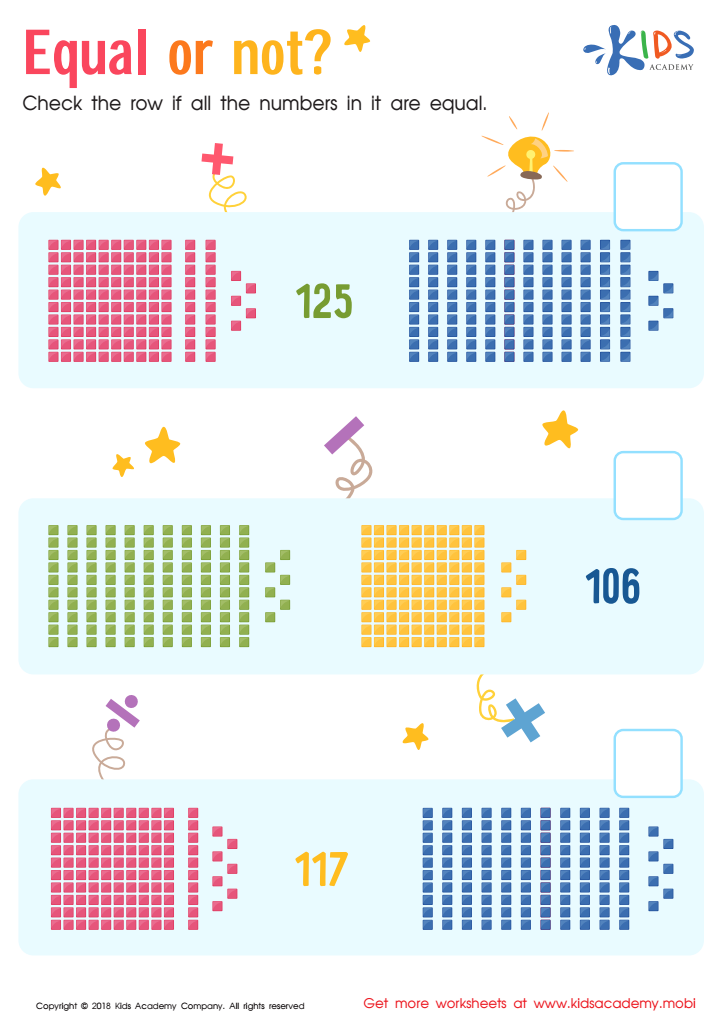
Equal or not Worksheet
 Assign to My Students
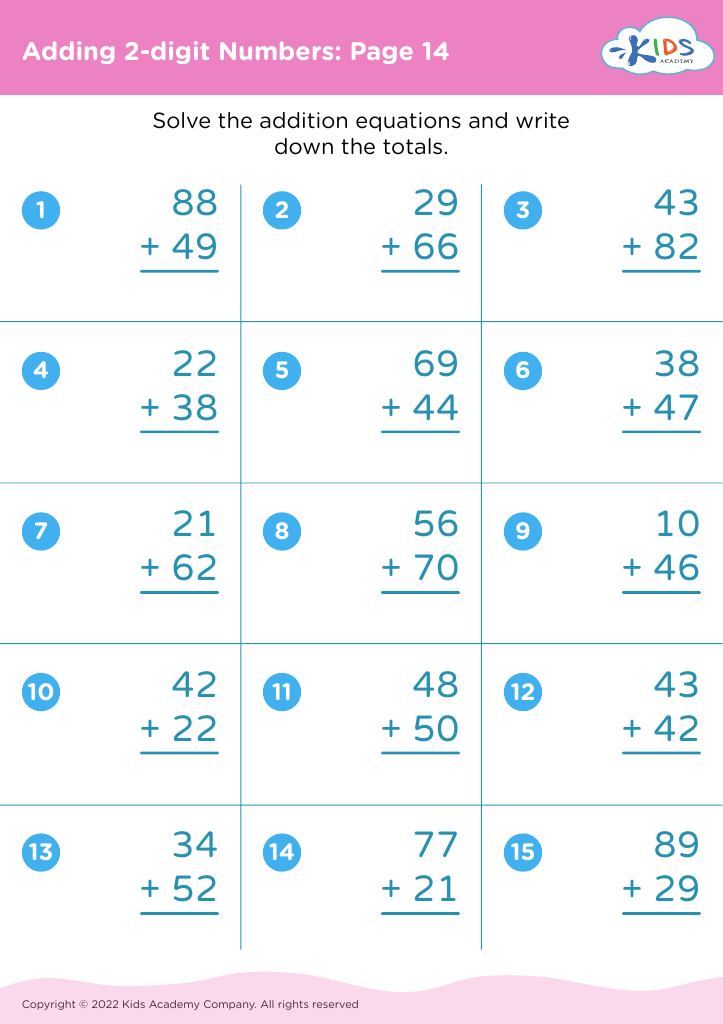
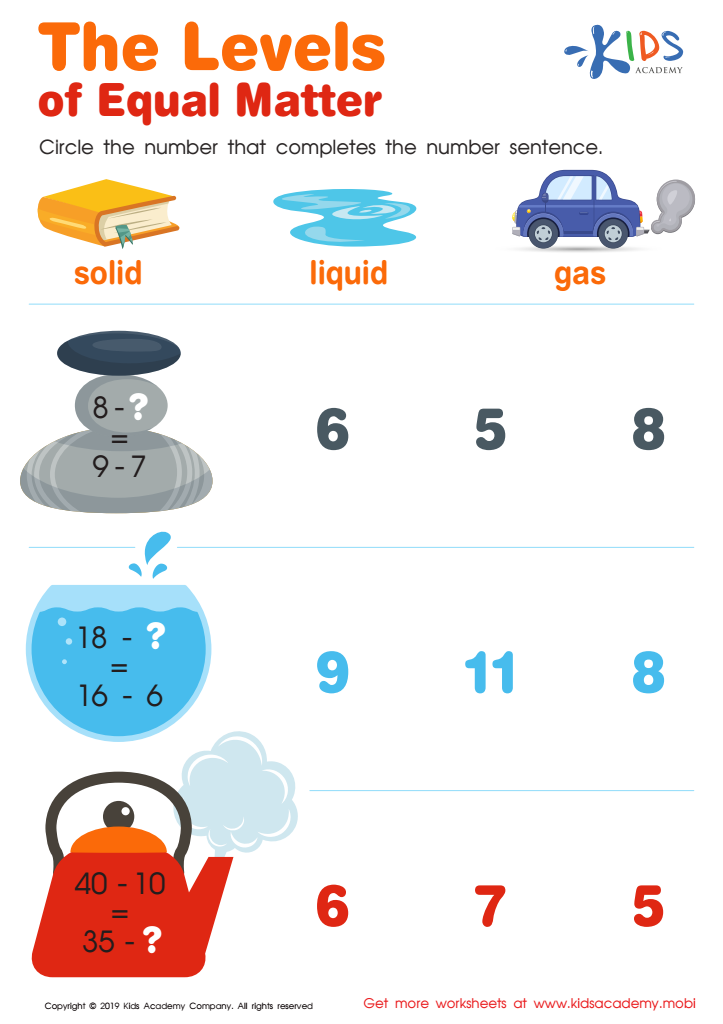
The Levels of Equal Matter Worksheet


.jpg)



Understanding equality in math is fundamental for 7-year-olds because it lays the groundwork for future mathematical concepts and everyday life skills. When children grasp the concept of equality, they begin to understand that the two sides of an equation must be balance-d, fostering a sense of fairness and accuracy.
For instance, recognizing that 5 + 3 is the same as 8 ensures they can comprehend more complex math later, such as algebra and problem-solving. This understanding aids in developing their logical thinking and analytical skills, which are crucial not just in mathematics, but in making reasoned decisions in real-life scenarios.
Furthermore, fostering a solid grasp of equality helps cultivate a positive attitude toward math. When children can confidently solve equations and recognize balanced relationships, they are more likely to enjoy and persevere in their mathematical studies. This can reduce math anxiety, build self-confidence, and make them more willing to engage in math-related activities.
Additionally, math topics like equality can be linked to ethical and social lessons. Equating groups of objects or understanding balanced scales in simple exercises teaches children fairness and equality conceptually, which can reinforce the importance of these values socially.
Ultimately, equality in math is foundational, ensuring children have the skills, confidence, and values necessary for their academic and personal growth.








