Visual fraction representation Math Worksheets for 7-Year-Olds
3 filtered results
-
From - To
Discover our engaging Visual Fraction Representation Math Worksheets designed specifically for 7-year-olds! These worksheets provide a fun and interactive way for young learners to grasp the concept of fractions visually. By using colorful illustrations and relatable examples, children can easily understand how fractions work and their real-world applications. Ideal for both classroom settings and at-home learning, our worksheets enhance critical thinking and problem-solving skills while fostering a love for math. Let your child explore, learn, and succeed in mastering fractions with these meticulously crafted resources. Start their mathematical journey today with our visually appealing and educational materials!
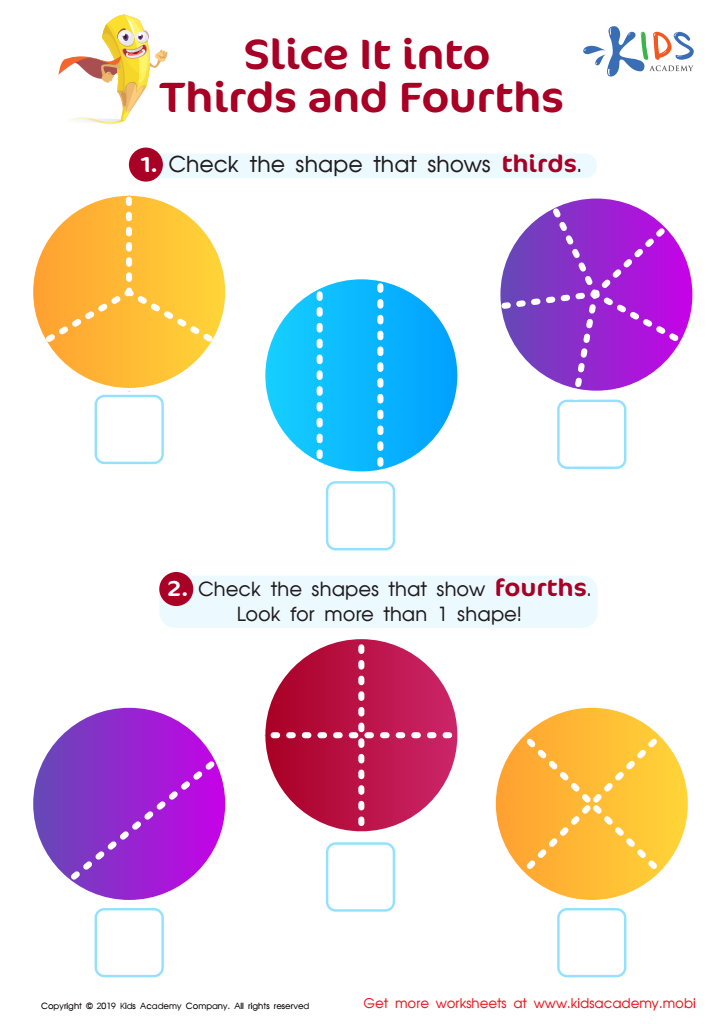
Slice in Thirds Fourths Worksheet
 Assign to My Students
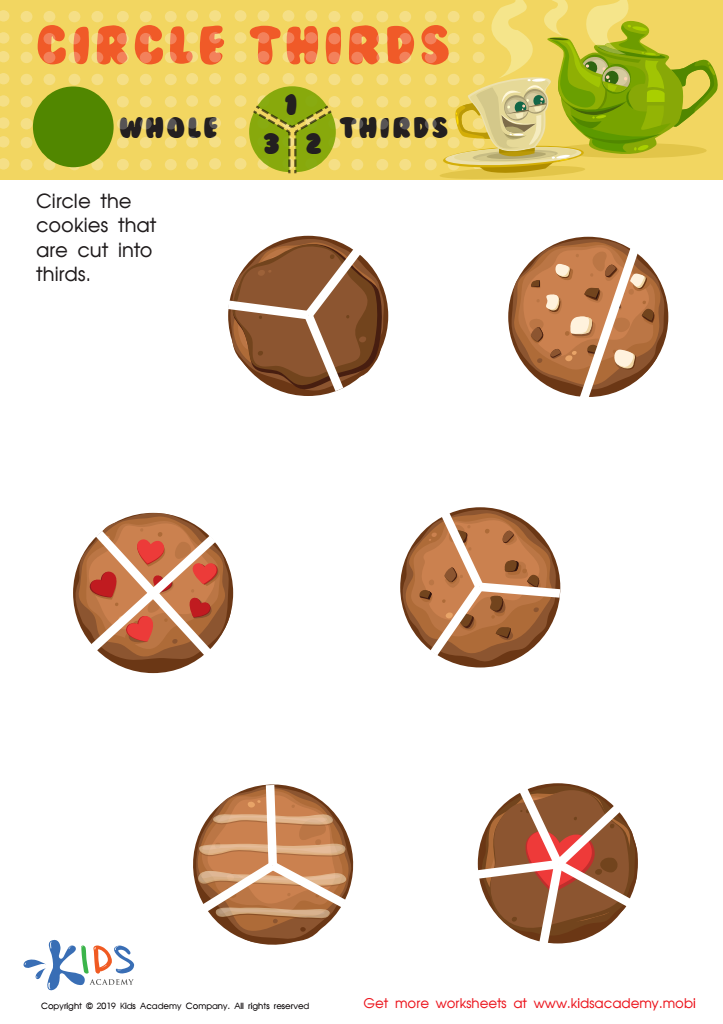
Circle Thirds Worksheet




%20(1).jpg)



Visual fraction representation is essential for teaching 7-year-olds about fractions and developing their mathematical understanding. At this age, children are transitioning from concrete to abstract thinking, and visual aids bridge that gap effectively. By using pictures, diagrams, and representations such as pie charts and number lines, young learners can see fractions as parts of a whole, fostering a deeper comprehension of concepts like equivalence and addition of fractions.
Parents and teachers should care about this approach because it nurtures critical thinking and enhances problem-solving skills. When children visualize fractions, they can relate mathematical concepts to real-life situations, making learning more engaging and meaningful. This foundation is crucial, as a strong understanding of fractions leads to greater success in more advanced math topics, such as decimals and percentages, later in their education.
Moreover, visual representations serve to build confidence, allowing children to explore and express their mathematical thinking in a safe and supportive environment. This not only helps them tackle fractions but cultivates a positive attitude toward math as a whole. Ultimately, embracing visual fraction representation enriches the learning experience and equips children with fundamental skills they will rely on throughout their educational journey.








