Number Sequencing Skip Counting Worksheets for 7-Year-Olds
3 filtered results
-
From - To
Discover our engaging Number Sequencing Skip Counting Worksheets designed specifically for 7-year-olds! These worksheets make learning math fun by helping young learners practice skip counting in various sequences, such as by twos, threes, fives, and tens. Through creative exercises and visually appealing activities, children enhance their counting skills while building confidence in their mathematical abilities. Ideal for both home and classroom use, our resources aim to support early learners in grasping essential math concepts. Encourage your child’s success in math with our easy-to-use skip counting worksheets that foster a love of learning and critical thinking skills!
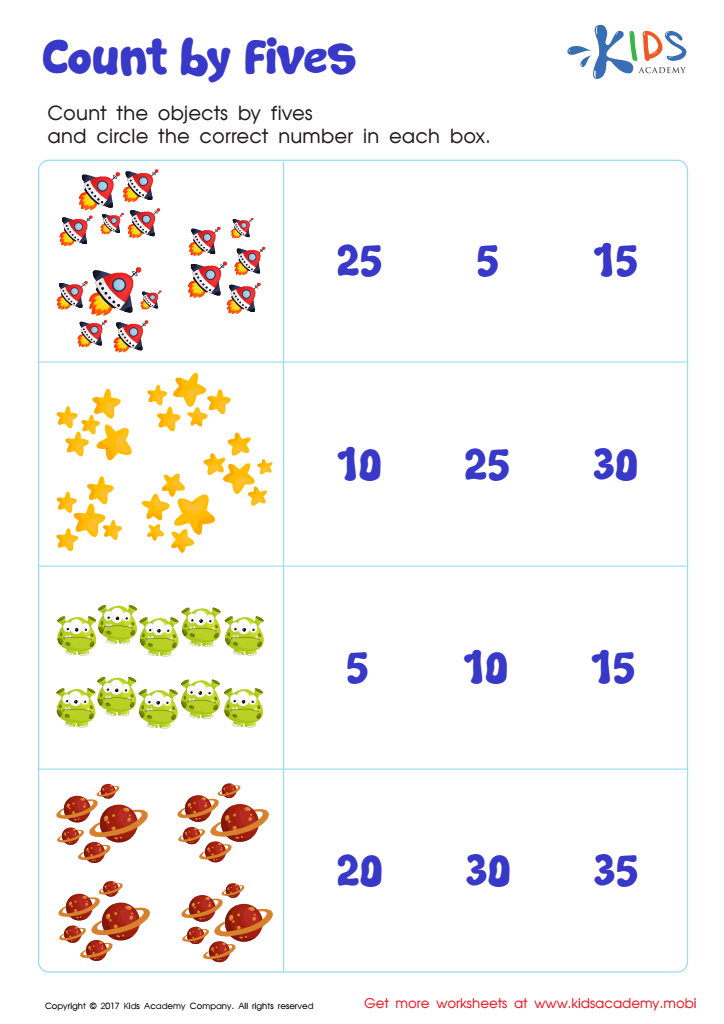
Skip Counting by 5s: Space Math Printable
 Assign to My Students
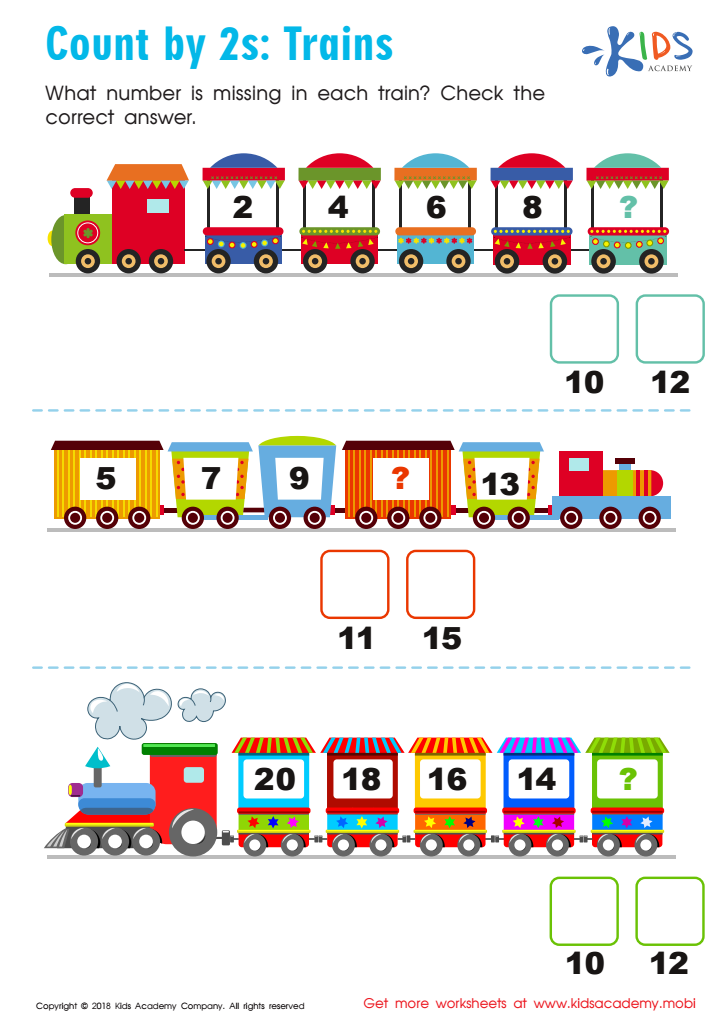
Count by 2's: Trains Worksheet
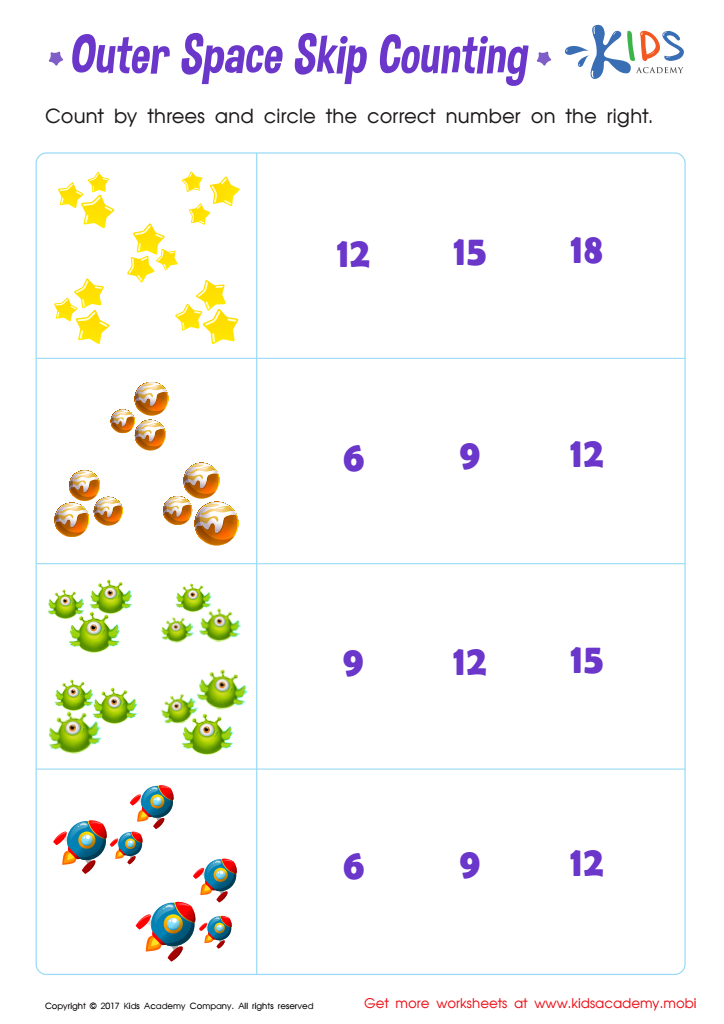
Skip Counting by 3s: Outer Space Skip Counting Printable








Number sequencing and skip counting are essential foundational skills for 7-year-olds that significantly contribute to their overall mathematical development. Understanding both concepts helps children develop number sense, which is crucial for grasping more complex mathematical ideas later.
Firstly, number sequencing enhances a child's ability to recognize patterns in numbers, which fosters cognitive skills. This understanding lays the groundwork for arithmetic operations, helping children perform addition and subtraction more easily. For instance, recognizing that numbers follow a specific order encourages them to predict what comes next, enhancing problem-solving skills.
Skip counting, on the other hand, involves counting by numbers other than one (e.g., by twos, threes, fives). This skill not only aids in performing multiplication and division but also strengthens mental math abilities. For example, if a child can effortlessly skip count by fives, they can quickly find prices, count items, or solve math problems involving multiples.
Overall, focusing on number sequencing and skip counting instills confidence in young learners, making them more eager to engage in math activities. Parents and teachers should prioritize these skills in early education to ensure children have a strong mathematical foundation that will benefit them throughout their academic journey and everyday life.








