Reading clocks Time Worksheets for 7-Year-Olds
3 filtered results
-
From - To
Welcome to our Reading Clocks Time Worksheets for 7-Year-Olds! This engaging collection of worksheets is designed to help young learners develop their time-telling skills. With a variety of fun and educational activities, children will practice reading both analog and digital clocks, gaining confidence in telling time independently. Our worksheets cater to different learning styles, providing visual aids and relatable scenarios that make understanding time enjoyable. Perfect for classroom use or at-home learning, these resources encourage essential skills that set the foundation for better math proficiency. Explore our worksheets today and watch your child's time-reading abilities flourish!
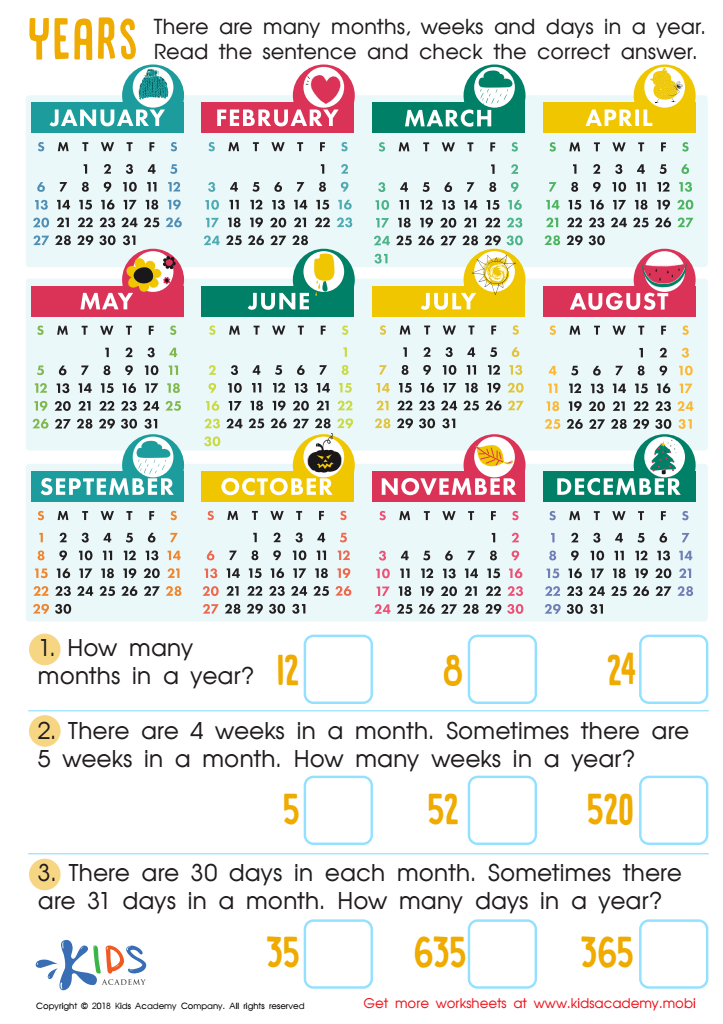
Years Worksheet
 Assign to My Students
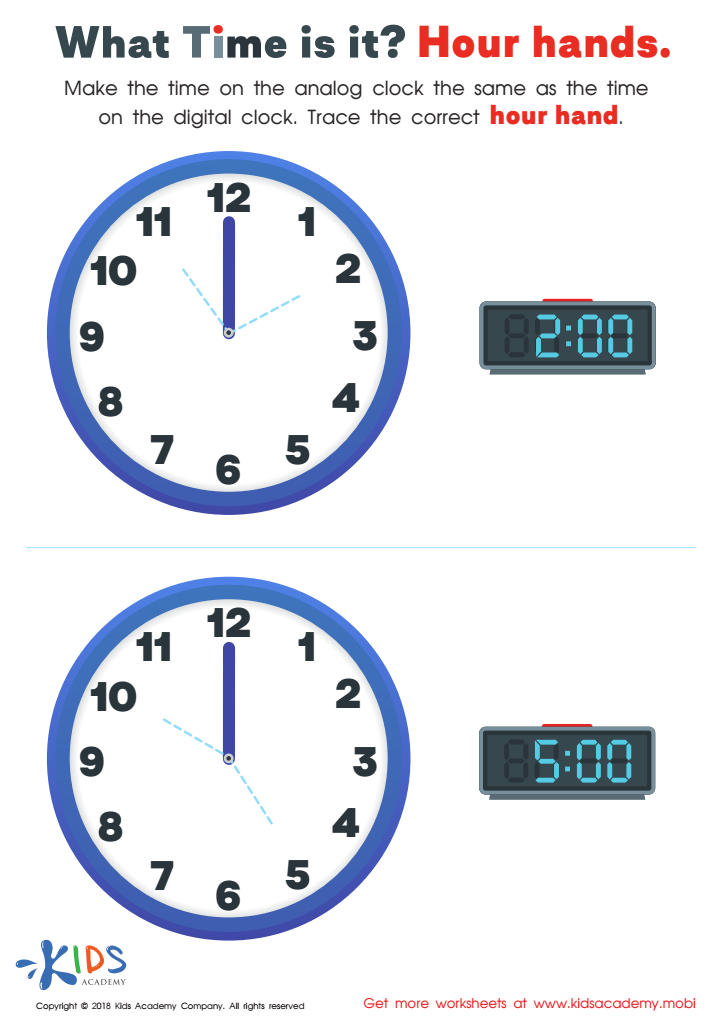
What Time Is it? Hour Hands Worksheet
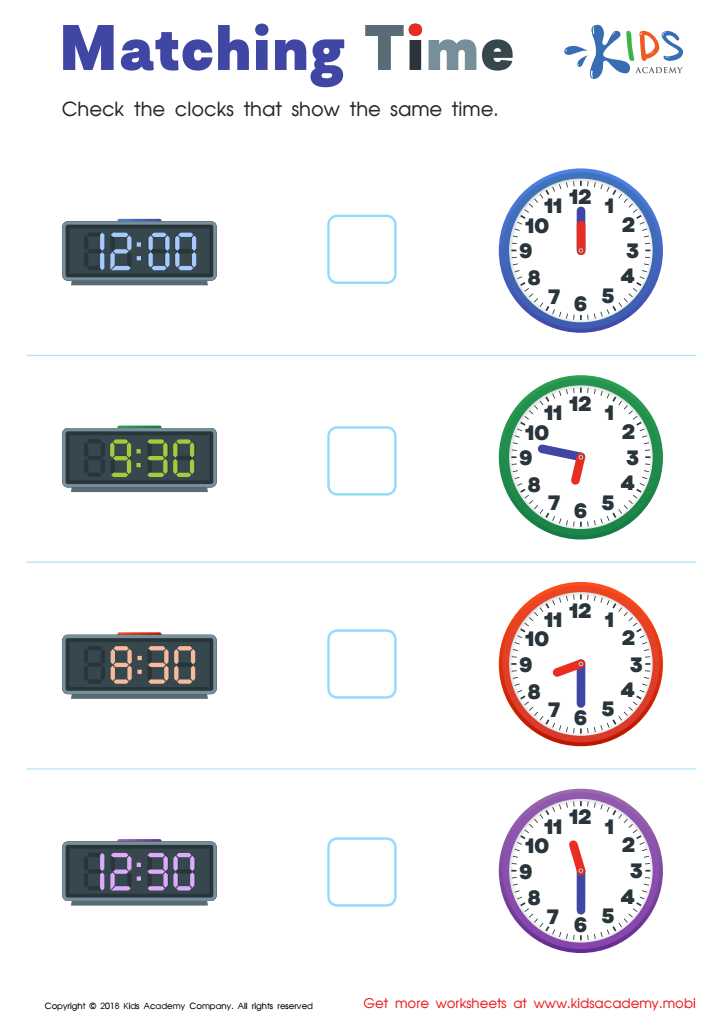
Matching Time Worksheet


.jpg)


Teaching seven-year-olds to read clocks and understand time is crucial for their overall development. First, it enhances their cognitive skills, as telling time requires children to engage in critical thinking and problem-solving. By grasping the concept of hours and minutes, children improve their ability to measure and make sense of durations, which fosters mathematical understanding.
Additionally, learning to read clocks instills a sense of responsibility and time management in young learners. This awareness helps children understand schedules, whether it's getting ready for school, participating in extracurricular activities, or completing homework, which are essential for cultivating independence.
Socially, knowing how to tell time allows children to better navigate their interactions with peers and adults. It helps them manage playdates, participating in group activities from a young age, and encourages cooperation and communication.
Finally, as technology increasingly uses automatic timekeeping, teaching children to read traditional clocks provides them with a valuable skill that connects them to history and culture. For parents and teachers, fostering time-telling skills equips children with essential lifelong skills that transcend the classroom, enriching their everyday life experiences. It is more than just learning numbers; it is about building confidence and aiding in their overall growth.








