Visual Learning Word Problems Worksheets for 7-Year-Olds
5 filtered results
-
From - To
Discover an engaging collection of visual learning word problems worksheets designed specifically for 7-year-olds! These resources help young learners enhance their math skills through colorful images and relatable scenarios, making complex concepts more accessible and enjoyable. Tailored to accommodate different learning styles, our worksheets reinforce problem-solving abilities while fostering critical thinking. Each activity encourages kids to visualize mathematical scenarios, seamlessly integrating art and education. Perfect for in-class activities or at-home practice, these worksheets inspire a love for learning, ensuring that children build a strong foundation in math. Explore our extensive library and watch your child excel in mathematics today!
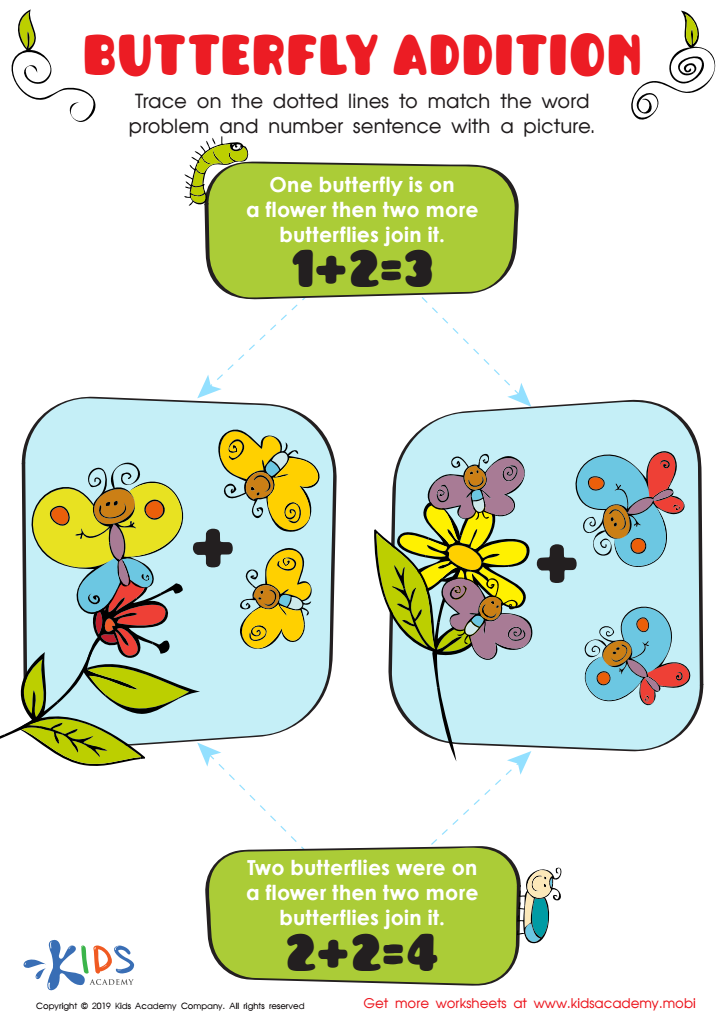
Butterfly Addition Worksheet
 Assign to My Students
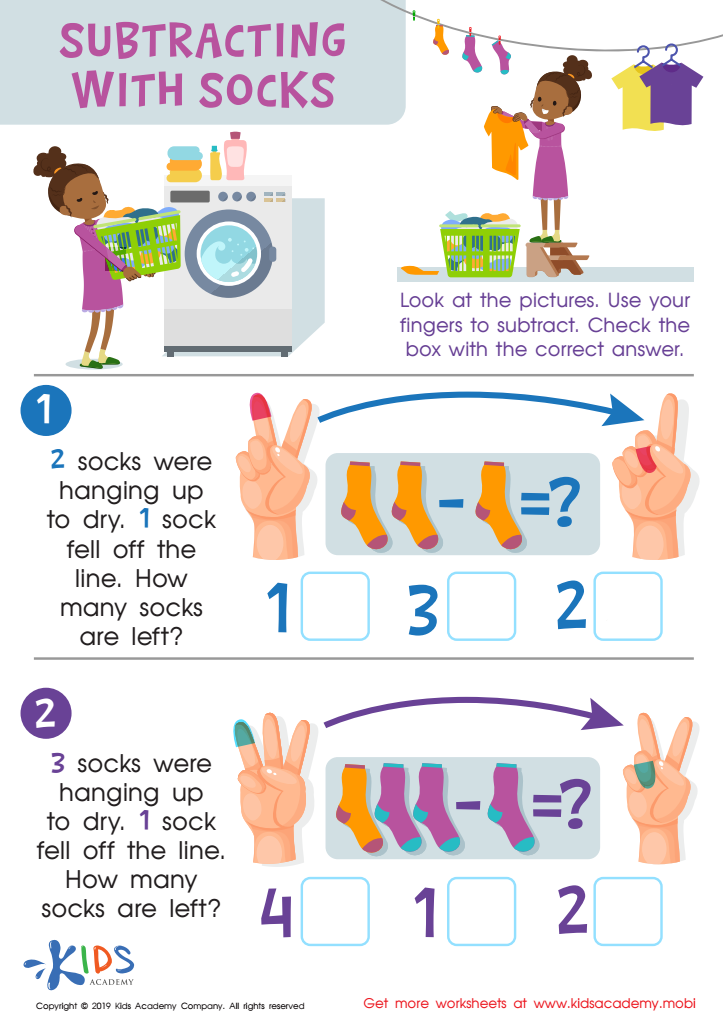
Subtracting Socks Worksheet
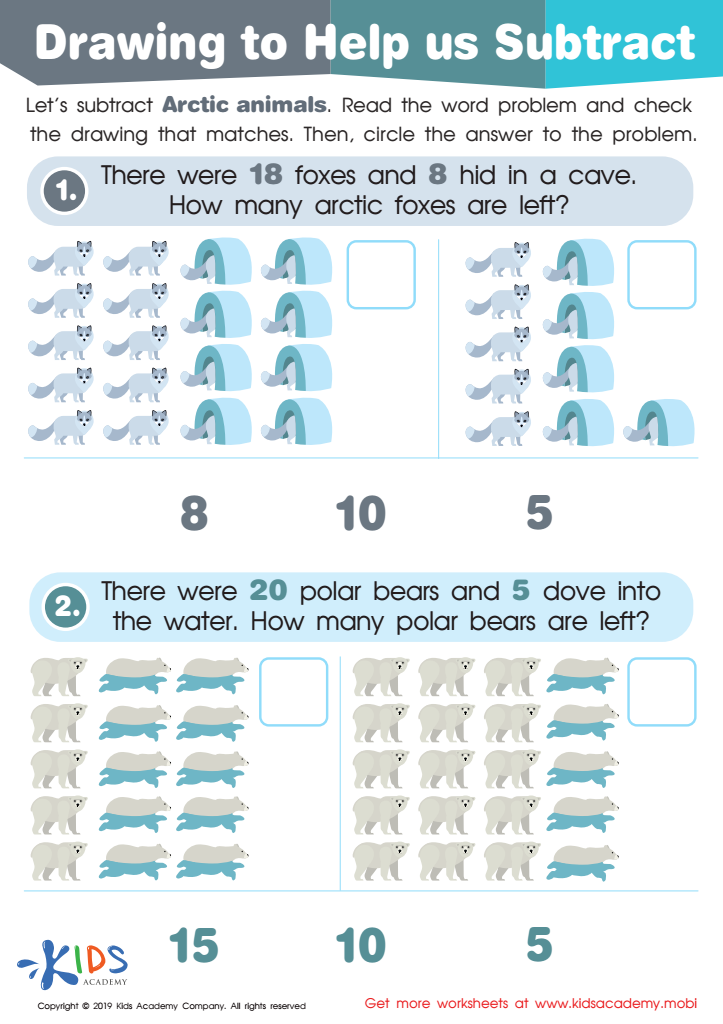
Drawing to Help Us Subtract Worksheet
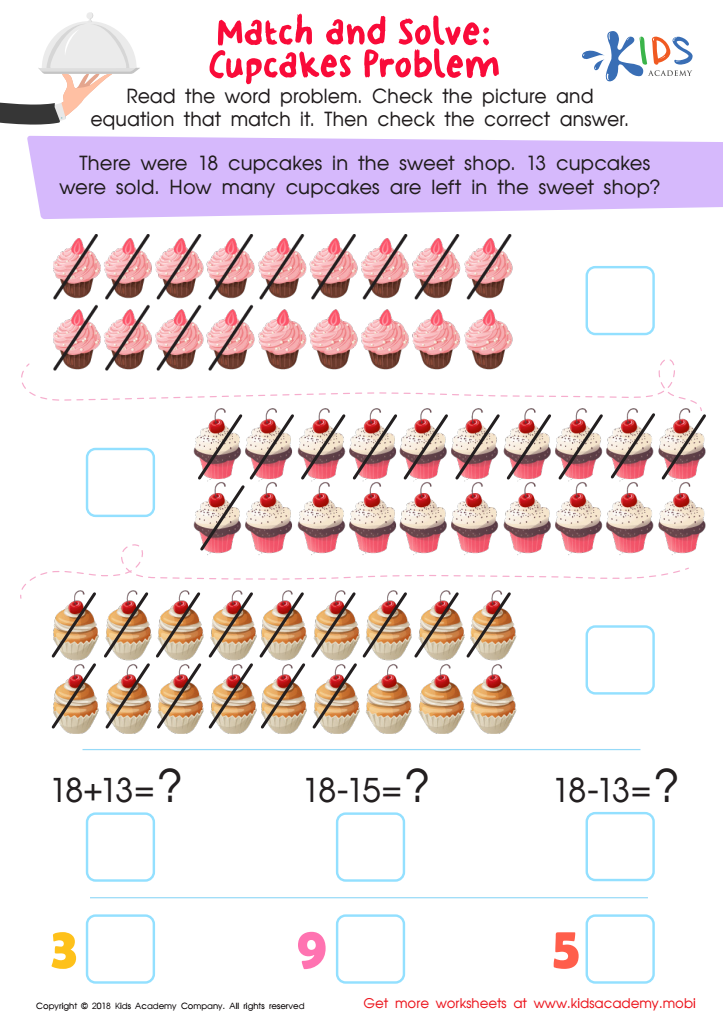
Match and Solve: Cupcakes Problem Worksheet
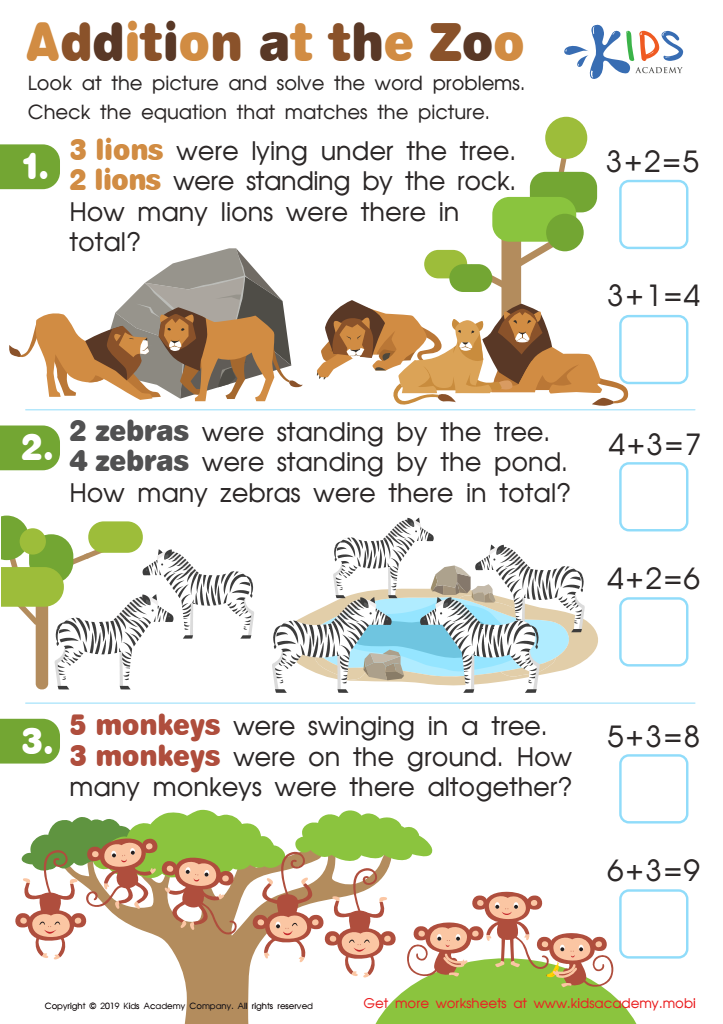
Addition at the Zoo Worksheet








Parents and teachers should care about visual learning word problems for 7-year-olds because this approach significantly enhances children's understanding of mathematical concepts. At this developmental stage, children actively engage in their learning process, and visual representations—such as pictures, diagrams, and charts—help them grasp complex ideas more easily.
Visual learning encourages students to make connections between abstract concepts and real-world situations. By utilizing visual aids in word problems, educators can foster critical thinking and problem-solving skills, making it easier for children to analyze questions and devise strategies for finding solutions. Moreover, visual tools can help address various learning styles, catering to students who may struggle with traditional text-based methods.
Incorporating visual learning word problems also promotes collaboration among peers, as children may discuss their interpretations and solutions with one another. This collaborative environment not only builds confidence but encourages communication skills essential for academic success.
Ultimately, emphasizing visual learning word problems helps to create a supportive and engaging learning atmosphere that nurtures a child's curiosity and passion for mathematics, setting a solid foundation for future learning. Thus, educators and parents alike should prioritize and implement these strategies in their teaching and support practices.








