Color Identification Building Vocabulary Worksheets for 7-Year-Olds
3 filtered results
-
From - To
Color Identification Building Vocabulary Worksheets for 7-Year-Olds are designed to enhance children's language skills while making learning fun! These engaging worksheets help young learners identify and name colors through vibrant illustrations and interactive activities. By associating colors with everyday objects and situations, children expand their vocabulary in an enjoyable way. The varied exercises promote color recognition and help reinforce comprehension skills as they progress. These worksheets are perfect for classroom settings or at-home practice, catering to different learning styles. Foster your child's love for learning and boost their confidence with our visually appealing and educational color identification resources!
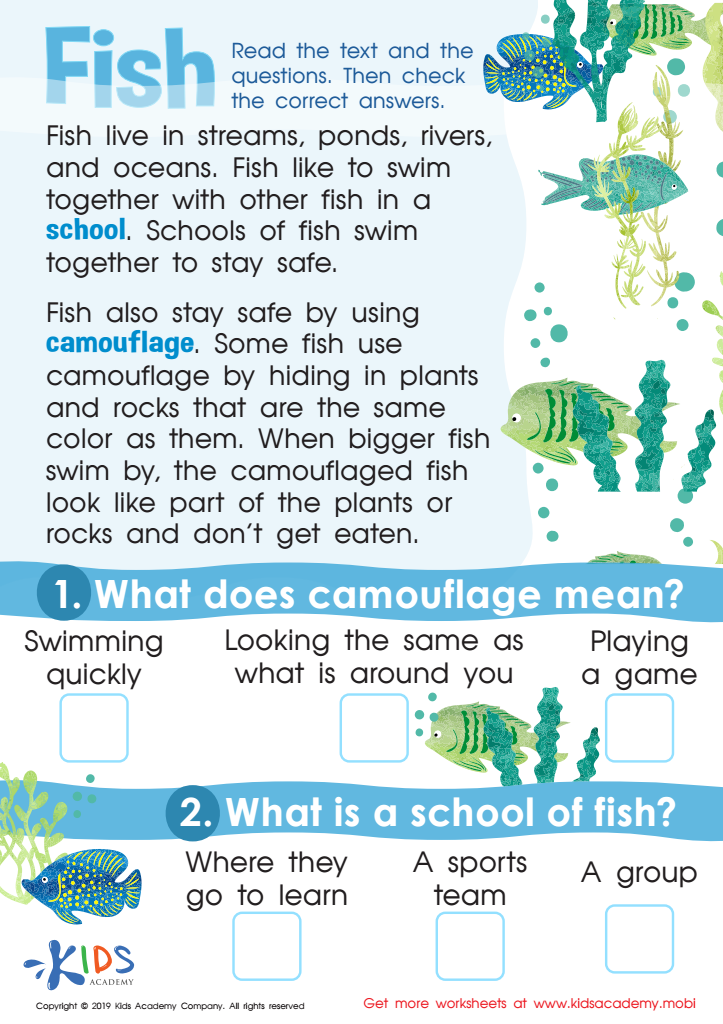
Fish Worksheet
 Assign to My Students
















.jpg)

.jpg)
Color identification and building vocabulary are crucial components of early childhood education, especially for 7-year-olds. At this developmental stage, children are eager to explore the world around them and express their thoughts. Understanding colors goes beyond aesthetics; it enhances observational skills and creativity, serving as a fundamental way for children to interact with their environment. When children identify colors, they begin to categorize and describe the world, laying the groundwork for stronger critical thinking skills.
Furthermore, building vocabulary in conjunction with color identification promotes language development. As children learn to associate colors with objects, feelings, and concepts, they become adept at expressing their ideas. For instance, using descriptive words like "vibrant red" or "calming blue" enriches their language and helps them articulate emotions and experiences more effectively.
This instruction supports literacy, as enhanced vocabulary is linked to better reading comprehension. For teachers and parents, fostering color identification intertwined with vocabulary enhances overall cognitive development and social skills. Participating in activities that involve colors encourages collaborative learning and communication, ultimately nurturing confident, expressive individuals as they advance in their educational journey. Supporting children in these skills equips them for future academic success and life experiences.








