Vocabulary Enrichment Building Vocabulary Worksheets for 7-Year-Olds
3 filtered results
-
From - To
Unlock your child's language potential with our "Vocabulary Enrichment Building Vocabulary Worksheets for 7-Year-Olds." These engaging and educational resources help young learners expand their vocabulary effectively. Carefully designed by experts, our worksheets offer fun, interactive activities that enhance word recognition, usage, and comprehension skills. Ideal for home or classroom use, they support key learning goals and ensure your child gains a robust language foundation. With vibrant illustrations and age-appropriate challenges, our worksheets make vocabulary enrichment enjoyable and accessible. Join us in making learning an exciting journey for your 7-year-old today!
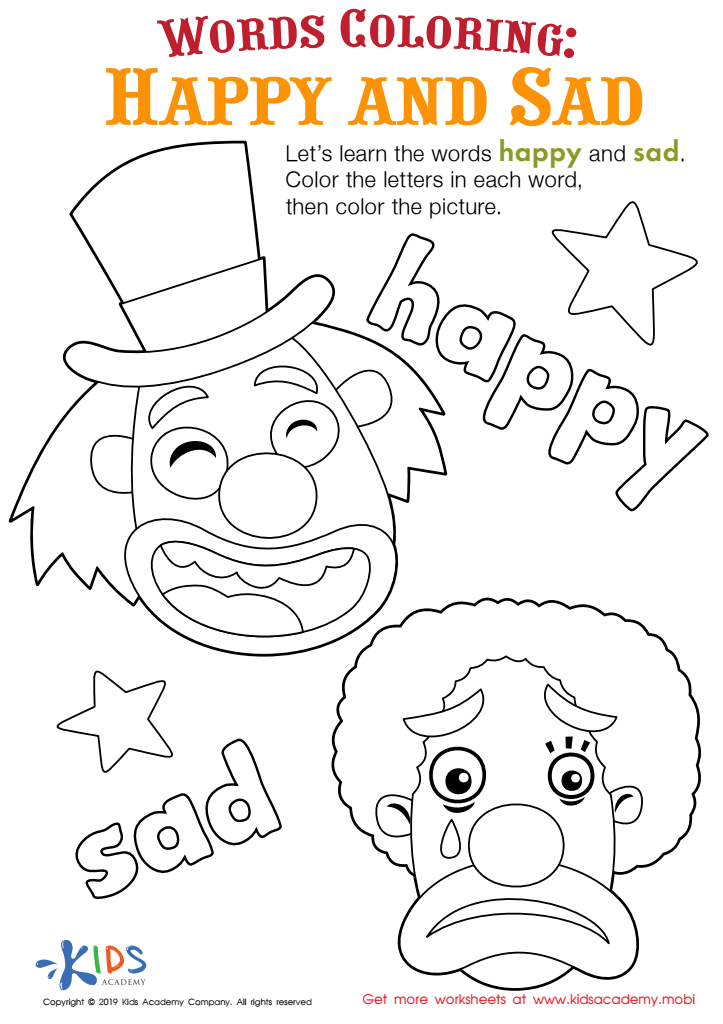
Happy and Sad Words Coloring Worksheet
 Assign to My Students











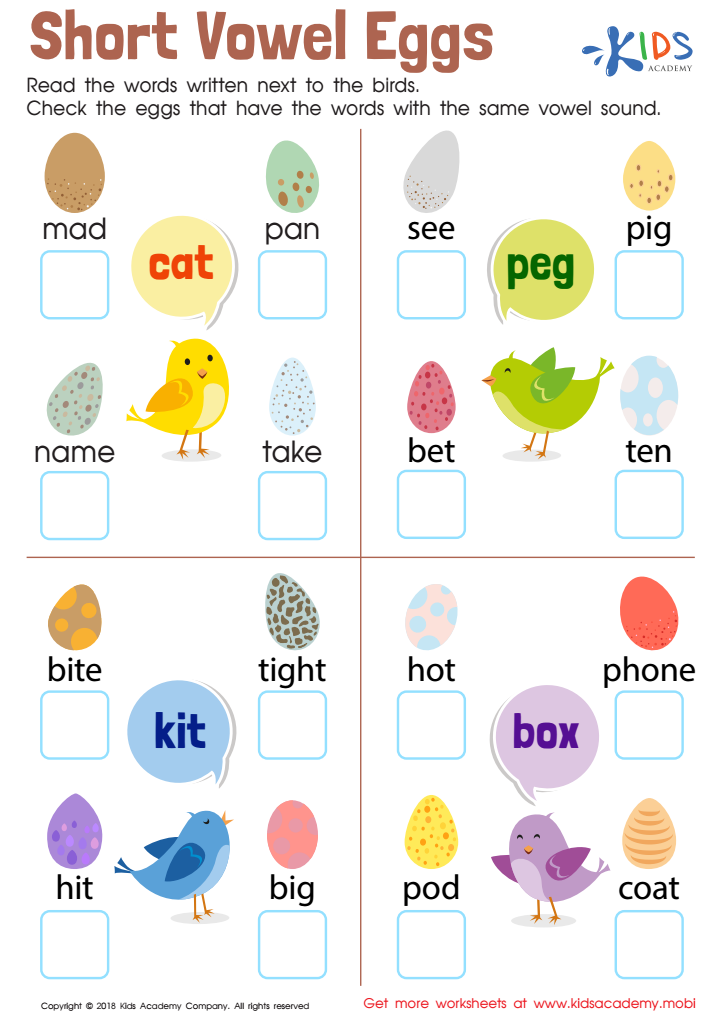
Short Vowel Eggs Worksheet








Vocabulary enrichment is crucial for 7-year-olds because this is a developmental stage where children's cognitive and linguistic abilities are rapidly expanding. When parents and teachers focus on building vocabulary, they significantly enhance a child’s communication skills, enabling clearer expression of thoughts, emotions, and desires. This is not only important for day-to-day interactions but also essential for academic success.
A rich vocabulary helps improve reading comprehension. As children encounter new words in texts, a broad vocabulary allows them to understand and engage more deeply with the material. This comprehension is vital for absorbing new information across all subjects, including science, social studies, and mathematics.
Moreover, vocabulary development promotes critical thinking. When children have a varied vocabulary, they can more precisely articulate ideas, discern subtleties in meaning, and engage in more meaningful discussions. These skills contribute to problem-solving and creativity, which are important for personal and academic growth.
Lastly, early vocabulary enrichment has long-term benefits. Research shows that a strong vocabulary is linked to later success in higher education and increased opportunities in the workforce. By investing in vocabulary development at a young age, parents and teachers are laying a foundation for a lifetime of effective communication and academic achievement.








