Moral understanding Reading Worksheets for 7-Year-Olds
5 filtered results
-
From - To
Looking for engaging and educational resources to help your 7-year-old learn essential values? Our Moral Understanding Reading Worksheets are perfect for young readers. Designed to foster critical thinking and ethical reasoning, these worksheets are filled with age-appropriate stories and questions that promote discussions about right and wrong. Through captivating narratives and relatable scenarios, children will enhance their reading skills while developing a strong moral foundation. Whether in the classroom or at home, these worksheets offer an invaluable tool for parents and educators dedicated to raising thoughtful and compassionate individuals. Start your child's journey towards moral understanding today!
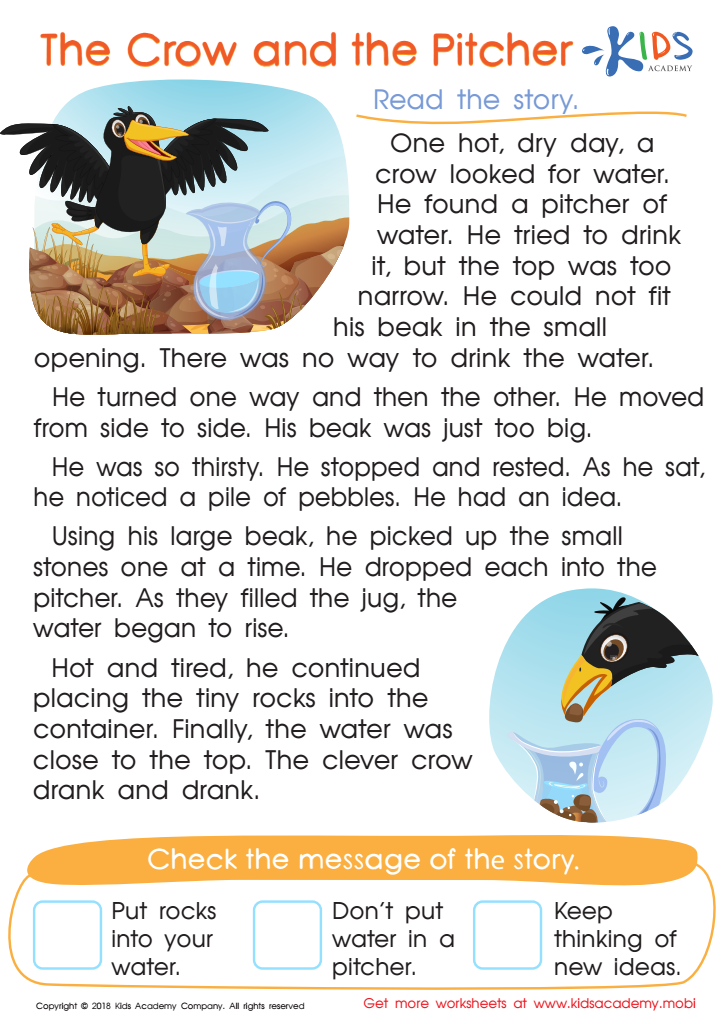
The Crow and the Pitcher Worksheet
 Assign to My Students
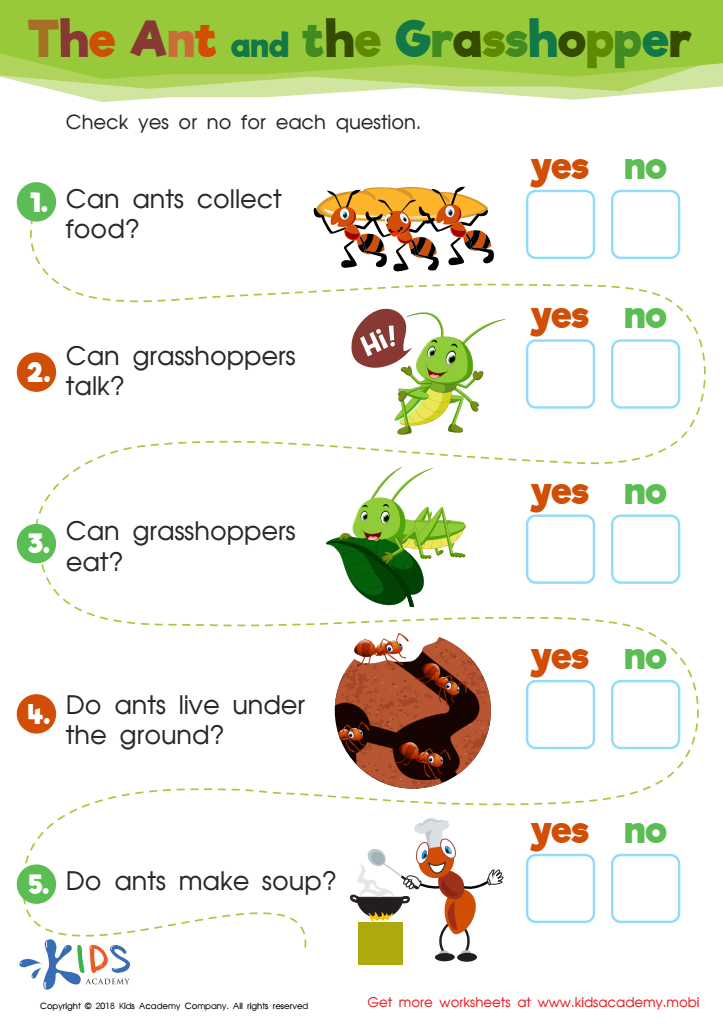
The Ant and The Grasshopper Worksheet
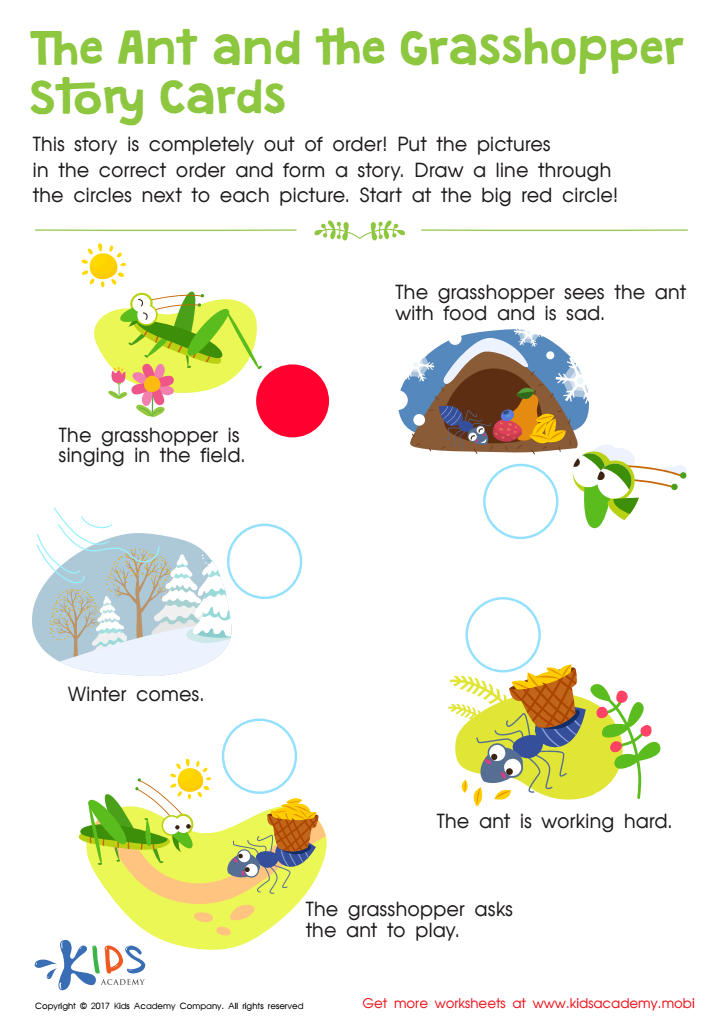
The Ant and The Grasshopper Worksheet
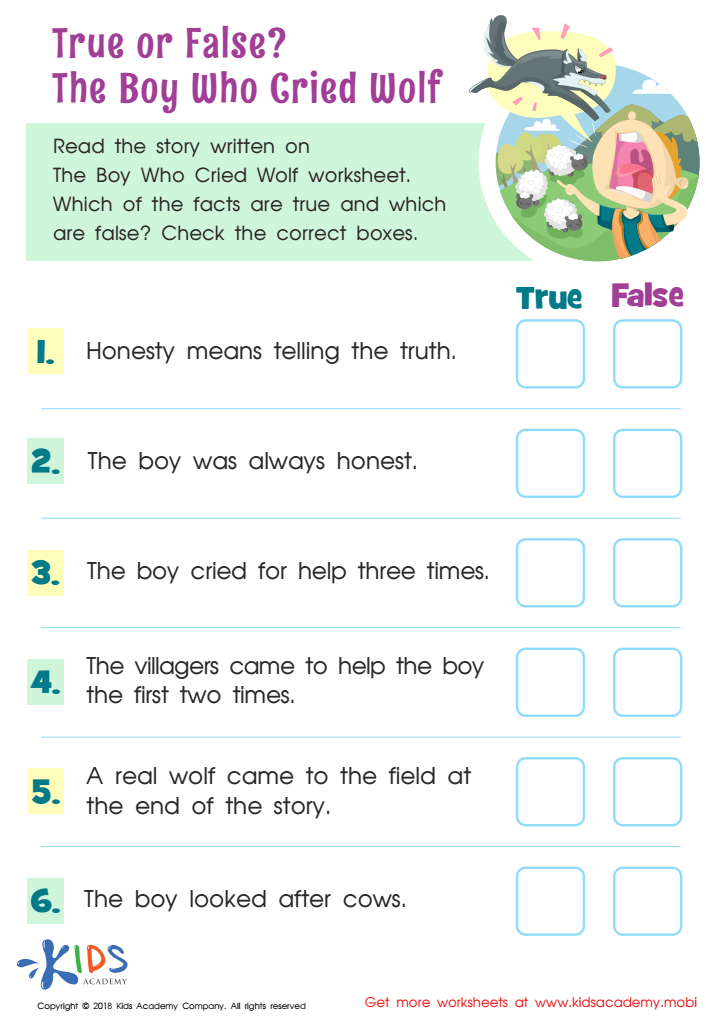
True or False? The Boy Who Cried Wolf Worksheet
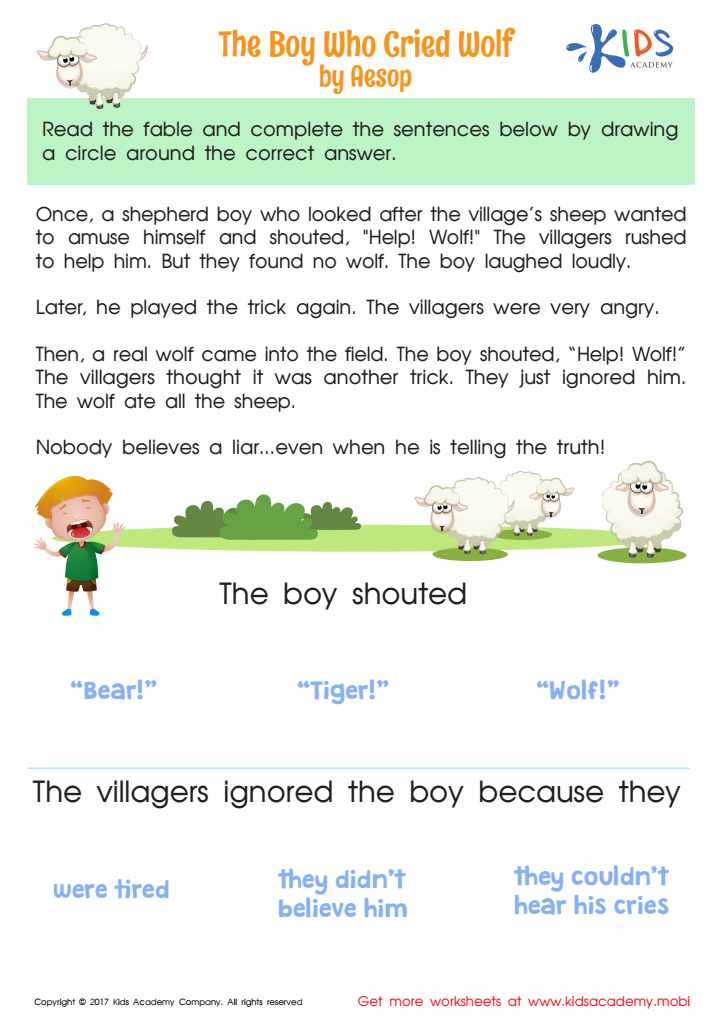
The Boy Who Cried Wolf Worksheet








Moral understanding at an early age is foundational for the development of a child's character and decision-making skills, and reading significantly contributes to this process. For 7-year-olds, whose minds are particularly impressionable, integrating moral lessons into reading helps establish core values such as empathy, honesty, kindness, and fairness. Stories with rich moral content enable children to perceive the distinction between right and wrong through relatable scenarios and characters.
By embedding moral understanding in reading materials, parents and teachers can facilitate discussions that help children internalize these values. For instance, when a child reads about a character who helps others or one who learns from a mistake, they are exposed to ethical dilemmas and their resolutions. Such stories can spark conversations between children and adults, allowing youngsters to reflect on what they would do in similar situations.
Furthermore, moral understanding boosts social-emotional learning, strengthening a child’s ability to relate to and collaborate with peers. It encourages critical thinking as children analyze characters' motivations and consequences. Instilling good morals early on through engaging and thoughtful reading empowers children to grow into conscientious, respectful, and responsible individuals, ultimately contributing to a harmonious and ethical society. Thus, prioritizing moral understanding in reading is essential for the holistic development of 7-year-olds.








