Filters

7 filtered results

Clear all filters
Favorites
With answer key
Interactive

7 filtered results

Difficulty Level

Grade


Enhance your 7-year-old's vocabulary with our engaging Vocabulary Expansion Reading Fiction Worksheets! Designed to make learning fun, these worksheets include captivating stories paired with interactive exercises that promote comprehension and word recognition. Each activity targets key language skills, helping kids explore new words in context, improve their reading fluency, and develop their ability to express themselves creatively. Perfect for supplementing classroom learning or at-home practice, our worksheets cater to young learners' needs and interests. Watch your child’s vocabulary soar as they dive into exciting fiction while honing their reading skills. Download these printable worksheets today for an enriching learning experience!

Check out this FREE Trial Lesson on Reading Fiction for age 7!

Context Clues

Favorites
With answer key
Interactive
  • 7
  • Vocabulary expansion
  • Reading Fiction
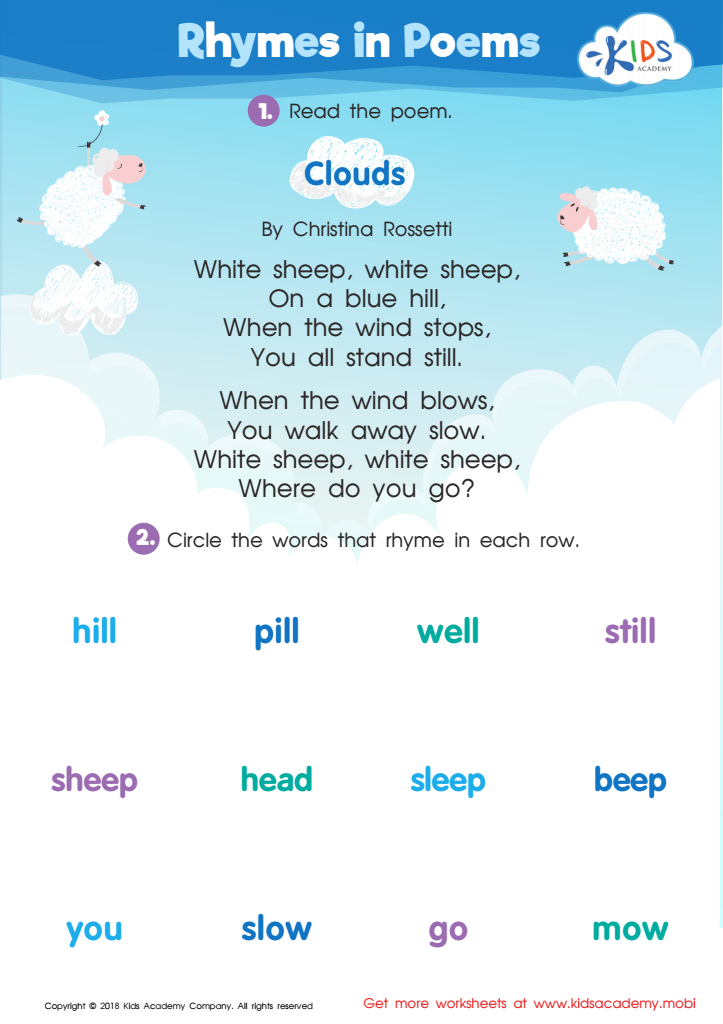
Rhymes in Poems Worksheet

Rhymes in Poems Worksheet

Poems are lovely works of literature; some with rhymes, and some without. This poem for kids is full of rhymes and tells the tale of a sheep. Read it aloud to your kids, then help them circle the rhyming words.
Rhymes in Poems Worksheet
Worksheet
The New Teacher Worksheet

The New Teacher Worksheet

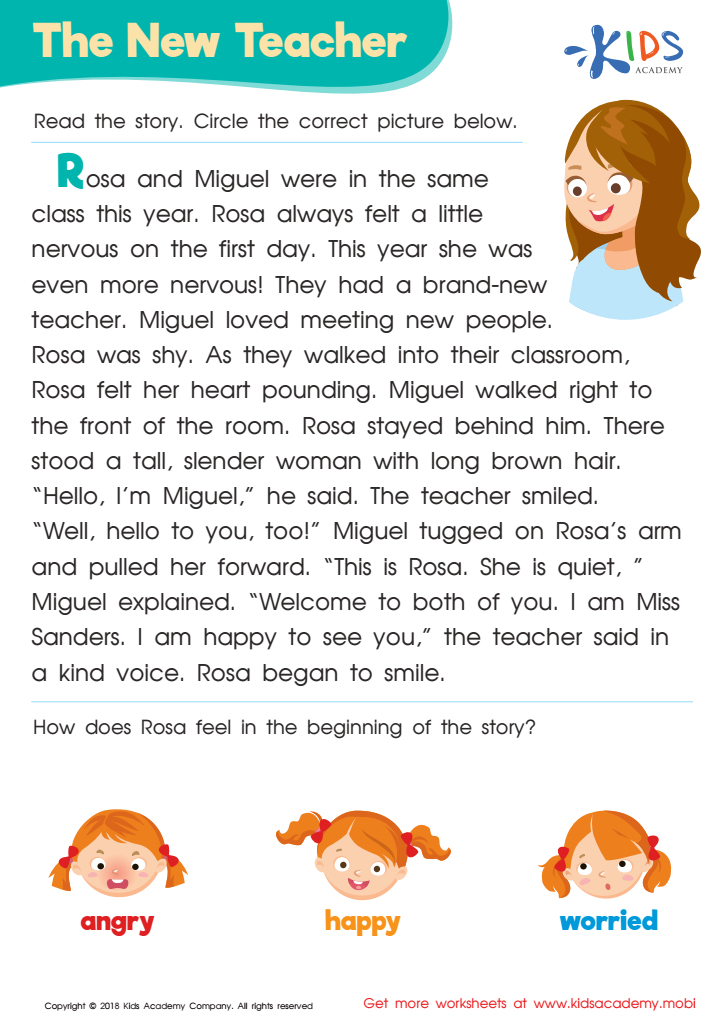
Encourage your kids to write their own short story before doing this exercise. It's about Rosa and Miguel on their first day of school, meeting their teacher. Read the story aloud and ask them to focus on Rosa's feelings. Then, help them circle the correct picture for the question.
The New Teacher Worksheet
Worksheet
Changing Feelings Worksheet

Changing Feelings Worksheet

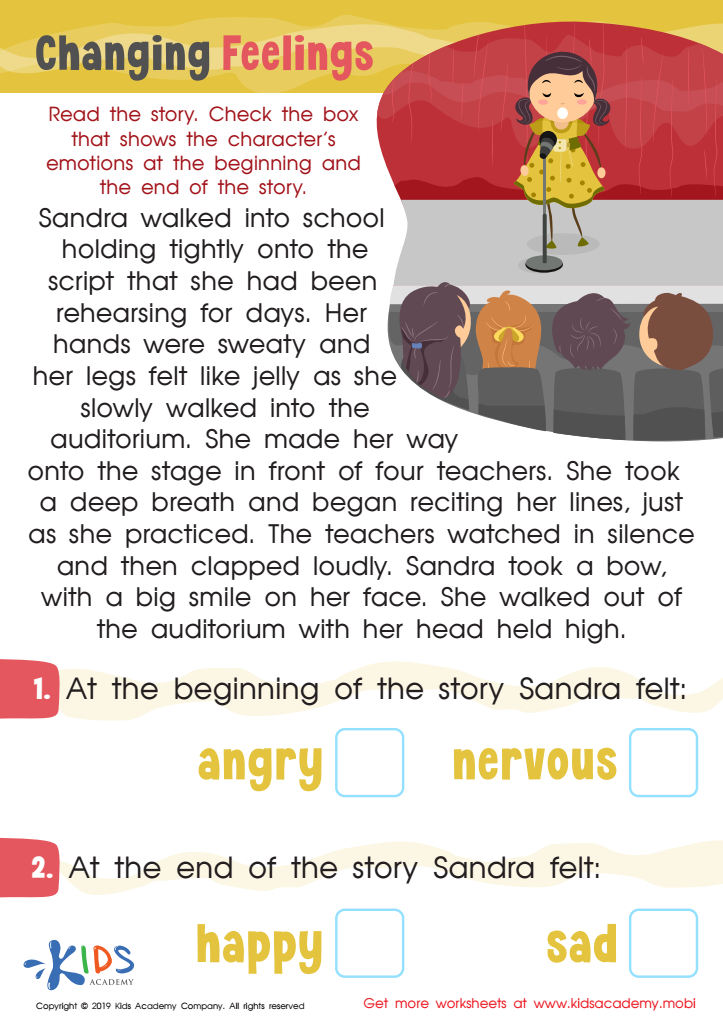
Help your kids practice reading skills with this exercise. Ask them to read the short passage, then check the boxes showing the character's emotions at the start and end. This will help them improve their reading and understanding.
Changing Feelings Worksheet
Worksheet
Descriptive Writing Worksheet: Part 2

Descriptive Writing Worksheet: Part 2

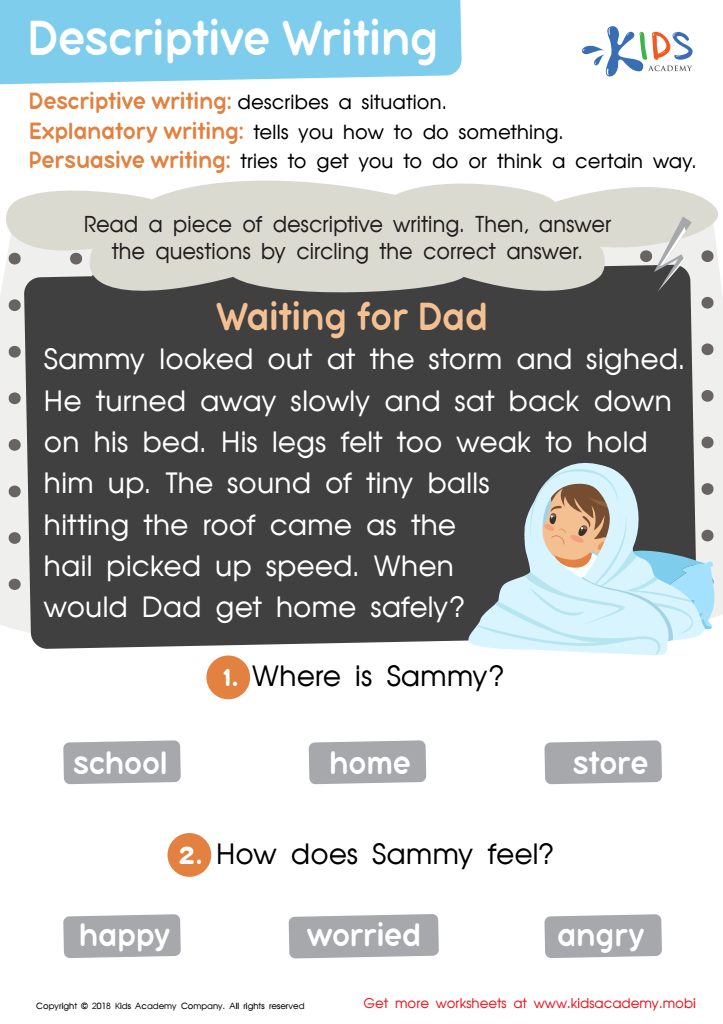
In this worksheet, your kids will explore writing styles like descriptive, explanatory and persuasive. Read them the descriptive text, then have them answer the questions. Writing is an art – it's a way to express emotions, tell stories and share information.
Descriptive Writing Worksheet: Part 2
Worksheet
What Does It Mean? Worksheet

What Does It Mean? Worksheet

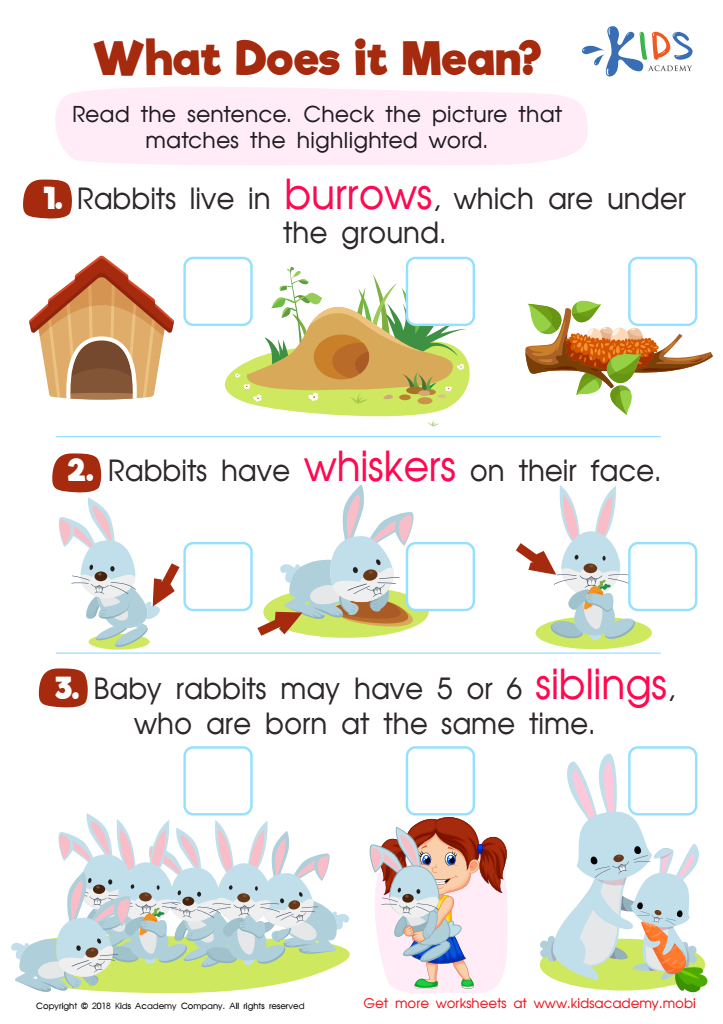
Teach your child to use context clues with this engaging Kids Academy worksheet. Read the sentences and find the pink-highlighted word. Use the other words in the sentence to figure out the meaning, then check the box next to the picture that represents it.
What Does It Mean? Worksheet
Worksheet
Rhyming Check Worksheet

Rhyming Check Worksheet

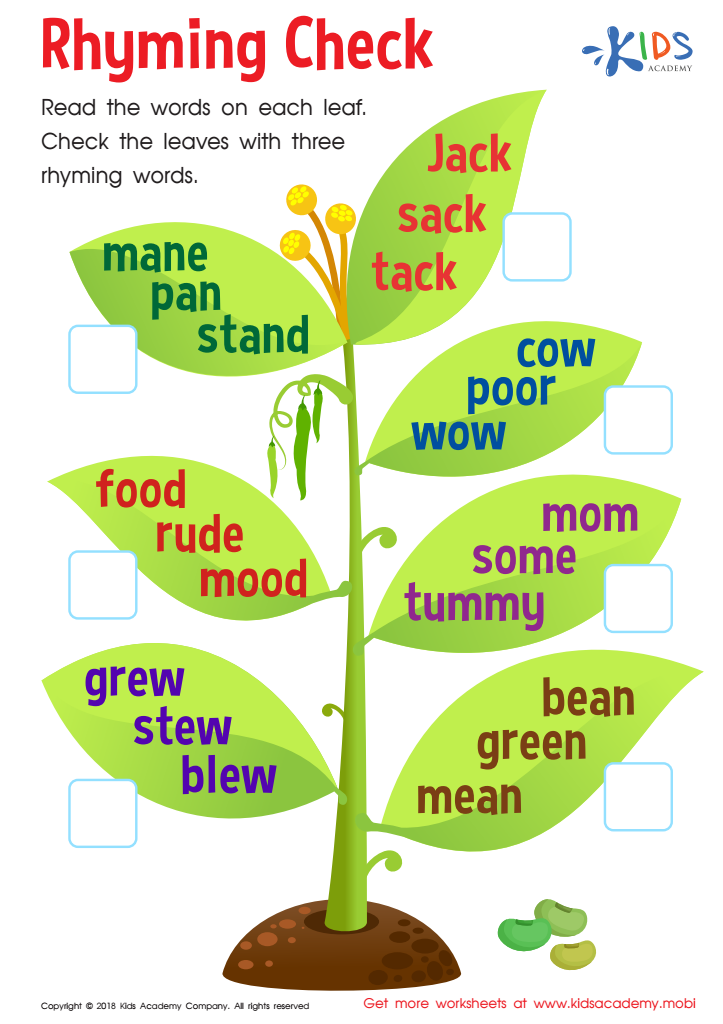
Help your child read the words on each leaf of a worksheet. Make sure they know that spellings can be misleading and tricky. When finished, ask them to identify the leaves with three rhyming words. This exercise helps their pronunciation skills and encourages critical thinking.
Rhyming Check Worksheet
Worksheet
Nursery rhyme match-up worksheet

Nursery Rhyme Match–Up Worksheet

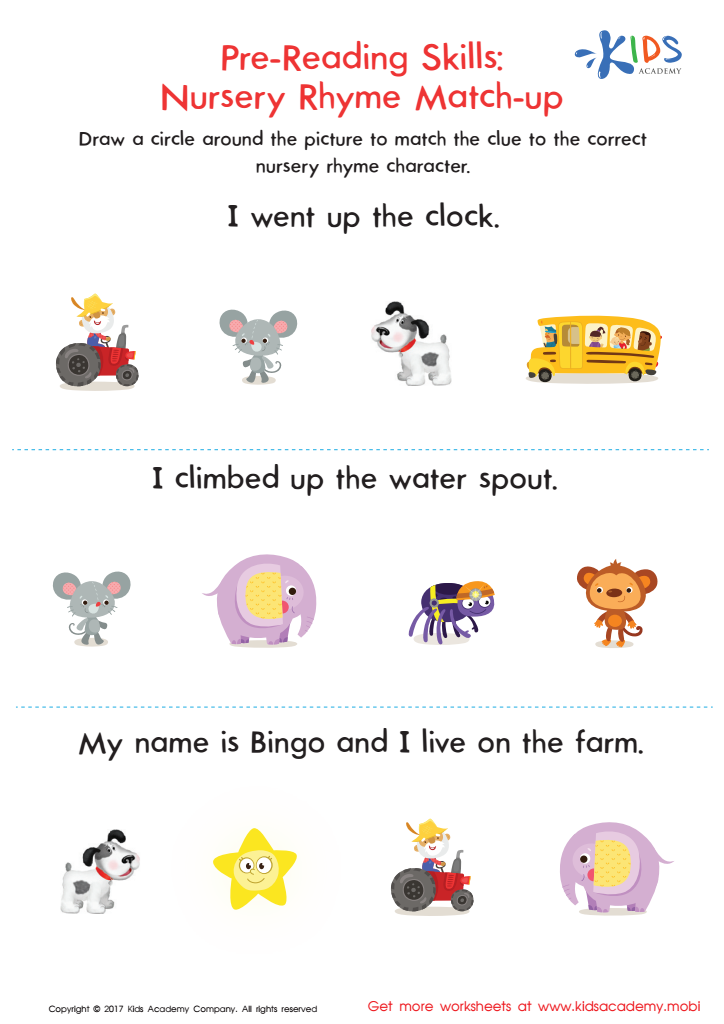
This worksheet helps kids build pre-reading skills using stories they know and love! By connecting with prior knowledge, kids can develop ideas about characters and set the stage for reading strategies.
Nursery Rhyme Match–Up Worksheet

Worksheet


Vocabulary expansion in young learners, especially through reading fiction, is crucial for several reasons. At the age of seven, children are in a significant developmental phase where they begin to enhance their communication skills and cognitive abilities. Reading fiction introduces them to diverse vocabulary in context, helping them make connections between words and meanings. This exposure enriches their language, improving their ability to express ideas, emotions, and stories.

Moreover, stories engage children’s imagination, fostering creativity while encouraging critical thinking and comprehension skills. Fiction often presents varying perspectives and cultures, promoting empathy and social awareness, which are essential for personal and academic growth.

When parents and teachers prioritize vocabulary expansion through reading, they not only raise reading levels but also instill a lifelong love for learning and reading. As children build their vocabulary, they gain confidence in their abilities, which reflects positively in their overall academic performance. Finally, strong vocabulary skills are essential as students progress in school, allowing them to tackle more complex texts and concepts with ease. Investing time and effort in reading fiction now will have lasting benefits in their educational journey and personal development.