Fine Motor Skills Sight Words Worksheets for 7-Year-Olds
5 filtered results
Difficulty Level
Grade
Age
-
From - To
Subject
Activity
Standards
Enhance your child's learning experience with our Fine Motor Skills Sight Words Worksheets designed specifically for 7-year-olds! These engaging worksheets not only help kids recognize essential sight words but also strengthen their fine motor skills through fun, hands-on activities. From tracing and writing to coloring and cutting, each worksheet promotes dexterity and coordination while reinforcing early literacy concepts. Perfect for home or classroom use, our printable resources cater to different learning styles, ensuring an interactive and enjoyable learning experience. Support your child's reading journey and fine motor development—download our worksheets today and watch their confidence soar!
Favorites
With answer key
Interactive
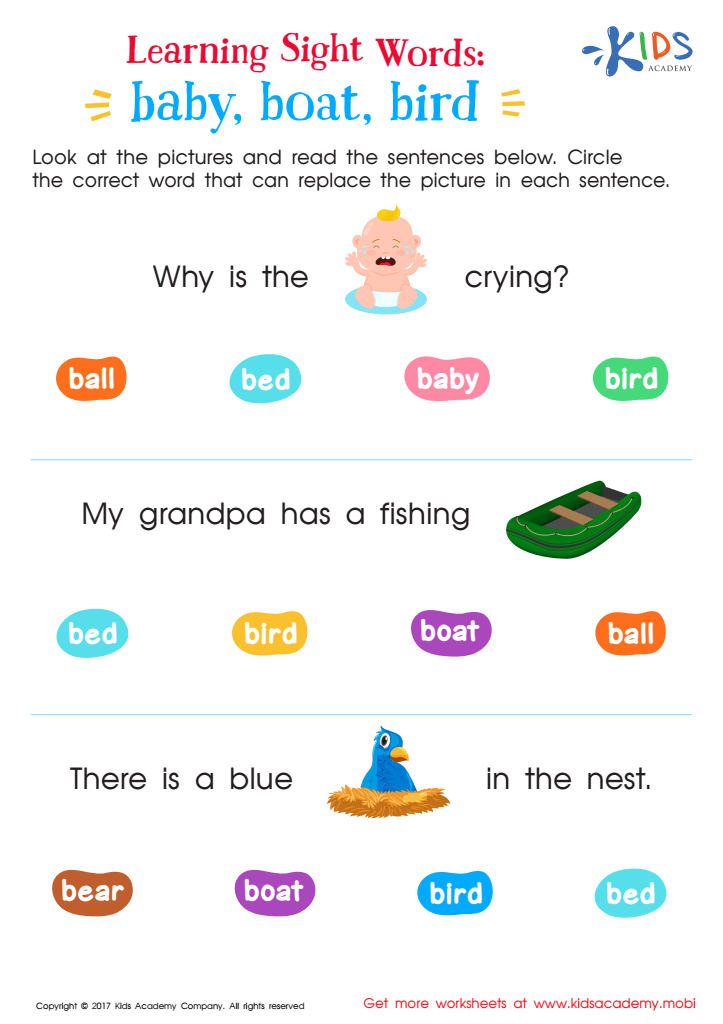
Baby, Boat, Bird Worksheet Sight Words Worksheet
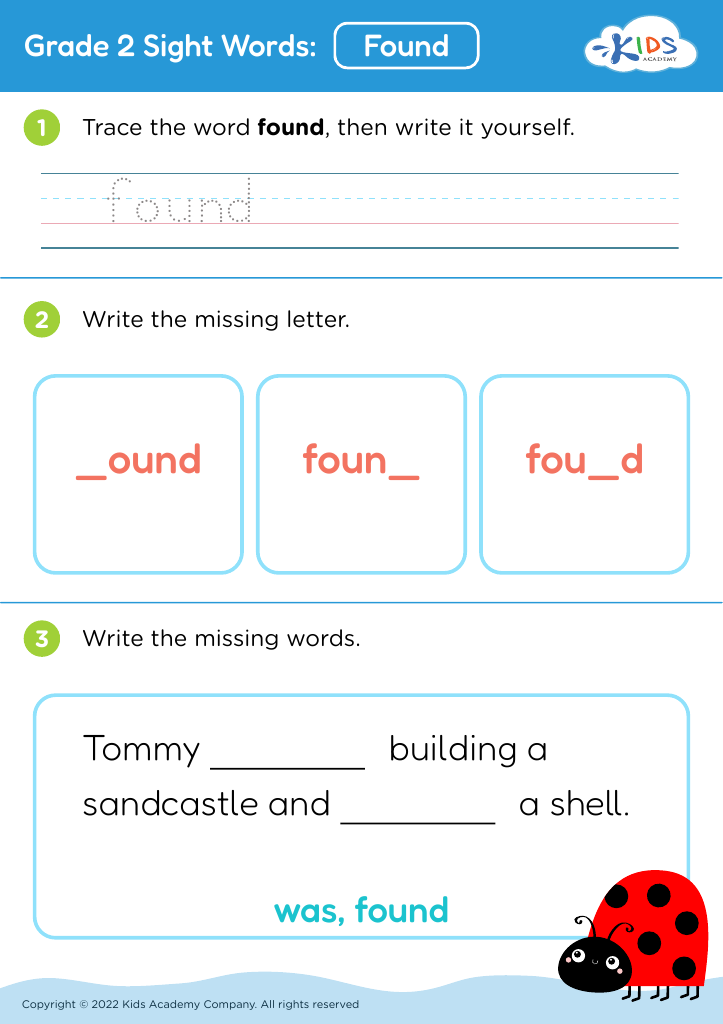
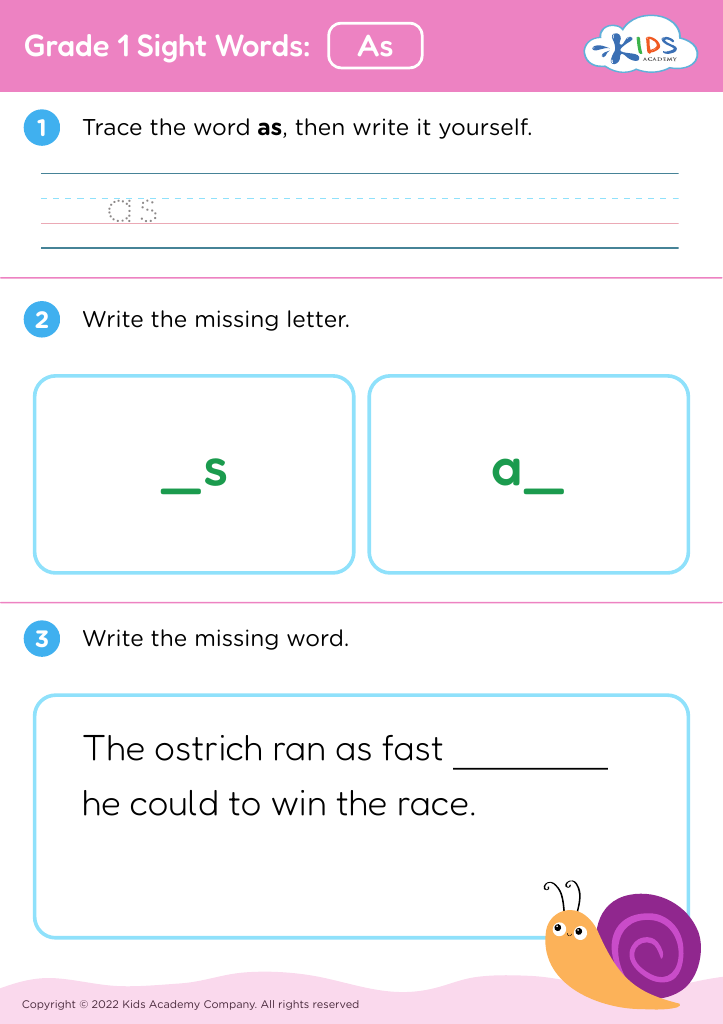
Sight words are an essential part of fluency; help kids build it by writing and reading them. This worksheet is a great way to start.
 Assign to My Students
Baby, Boat, Bird Worksheet Sight Words Worksheet
Worksheet









Join Kids Academy for Free
Who is primarily going to use this learning content?








Fine motor skills are crucial for a child's overall development, particularly for 7-year-olds who are mastering complex tasks. These skills involve the coordination of small muscles in the hands and fingers, enabling children to perform activities such as writing, cutting, and manipulating objects. As children refine their fine motor skills, they gain confidence and independence, which can significantly impact their academic performance and daily life.
In the context of sight words, which are commonly used words that young learners recognize without needing to sound them out, fine motor skills play an integral role. The ability to write or type these words with ease supports literacy development. When children practice handwriting their sight words, they reinforce their recognition and understanding of them, leading to improved reading fluency.
Parents and teachers should prioritize fine motor skill development alongside literacy. Incorporating fun activities like drawing, puzzles, and crafts can effectively enhance these skills. By recognizing the link between fine motor skills and sight word proficiency, caregivers can provide targeted support to foster a love for reading and strengthen a child’s academic foundation, preparing them for future learning challenges. Investing in these areas ultimately helps children become more proficient and confident learners.