Grammar practice Writing Worksheets for 7-Year-Olds
6 filtered results
-
From - To
Unlock your child's potential with our engaging Grammar Practice Writing Worksheets designed specifically for 7-year-olds. These resources provide a fun and interactive way for young learners to enhance their grammar skills, fostering confidence in their writing abilities. Featuring colorful illustrations and age-appropriate activities, our worksheets cover essential topics such as punctuation, parts of speech, and sentence structure. Each worksheet encourages creativity while reinforcing important grammar concepts in an enjoyable format. Perfect for both classroom use and at-home practice, our grammar worksheets are an excellent tool to support your child's educational journey. Make learning grammar exciting and accessible today!
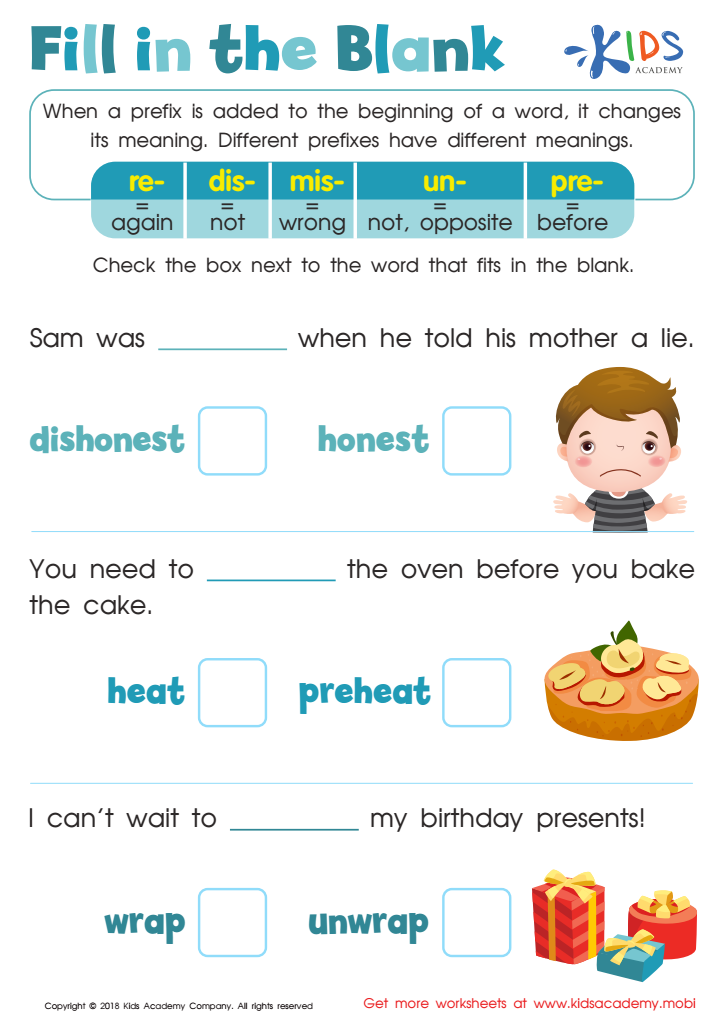
Reading: Fill in the Blank Worksheet
 Assign to My Students
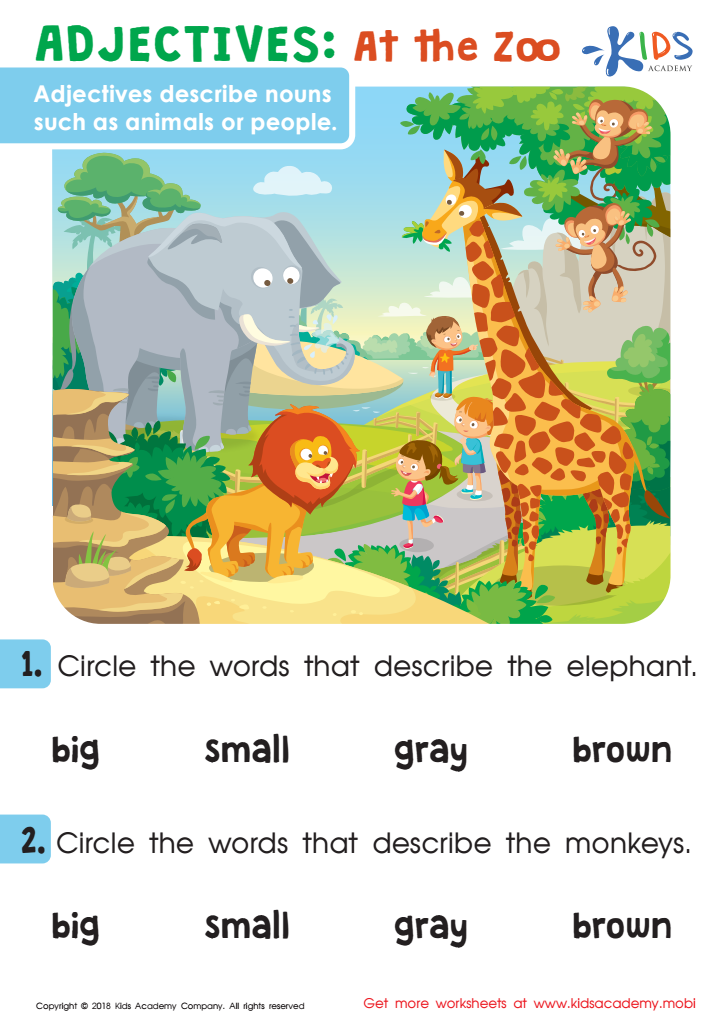
Adjectives: At The Zoo Worksheet
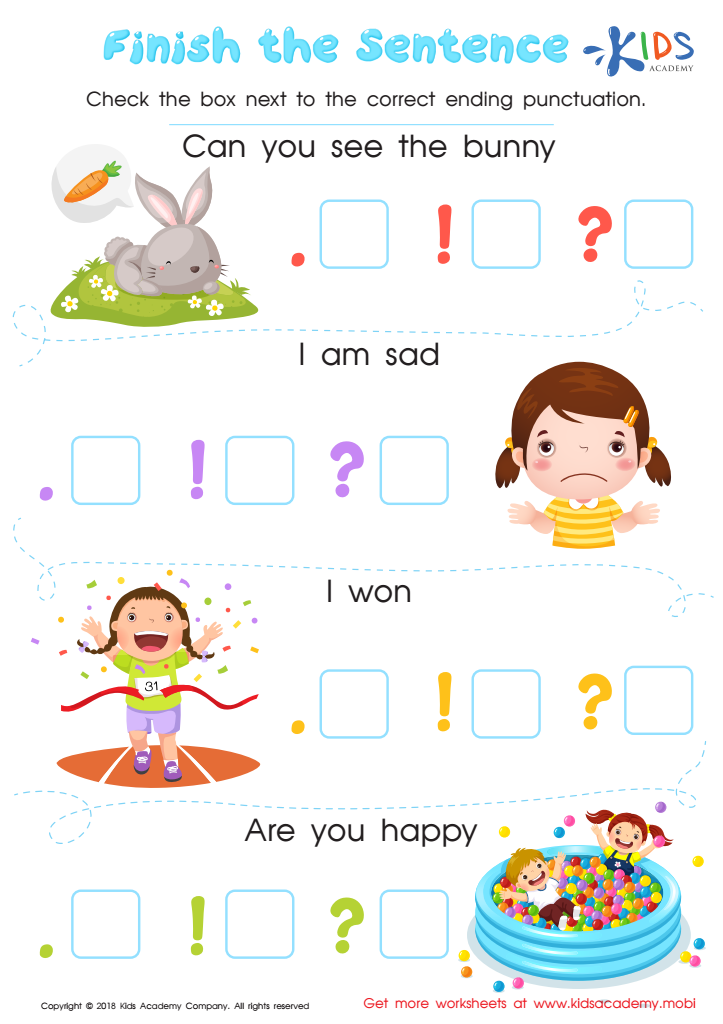
Finish the Sentence Worksheet
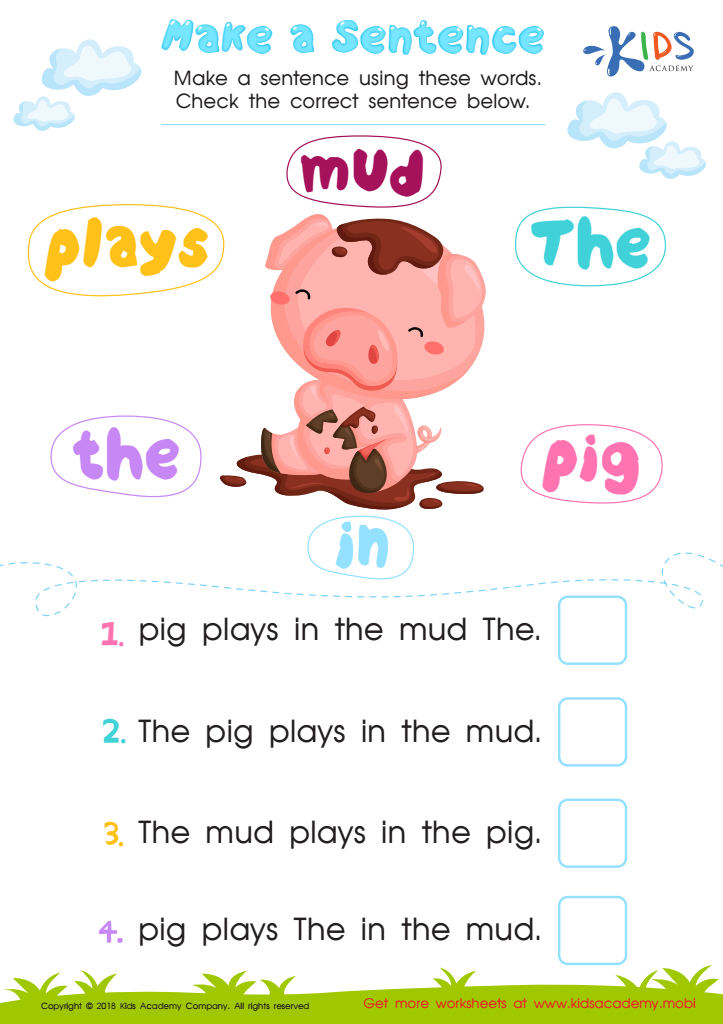
Assessment: Make a Sentence Worksheet
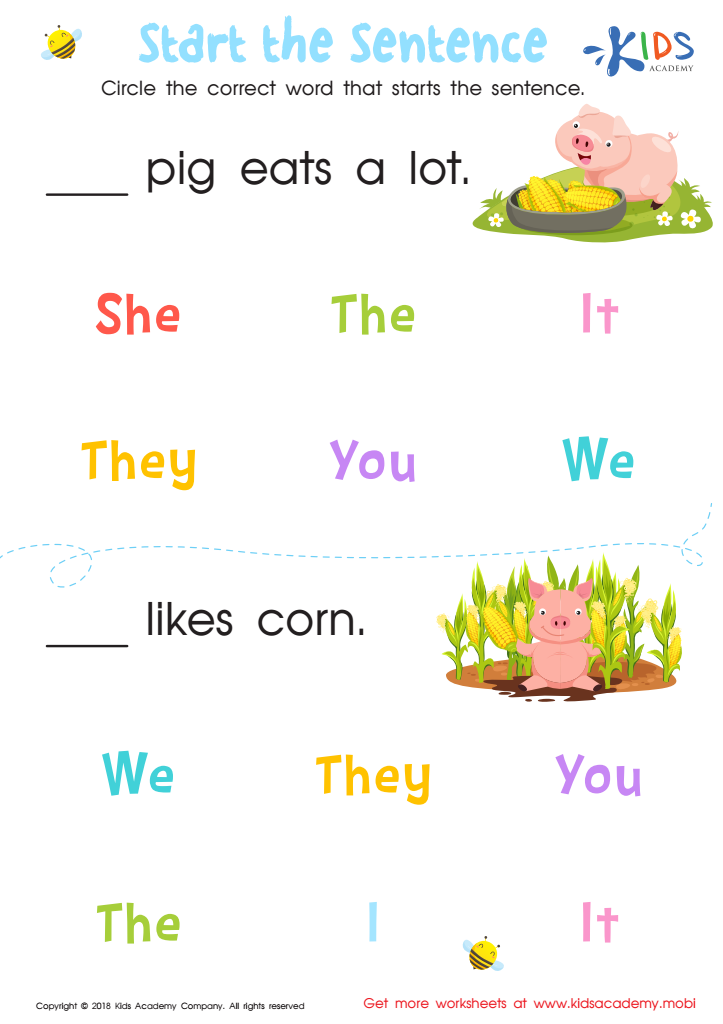
Start the Sentence Worksheet
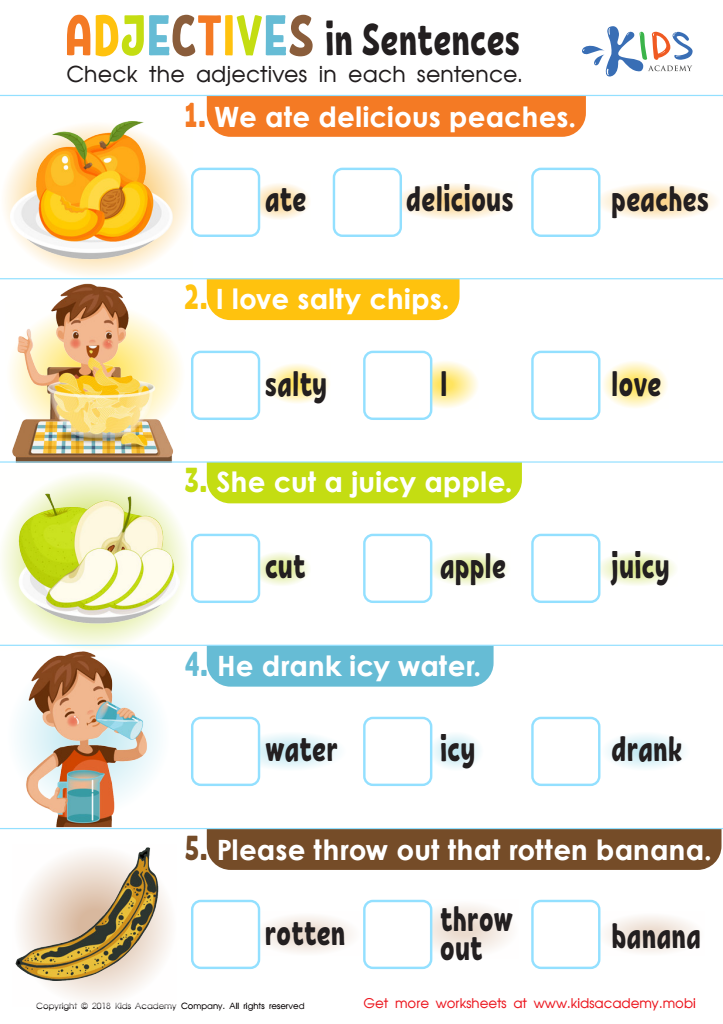
Adjectives in Sentences Worksheet








Grammar practice in writing for 7-year-olds is crucial as it lays the foundation for effective communication skills. At this age, children are developing their ability to express thoughts clearly and coherently. Teaching grammar helps them understand sentence structure, punctuation, and word usage, which are essential for crafting meaningful sentences.
Moreover, good grammar enhances a child’s reading and comprehension skills. As they learn to recognize correct grammar, they are also better equipped to decode and understand texts, boosting their overall literacy development. Furthermore, practicing grammar can foster confidence in writing. When children know the rules, they’re more likely to take risks with their writing, experiment with different styles, and express unique ideas without fear of making mistakes.
For parents and teachers, investing time in grammar practice opens up opportunities for discussion and creativity. It can be a springboard to larger topics, such as storytelling or persuasive writing. Engaging children in fun grammar activities or games also makes learning enjoyable and relevant. Ultimately, prioritizing grammar in writing empowers young learners, ensuring they have the skills necessary to articulate their thoughts both in school and beyond. This foundational competence is essential for their academic success and future endeavors.








