
Handwriting improvement Letter Recognition Worksheets for Ages 8-9
3 filtered results
Difficulty Level
Grade
Age
-
From - To
Subject
Activity
Standards
Explore our Handwriting Improvement Letter Recognition Worksheets designed specifically for children ages 8-9. These engaging worksheets combine letter recognition and handwriting practice to boost literacy skills effectively. With fun activities that encourage kids to identify and write letters, young learners can build confidence in their writing abilities. Each worksheet is carefully crafted to improve fine motor skills and reinforce letter shapes, making learning enjoyable and effective. Perfect for at-home practice or classroom activities, our resources help children excel in their reading and writing journey. Start today and watch your child's handwriting flourish with our fun, interactive worksheets!
Favorites
With answer key
Interactive
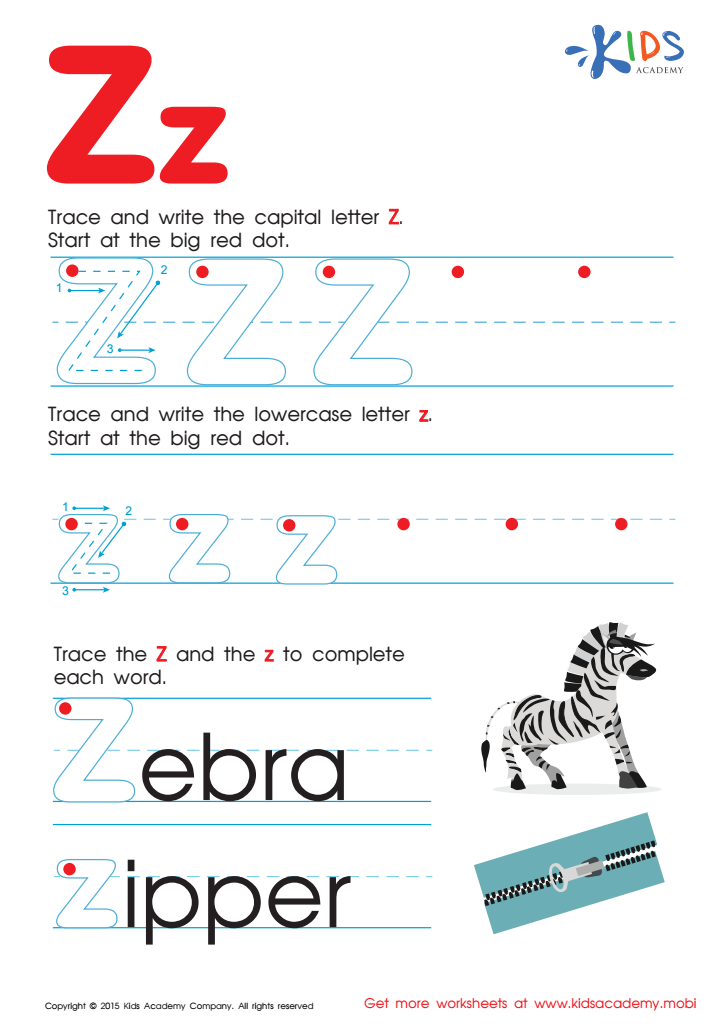
Letter Z Tracing Page
Trace and write capital "Z" and lowercase "z". Complete words "zebra" and "zipper". Be attentive and have fun! (80 words)
 Assign to My Students
Letter Z Tracing Page
Worksheet
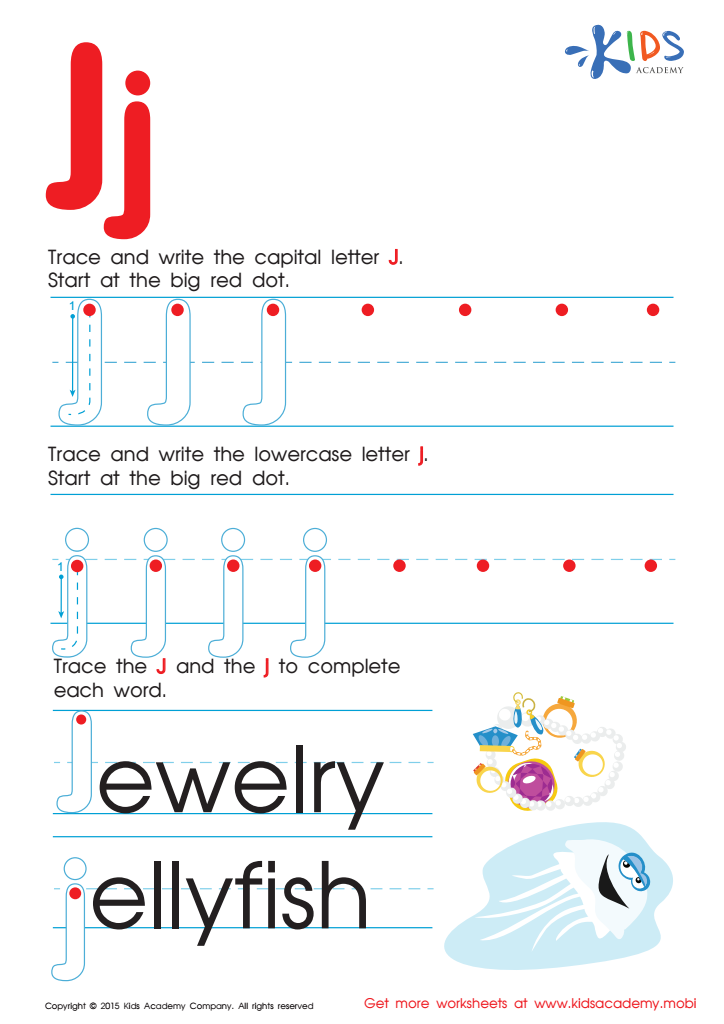
Letter J Tracing Page
Trace and write the letter "J" with our ABC worksheet - start at the big red dot! Have fun completing words like jewelry, jellyfish and more. Check out our kindergarten activities for more alphabet practice.
Letter J Tracing Page
Worksheet
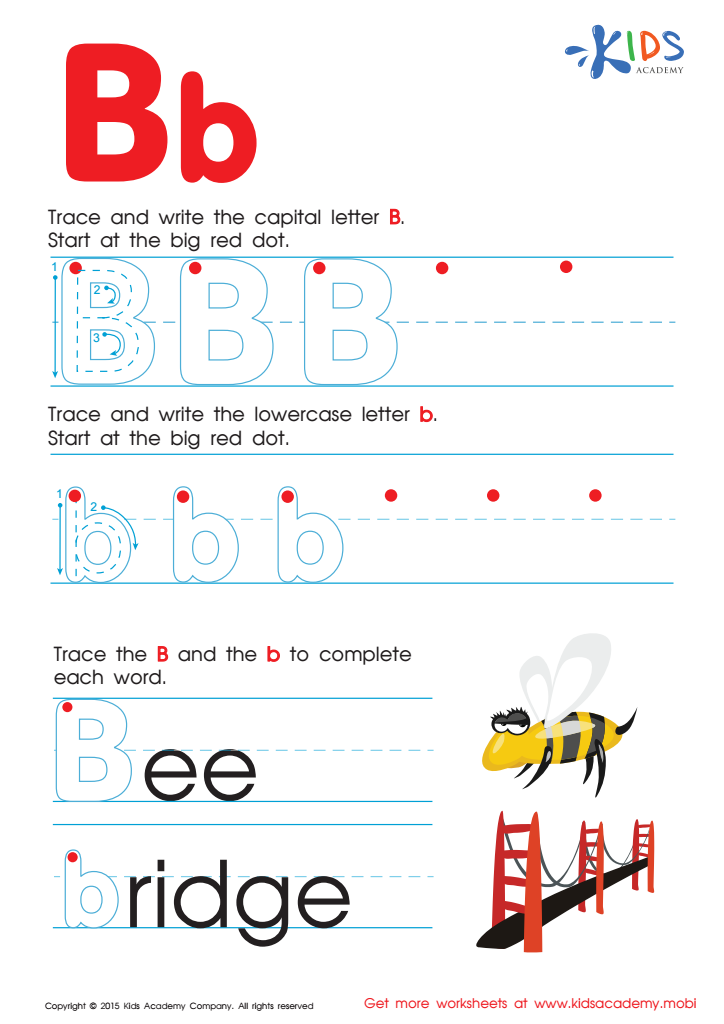
Letter B Tracing Page
Ready to learn the Alphabet? Put your pencil on the red dot and trace & write both capital & lowercase "B". Then have a look at the pictures. Catch the bee, cross the bridge & write the letters to complete the words. More ABC worksheets for kindergarten available!
Letter B Tracing Page
Worksheet
Join Kids Academy for Free
Who is primarily going to use this learning content?








Improving handwriting and letter recognition for children aged 8-9 is crucial for their overall academic success and self-esteem. During these formative years, children transition from learning to write to using writing as a critical tool for communication and expression. Clear handwriting enhances their ability to complete assignments, participate in assessments, and effectively convey their thoughts. Poor handwriting can lead to frustration, lower grades, and diminished motivation.
Furthermore, letter recognition solidifies a child’s foundation in literacy. Children who recognize letters quickly and accurately tend to read more fluently, understand basic phonics, and spell better. This competence fosters a love for reading and writing, essential skills for lifelong learning.
Encouraging handwriting improvement cultivates fine motor skills and hand-eye coordination, which are vital for numerous daily tasks beyond academics. For parents and teachers, supporting this development ensures that children feel confident in their abilities, paving the way for more complex writing tasks in the future, such as essays and reports.
Caring for handwriting and letter recognition at this stage not only nurtures a child’s educational journey but also builds a foundation for a successful future, both in school and beyond.







